For a cooperative marketing organisation handling agricultural commodities, operational pressure can change quickly with procurement cycles, market conditions, storage requirements, and distribution demand. National Agricultural Cooperative Marketing Federation of India works across a chain where delays or inconsistencies at one stage can affect inventory, movement, and commercial outcomes later. AI based SOP analytics and video analytics can help NAFED identify these weak points and focus attention where it matters most.
A Seasonal Operating Model For AI
NAFED’s activities can vary by commodity, procurement programme, location, and market conditions. A useful analytics strategy should therefore change with the operational cycle rather than rely on one fixed set of indicators.
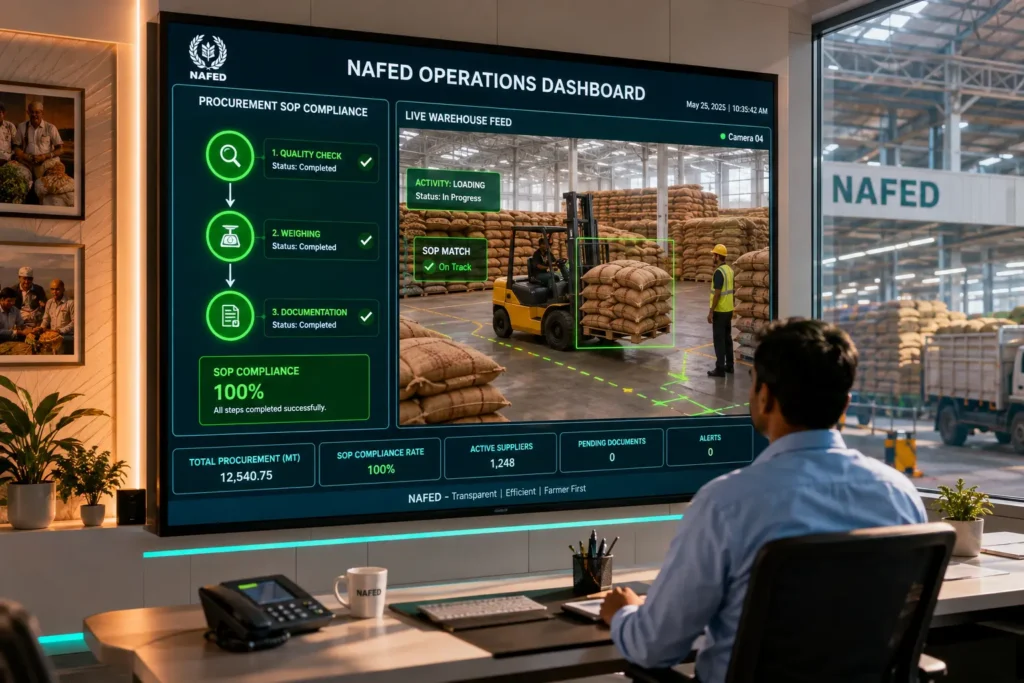
AI based SOP analytics can examine procedures for procurement, quality checks, weighing, documentation, storage, transportation, stock reconciliation, sale, and related workflows. During procurement, attention may centre on receiving and documentation. During storage, stock verification and handling become more important. During dispatch, loading, transportation, and reconciliation may require greater scrutiny.
Learning From Previous Cycles
Historical records can reveal recurring exceptions. If a procedure repeatedly creates delays during high-volume procurement periods, analytics can flag the pattern before the next cycle reaches the same pressure point.
This gives management an opportunity to adjust staffing, workflows, training, controls, or SOPs before the problem repeats.
Procurement Integrity Through Exception Analysis
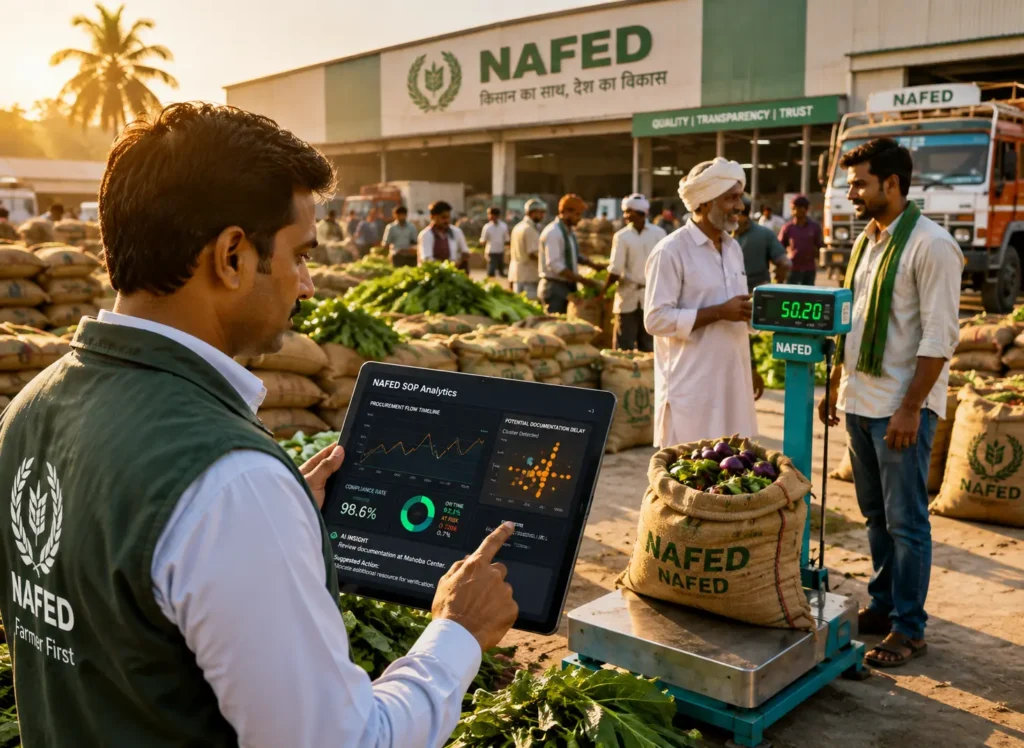
Procurement can involve multiple steps, including participation, weighing, quality assessment, documentation, stock entry, and movement. SOP analytics can compare expected sequences with available records and identify unusual processing times, incomplete documentation, repeated exceptions, or discrepancies between related records.
A recurring exception should not automatically be interpreted as misconduct. It may result from equipment constraints, seasonal workload, connectivity issues, documentation practices, or another operational factor. AI should identify the pattern; authorised teams should investigate the reason.
Where Physical Operations Need Visibility
Agricultural commodities move through procurement centres, warehouses, loading areas, transport points, and other facilities. These environments create risks that transaction records alone cannot explain.
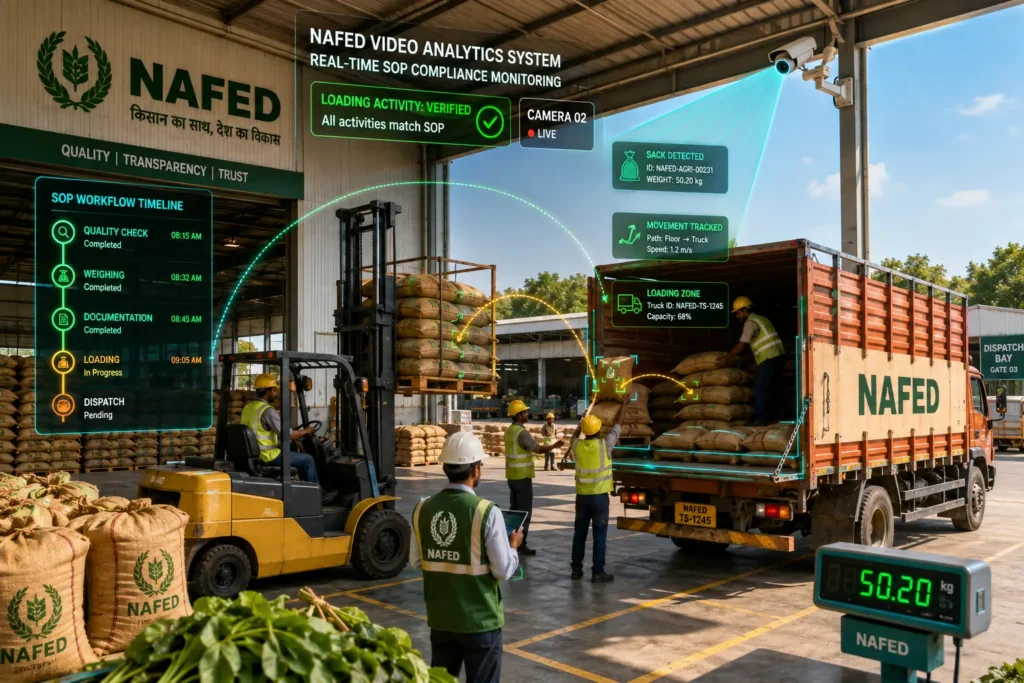
Video analytics can provide event-based monitoring at suitable locations. Potential applications include detecting unauthorised access to storage areas, monitoring vehicle movement around loading zones, identifying unusual material-handling activity, and supporting incident investigation.
A warehouse may need access and loading monitoring, while a procurement centre may require attention to vehicle movement and designated operational zones.
Protecting Commodity Quality After Procurement
Once agricultural produce enters storage or processing arrangements, handling and inventory discipline become critical.
SOP analytics can track defined inspection, stock rotation, storage, packaging, reconciliation, and dispatch procedures. It can identify locations where corrective actions repeatedly remain open or where similar exceptions recur.
Video analytics can add physical context around warehouses and handling areas. Relevant footage can help investigators review access, loading, unloading, or vehicle movement during a specific incident.
It should remain supporting evidence rather than a substitute for physical inspection, weighing, sampling, or quality assessment.
From Warehouse Control To Market Movement
NAFED’s marketing role means that inventory and distribution decisions can have commercial consequences. Delayed dispatch, unresolved stock discrepancies, or weak documentation can affect downstream efficiency.
Analytics can connect warehouse records with dispatch and transportation information to identify where delays accumulate. A location that repeatedly holds stock beyond an expected processing window may require investigation into transportation availability, documentation, demand patterns, or operational capacity.
A Risk-Based Management View
Rather than ranking every location using a single score, NAFED could use AI to group issues according to recurrence, volume, unresolved actions, operational impact, and data confidence.
Risk Pattern | Possible Management Response |
Repeated documentation gaps | Process or training review |
Recurring stock discrepancy | Physical verification |
Delayed corrective actions | Escalation review |
Unusual loading activity | Video-assisted investigation |
Repeated dispatch delays | Logistics review |
A Pilot Built Around The Agricultural Calendar
A practical NAFED pilot could focus on one commodity programme, procurement region, warehouse network, or distribution workflow. The pilot can establish a baseline before a high-activity period and measure whether analytics improves process control during and after the cycle.
Useful indicators include fewer recurring SOP deviations, faster reconciliation, fewer unresolved corrective actions, improved dispatch turnaround, shorter incident-investigation time.
Governance should cover data access, retention, cybersecurity, auditability, privacy, and human review. Automated findings should never independently determine supplier, cooperative, employee, or commercial responsibility.
For NAFED, the value of AI lies in making agricultural supply-chain processes more visible. SOP analytics can reveal where processes drift, while video analytics can add context from physical handling environments. Together, they can support stronger procurement discipline, inventory control, and distribution management.
FAQs
It can identify recurring delays, incomplete records, unusual processing patterns, and deviations across defined procurement and commodity-handling procedures.
Yes. Where suitable cameras exist, it can support access monitoring, loading-area events, vehicle movement, and selected incident investigations.
It can identify recurring discrepancies or unusual patterns in available stock records and prioritise locations for physical verification.
No. Video analytics can provide supporting evidence, while authorised personnel should investigate and determine the facts.