MTNL’s operational environment is built around infrastructure that must remain dependable even when customers never see the work behind it. Exchanges, fibre networks, broadband equipment, enterprise connectivity, field maintenance, customer service, and secure technical facilities all require coordinated procedures. When a fault is reported, the quality of the response depends on what happened before the technician arrived, what was done in the field, and whether the problem was actually resolved. AI based SOP analytics and video analytics can help MTNL strengthen that chain.
The First Priority: Know Where Service Recovery Slows Down
For MTNL, service assurance can be viewed as a sequence of decisions rather than a collection of tickets. A complaint is registered, classified, assigned, investigated, repaired, tested, and closed. Each step can introduce delay.
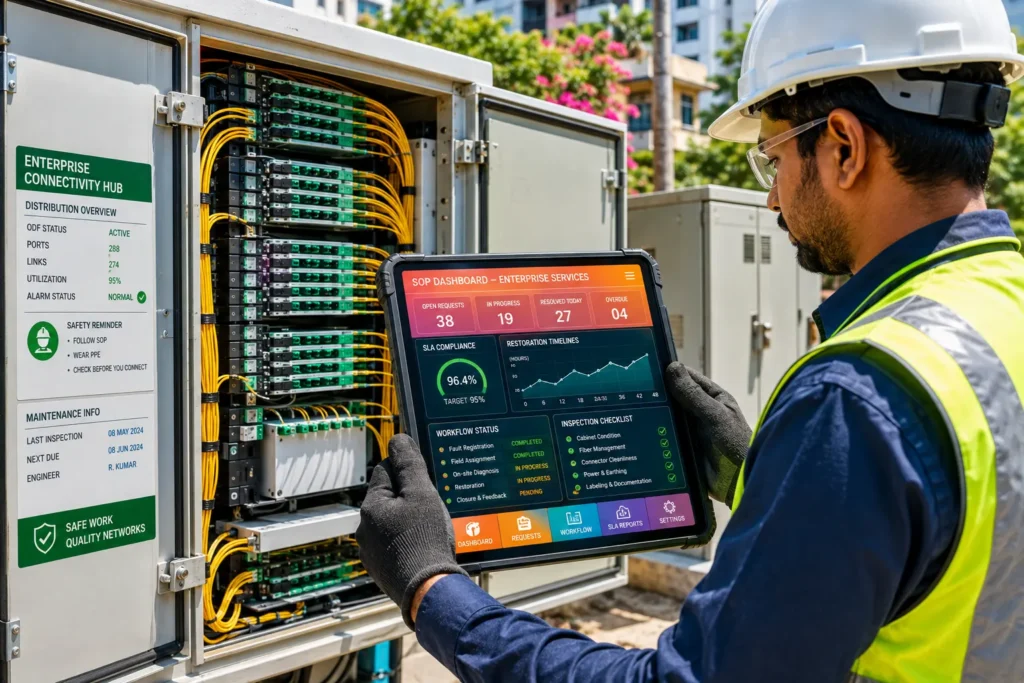
AI based SOP analytics can examine fault records, work orders, escalation histories, maintenance logs, inspection reports, restoration records, and closure information. It can identify where the same type of fault repeatedly gets delayed or reopened.
The value is not another dashboard of ticket counts. It is the ability to discover patterns such as repeated handoffs, delayed field assignments, incomplete troubleshooting, or corrective actions that do not prevent recurrence.
Turning Reopened Tickets Into Lessons
A work order that is closed and later reopened is especially useful for analysis. Repeated reopening around a particular exchange, network segment, equipment category, or service type can indicate that the recorded repair is not addressing the underlying problem.
Analytics can help MTNL compare these cases and determine whether the issue may involve equipment condition, maintenance procedures, spare availability, access constraints, or troubleshooting practices.
Video Analytics Has A Different Job
Video analytics should not attempt to duplicate network-management systems. Its role is to interpret physical environments where cameras can provide useful operational evidence.
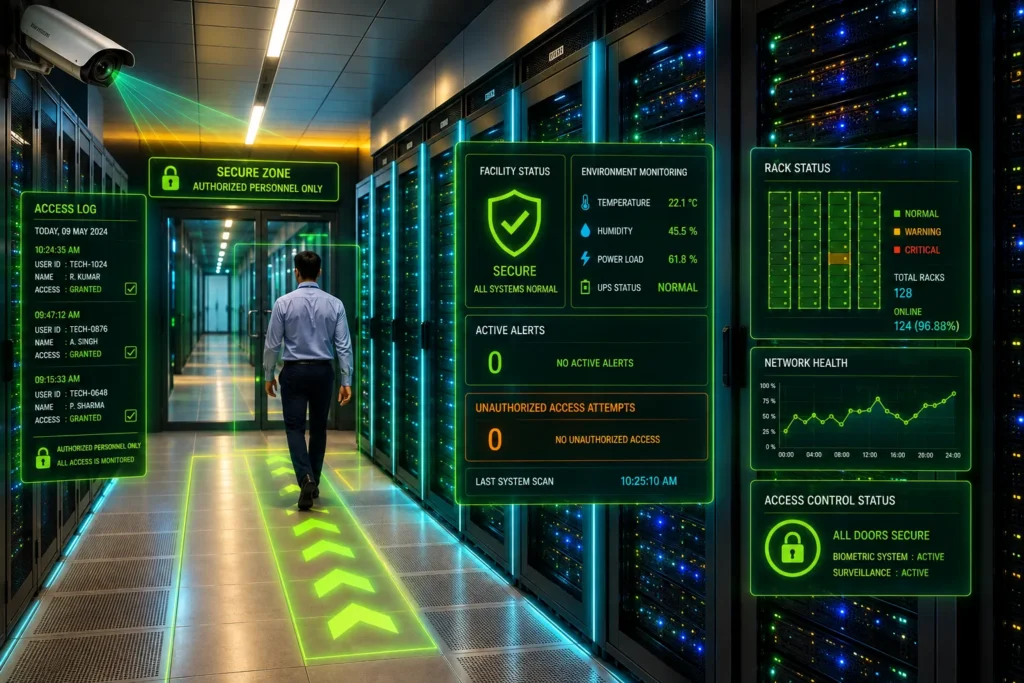
At suitable exchanges, equipment rooms, offices, storage areas, data facilities, and other controlled locations, video analytics can identify predefined events such as unauthorised entry, movement into restricted zones, unusual activity around sensitive equipment, or vehicle access.
A data facility may require strict access-event detection, while an equipment storage area may benefit more from movement and loading-zone monitoring. Rules should therefore be configured according to the physical environment.
Connecting Field Conditions With Network Records
Some service problems have a physical dimension that a fault-management system cannot explain. A recurring issue may coincide with repeated access to a particular equipment area, maintenance activity, or vehicle movement.
Where suitable camera coverage exists, video analytics can help investigators locate relevant events around the time of a fault or incident. SOP analytics can identify the associated maintenance history and required procedures.
Neither source should be treated as conclusive on its own. Together, they can give technical teams a more complete starting point for investigation.
Protecting Enterprise And High-Priority Services
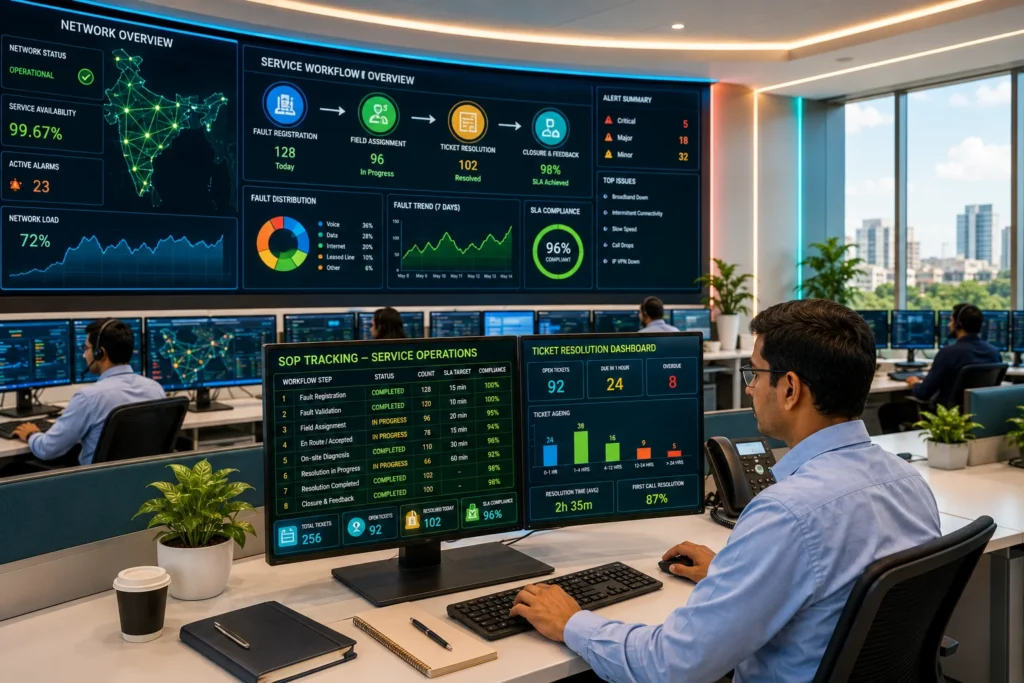
MTNL’s enterprise and institutional customers can have different service-assurance requirements from ordinary consumer connections. A delayed restoration may affect business operations, making escalation and communication procedures important.
SOP analytics can examine whether defined priority-service procedures are followed, whether escalation happens within expected timelines, and whether recurring issues are concentrated around particular service categories or infrastructure.
This can help management distinguish between isolated incidents and systemic weaknesses in enterprise service delivery.
Build AI Around The Cost Of Recurrence
The strongest business case may come from reducing repeated work. Every reopened ticket, repeated field visit, recurring equipment fault, or unresolved corrective action consumes technical capacity.
MTNL can use AI to prioritise problems according to recurrence, service impact, restoration time, asset importance, and previous intervention history.
A practical pilot could therefore focus on one costly recurring problem rather than the entire network.
Possible measures include:
- Reduction in reopened fault tickets.
- Shorter mean restoration time.
- Fewer repeat technician visits.
- Higher preventive-maintenance completion.
- Faster incident investigation.
- More relevant security alerts.
Governance Is Part Of Network Reliability
Telecom analytics can involve customer-related information, operational records, surveillance footage, and sensitive infrastructure details. AI deployment should therefore include role-based access, data minimisation, retention policies, cybersecurity controls, auditability, and human review.
Video alerts should support authorised security and engineering personnel rather than automatically assign fault or responsibility. SOP findings should similarly trigger investigation rather than become automatic personnel decisions.
For Mahanagar Telephone Nigam Limited, the practical value of AI lies in connecting service recovery, field activity, and physical security. SOP analytics can reveal where operational processes repeatedly fail to deliver durable outcomes, while video analytics can provide contextual evidence from selected facilities. Used together, they can help MTNL reduce recurring work, strengthen infrastructure protection, and improve the consistency of service operations.
FAQs
It can identify recurring patterns across fault registration, field response, maintenance, restoration, and closure records, helping teams investigate why problems return.
Yes. Where suitable cameras are available, it can support defined access-control, restricted-zone, equipment-area, and security-event monitoring.
It can analyse installation, maintenance, fault, and restoration workflows to identify recurring operational delays and process weaknesses
It can help locate relevant visual events at suitable monitored facilities, providing additional context alongside network logs, work orders, and technician reports