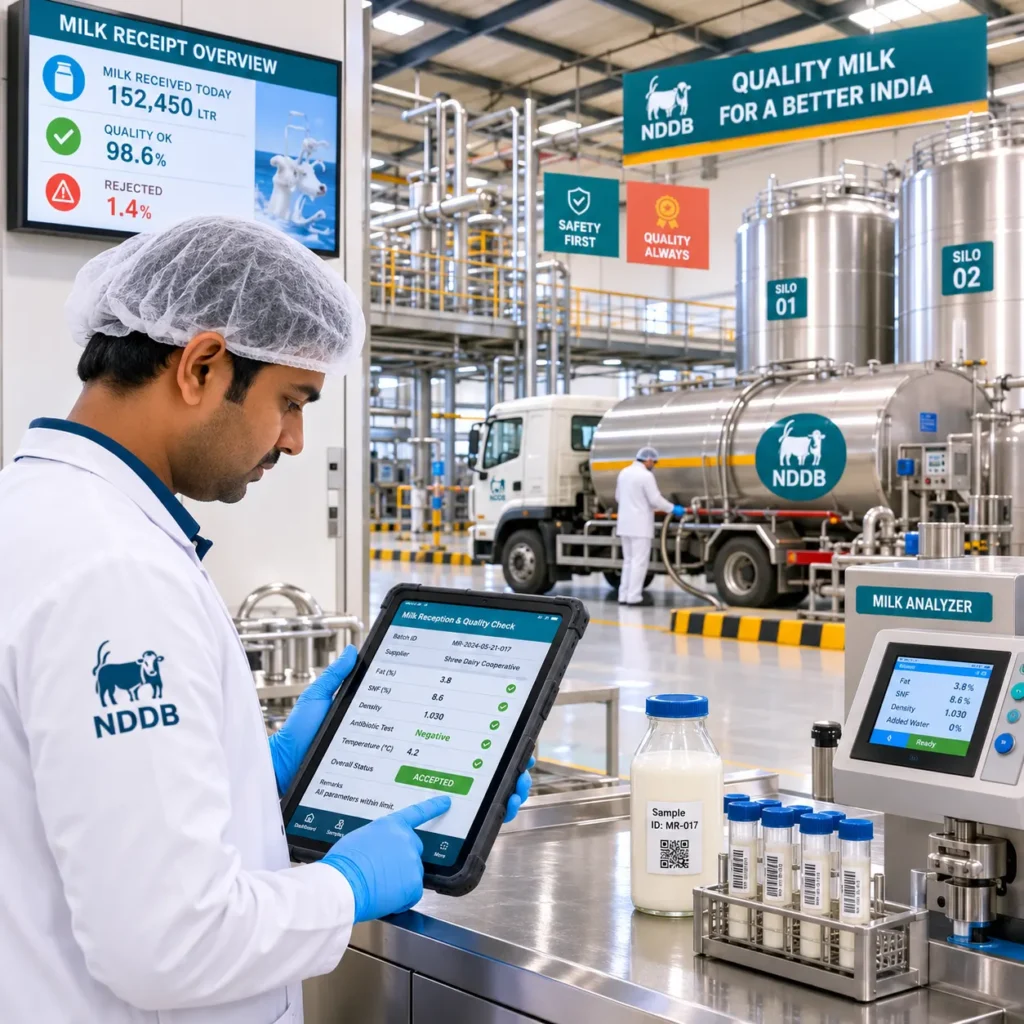
Dairy operations depend on consistency long before milk reaches a consumer. Collection centres, chilling facilities, laboratories, feed plants, warehouses, transport networks, and processing operations all have procedures that influence quality and reliability. For the National Dairy Development Board, AI based SOP analytics and video analytics can connect these activities with practical operational intelligence.
Start With Milk Quality And Process Integrity
For NDDB, one useful AI strategy is to follow the chain from milk collection to processing support rather than treating every facility as an isolated unit.
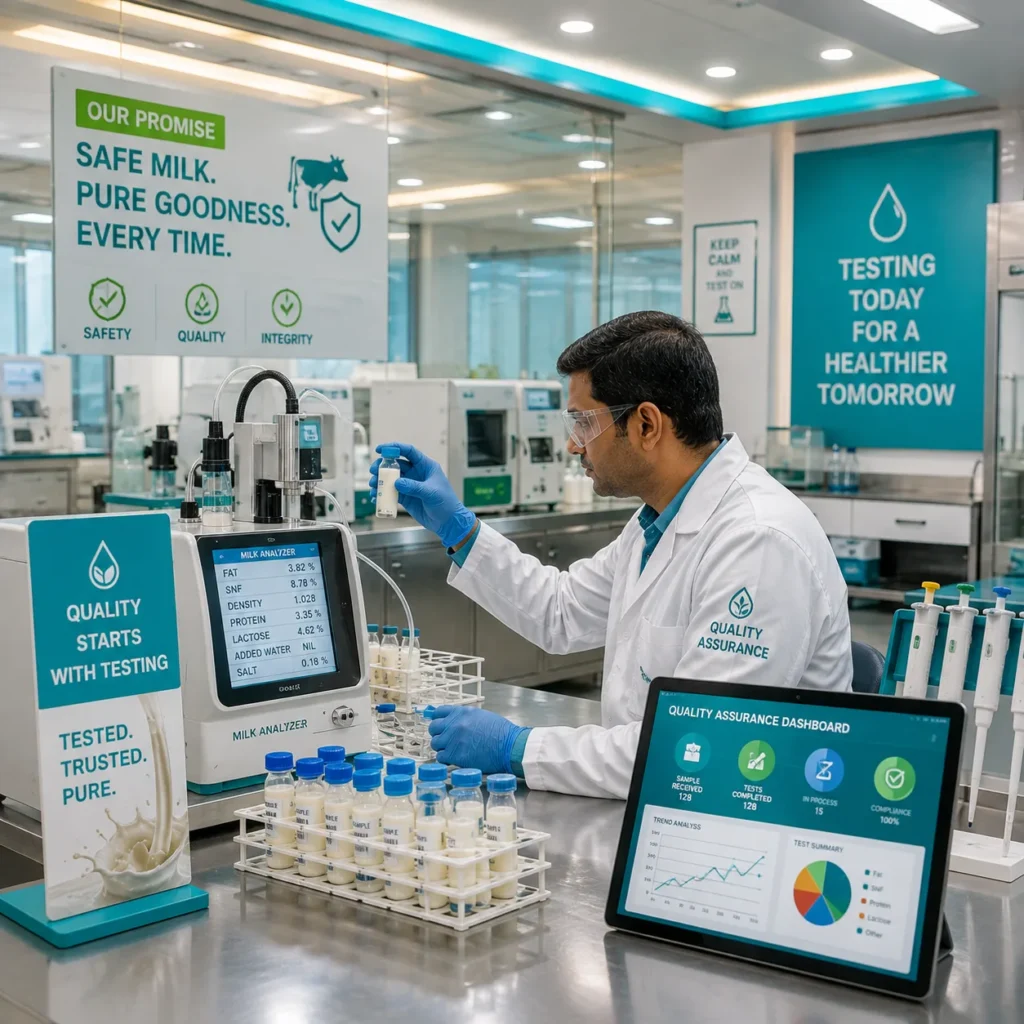
SOP analytics can examine defined procedures around milk reception, sampling, testing, equipment sanitation, chilling, laboratory checks, maintenance, storage, dispatch, and quality-control activities. It can identify recurring deviations in the timing or completion of these procedures.
The objective is to identify repeated weaknesses that could affect quality, productivity, or continuity.
Finding Patterns Across Dairy Operations
A deviation at one collection or processing location may have a local explanation. If the same deviation appears repeatedly across facilities, the issue may indicate a broader training, equipment, workflow, or procedure-design problem.
Analytics can compare exceptions by facility, process stage, equipment category, shift, or operating period. This can help NDDB teams determine whether corrective action should focus on training, maintenance, scheduling, process redesign, or SOP revision.
Video Analytics In Dairy Facilities
Dairy facilities contain physical environments where activity must follow defined safety, hygiene, and access requirements. Video analytics can provide event-based visibility at suitable locations without requiring personnel to watch every camera continuously.
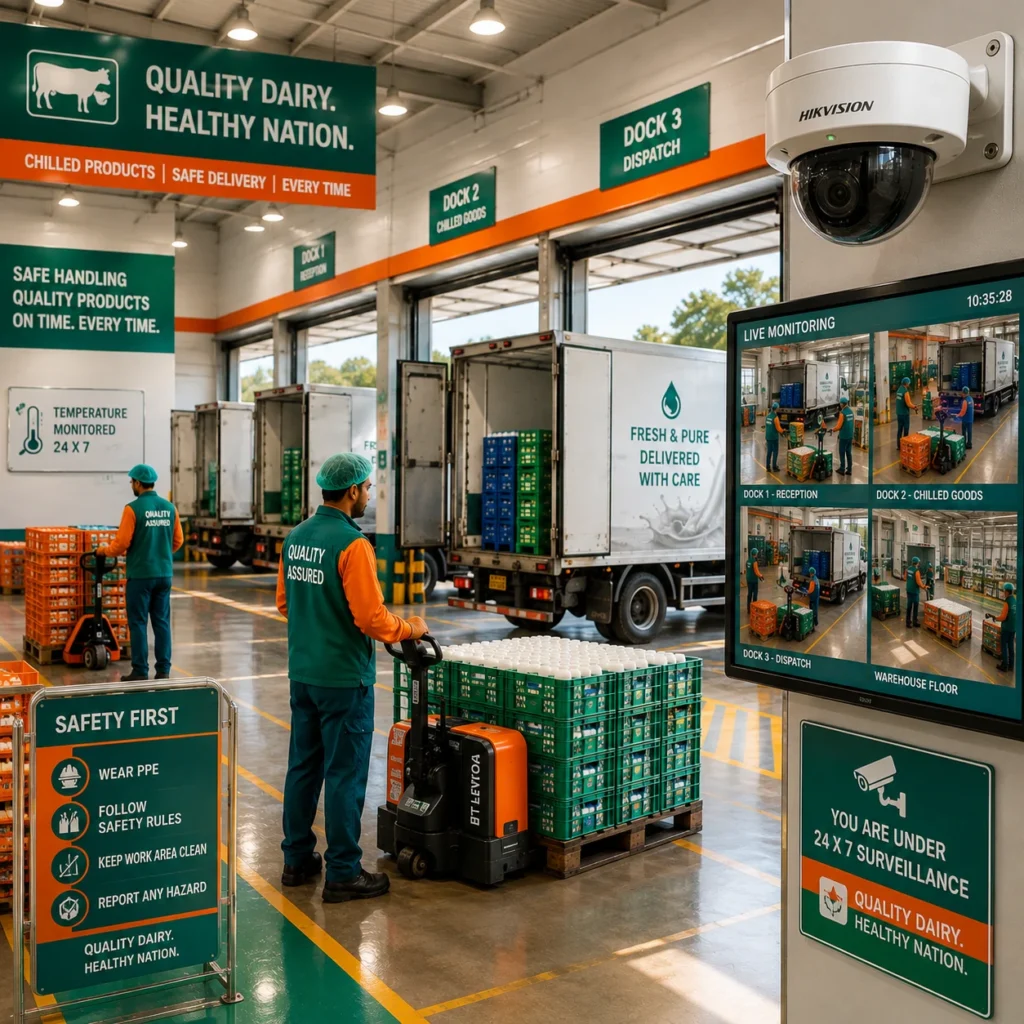
Potential applications include monitoring access to restricted processing or laboratory areas, detecting entry into designated equipment zones, observing movement around loading areas, and supporting investigation of selected safety or operational incidents.
Different locations should use different detection rules because laboratories, reception areas, storage facilities, feed plants, and loading bays present different risks.
Supporting Hygiene And Sanitation Procedures
Hygiene is central to dairy operations, but many sanitation controls depend on repeated procedural discipline.
SOP analytics can track whether defined cleaning, sanitation, inspection, and verification steps are completed according to schedule. It can identify recurring omissions, delayed actions, or corrective measures that repeatedly fail to prevent the same exception.
Video analytics can support selected non-sensitive facility areas by monitoring access to controlled zones or identifying predefined activity around sanitation and equipment areas.
Video should not be treated as a substitute for microbiological testing, laboratory analysis, or formal hygiene verification. Its role is to provide additional operational visibility.
Connecting Equipment Reliability With SOP Performance
Dairy infrastructure depends on pumps, chillers, refrigeration systems, processing equipment, laboratory instruments, vehicles, and other assets. Equipment-related disruption can affect both service continuity and product handling.
AI based SOP analytics can examine preventive-maintenance schedules, inspection records, breakdown reports, work orders, and corrective actions to identify recurring patterns.
If the same equipment category repeatedly generates exceptions shortly after maintenance, the pattern can prompt a deeper technical review. The cause might involve maintenance intervals, operating conditions, spare-parts availability, or an unsuitable procedure.
Improving Cold-Chain Discipline
Temperature-sensitive dairy products require reliable handling through storage and transportation. SOP analytics can examine defined temperature-check procedures, dispatch documentation, equipment inspections, and exception handling where relevant digital records are available.
Video analytics can complement these controls around loading bays, storage entrances, and restricted areas by identifying predefined movement or access events.
A Focused Pilot Can Establish Value
NDDB can begin with one measurable operational problem, such as sanitation-procedure compliance, equipment maintenance exceptions, restricted-area monitoring, cold-chain process discipline, or incident investigation.
The pilot should establish baseline performance and measure outcomes such as fewer repeated SOP deviations, faster corrective-action closure, improved inspection completion, reduced recurring equipment exceptions, or more relevant video alerts.
Governance should cover data access, retention, cybersecurity, privacy, model validation, and human review. Automated findings should support technical teams rather than determine quality, personnel, or regulatory conclusions independently.
For the National Dairy Development Board, AI based SOP analytics and video analytics can create a stronger connection between documented procedures and real-world dairy operations. The value lies in identifying recurring weaknesses early and directing attention to the right facilities and processes.
Extending Analytics Into Feed And Support Operations
NDDB’s broader dairy-development ecosystem includes activities beyond milk handling. Feed manufacturing, animal health support, logistics, and other services can also involve repeatable procedures.
SOP analytics can be adapted to each workflow. In a feed facility, the focus may be on inspection, batching, maintenance, inventory, and dispatch procedures rather than milk handling.
FAQs
It can identify recurring deviations in milk handling, sanitation, maintenance, laboratory, storage, dispatch, and other defined operational procedures.
Yes. It can support selected access, safety, equipment-zone, loading, and incident-monitoring use cases where suitable cameras and governance controls are available.
No. AI analytics can support process monitoring and operational review, but laboratory testing and established quality-control procedures remain essential.
SOP analytics can identify gaps in temperature-check procedures, inspections, documentation, and exception handling, while validated monitoring systems remain responsible for actual temperature measurement