The National Cooperative Consumers’ Federation of India operates where procurement, warehousing, inventory management, distribution, and consumer-facing sales must remain connected. Its work can involve agricultural commodities, cooperative channels, branch operations, warehouses, and retail outlets. When goods move through several hands and locations, the difficult question is not simply whether stock was purchased or sold, but whether every stage was executed according to the required process. AI based SOP analytics and video analytics can help NCCF strengthen that chain of control.
Follow The Commodity, Not Just The Transaction
For NCCF, a useful AI strategy is to follow a commodity through its operational lifecycle. Procurement creates one set of controls; transportation, warehousing, stock verification, auction or sale, and final delivery create others.
AI based SOP analytics can examine purchase records, supplier documentation, warehouse records, stock statements, inspection reports, sales records, delivery acknowledgements, corrective actions, and other available data.
The system can identify where process exceptions repeatedly occur rather than treating each exception as an isolated audit observation.

Turning Audit Observations Into Patterns
NCCF’s internal audit framework already places attention on areas such as stock records, godown and stock, shortages and excesses, purchase and sales registers, supplier records, pricing, and supporting delivery documentation.
AI can extend this approach by identifying repetition.
If similar stock discrepancies appear at a particular location, if old or damaged stock remains unresolved, or if documentation exceptions repeatedly occur during a specific type of transaction, analytics can highlight the pattern for management review.
Human audit and management teams should determine the reason and appropriate action
Procurement Needs A Different Analytical Lens
Agricultural procurement involves procurement centres, warehouses, transporters, payments, and subsequent distribution. Each stage can create delays or data inconsistencies.
SOP analytics can examine whether registration, procurement documentation, weighing, quality-related checks, stock entry, payment processing, transportation, and warehouse procedures are completed according to defined requirements.
For commodities procured for price-support or market-intervention purposes, analytics can help identify unusual delays or recurring process exceptions across locations.
This can support procurement teams in deciding where additional verification or operational attention is warranted.
Video Analytics Inside Warehouses And Retail Operations
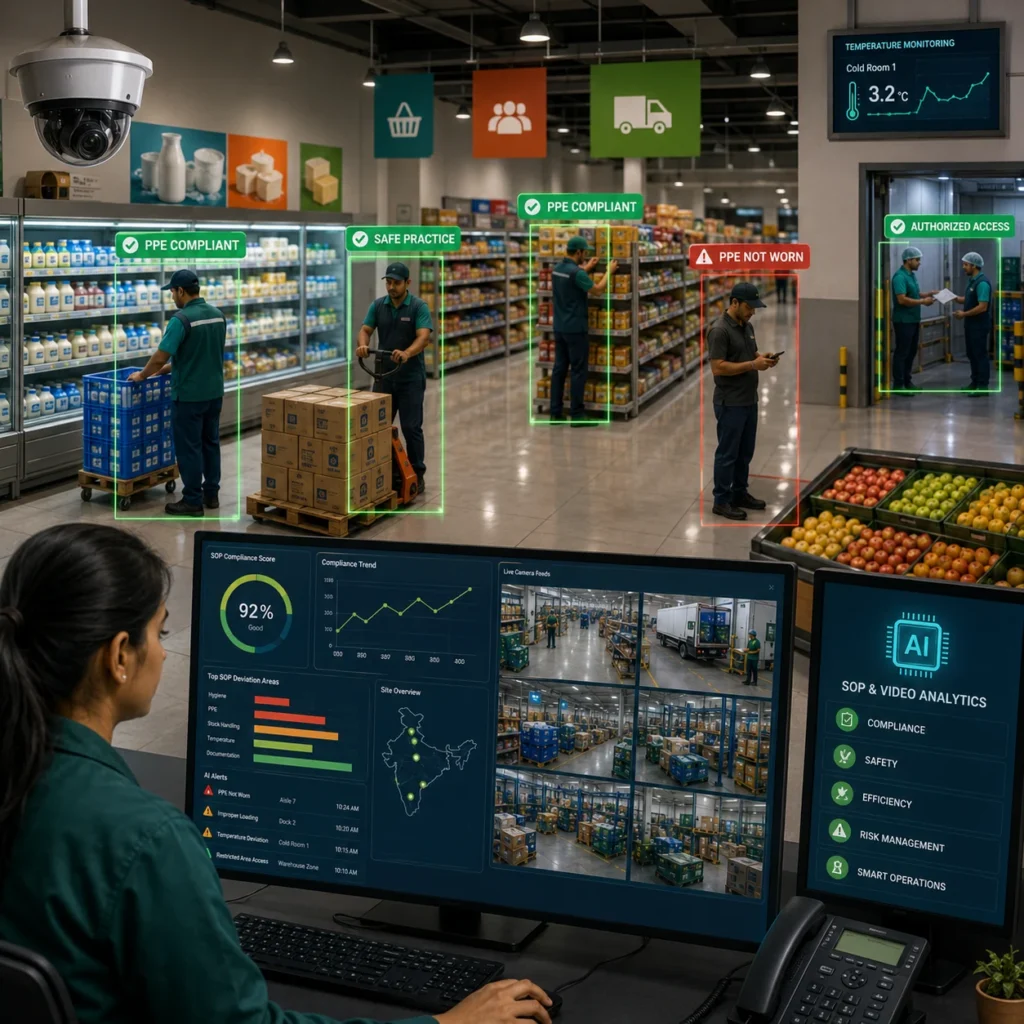
Video analytics adds a physical layer to NCCF’s records. Warehouses, godowns, loading areas, and retail outlets contain activity that cannot always be understood from transaction data alone.
At suitable locations, video analytics could identify predefined events such as unauthorised access, restricted-area movement, unusual loading-zone activity, or vehicle movement during dispatch.
In retail outlets, applications could focus on access-controlled areas, stockrooms, or selected security events rather than indiscriminate monitoring of customers.
The objective is event-based visibility that helps staff investigate relevant situations faster.
Stock Reconciliation Can Become Proactive
Stock discrepancies are especially important because they can emerge between physical handling and recorded transactions.
SOP analytics can compare stock records, physical verification results, receipts, issues, transfers, sales, and other available information to identify recurring differences.
Video analytics can provide supporting context when a discrepancy requires investigation. Relevant footage may help teams review loading, unloading, movement, or access around a particular period.
Video evidence should remain supporting information. It cannot by itself establish the reason for a stock difference.
Protecting Old, Damaged, And Sensitive Inventory
Another potential use is identifying recurring delays in the disposal or resolution of old and damaged stock. Analytics can flag items that remain in a pending state beyond defined timelines and identify locations where such cases repeatedly accumulate.
This can help management investigate storage capacity, disposal procedures, documentation, or decision-making bottlenecks.
Bringing Branches Into A Common Improvement Framework
NCCF operates through branch offices in different parts of India, making consistency an important management issue. AI based SOP analytics can compare process performance across branches while accounting for differences in business volume and operating conditions.
A branch with a high number of exceptions is not automatically underperforming. Analytics should consider transaction volume, commodity mix, storage capacity, and other contextual factors.
The useful outcome is identifying branches or workflows where recurring patterns justify support, training, redesign, or closer review.
A Focused Pilot Can Strengthen Control
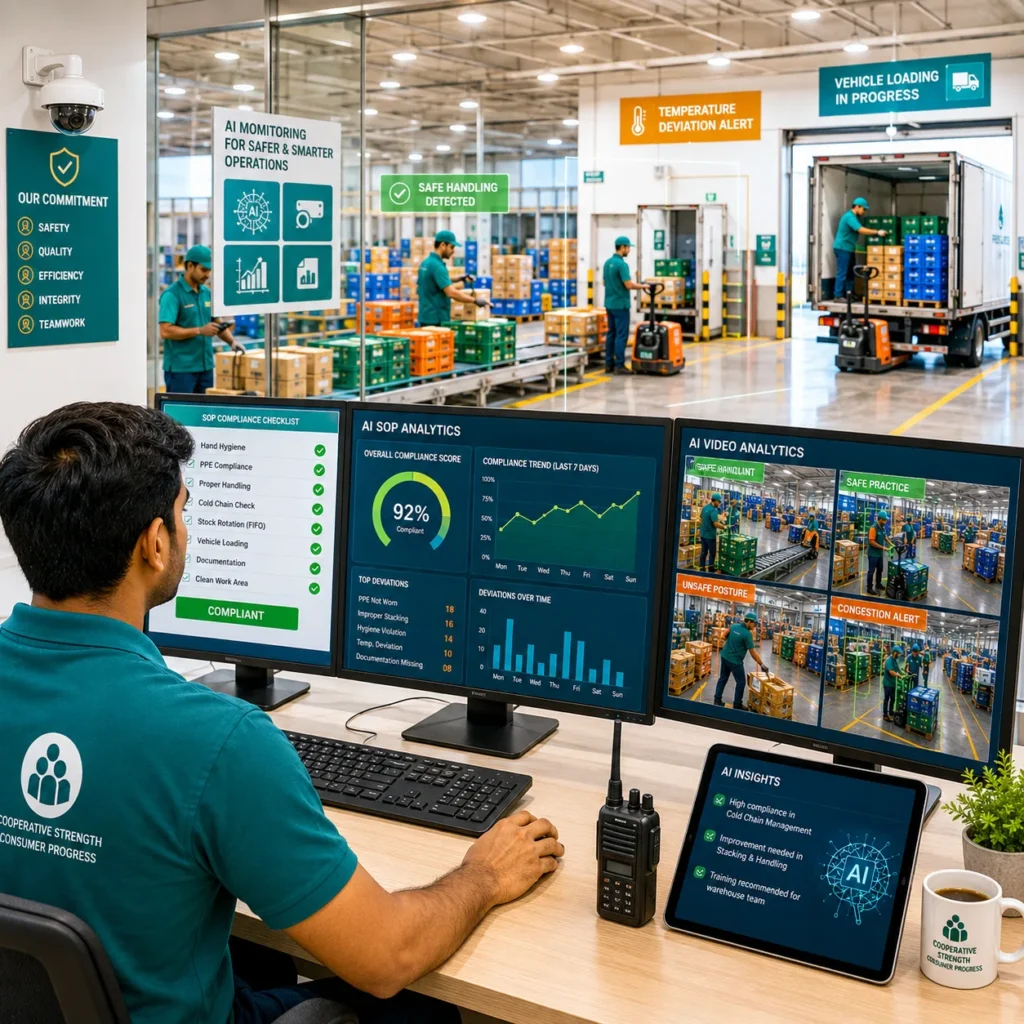
NCCF can begin with one measurable workflow, such as stock reconciliation, procurement documentation, warehouse access, dispatch procedures, or recurring audit observations.
The pilot should establish baseline performance and track indicators such as fewer repeated discrepancies, faster corrective-action closure, improved documentation compliance, reduced investigation time, and useful video-alert accuracy.
Data governance should be built into the programme, including access controls, retention, cybersecurity, auditability, privacy, and human review.
For the National Cooperative Consumers’ Federation of India, AI based SOP analytics and video analytics can complement audit and operational systems by connecting transaction records with physical activity. The value lies in finding weaknesses earlier, directing verification to the right locations, and strengthening accountability across procurement, storage, distribution, and retail operations.
FAQs
It can identify recurring differences, delayed reconciliations, incomplete records, and repeated corrective actions across warehouses, branches, and retail operations.
Yes. It can analyse defined procurement workflows and highlight recurring documentation, timing, payment, stock-entry, or transportation exceptions for human review.
It can help locate relevant visual events around loading, unloading, storage access, or vehicle movement, provided suitable camera coverage exists.
Yes. Analytics can compare recurring process patterns across branches while accounting for differences in transaction volume, commodity mix, and operating conditions.
A focused pilot around stock reconciliation, procurement documentation, warehouse access, or recurring audit observations can provide measurable results before wider implementation.