For a mining organisation operating across numerous mines, subsidiaries, heavy equipment fleets, haul roads, workshops, coal-handling facilities, and other industrial locations, maintaining consistent safety practices is a complex operational task. Coal India Limited (CIL) can use AI-based SOP analytics and video analytics to strengthen this process by turning visual observations into real-time safety and operational insights.
CIL’s scale makes continuous monitoring particularly relevant. The company’s operational systems already provide centralised visibility into production and subsidiary-level performance, with current dashboards tracking production and offtake across CIL and its subsidiaries.
From Safety Rules To Continuous Monitoring
Safety procedures are effective only when they are consistently followed at the worksite. Conventional inspections, supervisory checks, and CCTV review remain important, but they cannot always provide continuous observation across large mining environments.
AI-based SOP analytics can add a monitoring layer by checking selected activities against predefined rules. Instead of simply recording an event, the system can identify whether a specified safety condition is being followed and generate an alert when a deviation occurs.
For CIL, relevant areas may include:
- PPE compliance in designated work zones
- Entry into restricted or hazardous areas
- Worker presence near operating heavy machinery
- Safe-distance requirements around mobile equipment
- Vehicle movement within defined zones
- Compliance with selected maintenance procedures
- Housekeeping conditions that create identifiable hazards
Video Analytics Across Mining Operations
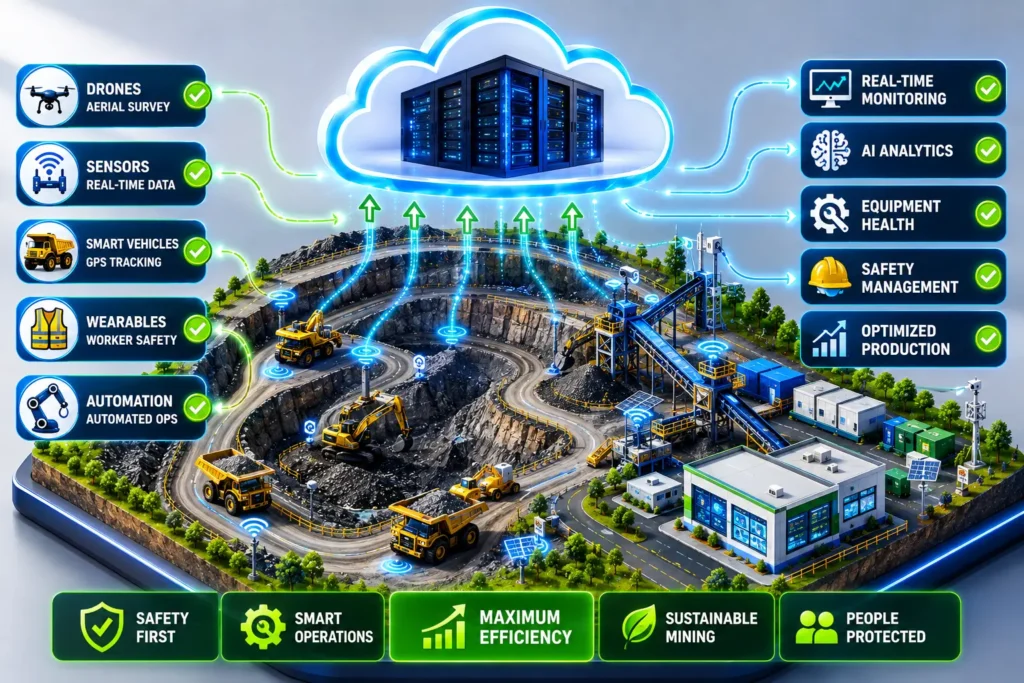
Video analytics can transform existing surveillance infrastructure into an active monitoring system. Computer vision can analyse camera feeds and identify people, vehicles, equipment, movement patterns, and predefined events.
Open-Cast Mining
Large open-cast mines contain extensive operating areas where manual observation can be difficult. AI-enabled cameras can monitor haul roads, excavation zones, loading points, dumping areas, and access routes for predefined safety conditions.
Coal Handling And Conveyors
Video analytics can keep an eye on specific conveyor corridors, transfer points, and access locations in coal-handling plants. It can detect the presence of people in restricted areas, obvious obstacles, or other circumstances that the operating team specifies.
Workshops And Maintenance Areas
Maintenance activities often involve equipment isolation, controlled access, and interaction between workers and machinery. AI monitoring can support compliance with selected exclusion-zone and PPE requirements.
A Different Layer Of Safety Intelligence
The main advantage of combining SOP analytics with video analytics is the ability to connect an observed event with an operational rule.
Observation | AI Interpretation | Possible Response |
Worker without required PPE | SOP deviation | Notify supervisor |
Person enters exclusion zone | Safety event | Trigger control-room alert |
Vehicle approaches restricted area | Traffic-risk condition | Escalate warning |
Worker near moving equipment | Proximity event | Immediate intervention |
Obstruction in monitored area | Visual anomaly | Inspection request |
Repeated SOP violations | Recurring pattern | Targeted safety review |
Connecting AI With Existing CIL Systems
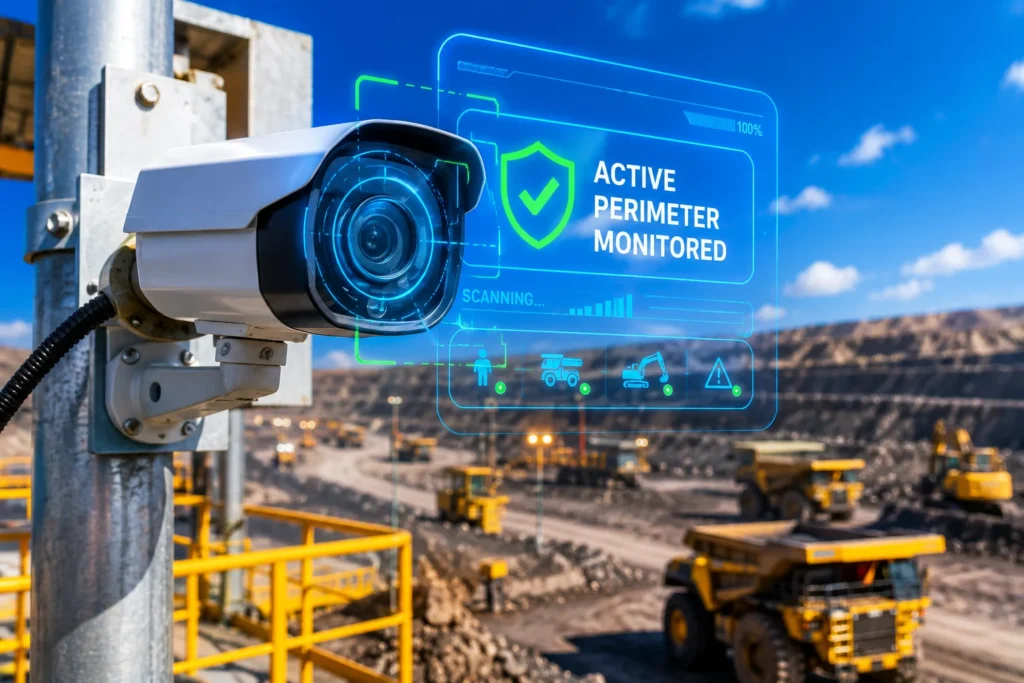
Video analytics should not operate as an isolated CCTV application. Its value increases when visual events can be connected with other operational information.
A possible architecture could link camera analytics with:
- Mine monitoring systems
- Access-control platforms
- Equipment and fleet-management systems
- Sensor and telemetry data
- Maintenance applications
- Safety incident-management platforms
- Centralised dashboards and command centres
CIL already maintains digital operational dashboards that consolidate production and offtake information across the organisation.
Prioritising High-Value Applications
CIL does not need to deploy every possible AI capability simultaneously. A focused implementation can produce clearer results and make model validation easier.
Phase 1: Identify Critical Scenarios
Map high-risk activities and determine which SOP deviations can be reliably detected through cameras.
Phase 2: Validate The Technology
Test selected models under actual mining conditions, including dust, rain, glare, night operations, changing camera angles, and partial visibility.
Phase 3: Connect Alerts To Action
An alert is useful only when someone knows what to do with it. Each event should have a defined owner, escalation path, response time, and recording mechanism.
Phase 4: Expand Based On Evidence
After measuring accuracy and operational value at pilot locations, successful use cases can be extended to other mines and subsidiaries.
What CIL Can Measure
The success of an AI analytics programme should be evaluated through measurable outcomes rather than the number of cameras installed.
Useful indicators include:
- SOP deviation frequency
- Safety-alert response time
- False-alert rate
- Repeated violation frequency
- Time required for incident investigation
- Manual surveillance workload
- Number of high-risk events identified before escalation
- Corrective-action closure time
Beyond Alerts: Learning From Repeated Deviations
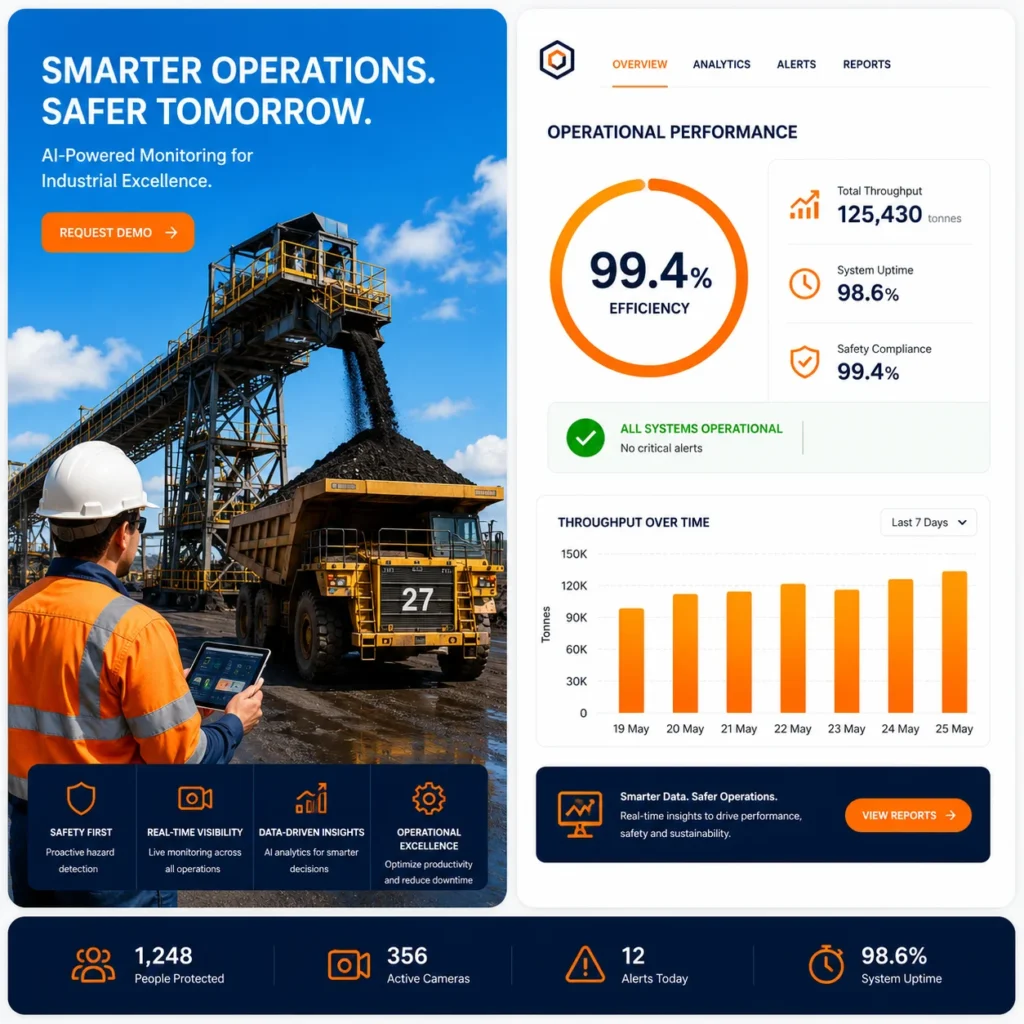
One of the more valuable applications of AI-based SOP analytics is the analysis of recurring behaviour.
Suppose the same safety deviation occurs repeatedly in a particular location or during a specific activity. Instead of treating every occurrence as an independent incident, analytics can reveal the pattern. CIL can then investigate whether the underlying cause relates to worksite design, training, equipment positioning, procedure clarity, supervision, or another operational factor.
Frequently Asked Questions
It is the use of AI to analyse operational or visual information against predefined safety and operating procedures and identify potential deviations.
It can continuously monitor selected locations for PPE violations, restricted-area entry, unsafe proximity, vehicle movement, and other predefined conditions
In many cases, existing cameras may be usable, but suitability depends on resolution, positioning, lighting, connectivity, and the specific analytics model. Some locations may require upgraded equipment.
Yes. Computer vision can detect vehicles, track movement, and identify selected proximity or zone-related events. Integration with fleet or location data can provide additional context
No. AI should function as a monitoring and decision-support layer. Safety officers and supervisors should validate important events, determine corrective actions, and remain responsible for safety decisions.