At a tertiary academic medical centre such as the All India Institute of Medical Sciences, patient care is only one part of a much larger operating system. Emergency services, laboratories, operating areas, infection control, biomedical waste, central sterile services, engineering, security, transport, and support facilities must function together. When one procedural step is missed, the effect can extend beyond a single department. AI based SOP analytics and video analytics can help AIIMS strengthen these operational links while keeping clinical decisions firmly with qualified professionals.
The Patient Journey Reveals Where Processes Intersect
A useful AI strategy for AIIMS can be built around operational control points rather than individual departments.
A patient may move through registration, diagnostics, treatment, admission, procedure, discharge, and follow-up. Around that journey are supporting processes involving equipment readiness, infection prevention, cleaning, waste segregation, and facility management.
AI based SOP analytics can examine the procedures behind these activities and identify where execution repeatedly differs from the defined process.
It can analyse suitable records such as checklists, inspection reports, maintenance logs, incident reports, corrective actions, laboratory workflow data, and facility audits.
Distinguishing A One-Time Exception From A Systemic Gap
A missed step does not automatically indicate poor performance. The underlying reason may be workload, resource availability, unclear responsibility, equipment downtime, or a procedure that is difficult to execute under actual conditions.
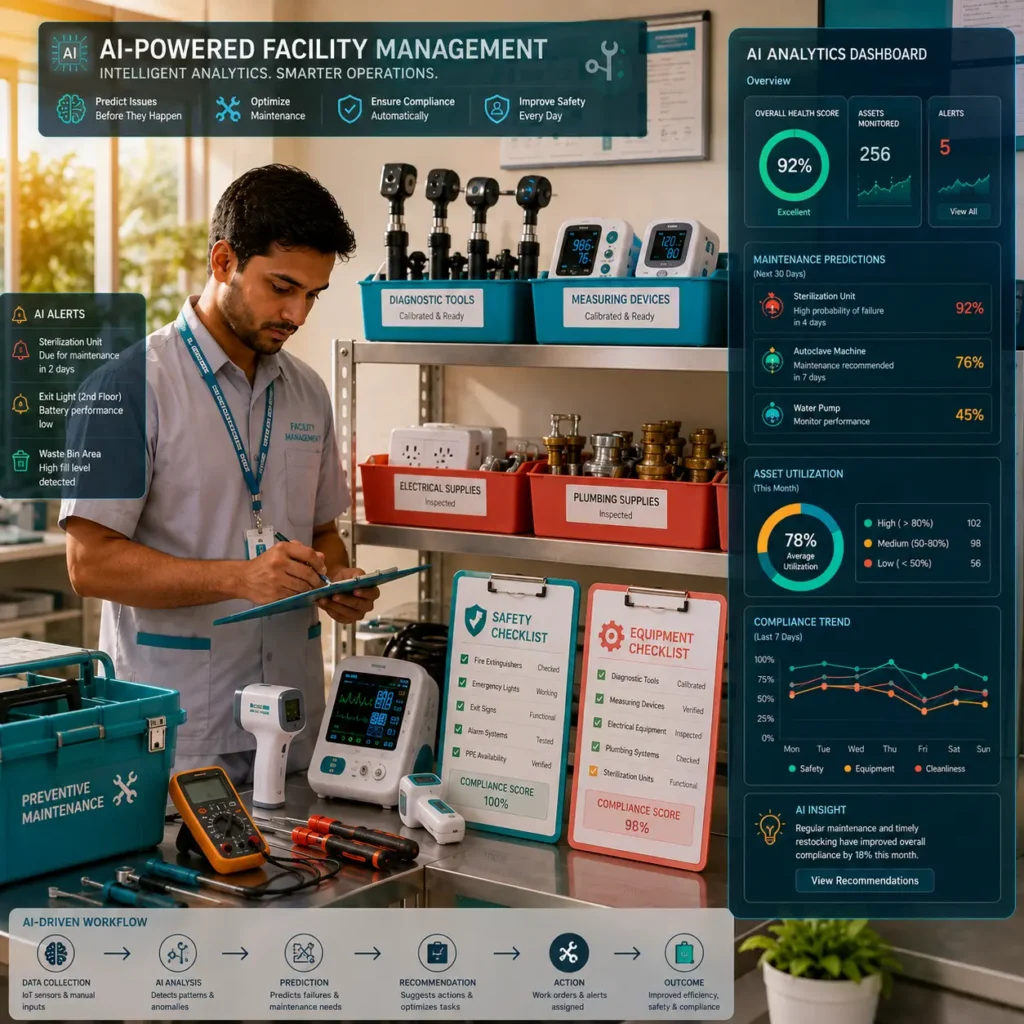
Analytics can compare deviations by department, facility, shift, activity, or process stage. This helps administrators decide whether the response should involve training, workflow redesign, maintenance, or SOP revision.
Infection Control Is A Process Discipline
Infection prevention depends on repeated behaviours rather than one-time interventions. Hand hygiene, environmental cleaning, disinfection, biomedical waste segregation, spill management, and other procedures require consistency across clinical and support areas.
AI based SOP analytics can identify recurring gaps in documented inspections, training, checklists, corrective actions, and compliance reviews. It can also highlight whether the same category of issue repeatedly reappears after corrective action.
Video analytics can complement this only in carefully selected non-clinical or controlled environments. It could support monitoring of restricted access, defined movement conditions, or selected operational events around waste-handling and facility areas.
Patient privacy must remain a fundamental design constraint. Video analytics should not be used to indiscriminately monitor clinical interactions or make automated judgments about patients.
Making Biomedical Waste Management More Observable
Biomedical waste handling is particularly suited to process-based analytics because it involves defined stages, responsibilities, and safety requirements.
SOP analytics can examine whether segregation, collection, internal transportation, temporary storage, documentation, and related procedures are completed according to established requirements. Repeated deviations can be categorised by location, activity, time period, or workflow stage.
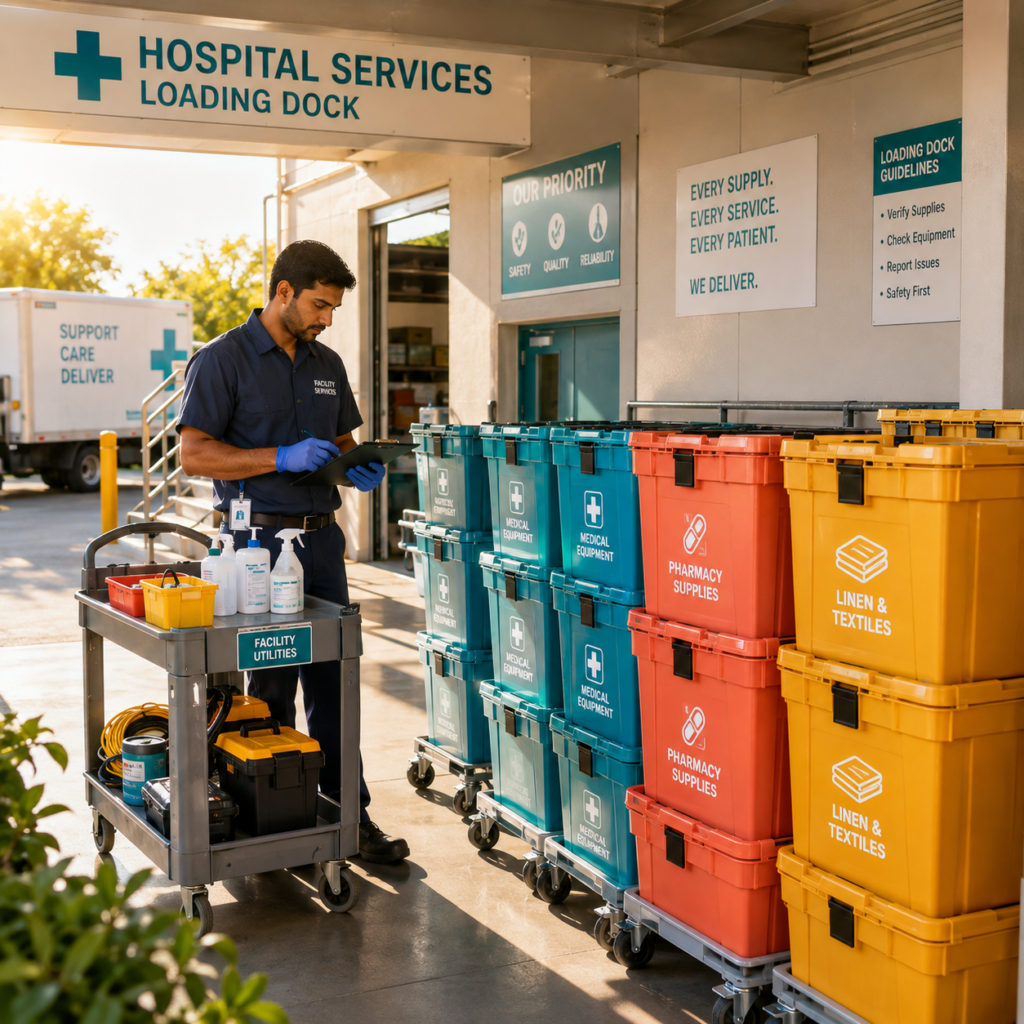
Video analytics can provide additional operational visibility around designated waste collection points, storage areas, and controlled access locations. It may identify predefined events such as unauthorised access or movement in restricted areas.
The technology should support existing biomedical waste procedures, not replace statutory controls.
Supporting Emergency Readiness
Emergency departments operate under changing patient volumes and priorities. SOP analytics can examine equipment readiness, support-service response, inspection completion, escalation, and other defined non-clinical workflows.
Video analytics can support selected areas through controlled-access monitoring, vehicle movement, or defined crowd-density events. Alerts should be reviewed by authorised personnel rather than treated as automatic conclusions.
Using Video Analytics Around Facilities
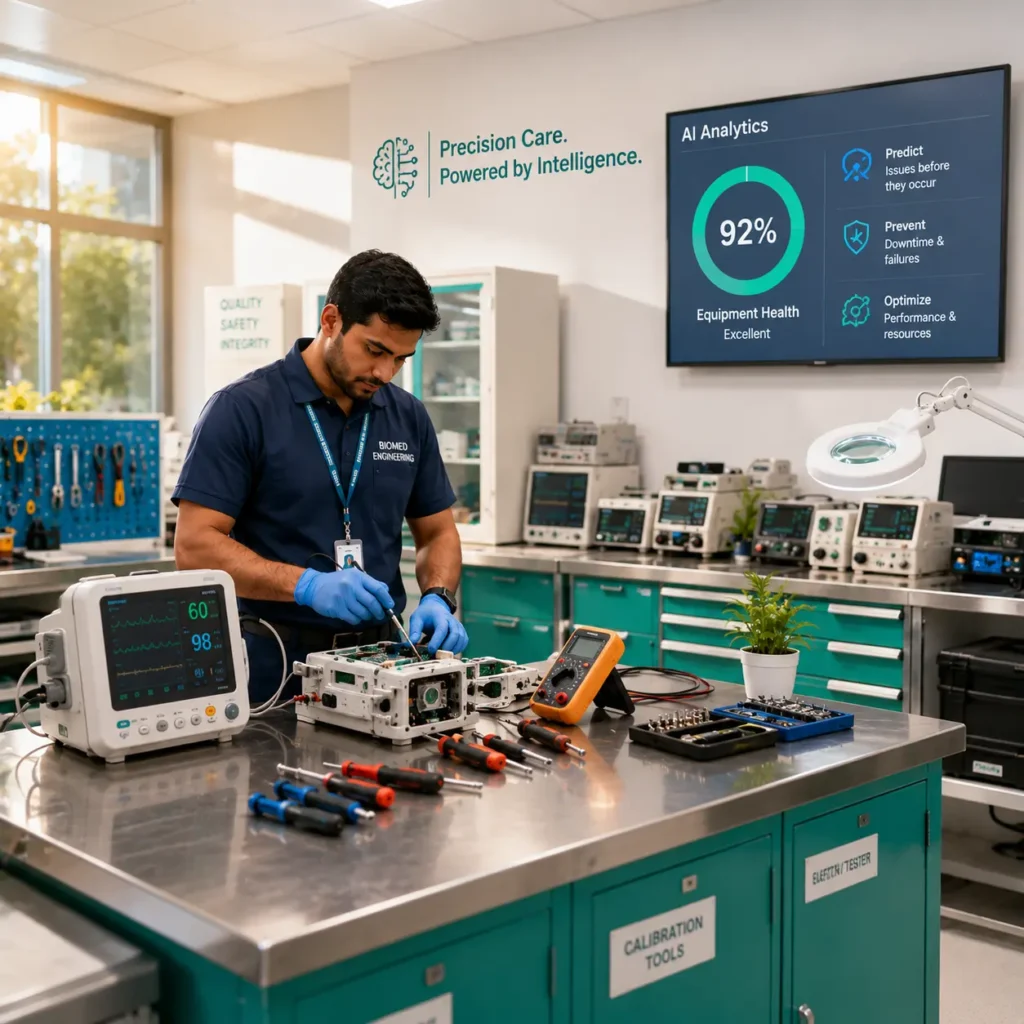
Laboratories, engineering areas, workshops, storage spaces, and access-controlled locations can use different video rules. Depending on the site, analytics may focus on restricted access, movement near equipment zones, storage access, or defined security events
Turning Corrective Actions Into Measurable Improvement
Hospitals conduct inspections and identify deficiencies, but closing an action does not always mean the underlying problem has disappeared.
AI based SOP analytics can track whether corrective actions are completed within defined timelines and whether similar deviations recur afterward. This creates an opportunity to evaluate the effectiveness of interventions rather than measuring closure alone.
Administrators can prioritise issues according to recurrence, operational impact, and risk category, directing attention to persistent problems.
A Controlled Path To AI Adoption
AIIMS can begin with a narrowly defined operational use case such as biomedical waste process compliance, facility access monitoring, corrective-action tracking, or selected emergency-support workflows.
The pilot should measure repeated SOP deviations, corrective-action closure, inspection completion, incident review time, and video-alert relevance.
Healthcare AI also requires strong governance. Role-based access, data minimisation, retention controls, cybersecurity, audit trails, privacy safeguards, and human review should be established before scaling.
For AIIMS, the strongest value of AI based SOP analytics and video analytics lies in strengthening the operational system surrounding patient care. By identifying recurring process gaps and providing targeted visibility into physical environments, AI can help hospital leaders improve consistency, safety, readiness, and accountability without displacing clinical expertise.
FAQs
It can identify recurring deviations in defined administrative, safety, maintenance, infection-control, facility, and support workflows.
Yes, for carefully defined operational and security purposes, provided privacy, access control, data protection, and human-review requirements are built into the system
SOP analytics can identify recurring gaps in segregation, collection, storage, documentation, and related processes, while video analytics can support selected access and facility-monitoring use cases
It can support selected non-clinical workflows such as readiness checks, facility access, crowd management in designated areas, and support-service coordination. Clinical decisions should remain with healthcare professionals.
A focused pilot around one measurable operational issue, such as corrective-action management, biomedical waste compliance, or restricted-area monitoring, can establish value before broader implementation.