Delhi Metro Rail Corporation (DMRC) operates a complex urban transport system where passenger safety, train operations, station management, maintenance, security, and construction activities must function together. Its existing environment already includes extensive CCTV surveillance, automated metro systems, simulators, and technology-focused training.
AI-based SOP analytics and video analytics can add another layer of operational awareness. The objective is to identify defined situations that need attention and give authorised personnel better information.
Where AI Can Fit Into Metro Operations
Location | Potential Analytics | Purpose |
Stations | Crowd and restricted-area detection | Passenger safety |
Platforms | Unusual movement monitoring | Risk reduction |
Depots | PPE and equipment-zone monitoring | Maintenance safety |
Construction Sites | Worker and vehicle monitoring | Contractor safety |
Control Areas | Unusual activity detection | Operational security |
Each application can be configured according to the conditions of the particular location
Passenger Areas: Identifying Events That Need Attention
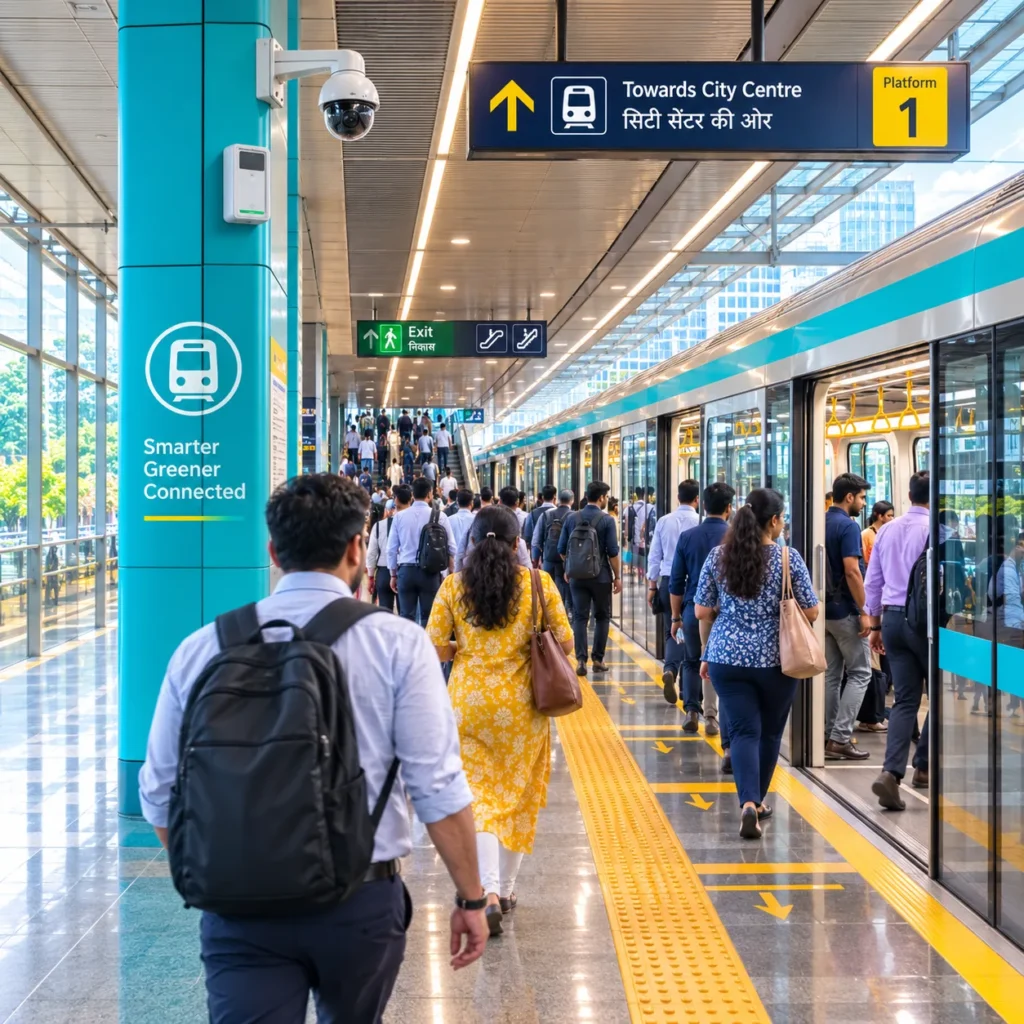
Stations generate large amounts of visual information, particularly during peak periods. Crowd movement can change quickly, while an unattended object, restricted-area entry, or unusual gathering may require intervention.
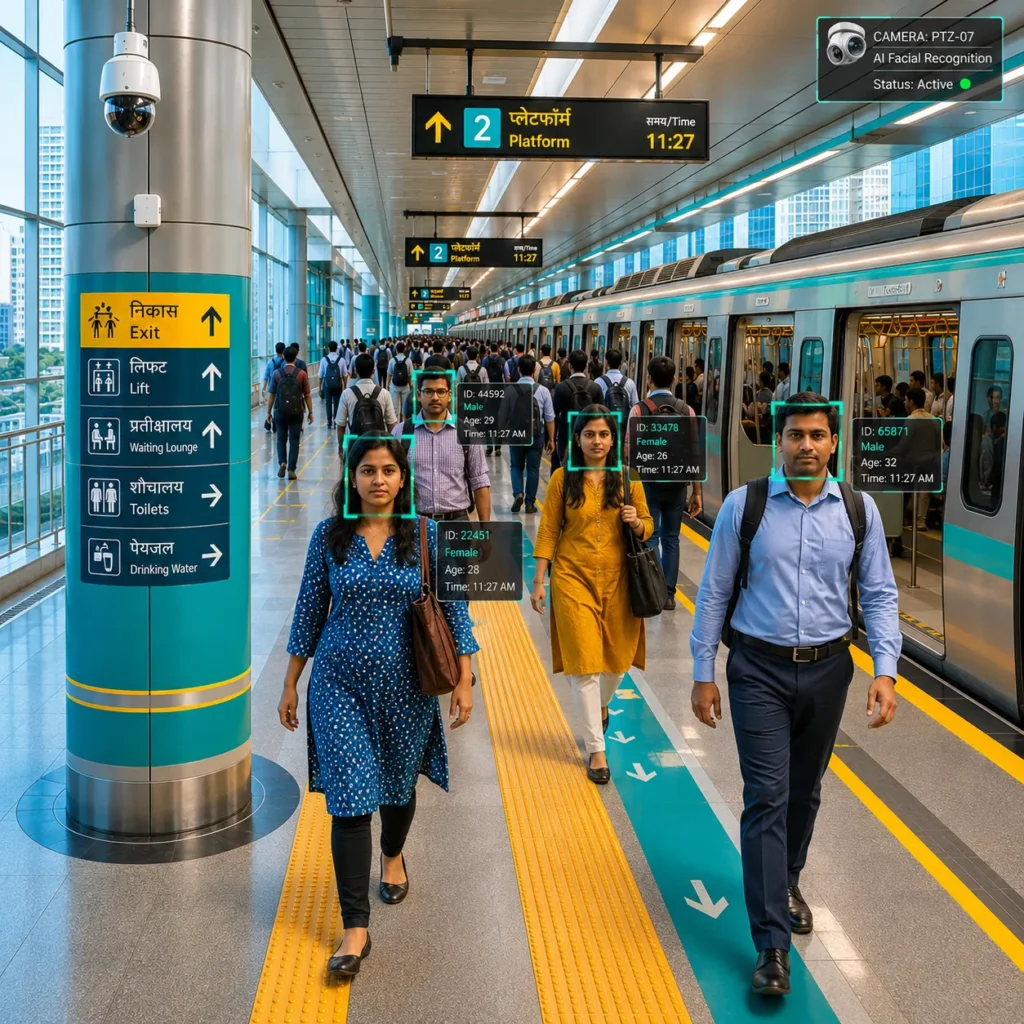
Video analytics can identify predefined conditions such as unusual crowd concentration, people entering controlled areas, objects left in monitored locations, or movement in areas that should remain clear.
The system can highlight events for station controllers, security personnel, or other authorised teams to assess.
Maintenance Areas: Linking SOPs With Visual Monitoring
DMRC maintenance teams work across rolling stock, track, signalling, electrical systems, escalators, communications, and station infrastructure. Selected SOP requirements can be converted into visual rules.
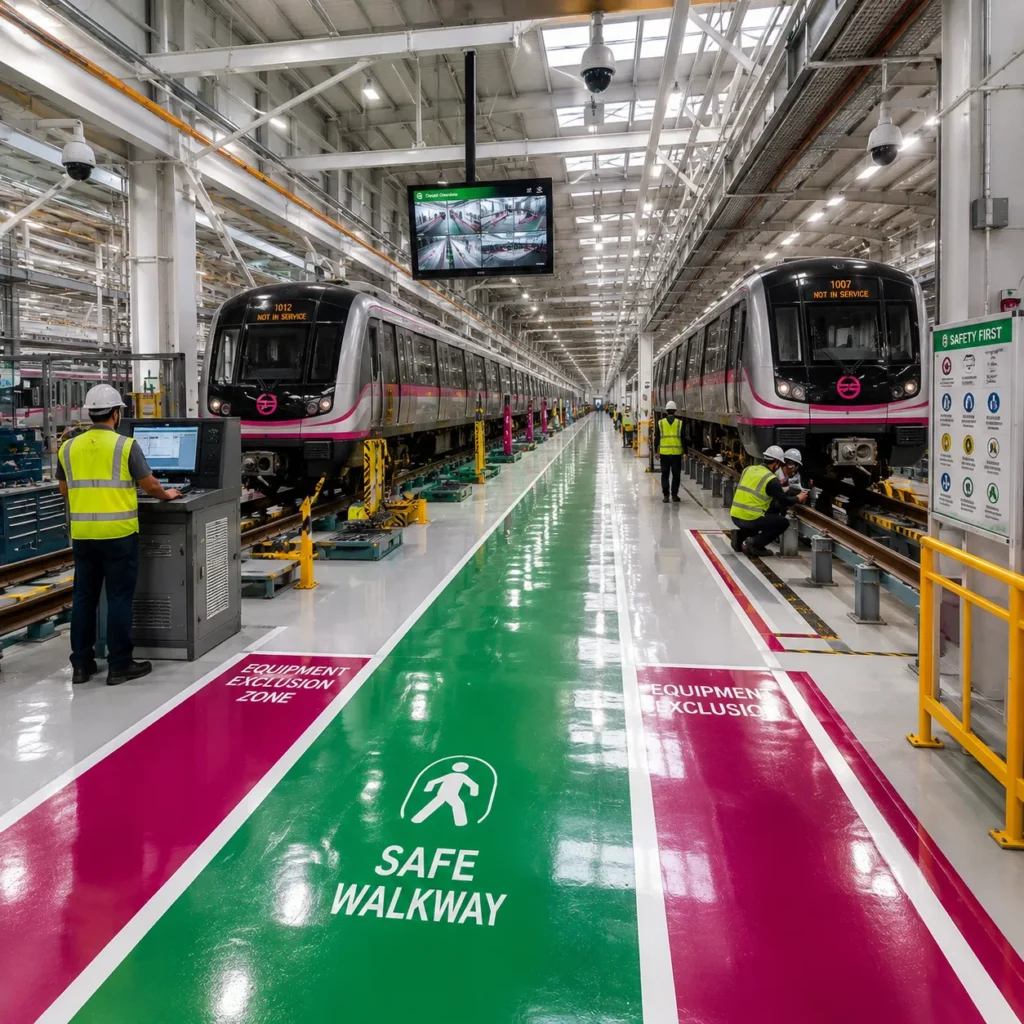
Potential applications include PPE, equipment exclusion zones, authorised maintenance access, worker proximity to moving equipment, access-route obstructions, and depot vehicle movement.
If a maintenance procedure requires an area to remain clear, video analytics can monitor the defined zone and flag a potential deviation. It should not attempt to determine whether a complex technical repair has been correctly performed.
Why Depots Are Suitable For Early Deployment
Depots provide a more controlled environment than busy passenger stations. Equipment locations, access permissions, work schedules, and maintenance activities can often be defined more clearly.
A pilot could focus on worker-equipment interaction, PPE compliance, restricted maintenance zones, and vehicle movement.
Repeated alerts can then be reviewed to determine whether they are caused by training, supervision, workflow, or site design. This makes depot analytics useful not only for immediate intervention but also for improving maintenance practices.
Construction Sites Require A Separate Approach
Metro expansion involves tunnelling, viaduct construction, station development, track work, and utility activities. These sites involve contractors, heavy machinery, temporary barriers, and constantly changing work zones.
AI can support selected construction-safety requirements, including:
- PPE detection
- Worker entry into restricted zones
- Worker-equipment proximity
- Vehicle movement
- Temporary work-area monitoring
- Obstruction detection
Because site layouts change, analytics models and camera coverage should be reviewed as construction progresses.
Context Determines The Importance Of An Alert
A person detected inside a restricted area is not necessarily committing a violation. The individual may be authorised maintenance staff working under an approved permit.
DMRC can improve alert quality by connecting video events with relevant information such as access permissions, work permits, maintenance schedules, equipment status, station conditions, and emergency notifications.
This can reduce unnecessary escalation and help operators focus on important events
From CCTV Evidence To Operational Learning
Video analytics can also improve incident investigation. Instead of manually searching through hours of footage, authorised personnel can locate recordings using time, location, movement, or predefined event categories.
The resulting information can help investigate passenger incidents, maintenance events, security situations, and construction-site occurrences.
Repeated events can reveal wider problems. Recurring crowding may indicate a passenger-flow issue, while maintenance-zone violations could point to access arrangements or training
Governance Should Be Built Into The Deployment
A metro system handles significant volumes of passenger and operational video. AI deployment should therefore incorporate:
- Role-based access
- Secure network architecture
- Data-retention controls
- Audit trails
- Cybersecurity testing
- Appropriate privacy safeguards
- Controlled system integration
- Human validation of significant alerts
AI-generated events should remain decision-support information. Safety-critical and security-sensitive decisions should stay with authorised DMRC personnel
Measuring Practical Results
The programme should be evaluated through outcomes, not camera count.
Useful indicators include:
- Recurring SOP deviations
- PPE compliance
- Restricted-area events
- Worker-equipment proximity incidents
- Alert response time
- False-positive rate
- CCTV investigation time
- Contractor corrective-action closure
For DMRC, AI-based SOP analytics and video analytics can complement its existing CCTV, automation, training, and digitalisation. A combination of passenger-area monitoring, depot safety, maintenance analytics, and construction-site surveillance can improve operational visibility while keeping professional judgement at the centre of metro safety.
Frequently Asked Questions
Yes. Depots provide controlled environments for monitoring PPE, restricted maintenance zones, worker-equipment interaction, and vehicle movement.
It can identify predefined conditions such as unusual crowd concentration, restricted-area entry, or objects left in monitored areas for human assessment.
Yes. It can monitor selected conditions involving PPE, work-zone boundaries, heavy equipment, vehicles, and temporary restricted areas.
Potentially. Linking video events with access permissions or work-permit information can provide context and distinguish authorised activity from genuine exceptions.