Deendayal Port Authority (DPA) operates a complex maritime environment where cargo movement, vessel operations, road traffic, industrial activity, maintenance work, security, and workforce safety overlap. In such a setting, even a small procedural deviation can create wider operational consequences.
AI-based SOP analytics and video analytics can help DPA move from observation-based surveillance toward event-focused monitoring. The technology can examine live or recorded video for predefined conditions, highlight exceptions, and provide supervisors with information that can support timely intervention.
A Port-Wide View Of Operational Risk
The value of AI at DPA can be considered through the different activities taking place across the port rather than through individual camera feeds.
Cargo And Yard Operations
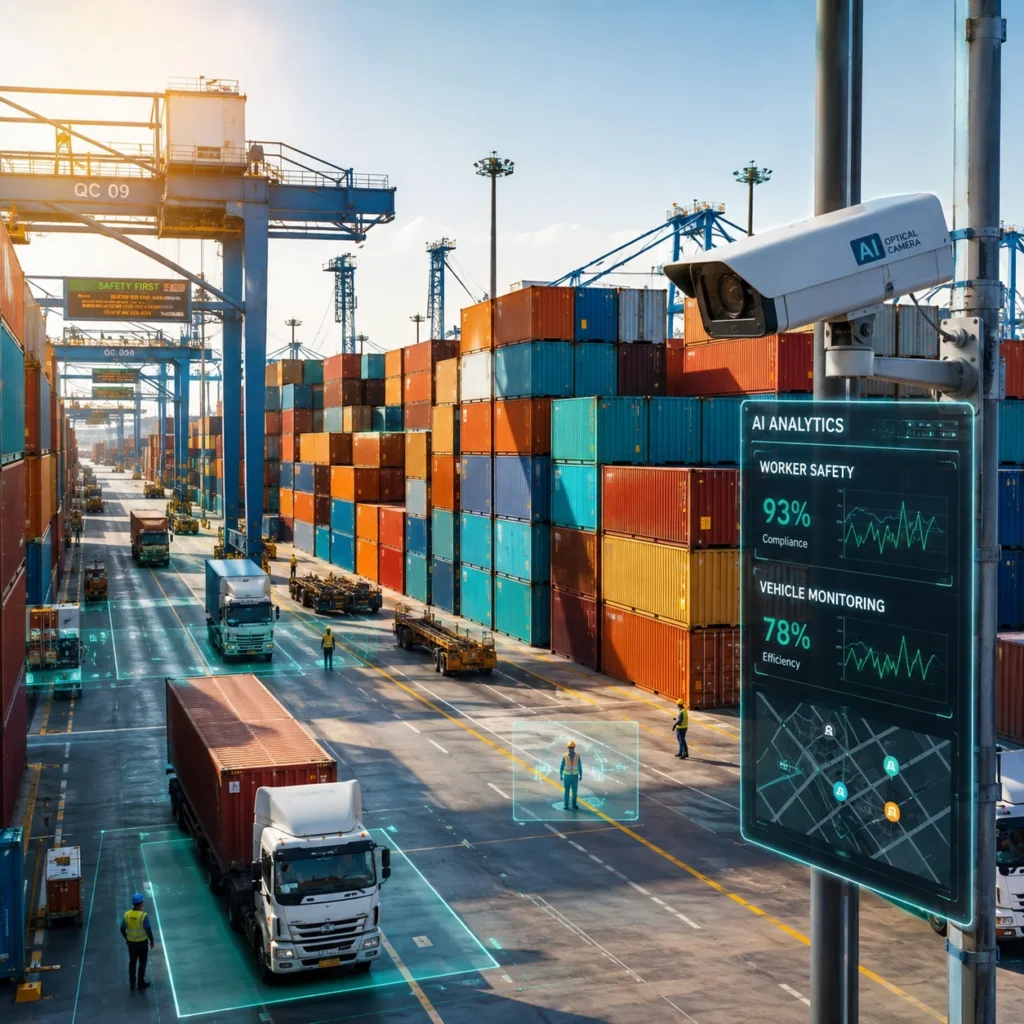
Container yards, cargo-handling areas, loading zones, and internal roads involve heavy equipment and frequent vehicle movement. Video analytics can monitor selected exclusion zones and identify personnel entering areas where equipment is operating.
Repeated worker-vehicle interaction can also be analysed to determine whether traffic routes, signage, physical separation, or work practices need improvement.
Maintenance And Workshop Areas
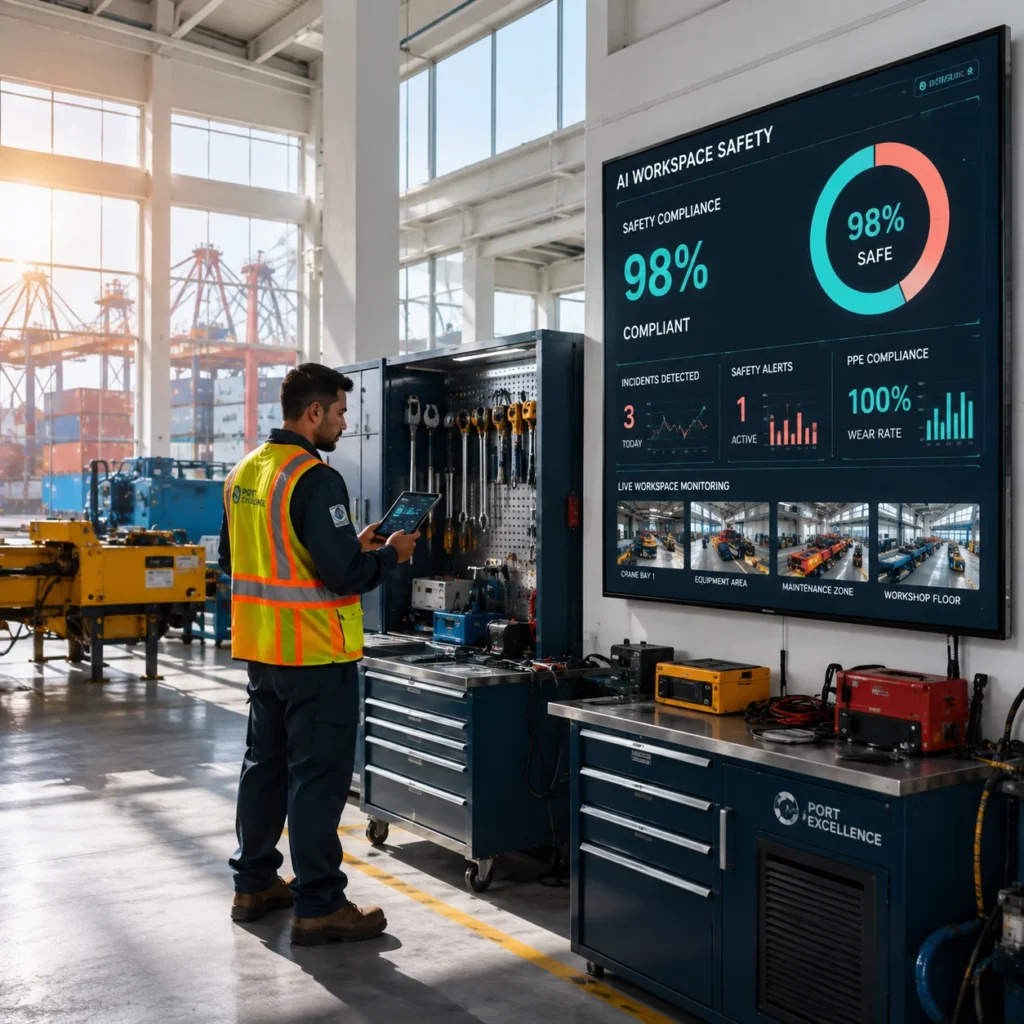
Maintenance teams may work around mechanical, electrical, and other port infrastructure. AI-based SOP analytics can monitor visible requirements such as PPE, controlled access, designated work zones, and clear pathways.
Gates And Access Points
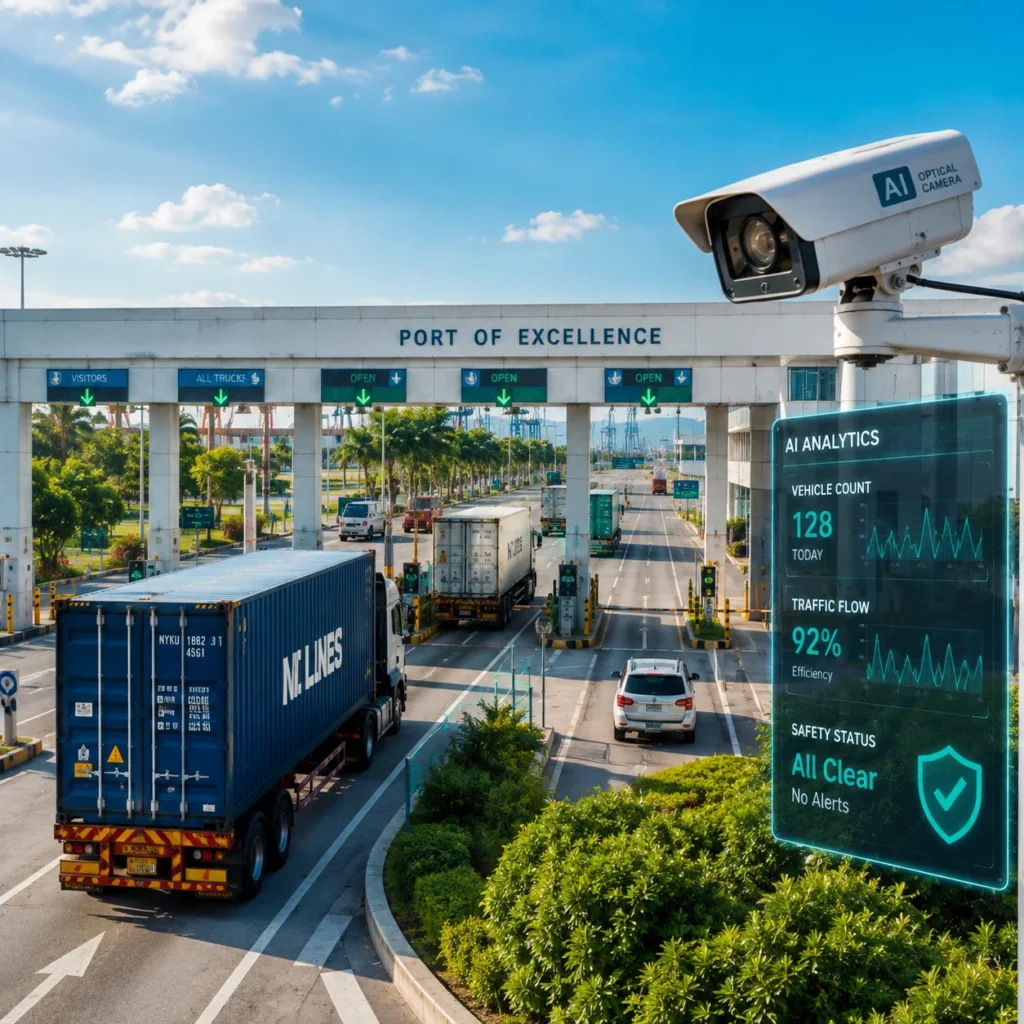
Port gates are important control points because vehicles, employees, contractors, visitors, and cargo-related movements converge there.
Video analytics can support monitoring of restricted access, vehicle movement, congestion, and unusual activity. When integrated appropriately with access-control information, an AI event can be interpreted in context.
Turning SOPs Into Visual Rules
Not every SOP is suitable for computer vision. The strongest candidates are procedures containing requirements that can be observed through a camera.
SOP Element | Possible AI Detection | Human Follow-Up |
PPE requirement | Missing visible PPE | Supervisor verification |
Restricted zone | Person crossing boundary | Access verification |
Equipment exclusion area | Personnel proximity | Safety assessment |
Vehicle route | Unexpected movement | Traffic review |
Emergency pathway | Obstruction | Corrective action |
The Shift From Watching Cameras To Managing Exceptions
Traditional CCTV is useful when an incident needs to be investigated, but continuously watching numerous feeds is difficult. AI changes the role of surveillance by allowing systems to identify specific visual conditions automatically.
For DPA, the emphasis can be placed on exceptions such as:
- Personnel entering designated equipment zones
- Workers without required visible PPE
- Vehicle-pedestrian proximity
- Unauthorised access to controlled areas
- Obstructions on operational routes
- Unusual activity around storage or cargo areas
- Unsafe movement around maintenance locations
Making Alerts Smarter With Operational Context
A port environment contains many legitimate activities that may look unusual to an automated system.
A maintenance worker entering a restricted zone may be authorised. A vehicle moving through a controlled area may be part of a scheduled cargo operation. An apparent obstruction may be temporary because loading activity is underway.
DPA can potentially improve alert prioritisation by connecting video analytics with information such as:
- Work permits
- Access permissions
- Vehicle authorisations
- Maintenance schedules
- Equipment status
- Cargo-handling activity
- Operational notifications
This contextual layer can reduce unnecessary alerts and help security and safety teams concentrate on events that genuinely require review.
Video Analytics As A Safety Feedback Mechanism
AI analytics can provide more than immediate alerts. Aggregated data can show where safety procedures repeatedly break down.
Suppose one operational area records frequent PPE deviations. The underlying issue could be training, supervision, equipment availability, or unclear site requirements.
If a particular route repeatedly produces worker-vehicle proximity events, DPA could investigate whether the physical layout or traffic arrangement should be modified
Incident Review Without Searching Every Recording
When a safety, security, cargo, or operational incident occurs, investigators may need to examine footage from several cameras.
AI-assisted video search can help authorised personnel locate relevant footage according to time, location, movement, vehicle presence, or predefined event characteristics.
This can reduce manual review time and help establish the sequence surrounding an event
Designing For The Port’s Physical Environment
Port analytics must work under real operating conditions. Dust, rain, glare, night operations, moving equipment, changing cargo stacks, camera obstruction, and large open areas can affect detection performance.
Before deployment, DPA should assess:
- Camera coverage and positioning
- Day and night image quality
- Weather-related performance
- Network reliability
- Detection accuracy
- False-positive rates
- Data retention
- Cybersecurity
- Role-based access
Pilot deployments can help determine which use cases are reliable enough for operational workflows.
Measuring Business And Safety Outcomes
The success of AI should be measured by improvements rather than the number of cameras connected.
Useful indicators include:
- Reduction in recurring SOP deviations
- PPE compliance
- Restricted-zone events
- Worker-equipment proximity incidents
- Vehicle-related safety events
- Alert response time
- False-positive rate
- CCTV investigation time
- Corrective-action closure
For Deendayal Port Authority, AI-based SOP analytics and video analytics can create a more responsive layer across cargo areas, maintenance facilities, access points, yards, and other controlled locations. By combining automated visual detection with operational context and human verification, DPA can improve safety visibility while keeping port operations, security, and engineering decisions with qualified personnel.
Frequently Asked Questions
Yes. It can identify predefined conditions involving equipment zones, worker positioning, PPE, vehicle movement, and restricted areas
It can monitor selected visible requirements such as PPE, access boundaries, equipment zones, and designated work areas
Yes. Suitable applications include access monitoring, vehicle movement, congestion detection, and identification of unusual activity for authorised personnel.
Potentially. Connecting visual events with work permits, access permissions, maintenance schedules, and operational information can provide context and improve alert prioritisation.
No. AI should identify and prioritise predefined events. Trained personnel must verify the circumstances and make final safety, security, operational, and engineering decisions.