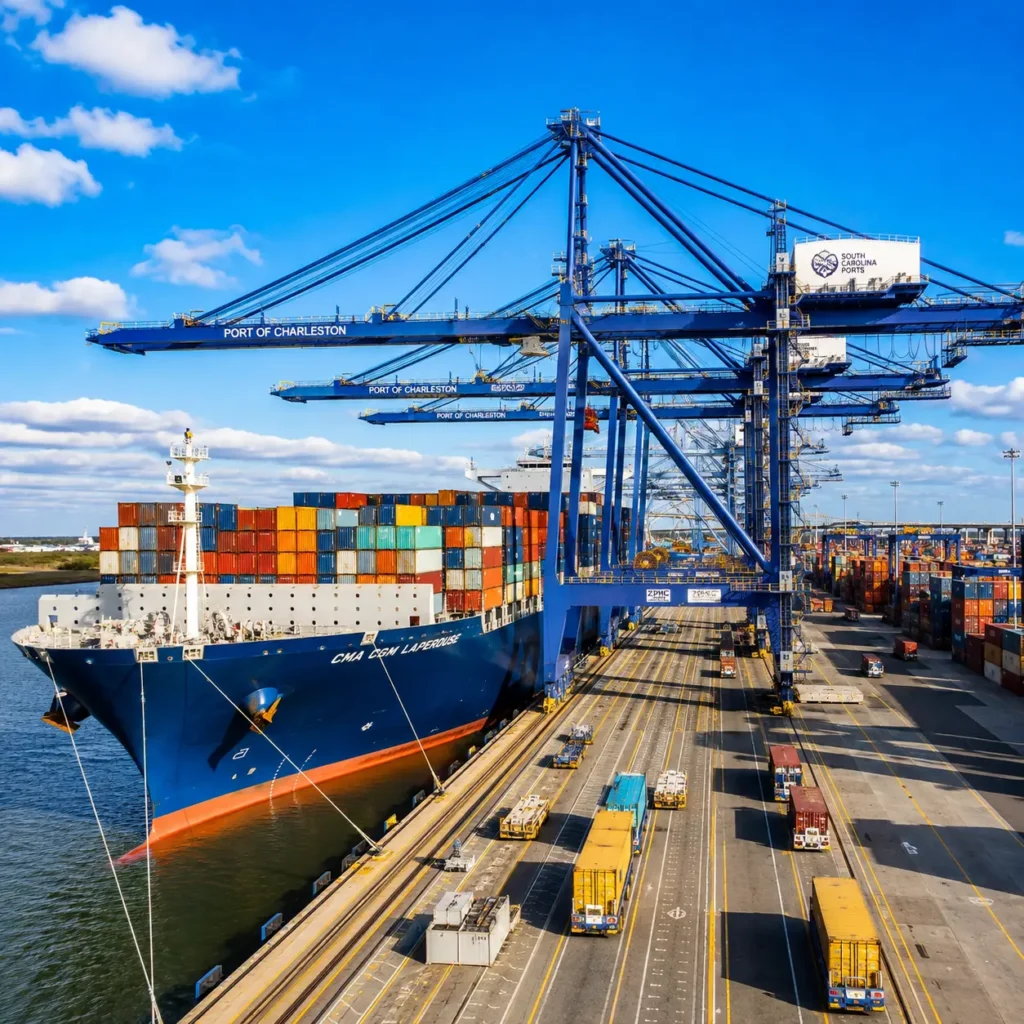
Cochin Port Authority operates a diverse maritime environment where vessel movement, container handling, dry and liquid bulk cargo, tanker operations, storage, road traffic, and passenger-facing activities can intersect. Its operations include round-the-clock pilotage, cargo handling, real-time vessel coordination, and facilities such as ICTT Vallarpadam, tanker berths, and LNG infrastructure. AI is most useful when it helps teams make better decisions from existing information.
Start With The Decisions That Matter
An effective AI programme can be designed around operational decisions rather than technology categories. Management can identify where delayed information, inconsistent execution, or limited visibility creates risk.
Four decision areas provide a practical starting point:
- Is a critical procedure being followed as intended?
- Does a developing situation require supervisory attention?
- What caused a recurring operational or safety deviation?
- Has a corrective action actually improved performance?
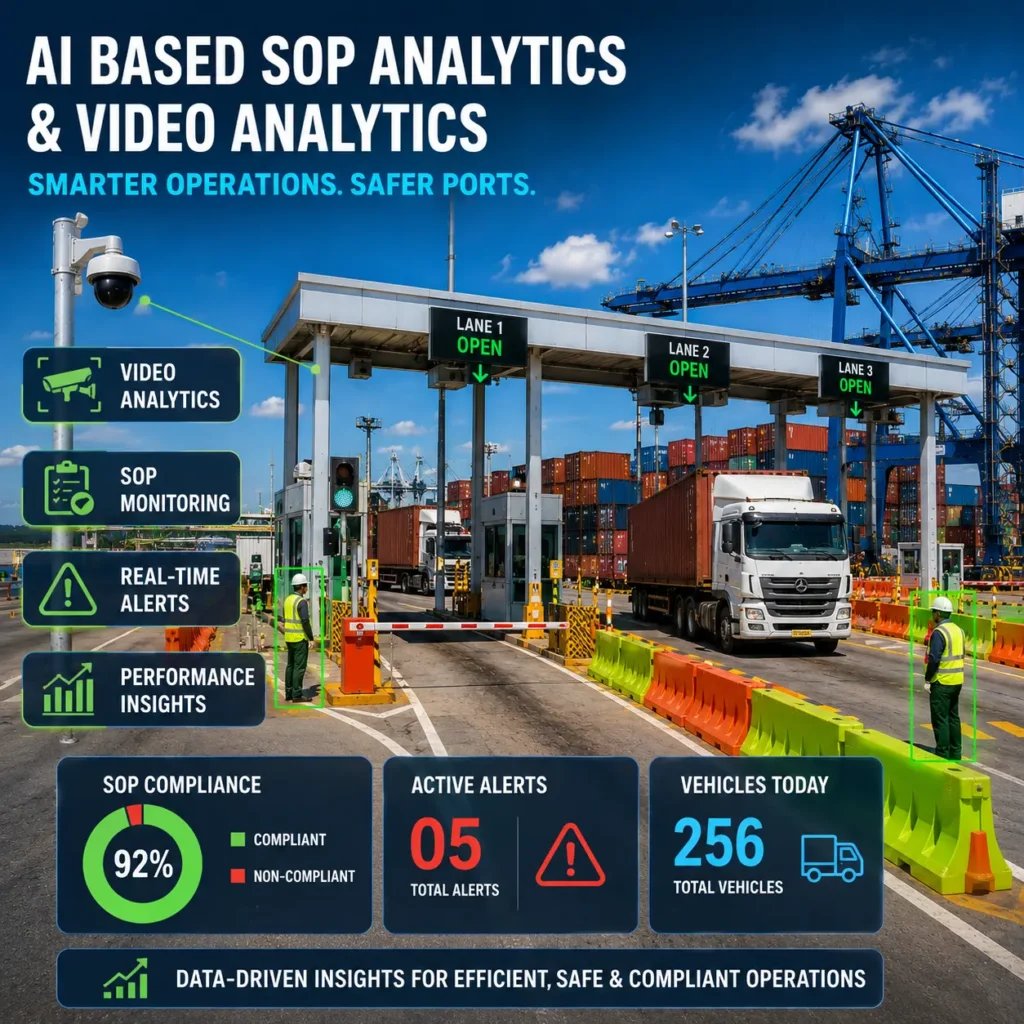
AI based SOP analytics can support the first and fourth questions, while video analytics can contribute strongly to the second and third. Used together, they create a continuous feedback mechanism for port operations.
Making SOPs More Useful Between Audits
Port procedures cover activities involving cargo, equipment, access, inspections, safety, and emergency response. Conventional compliance reviews provide snapshots, while deviations may occur between inspections.
AI based SOP analytics can examine digital records, checklists, inspection results, incident information, corrective actions, and workflow data to identify patterns. It could highlight a procedure step that is frequently delayed or a process generating repeated exceptions.
The shift is from asking, “Was the SOP followed?” to asking, “Where is execution diverging from the intended process?”
Turning Patterns Into Management Actions
Analytics can classify recurring deviations by activity, location, shift, equipment category, or process stage. This helps teams distinguish isolated mistakes from structural problems.
If a recurring deviation is linked to a particular workflow, the response might involve revising the procedure, improving training, changing task sequencing, clarifying responsibilities, or addressing an operational constraint. Analytics therefore becomes useful for continuous improvement rather than merely producing compliance reports.
Using Video Analytics Where Visibility Is Difficult
Cochin Port Authority has a physically distributed operating environment. Human teams cannot continuously observe every berth, road, yard, gate, storage area, and equipment zone. Video analytics can provide an additional layer of awareness by identifying predefined visual events from suitable camera feeds.
Potential applications include:
- Detecting people entering restricted operational areas.
- Identifying vehicles or pedestrians in defined high-risk zones.
- Monitoring unusual movement around cargo-handling equipment.
- Supporting security monitoring at access points.
- Finding relevant footage faster during incident investigations.
The system should not be treated as an automatic decision-maker. It should identify events for supervisor review.
Different Rules For Different Port Activities
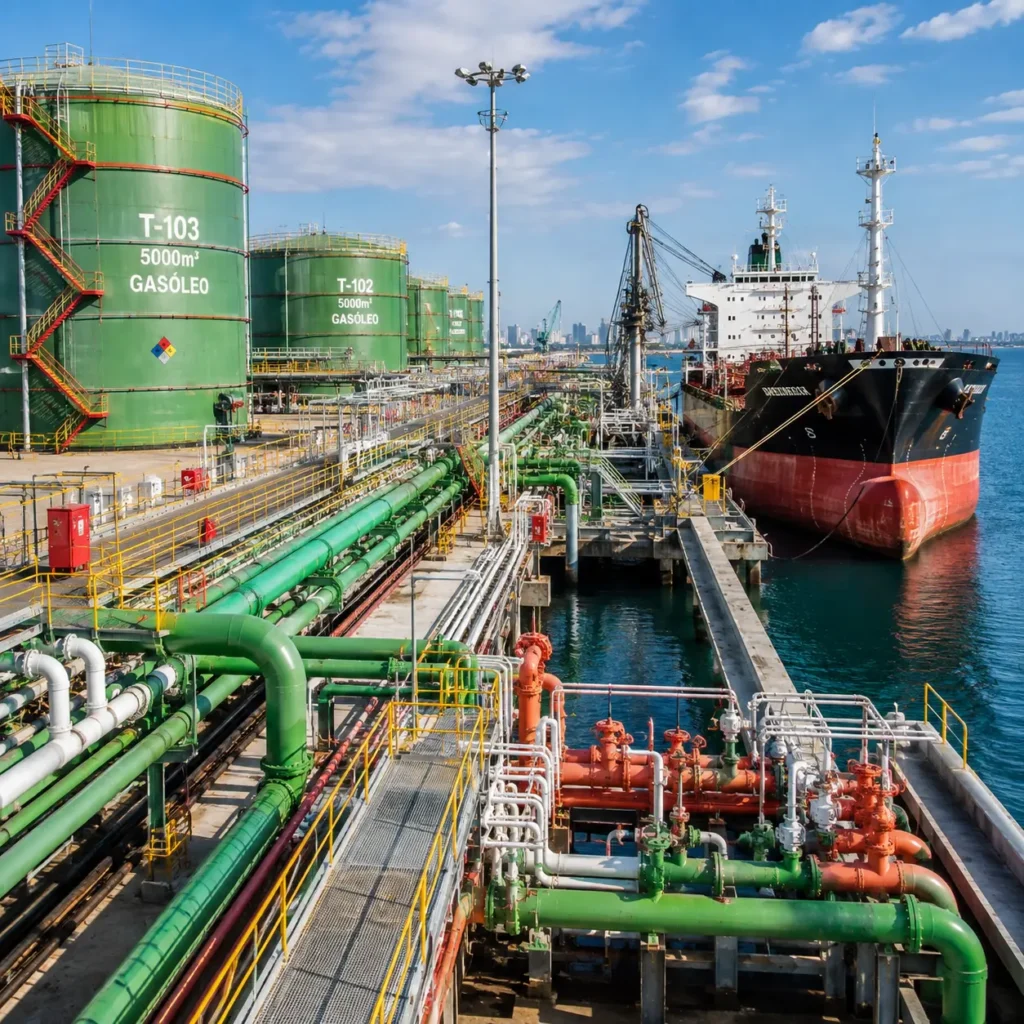
Cochin Port’s cargo mix includes crude oil, POL products, liquid bulk, dry bulk, containers, LNG, and other materials. Analytics should therefore reflect the risk profile of each operational area.
Around tanker and liquid-cargo facilities, video analytics could support monitoring of defined exclusion zones, vehicle or personnel movement, and other observable conditions relevant to safe operations. SOP analytics could examine compliance with inspection, transfer, access, or emergency-response procedures.
For container operations, the emphasis could shift toward traffic movement, equipment interaction, access control, and operational-zone awareness. Applying different analytical rules is more useful than using identical AI models across the entire port.
Building The Evidence Chain
The strongest application may be the connection between process records and visual evidence. Suppose SOP analytics identifies repeated deviations during a particular operation. Supervisors could review relevant video events to understand the surrounding circumstances.
That evidence can help determine whether the issue relates to congestion, equipment positioning, unclear procedure steps, communication gaps, or another operational factor. After a corrective measure is introduced, the same analytics can assess whether the pattern changes. The objective is not to monitor people for its own sake. It is to make operational learning faster and more evidence-based.
A Focused Rollout Can Reduce Implementation Risk
Cochin Port Authority could begin with one operational problem where the expected outcome is measurable. A pilot might focus on a high-risk SOP, restricted-area monitoring, incident investigation, or a specific cargo-handling workflow.
Before deployment, the project should define the event being detected, responsible teams, escalation rules, data-retention requirements, and performance measures. Accuracy should be tested under actual operating conditions, including changes in lighting, weather, traffic density, and camera visibility.
Success could be assessed through fewer repeated SOP deviations, faster investigations, improved response times, stronger inspection consistency, or reduced operational disruption. Expansion should follow demonstrated value rather than technology availability.
FAQs
It can analyse process records to identify recurring deviations and show where training, supervision, workflow changes, or SOP revisions may be needed.
Potential areas include access points, cargo-handling zones, tanker facilities, yards, roads, storage areas, and other locations where defined visual events support safety or security objectives.
Yes. Detection rules can be configured around the distinct workflows and risks associated with liquid cargo, tanker activity, containers, bulk cargo, and other operations.
It can help locate relevant visual events more efficiently, giving investigation teams additional context alongside reports, logs, and witness information.