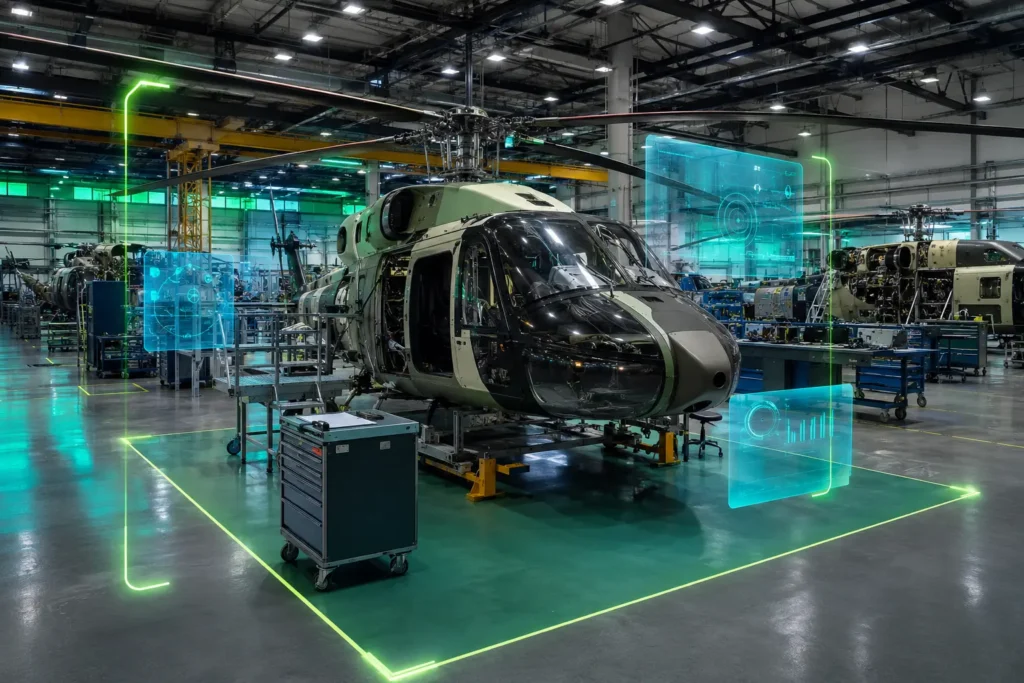
The production and upkeep of aircraft necessitate an exceptionally high degree of process discipline. At Hindustan Aeronautics Limited (HAL), activities span aircraft and helicopter manufacturing, engine and power-plant work, avionics, systems, maintenance, repair and overhaul, testing, and other aerospace operations. Many of these environments involve controlled procedures, specialised equipment, restricted areas, and safety-critical tasks.
HAL’s occupational health and safety framework already covers its divisions and includes ISO 45001:2018 certification, Hazard Identification and Risk Assessment (HIRA), shop-floor inspections, safety audits, and safety committee reviews. Its annual reporting also identifies technological upgrades as part of its approach to managing health and safety risks. AI-based SOP analytics and video analytics can strengthen this framework by providing continuous, evidence-based monitoring of selected workplace conditions.
Why Aerospace Manufacturing Needs Intelligent SOP Monitoring
In aerospace production, SOP compliance is closely connected with product quality, worker safety, equipment protection, and process consistency. However, many procedures are performed across large facilities and multiple shifts, making continuous manual observation difficult.
AI-based SOP analytics can monitor specific, observable requirements and identify deviations in real time.
For HAL, possible applications include:
- PPE compliance in manufacturing and maintenance areas
- Restricted-zone access
- Worker proximity to machinery
- Safe movement around cranes and lifting equipment
- Controlled access to testing areas
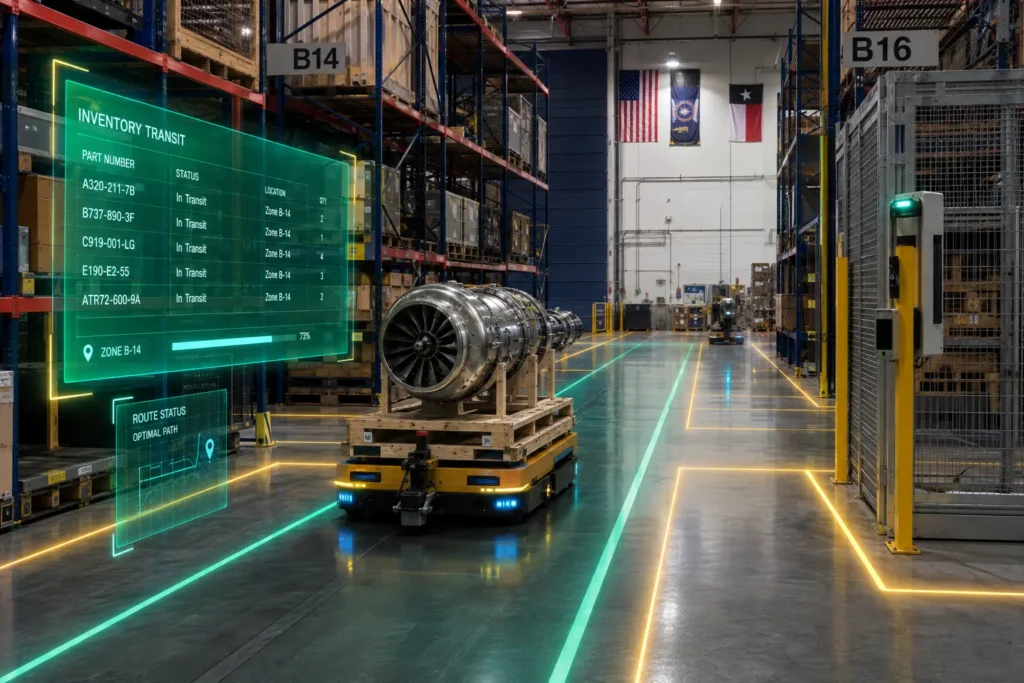
- Material-handling procedures
- Housekeeping and obstruction detection
- Selected maintenance and work-permit requirements
The technology should be configured around HAL’s approved procedures and risk assessments. AI detection should supplement existing safety controls rather than become a substitute for them.
Video Analytics For Manufacturing And MRO Operations
Video analytics can turn existing camera networks into active monitoring systems. Instead of relying solely on personnel to observe live feeds or review recordings after an incident, computer vision can identify predefined events and bring them to the attention of responsible teams.
Aircraft And Helicopter Manufacturing
Assembly areas contain specialised tools, components, lifting equipment, workstations, and controlled access zones. AI can monitor selected safety conditions, including PPE, access restrictions, and worker-equipment interactions.
Engine And Power-Plant Facilities
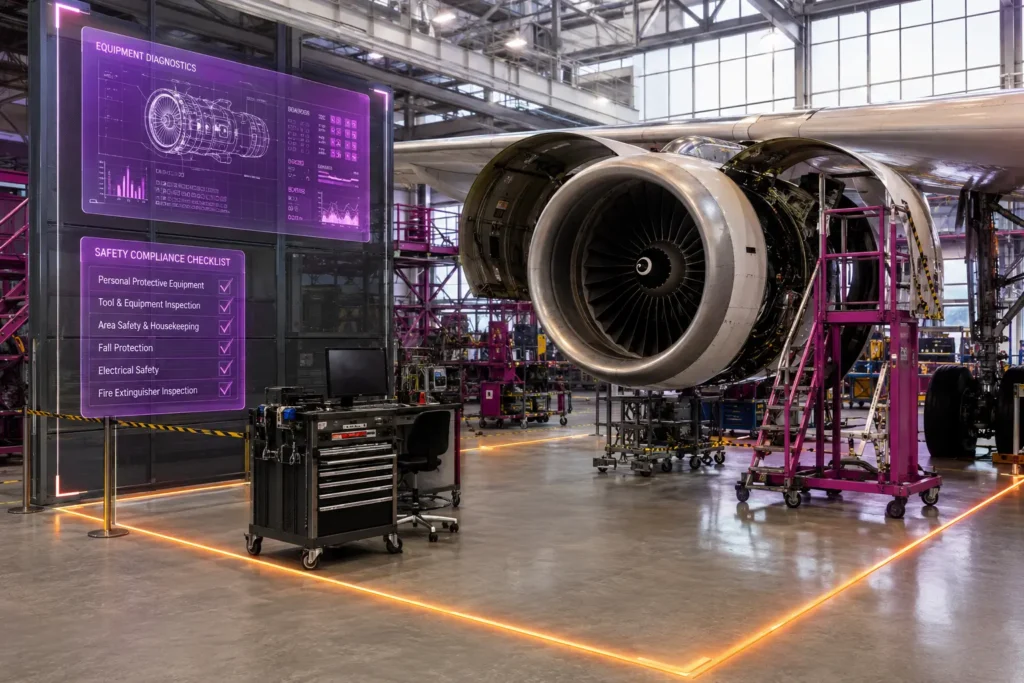
Engine manufacturing, testing, and maintenance involve heavy components and equipment. Video analytics can support monitoring of designated exclusion zones, access conditions, material movement, and selected maintenance activities.
MRO Facilities
Maintenance, repair and overhaul activities often involve aircraft movement, ground-support equipment, tooling, access controls, and work-at-height situations. AI can monitor clearly defined visual conditions and alert personnel when a rule is breached.
Connecting SOP Requirements With Visual Evidence
An important advantage of SOP analytics is that it can transform selected written procedures into measurable events.
SOP Requirement | Possible Video Analytics | Potential Outcome |
PPE compliance | Detect missing required equipment | Supervisor alert |
Restricted access | Identify unauthorised entry | Security notification |
Crane safety | Detect personnel within defined zones | Immediate intervention |
Aircraft movement area | Monitor person or vehicle presence | Reduce exposure risk |
Maintenance zone | Detect access or positioning deviations | Procedure review |
Housekeeping | Identify selected obstructions | Corrective action |
Aerospace Security Makes Context Important
HAL’s facilities handle sensitive defence-related equipment, technology, documentation, and infrastructure. This makes video analytics relevant not only to workplace safety but also to physical security.
A single camera system could potentially support multiple rule sets for:
- Unauthorised personnel
- Restricted-area access
- Vehicle movement
- Perimeter activity
- Camera tampering
- Material movement
- Safety violations
Using AI To Improve Safety Investigations
Video analytics can also support what happens after an event. Instead of manually reviewing hours of footage, safety teams can search recorded video for specific time periods, locations, objects, or predefined events. This can help reconstruct the sequence surrounding a near miss or safety incident. Repeated events can provide even greater value. If similar SOP deviations occur repeatedly in a particular shop, HAL can investigate whether the underlying cause involves training, workstation design, equipment positioning, signage, PPE availability, or the procedure itself.
A Controlled Rollout For HAL
Given the sensitivity and complexity of aerospace manufacturing, implementation should be phased.
Identify High-Value SOPs
Select safety-critical procedures where visual compliance can be reliably measured.
Evaluate Existing Infrastructure
Assess camera coverage, image quality, lighting, network connectivity, computing capacity, cybersecurity, and storage.
Pilot At Selected Facilities
Test AI models under actual manufacturing and MRO conditions, including glare, changing illumination, equipment obstruction, crowded workspaces, and specialised protective clothing.
Establish Human Response
Every high-priority alert should have an assigned owner, escalation path, and corrective-action process.
Expand After Validation
Successful applications can be extended to other HAL divisions after accuracy, false-alert rates, security requirements, and operational value have been established.
HAL’s latest annual-report cycle covers FY2024–25, and the company’s official website continues to identify aircraft, helicopters, systems, MRO, and R&D among its principal activities.
How HAL Can Measure The Results
The effectiveness of AI-based SOP analytics should be judged through measurable safety and operational outcomes.
Useful KPIs include:
- Reduction in recurring SOP deviations
- Safety-alert response time
- PPE compliance
- Restricted-area violations
- Worker-equipment proximity events
- False-positive rate
- Incident investigation time
- Corrective-action closure time
- Manual monitoring effort
Frequently Asked Questions
It is an AI-enabled system that evaluates selected workplace activities against defined safety or operating procedures and identifies potential deviations for review
It can monitor selected areas for PPE compliance, restricted access, unsafe worker-equipment proximity, material movement, and other clearly defined safety conditions.
Yes. Potential applications include monitoring aircraft maintenance areas, equipment zones, access-controlled locations, ground-support activities, and selected work-at-height or material-handling conditions.
Yes. Computer vision can support monitoring of restricted areas, perimeter activity, vehicles, unauthorised access, and camera tampering, subject to HAL's security and data-governance requirements.
No. AI should provide continuous monitoring and decision support. Qualified safety, security, and operational personnel should validate important alerts and remain responsible for corrective action and final decisions.