Space missions leave little room for procedural uncertainty. At the Indian Space Research Organisation (ISRO), activities extend from spacecraft and launch-vehicle development to testing, integration, mission operations, laboratories, ground infrastructure, and astronaut-related programmes. Each environment has its own operating procedures, access requirements, safety controls, and quality expectations.
ISRO is already actively exploring artificial intelligence and machine learning. Its research programmes include advanced computer vision, AI/ML-based remote-sensing applications, rover navigation, and AI-enabled decision-support systems for human space missions. Recent ISRO discussions on mission operations have also highlighted AI and ML as technologies that can support greater autonomy and human-machine collaboration.
This creates an opportunity to apply AI not only to space missions, but also to the operational environments where those missions are designed, tested, assembled, and controlled.
A Use-Case Map For ISRO
Rather than applying the same analytics model across every ISRO centre, applications can be selected according to the nature of each facility.
Environment | Relevant AI Application | Operational Purpose |
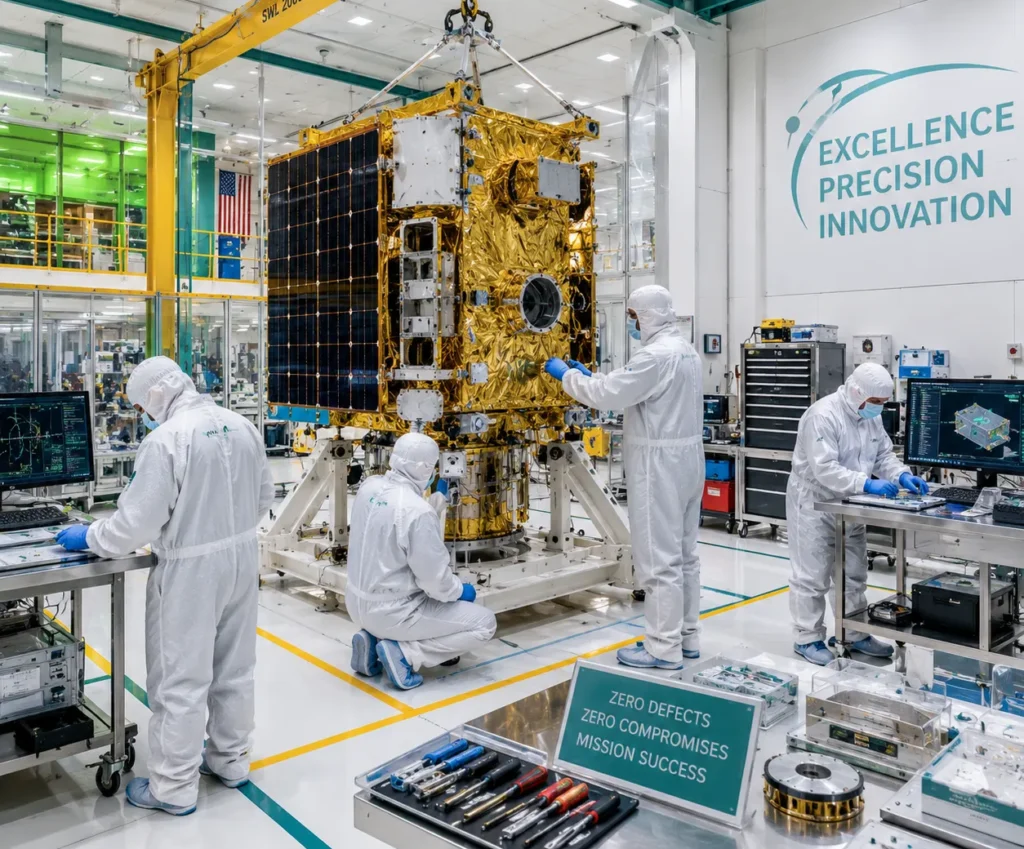
Assembly Facilities | PPE and access monitoring | Support controlled operations |
Test Areas | Zone and personnel detection | Strengthen test safety |
Laboratories | Procedure-related monitoring | Improve compliance |
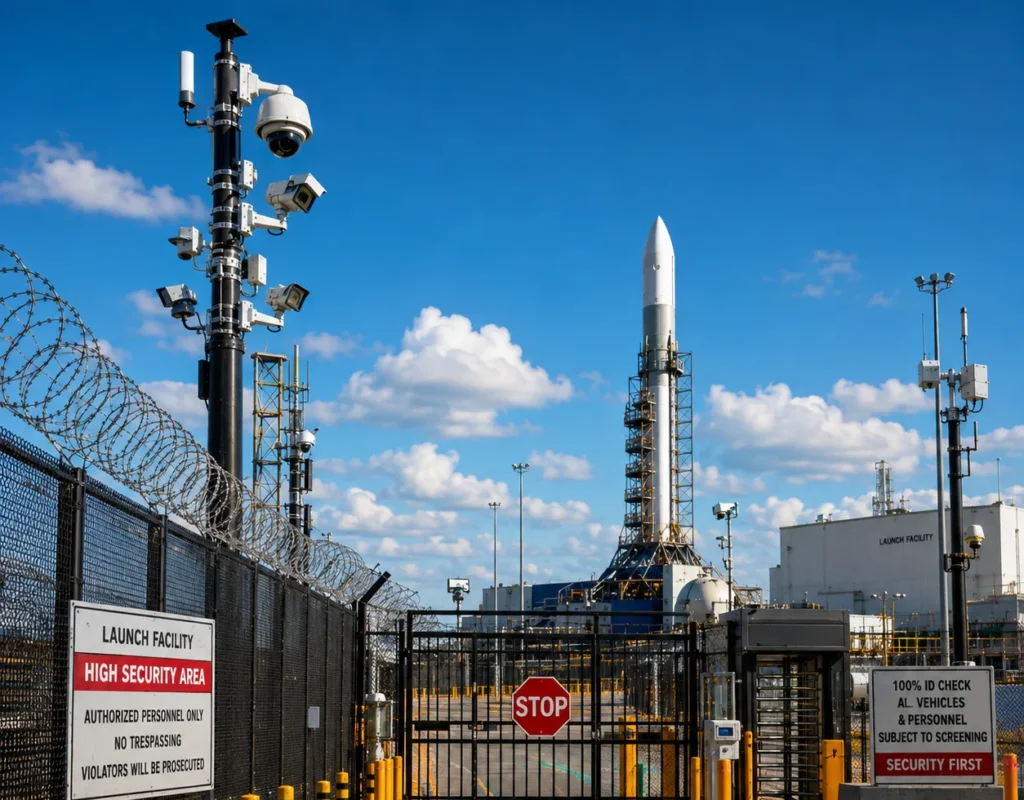
Launch Infrastructure | Restricted-area monitoring | Support safe operations |
Mission Facilities | Security and activity monitoring | Protect critical infrastructure |
Ground Facilities | Vehicle and personnel analytics | Improve site awareness |
This location-specific approach is important because a spacecraft assembly facility has very different requirements from a launch complex or mission-control environment.
SOP Analytics For Precision Operations
ISRO’s quality and reliability processes are built around defined standards, quality plans, surveillance, and audits. AI-based SOP analytics can complement these controls where a procedure contains conditions that can be observed visually.
The system can potentially flag:
- PPE deviations
- Unauthorised entry
- Personnel inside defined equipment zones
- Unsafe vehicle movement
- Blocked access routes
- Selected housekeeping conditions
- Deviations in designated work areas
Video Analytics Around Launch And Test Infrastructure
Launch and testing environments present particularly strong opportunities because access and movement are often controlled by clearly defined operational boundaries.
Video analytics can support monitoring before and during critical activities by identifying unexpected personnel, vehicles, or objects within designated areas.
For example, a system could monitor a restricted zone around a test facility and alert authorised personnel when an unexpected person enters. If access-control information is available, the event could be assessed against the person’s authorisation status.
The same principle could be applied to vehicle movement around sensitive infrastructure, where unusual access or positioning may warrant attention.
Protecting Ground Infrastructure
ISRO’s operational ecosystem depends heavily on ground infrastructure. Mission-support facilities, tracking stations, test installations, laboratories, storage areas, and other sites require controlled access and reliable physical security.
Video analytics can provide continuous monitoring for:
- Unauthorised access
- Unusual movement
- Perimeter activity
- Vehicle entry
- Camera obstruction
- Activity near sensitive installations
Connecting Visual Intelligence With Mission Context
The greatest potential comes when video analytics is not treated as an isolated CCTV system.
A visual event can be interpreted alongside access permissions, equipment status, maintenance schedules, test timelines, environmental sensors, or other operational information.
Supporting Space Safety Beyond Earth
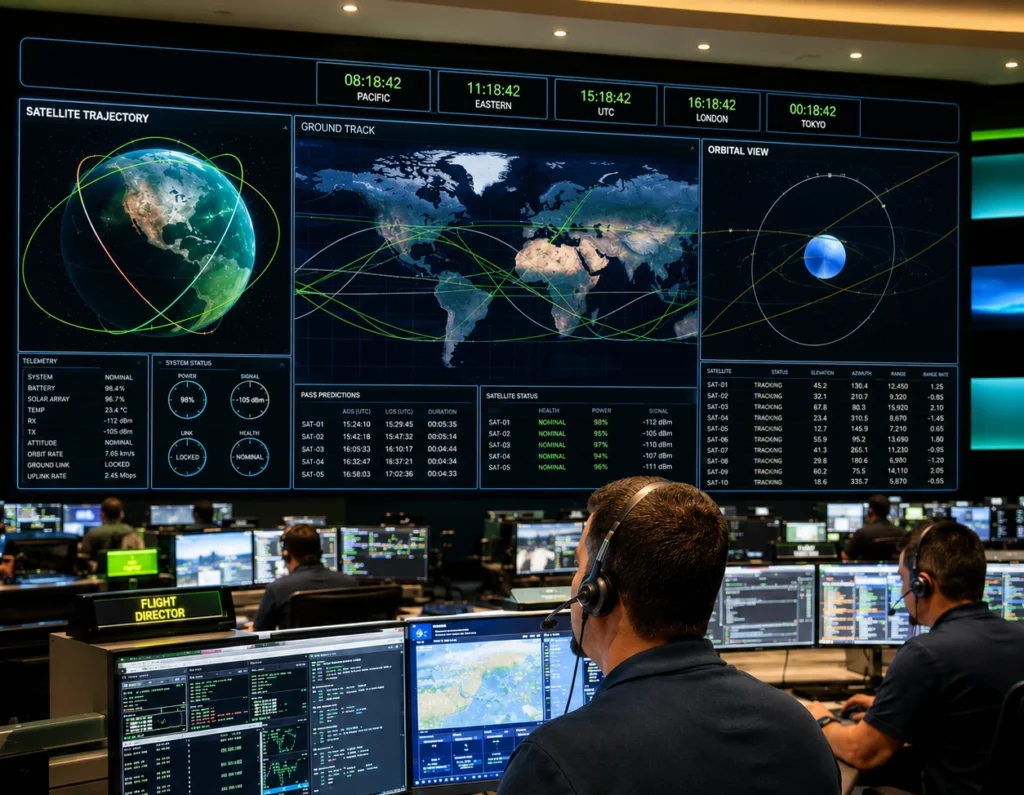
ISRO’s safety responsibilities extend beyond its physical facilities. Through the ISRO System for Safe and Sustainable Operations Management (IS4OM), the organisation conducts space situational awareness activities, including monitoring space objects, assessing collision risks, and supporting the protection of Indian space assets.
Although this is different from workplace video analytics, the underlying principle is similar: large volumes of information need to be analysed so that experts can focus on events requiring attention.
AI-based SOP and video analytics can apply that same decision-support philosophy to physical facilities, while IS4OM demonstrates how ISRO already approaches safety through continuous monitoring and risk assessment.
Using Analytics To Improve Operational Discipline
Repeated AI detections can reveal more than individual violations.
Suppose a particular facility repeatedly records personnel entering a restricted area. The cause may not simply be non-compliance. It could indicate an inconvenient route, unclear signage, inadequate barriers, or a workflow that conflicts with the existing SOP.
Similarly, repeated PPE alerts could indicate a training or availability issue.
Analysing these patterns can help ISRO determine whether a problem requires behavioural correction, infrastructure changes, procedural revision, or additional supervision.
Requirements For A Secure Implementation
Any AI video analytics deployment within ISRO would need to account for the sensitivity of space and strategic infrastructure.
Important considerations include:
- Segmented and secure networks
- Role-based access to video data
- Strong authentication and encryption
- Controlled data retention
- Audit trails
- Protection of sensitive facility imagery
- Secure integration with operational systems
- Human validation of important alerts
Measuring Whether AI Is Delivering Value
The effectiveness of the programme can be assessed through practical indicators rather than the number of cameras connected.
Useful measures include:
- Reduction in recurring SOP deviations
- PPE compliance
- Restricted-area events
- Safety-alert response time
- False-positive percentage
- Incident investigation time
- Corrective-action closure
- Manual surveillance effort
Frequently Asked Questions
Can AI-Based SOP Analytics Be Used In Spacecraft Assembly Areas?
Yes. It can monitor selected visual requirements such as PPE, controlled access, personnel positioning, and other clearly defined safety conditions without attempting to evaluate complex technical assembly decisions.
How Can Video Analytics Support Launch Facilities?
It can monitor designated restricted zones, personnel and vehicle movement, perimeter activity, and other predefined conditions before and during controlled operations.
Can AI Analytics Be Integrated With Access-Control Systems?
Yes. Combining camera detections with access permissions can help distinguish authorised activity from potential access violations and improve alert prioritisation.
Can Video Analytics Support ISRO's Mission Infrastructure?
Potentially. It can provide an additional monitoring layer around selected ground facilities, laboratories, tracking infrastructure, and other locations where visual conditions can be reliably defined.
Will AI Replace ISRO's Safety And Operations Experts?
No. AI should provide monitoring and decision support. Qualified personnel should validate significant events, interpret technical context, and make operational and safety decisions.