Paradip Port Authority operates a large and dynamic maritime environment where cargo handling, vessel-related activities, road traffic, equipment movement, maintenance, and security functions take place simultaneously. Such an environment requires more than conventional surveillance. Port personnel need timely visibility into conditions that could affect safety, operational continuity, and adherence to established procedures.
AI-based SOP analytics and video analytics can provide this additional layer of visibility. By analysing CCTV footage for predefined events, AI can help identify potential deviations and direct them to the appropriate team for verification.
Five Port Situations Where Analytics Can Assist
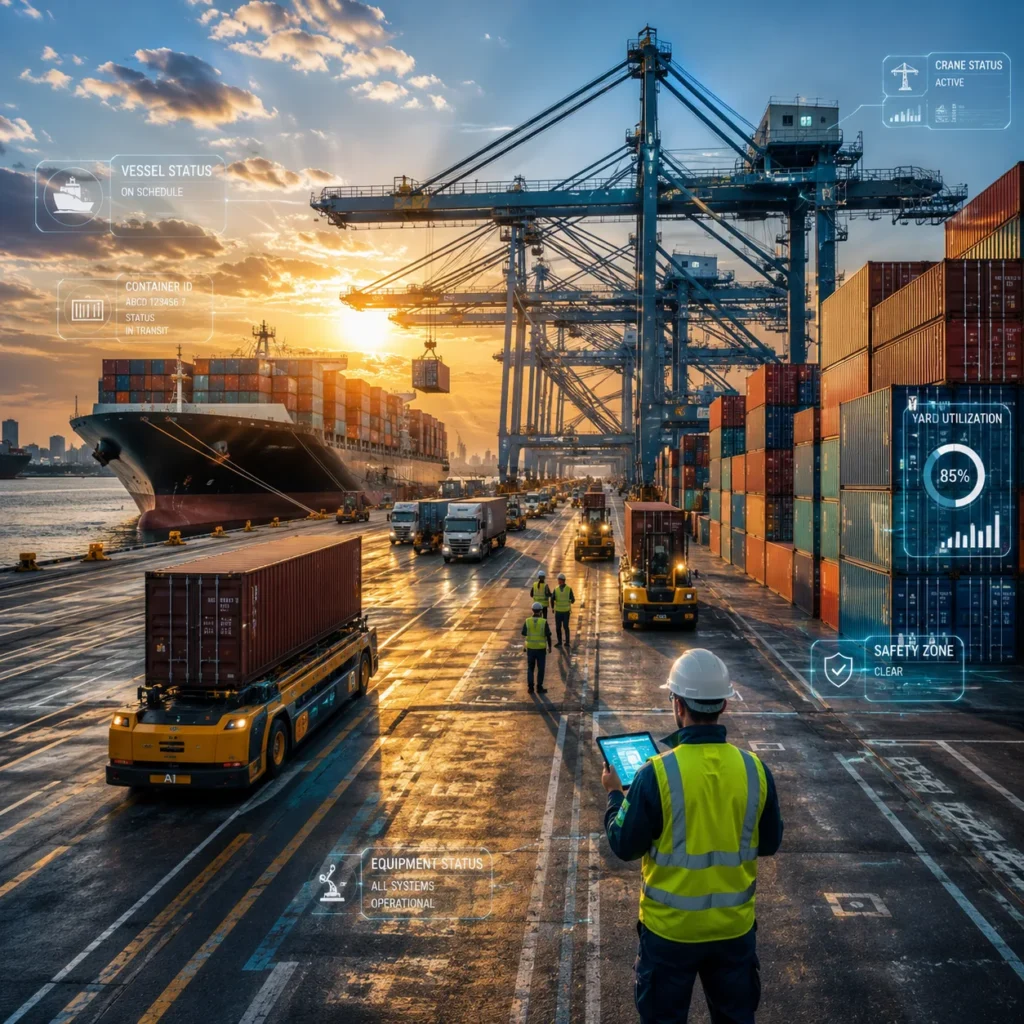
Cargo-Handling Zones
Cargo operations involve cranes, vehicles, workers, containers, and other equipment. AI can monitor defined equipment zones and identify personnel entering areas where access should be restricted during specific activities.
The alert can be sent to the responsible supervisor for assessment. This provides an additional safety layer without attempting to replace equipment operators or established cargo-handling procedures.
Internal Port Roads
Movement of trucks, service vehicles, cargo-handling equipment, and pedestrians creates potential interaction points. Video analytics can identify predefined vehicle-person proximity conditions and unusual movement within controlled routes.
Aggregated data can also identify locations where such events occur repeatedly, allowing management to review traffic arrangements or physical separation.
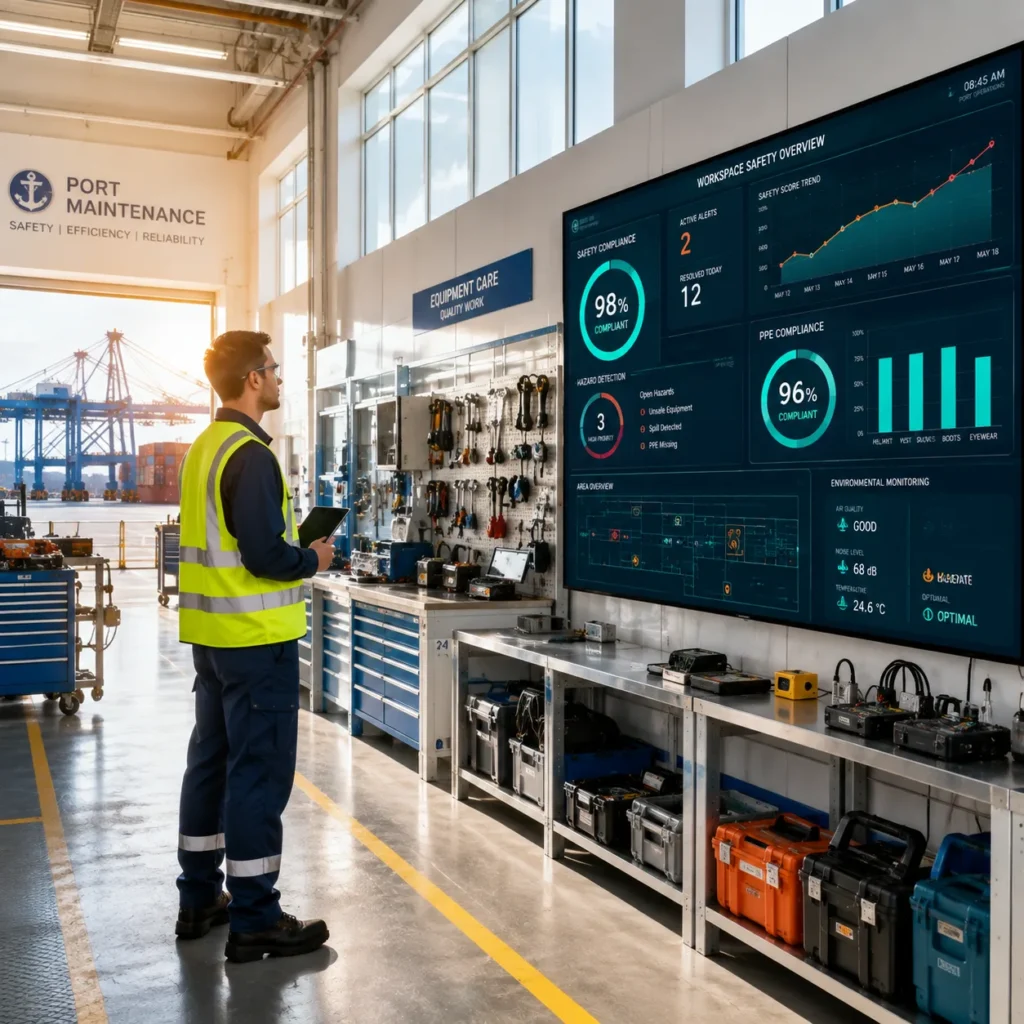
Workshops And Maintenance Areas
Maintenance work may involve electrical systems, mechanical equipment, tools, vehicles, and specialised machinery. AI-based SOP analytics can monitor selected requirements such as PPE, restricted maintenance zones, personnel-equipment proximity, and clear access routes.
This can make selected safety procedures continuously observable rather than dependent only on periodic inspections.
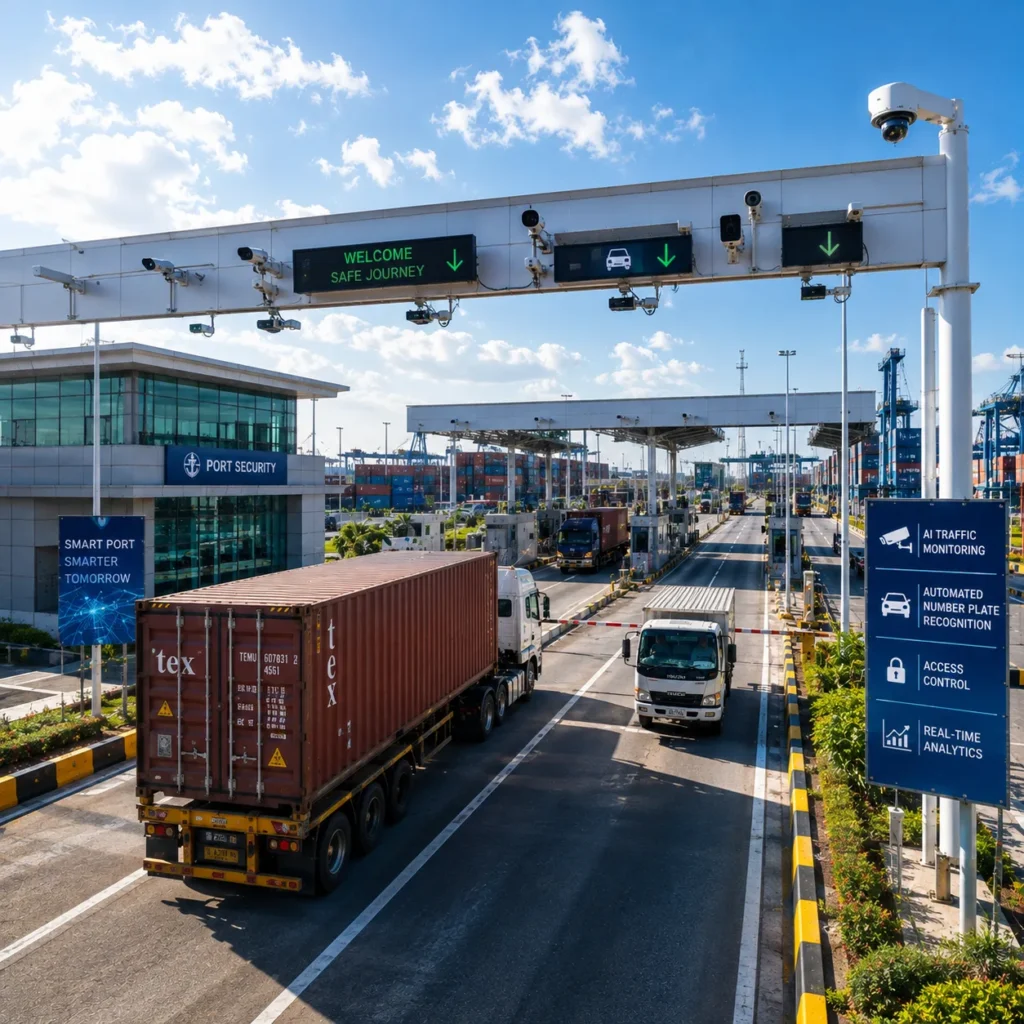
Entry And Exit Points
Port gates and controlled facilities handle employees, contractors, visitors, and vehicles. Video analytics can identify movement across predefined boundaries, unusual activity, and selected vehicle-access conditions.
The effectiveness of these alerts can increase when they are considered alongside authorised access information.
Storage And Restricted Areas
Certain port facilities require controlled access. AI can monitor designated zones and identify movement that does not match expected activity.
The system should generate an event for verification rather than automatically treating the detection as a security incident.
Connecting AI With Port Operations
A significant limitation of standalone video analytics is that cameras cannot always understand why an event is happening.
A worker inside a restricted area may be conducting approved maintenance. A vehicle inside a controlled zone may be involved in scheduled cargo movement.
Paradip Port Authority can potentially improve alert accuracy by connecting video events with relevant operational information:
Context | How It Can Help |
Work permits | Confirm authorised maintenance |
Access records | Validate personnel movement |
Vehicle permissions | Establish expected vehicle activity |
Equipment status | Understand operating conditions |
Maintenance schedules | Identify planned work |
Operational status | Interpret unusual activity |
This contextual approach can reduce unnecessary alerts and improve the usefulness of information reaching control-room and supervisory teams.
Using AI To Improve SOP Management
SOP analytics becomes particularly valuable when repeated deviations are analysed collectively.
For example, if PPE-related alerts repeatedly occur in one work area, the issue may not simply be individual non-compliance. It could indicate inadequate training, insufficient equipment availability, poor supervision, or unclear work-zone requirements.
Similarly, recurring worker-equipment proximity events may suggest that a traffic route or workspace needs redesign.
AI can therefore provide evidence for improving the underlying process instead of merely recording individual deviations.
The Operational Questions AI Can Answer
Instead of asking what every camera is recording, Paradip Port Authority can focus on specific operational questions:
- Is a worker entering an equipment exclusion zone?
- Are personnel following visible PPE requirements?
- Is a vehicle moving through an unauthorised route?
- Is an operational pathway blocked?
- Has someone entered a restricted facility?
- Is there unusual activity around a controlled area?
- Are workers and heavy equipment coming into close proximity?
These questions can form the foundation of a practical AI analytics programme.
Incident Investigation Can Become Faster
When an accident, security event, cargo-related incident, or operational disruption occurs, investigators may need to review footage from multiple cameras.
AI-assisted video search can help authorised personnel locate relevant recordings using factors such as:
- Time
- Location
- Movement
- Vehicle activity
- Predefined event categories
This can reduce manual searching and help establish the sequence of events.
Historical video analytics can also support comparisons between incidents, helping determine whether corrective measures have addressed recurring problems.
Designing Analytics For A Port Environment
Paradip’s operating environment can present challenges for computer vision. Outdoor cameras may encounter changing weather, glare, dust, night-time conditions, moving equipment, changing cargo layouts, and temporary obstructions.
A successful deployment should therefore assess:
- Camera coverage and positioning
- Day and night performance
- Weather-related detection accuracy
- Network reliability
- False-positive rates
- Data retention
- Cybersecurity
- Access permissions
- Human response procedures
Measuring The Business And Safety Impact
The programme should be judged by operational improvements rather than the number of cameras connected.
Useful measures include:
- Reduction in recurring SOP deviations
- PPE compliance
- Restricted-zone events
- Worker-equipment proximity incidents
- Vehicle-related safety events
- Alert response time
- False-positive rate
- Incident investigation time
- Corrective-action closure
Frequently Asked Questions
Yes. It can monitor selected conditions involving equipment exclusion zones, PPE, worker positioning, restricted access, and vehicle-person interaction.
It can identify predefined vehicle-person proximity events, unusual movement, restricted-route entry, and other conditions requiring human assessment
Yes. Suitable applications include PPE monitoring, restricted maintenance zones, equipment proximity, and designated work-area monitoring.
Potentially. Linking video detections with work permits, access records, maintenance schedules, and equipment information can provide useful context.
No. AI should provide additional monitoring and prioritise events for review. Trained personnel must verify alerts, interpret circumstances, and make final operational, safety, and security decisions.