Jawaharlal Nehru Port Authority (JNPA) operates a complex port environment where vessels, containers, cranes, trucks, terminal personnel, visitors, security teams, and maintenance crews interact within tightly controlled areas. In such an environment, operational efficiency depends not only on equipment and infrastructure but also on consistent adherence to safety and access procedures.
AI-based SOP analytics and video analytics can help JNPA make selected procedures more visible and measurable. Rather than replacing security personnel, operators, or safety teams, AI can identify defined visual conditions and direct attention towards situations that require human assessment.
SOP Analytics Around Cargo Operations
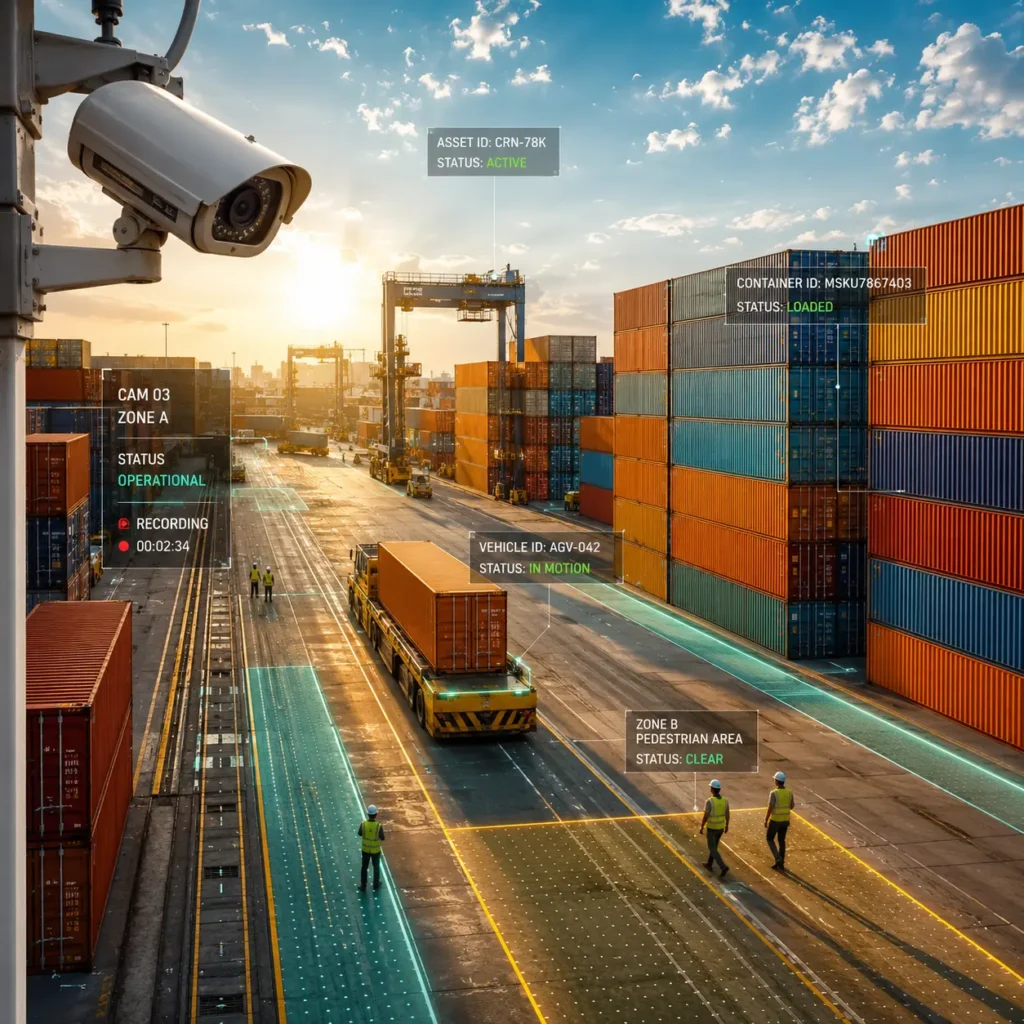
Container handling involves cranes, trucks, terminal equipment, workers, and vehicles operating in close proximity. Certain SOP requirements can be converted into visual rules.
AI can monitor defined exclusion zones around cargo-handling equipment, identify people entering controlled areas, and detect selected worker-vehicle proximity conditions. It can also support visible PPE monitoring in designated work areas.
The purpose is to identify a condition that needs attention, not to determine whether a complex cargo operation has been technically performed correctly. Human operators and safety personnel should remain responsible for interpreting the situation.
Gate And Yard Traffic Intelligence
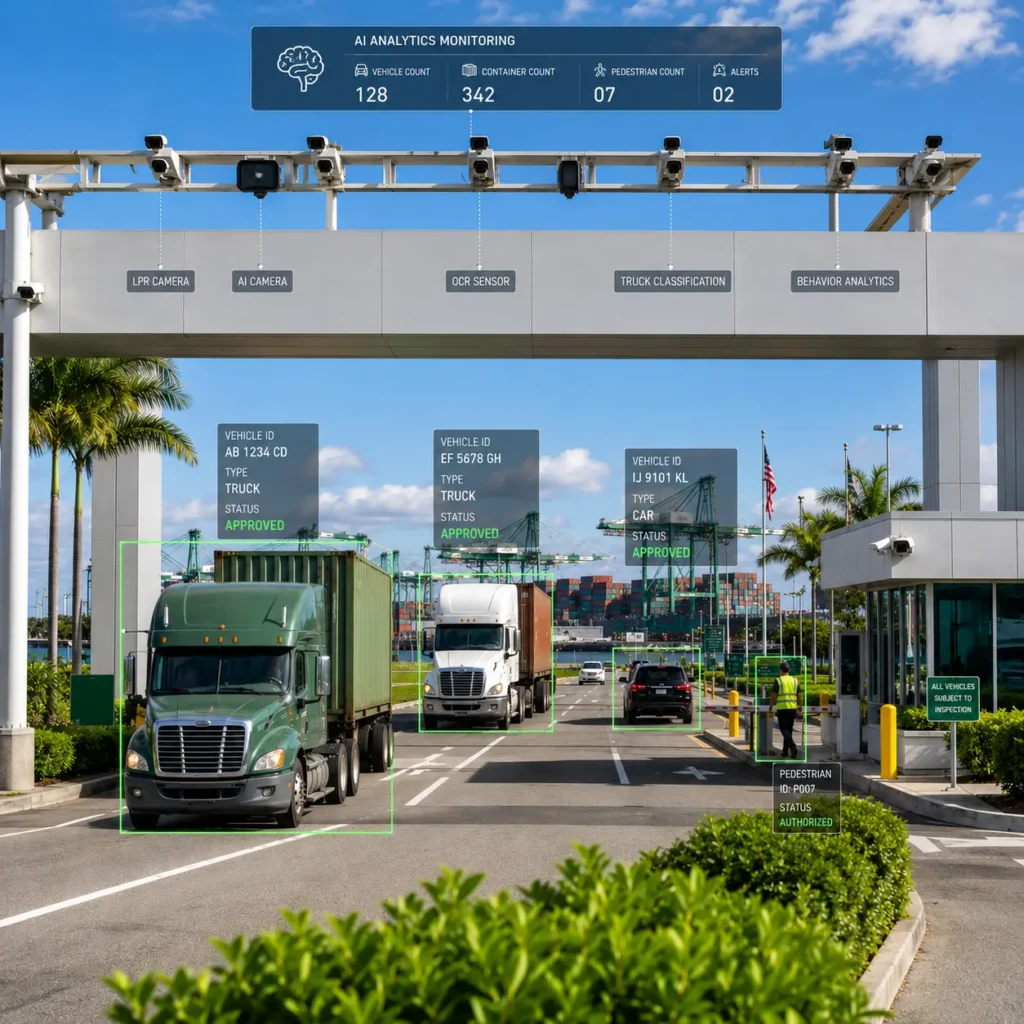
Port gates and internal roads can become congested when vehicles, containers, and personnel move simultaneously. Video analytics can help monitor defined traffic conditions and identify unusual vehicle movement, congestion, restricted-area entry, or unsafe interaction between vehicles and pedestrians.
Making Security Alerts More Contextual
A video detection does not automatically mean that an incident has occurred. A person entering a restricted area may be authorised for maintenance, while a vehicle inside a controlled zone may be performing an approved operation.
JNPA can potentially improve alert prioritisation by connecting video events with relevant information such as:
- Access permissions
- Vehicle authorisations
- Work permits
- Maintenance schedules
- Terminal operating status
- Equipment activity
- Gate information
This context can help distinguish expected activity from events that require verification and reduce unnecessary alerts for security personnel.
Supporting Crane And Equipment Safety
Large cargo-handling equipment creates areas where worker positioning and equipment movement must be carefully managed. Video analytics can monitor selected zones around cranes, loading equipment, workshops, and maintenance facilities.
Potential use cases include detecting personnel inside predefined equipment zones, monitoring worker-equipment proximity, identifying selected PPE deviations, and detecting obstructions around designated operational routes.
These alerts can complement physical barriers, safety procedures, operator controls, and supervision.
Maintenance Teams Can Use SOP Analytics Too
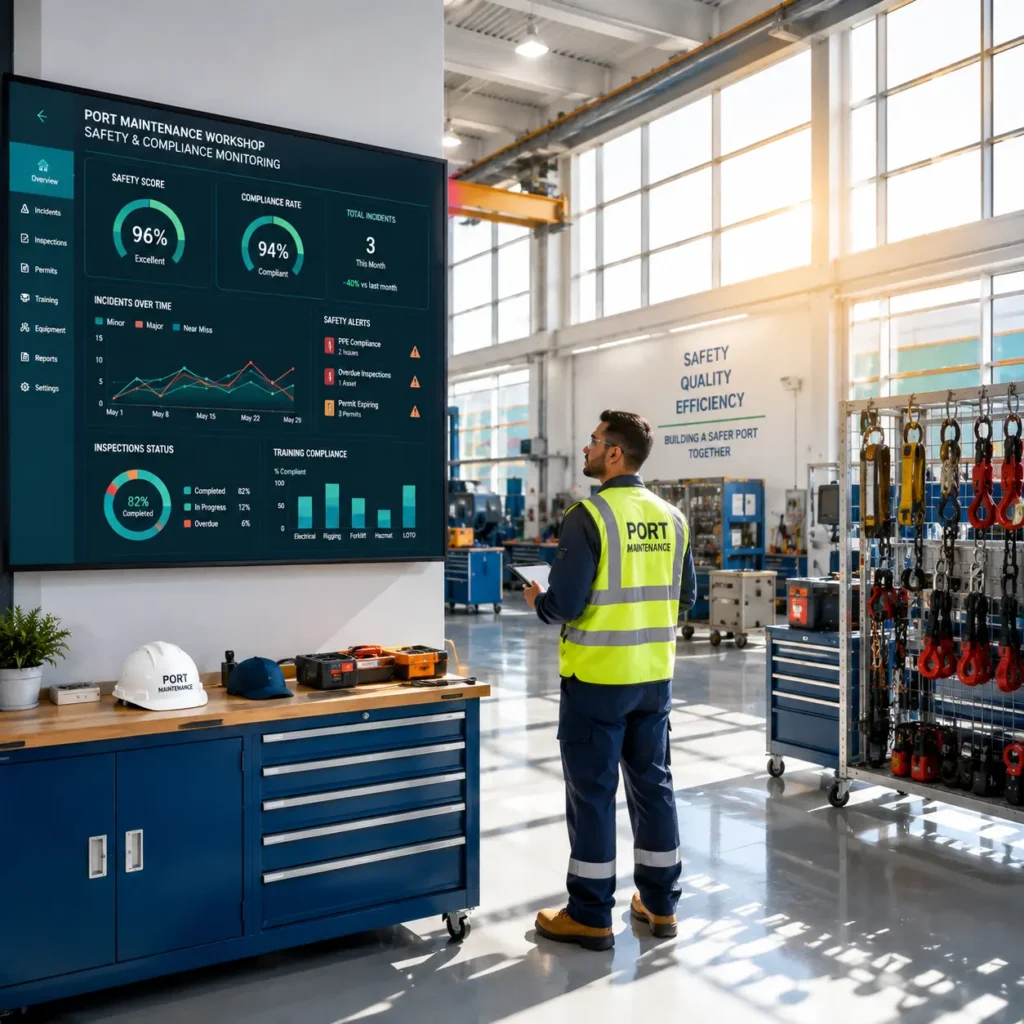
Port infrastructure includes electrical systems, cranes, lighting, buildings, roads, drainage, mechanical equipment, and other assets requiring maintenance.
AI-based SOP analytics can support selected maintenance requirements such as controlled access, PPE, designated work areas, and clear emergency routes.
If a maintenance activity is scheduled, the system can use that information to provide context to visual detections. Repeated deviations can also highlight locations where training, signage, access arrangements, or worksite design may need improvement.
Incident Investigation With AI-Assisted Video Search
Video analytics can remain useful after an operational or safety incident. Investigators may otherwise need to review recordings from multiple cameras covering gates, yards, cranes, roads, and terminal areas.
AI-assisted search can help authorised personnel locate relevant footage using time, location, movement, vehicle presence, or predefined event categories. This can shorten the time required to establish the sequence of events.
Repeated incident patterns can then be reviewed to determine whether corrective actions are working or whether a recurring operational risk remains.
A Port Environment Requires Robust Analytics
JNPA’s outdoor environment presents challenges for computer vision. Glare, rain, dust, night-time conditions, camera vibration, moving containers, changing yard layouts, and obstructed views can affect detection accuracy.
Before scaling an AI programme, JNPA should evaluate:
- Camera positioning and coverage
- Day and night performance
- Weather-related detection quality
- Network reliability
- False-positive rates
- Data retention
- Cybersecurity
- Role-based access
- Human response procedures
Analytics should be tested under actual port conditions rather than relying only on controlled demonstrations.
Measuring The Operational Value
JNPA can evaluate the programme through measurable outcomes such as:
- Reduction in recurring SOP deviations
- PPE compliance
- Restricted-zone events
- Worker-equipment proximity incidents
- Gate and yard congestion events
- Alert response time
- False-positive rate
- Incident investigation time
- Corrective-action closure
The objective should be improved visibility and faster response, not simply generating more alerts.
For Jawaharlal Nehru Port Authority, AI-based SOP analytics and video analytics can complement existing port security, safety, traffic management, maintenance, and surveillance systems. A targeted deployment across cargo areas, gates, yards, workshops, and controlled facilities can help identify recurring risks while keeping operational and security decisions with trained personnel.
Frequently Asked Questions
Yes. It can support monitoring of defined exclusion zones, worker-equipment proximity, PPE, and restricted areas for human review.
It can identify selected traffic, access, congestion, and vehicle-person interaction conditions and direct relevant events to authorised teams.
Yes. In suitable camera locations, analytics can monitor predefined equipment zones and identify personnel entering areas where access should be restricted.
Potentially. Linking visual events with work permits, access permissions, maintenance schedules, and equipment activity can provide useful operational context.