Ahmedabad Metro Rail operates in an environment where passenger movement, train operations, maintenance, security, construction, and public infrastructure intersect every day. The challenge is not simply collecting CCTV footage. It is making that visual information useful when an unsafe or unusual situation develops.
AI-based SOP analytics and video analytics can help Ahmedabad Metro Rail move towards more proactive monitoring. Instead of asking personnel to continuously watch every camera, AI can identify predefined conditions, highlight relevant events, and provide information that supports faster human intervention.
A Scenario-Based Approach For Ahmedabad Metro
When Passenger Movement Becomes Unusual
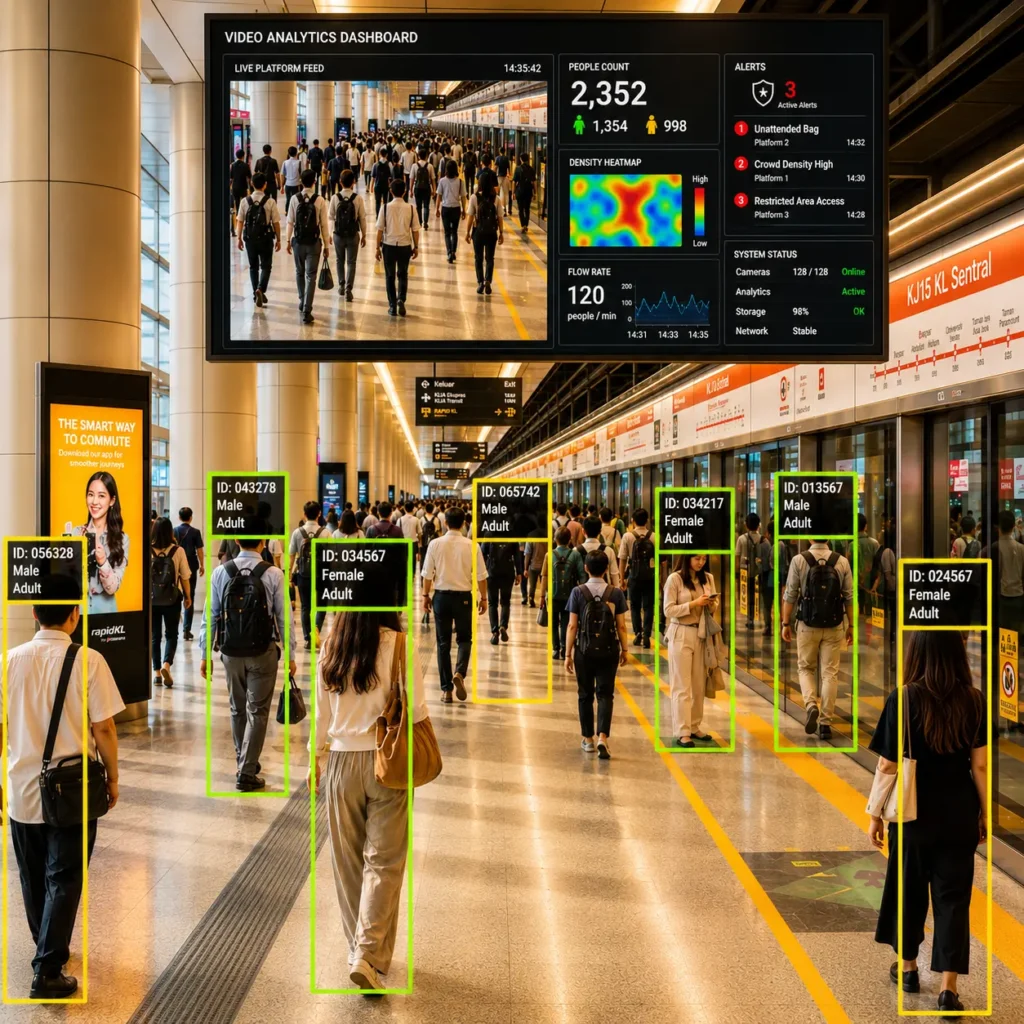
Crowding is not inherently unsafe. However, unusually high passenger concentration in a particular location can require intervention, especially during peak hours, service disruptions, or special events.
Video analytics can monitor predefined areas and identify changes in crowd density or unusual accumulation. Alerts can then be reviewed by station personnel.
Historical analytics can also reveal recurring congestion points. If the same area repeatedly experiences crowding, Ahmedabad Metro Rail can examine passenger routing, signage, barriers, staffing, or station arrangements instead of treating each occurrence as an isolated event.
When Maintenance Work Creates Exposure
Maintenance activities involve workers, equipment, electrical systems, tools, vehicles, and controlled work zones. Some SOP requirements can be translated into visual rules.
AI-based SOP analytics can monitor:
- Required visible PPE
- Restricted maintenance areas
- Worker-equipment proximity
- Designated work boundaries
- Vehicle-person interaction
- Clear access routes
For example, if personnel are required to remain outside a defined equipment zone while an operation is underway, video analytics can identify entry into that zone and notify the responsible team.
The technology should monitor observable requirements, not attempt to evaluate complex technical work.
When Construction Conditions Change
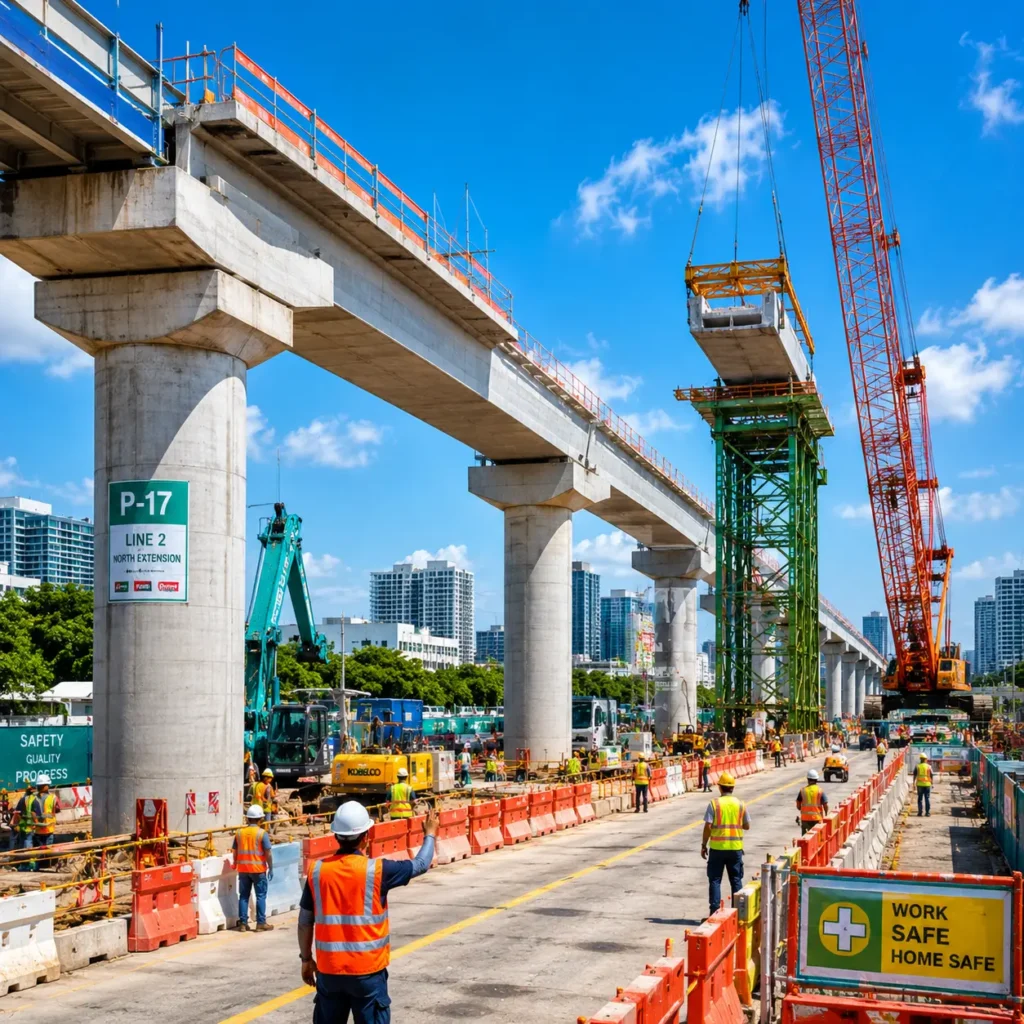
Metro infrastructure development creates temporary environments where excavation, heavy machinery, contractors, elevated structures, barriers, and changing access routes may coexist.
Video analytics can support selected contractor-safety requirements, including PPE, work-zone boundaries, equipment proximity, vehicle movement, and restricted access.
However, these environments change continuously. Camera positioning and analytics rules should therefore be reviewed as construction progresses rather than remaining fixed throughout the project.
Turning An Alert Into Useful Information
An AI detection becomes more valuable when its operational context is known.
A person inside a restricted maintenance area may be an authorised technician. A vehicle inside a controlled zone may be performing scheduled work. A worker without visible PPE may be temporarily outside the applicable work area.
Ahmedabad Metro Rail could potentially improve alert interpretation by connecting video analytics with:
Information Source | Context It Can Provide |
Access Control | Whether a person is authorised |
Work Permits | Whether maintenance is approved |
Equipment Status | Whether machinery is operating |
Maintenance Schedules | Whether activity is expected |
Station Information | Current operating conditions |
Emergency Systems | Whether an abnormal event is underway |
Where Conventional Monitoring Faces Limitations
Metro operations generate a large volume of routine visual activity. Most of it requires no action, while a relatively small number of events may require immediate attention.
Examples include:
- A passenger crowd forming near a platform access point
- A worker entering an equipment exclusion zone
- A vehicle moving through a restricted depot area
- A contractor failing to follow a visible safety requirement
- An object remaining unattended in a monitored location
- An unauthorised person entering a controlled facility
AI can help separate these types of events from routine activity.
The objective is not to make autonomous decisions. It is to reduce the amount of information that personnel need to manually examine.
A Stronger Role For AI In Depots
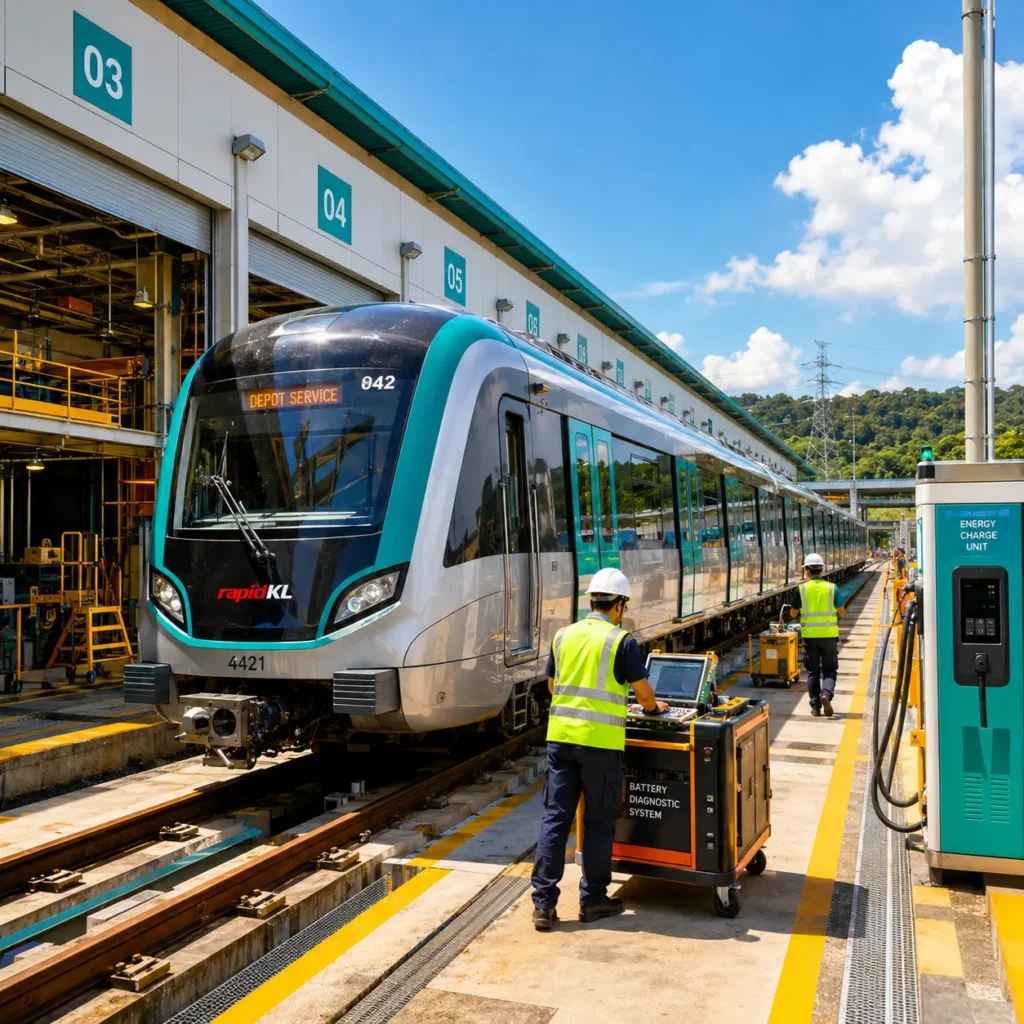
Depots can offer a practical environment for introducing AI because movements and activities are generally more structured than in passenger areas.
Analytics can be configured around train movements, service vehicles, maintenance teams, equipment zones, and access-controlled areas.
Using Video Intelligence After An Incident
AI analytics can remain useful once an event has ended.
When an incident occurs, authorised personnel may need to examine footage from several cameras to understand what happened. AI-assisted search can help locate relevant recordings using time, location, movement, or predefined event characteristics.
This can support investigations involving:
- Passenger incidents
- Security events
- Maintenance occurrences
- Construction-site events
- Equipment-related situations
From Individual Violations To Systemic Improvements
Repeated alerts can sometimes reveal a problem with the environment rather than with individual behaviour.
If workers repeatedly cross the same restricted boundary, the cause may be poor site design or an inconvenient access route. Recurring PPE alerts may point towards training, supervision, or equipment availability. Repeated passenger crowding may indicate an underlying passenger-flow issue.
Building AI Around Safety And Security Controls
A metro analytics programme should be designed with security and responsible data management from the beginning.
Important considerations include:
- Role-based access to video
- Secure network architecture
- Controlled data retention
- Audit trails
- Cybersecurity testing
- Privacy safeguards
- Secure integration with existing systems
- Human verification of significant alerts
How Ahmedabad Metro Rail Can Measure Success
The programme should be evaluated through operational outcomes rather than the number of cameras or alerts generated.
Useful indicators include:
- Reduction in recurring SOP deviations
- PPE compliance
- Restricted-area events
- Worker-equipment proximity incidents
- Passenger-safety events identified
- Alert response time
- False-positive rate
- Incident investigation time
- Contractor corrective-action closure
Frequently Asked Questions
Yes. It can monitor selected visual requirements such as PPE, restricted zones, worker-equipment proximity, and designated maintenance areas.
It can identify predefined crowd-density conditions and unusual accumulation in selected locations, allowing station personnel to assess whether intervention is necessary.
Yes. Potential applications include PPE monitoring, work-zone detection, equipment-personnel proximity, vehicle movement, and restricted-area monitoring.
Potentially. Linking video detections with work permits, access permissions, maintenance schedules, and equipment status can provide useful context.