Hyderabad Metro Rail operates across a busy urban environment where stations, trains, depots, maintenance facilities, construction areas, and passenger movement must remain coordinated throughout the day. High temperatures, monsoon conditions, peak-hour congestion, and ongoing infrastructure activities can further change operating conditions.
AI-based SOP analytics and video analytics can help Hyderabad Metro Rail introduce greater intelligence into existing surveillance and supervision systems. Instead of treating CCTV primarily as a recording mechanism, AI can identify selected conditions that require attention and provide useful information to operations, safety, maintenance, and security teams.
Passenger Flow Can Become A Measurable Safety Indicator
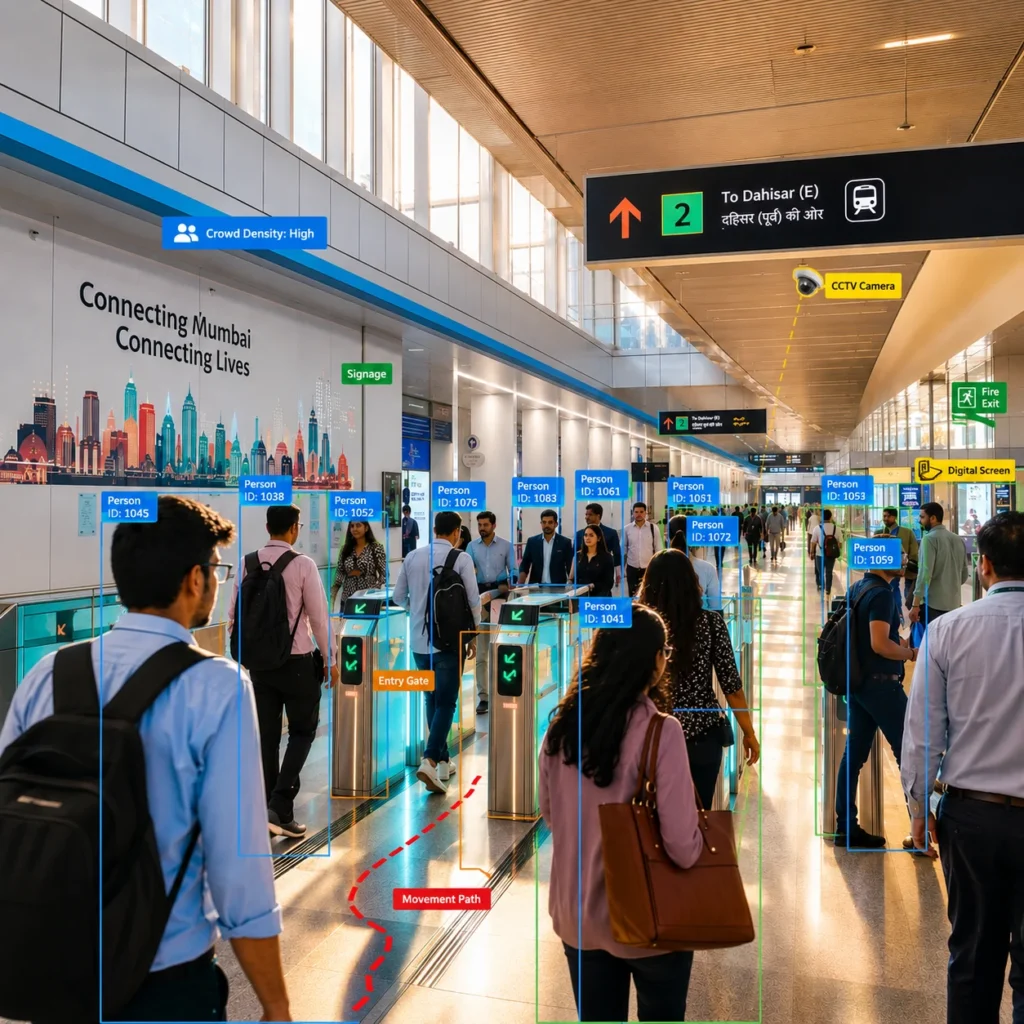
Passenger movement changes significantly between normal periods, peak hours, service disruptions, and special events. Manual monitoring may not provide a consistent picture across every station.
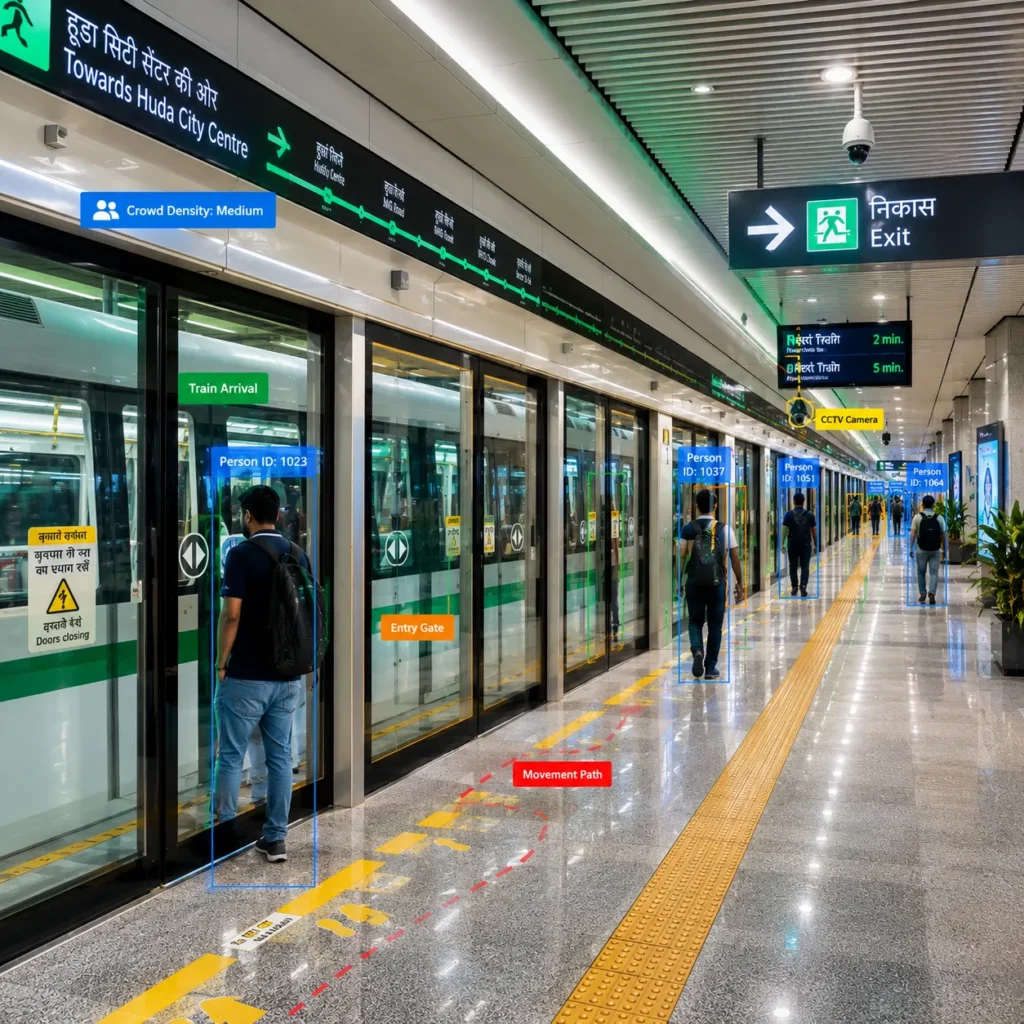
Video analytics can identify unusual crowd accumulation in selected areas and help station personnel understand where passenger movement is becoming concentrated.
This information can support decisions involving:
- Queue management
- Platform supervision
- Crowd-control measures
- Passenger routing
- Staffing requirements
Over time, analytics can reveal recurring patterns. If one location consistently experiences congestion, Hyderabad Metro Rail can investigate whether barriers, signage, passenger routes, station layouts, or operating practices need adjustment.
Turning Safety Procedures Into Visual Checks
Not every SOP is suitable for AI. The most appropriate procedures contain requirements that cameras can observe reliably.
For example, if maintenance personnel are required to remain outside a designated equipment zone while machinery is operating, AI can monitor the boundary and identify unexpected entry.
Similarly, computer vision can support selected PPE requirements, controlled access, worker positioning, and designated vehicle routes.
Possible applications include:
Operational Area | AI-Based Monitoring | Intended Outcome |
Maintenance | PPE and access | Safer work practices |
Depot | Worker-equipment proximity | Reduce exposure |
Construction | Work-zone compliance | Contractor safety |
Station | Restricted-area entry | Security support |
Service Areas | Obstruction detection | Better access |
What Should AI Watch For?
The strongest applications are those where the condition is clearly visible and an established response already exists.
Potential examples include:
- Unusual passenger crowding
- Entry into restricted areas
- Unattended objects
- Missing visible PPE
- Personnel entering equipment zones
- Worker-vehicle interaction
- Obstructions on designated pathways
- Unusual activity around critical facilities
- Construction-site safety deviations
The purpose is not to automate every operational decision. AI should narrow down the events that deserve human attention.
Depots Can Provide A Controlled Starting Point
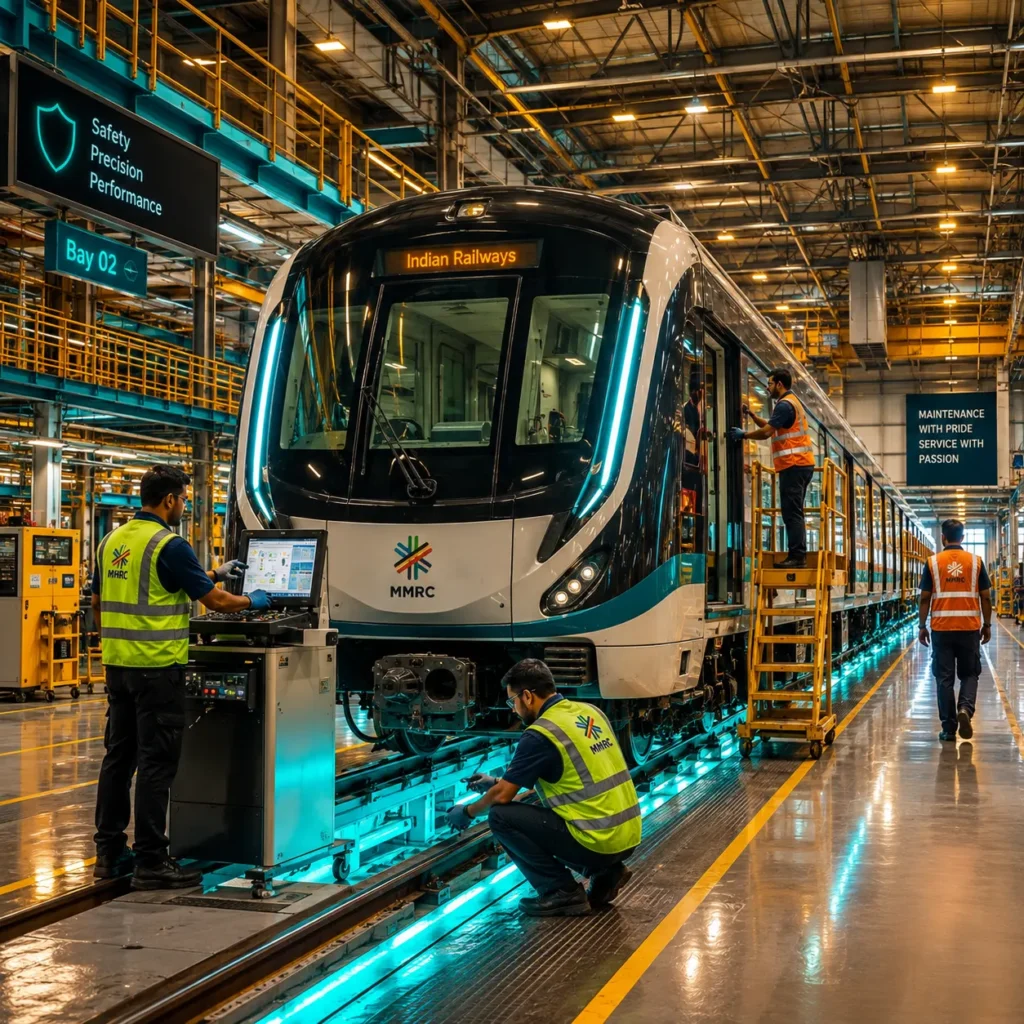
A depot offers a relatively structured environment for implementing SOP analytics. Train movements, maintenance activities, service vehicles, personnel, and equipment generally operate within identifiable zones.
This makes it possible to establish specific detection rules around worker-equipment interaction, restricted maintenance areas, PPE, and vehicle movement.
A pilot at a depot can also help assess the practical performance of AI before extending selected applications to crowded stations. False alerts, camera positioning, response procedures, and network requirements can be evaluated under real operating conditions.
Construction Sites Need Adaptive Monitoring
Metro infrastructure projects create constantly changing environments. Excavation, civil works, elevated structures, electrical activities, heavy machinery, contractors, and temporary barriers may all be present at different stages.
AI video analytics can support selected construction-safety requirements such as:
- Worker entry into restricted areas
- PPE compliance
- Personnel near heavy machinery
- Vehicle movement
- Temporary work-zone monitoring
Obstructions around designated routes
An Alert Becomes More Useful With Context
Video analytics can identify an event, but operational information can determine whether it is significant.
Hyderabad Metro Rail could potentially connect video events with:
- Access permissions
- Maintenance schedules
- Work permits
- Equipment status
- Depot activities
- Station conditions
- Emergency notifications
For instance, a person entering a restricted maintenance zone may be authorised because a work permit is active. Without this information, the same detection might unnecessarily trigger a security response.
Contextual analytics can therefore reduce false escalations and help control-room personnel concentrate on higher-priority events.
AI Can Shorten Incident Investigation
Video analytics also has value after an incident.
When an event occurs, authorised personnel may need to review recordings from several cameras to understand what happened. AI-assisted search can help locate relevant footage using time, location, movement, or predefined event characteristics.
This can support investigation of passenger incidents, security events, maintenance occurrences, and construction-site situations.
From Alerts To Preventive Improvements
Repeated AI detections can reveal problems that individual inspections may overlook.
Frequent worker entry into a restricted area could indicate poor site design, inconvenient access routes, unclear signage, or inadequate physical separation. Repeated PPE alerts could indicate a training or equipment-availability issue.
Similarly, recurring crowding at a particular station location may indicate a passenger-flow problem rather than simply a temporary peak.
What Hyderabad Metro Rail Should Consider
A successful deployment requires more than suitable AI software. Hyderabad Metro Rail should evaluate:
- Camera positioning and image quality
- Network reliability
- Night-time performance
- Crowd density
- Camera obstruction
- Weather-related visibility
- False-positive rates
- Data retention
- Cybersecurity
- Privacy and access controls
Measuring Operational Impact
Useful performance indicators can include:
- Recurring SOP deviations
- PPE compliance
- Restricted-area events
- Worker-equipment proximity incidents
- Passenger-safety alerts
- Alert response time
- False-positive percentage
- Incident investigation time
- Contractor corrective-action closure
Frequently Asked Questions
Yes. Depots are suitable for monitoring PPE, restricted maintenance zones, worker-equipment interaction, vehicle movement, and other clearly defined safety requirements.
It can identify predefined crowding conditions, restricted-area entry, unattended objects, and other events that require assessment by station personnel.
Yes. It can support monitoring of PPE, work-zone boundaries, heavy-equipment interaction, vehicle movement, and selected contractor safety requirements.
Potentially. Combining video events with work permits, access permissions, equipment status, and maintenance schedules can provide context and improve alert prioritisation.
No. AI provides additional monitoring and decision support. Operations, maintenance, safety, and security personnel should continue to validate important events and make final decisions.