Chennai Metro Rail Limited (CMRL) operates a rapidly developing urban rail system in which passenger movement, train operations, station facilities, depots, construction works, maintenance activities, and security functions must remain coordinated. Chennai’s climate, including heat, heavy rainfall, and periods of intense passenger movement, also creates operational conditions that can change significantly during the day.
For CMRL, AI-based SOP analytics and video analytics can provide a practical way to strengthen supervision across these different environments. Instead of treating every camera as a passive recording device, AI can help identify specific situations that deserve attention from operations, safety, maintenance, or security teams.
A Risk-Based Approach For CMRL
The most effective deployment would begin with situations where early detection can make a meaningful difference.
Risk | Possible AI Application | Value To CMRL |
Platform congestion | Crowd-density analytics | Faster station response |
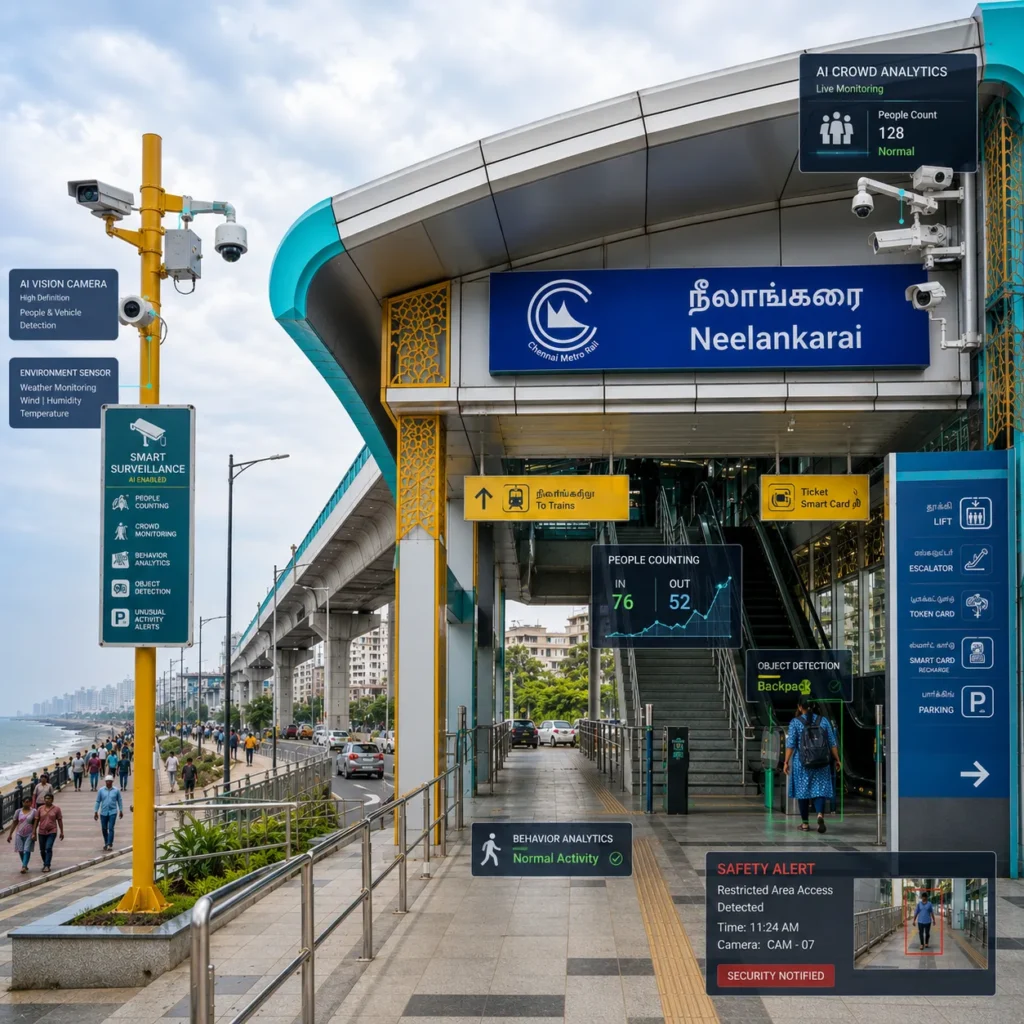
Restricted access | Person detection | Better security |
Maintenance exposure | Worker-equipment monitoring | Safer work |
Depot movement | Vehicle-person detection | Reduce collision risk |
Construction activity | Work-zone monitoring | Contractor oversight |
Unattended objects | Object detection | Security response |
This approach avoids attempting to automate every activity and concentrates resources on conditions that have a defined operational response.
Platform And Concourse Intelligence
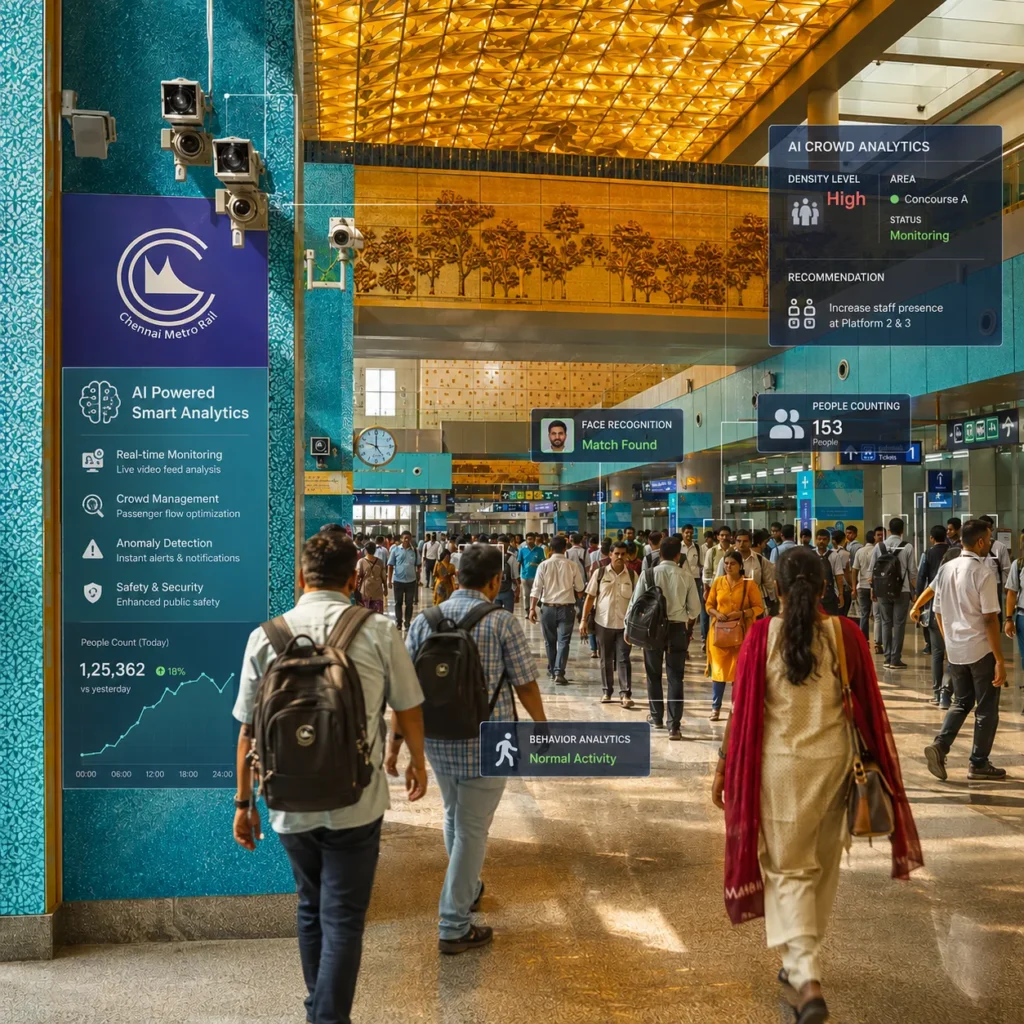
Passenger areas are dynamic. Normal movement can quickly become congestion during peak hours, service disruptions, special events, or changes in passenger flow.
Video analytics can monitor selected platform and concourse areas for unusual crowd concentration, people entering restricted locations, unattended objects, or other predefined conditions.
For CMRL, the benefit is not simply knowing that a crowd exists. Analytics can help identify when crowd conditions differ from an established threshold or pattern, allowing station personnel to investigate.
The same technology could support analysis of recurring congestion locations, helping CMRL examine whether passenger routing, signage, barriers, staffing, or station layout requires adjustment.
Making Maintenance SOPs Digitally Observable
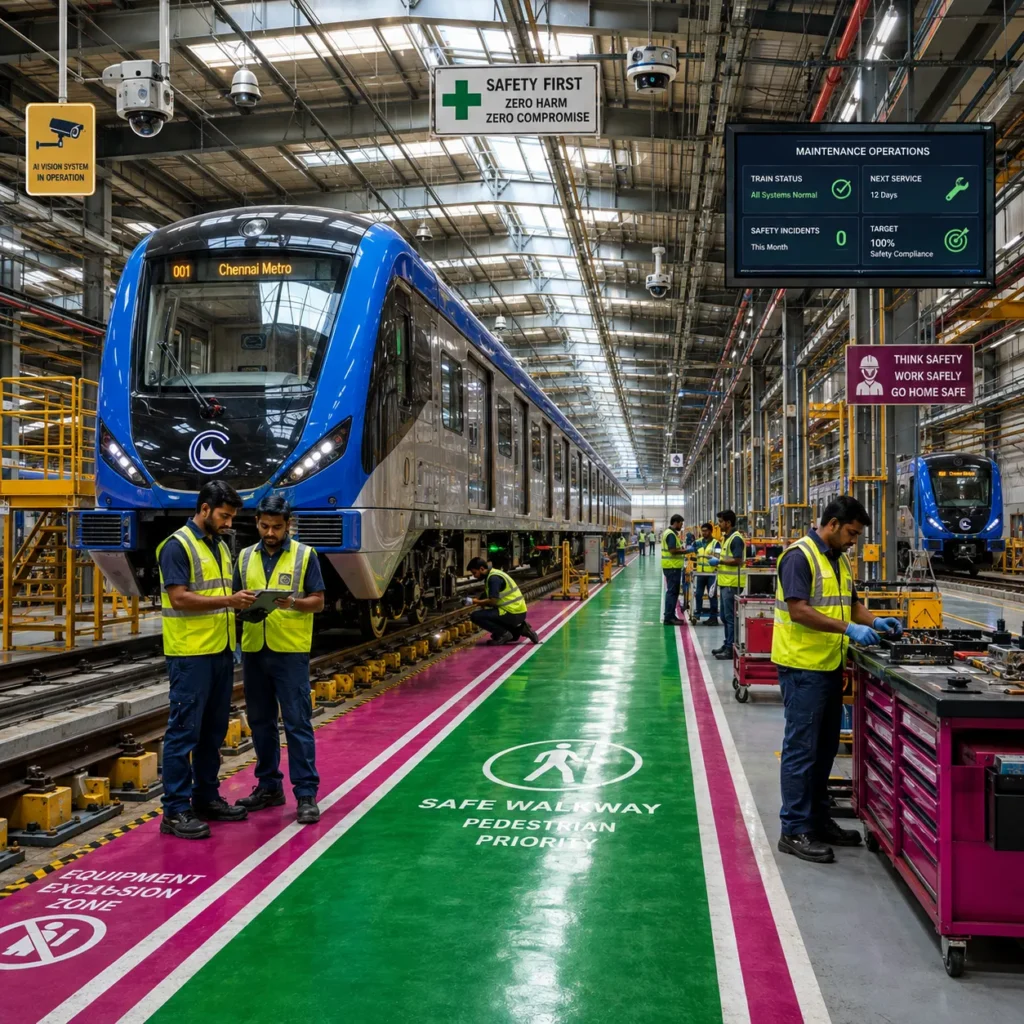
Metro maintenance involves electrical, mechanical, civil, signalling, telecommunications, rolling stock, and station infrastructure activities. Many associated procedures contain requirements that can be observed through cameras.
AI-based SOP analytics can support requirements such as:
- Wearing specified PPE
- Remaining outside designated equipment zones
- Controlling access to maintenance areas
- Maintaining clear pathways
- Monitoring worker-equipment proximity
- Restricting vehicle movement in selected areas
For example, when maintenance is being performed around a designated equipment zone, computer vision can identify unexpected personnel entry and notify the responsible team.
The system should monitor only clearly measurable requirements. It should not attempt to determine whether a complex engineering task has been technically completed correctly.
Depots As Controlled AI Test Environments
CMRL depots provide an interesting starting point because activities are generally more structured than those in passenger areas. Trains, maintenance equipment, personnel, and service vehicles operate according to defined procedures and schedules.
Video analytics can be used to examine worker and vehicle interaction, restricted maintenance areas, PPE compliance, and selected movement conditions.
A depot pilot could also help CMRL evaluate AI performance before extending the technology to crowded stations. Controlled environments make it easier to establish detection accuracy, response procedures, and acceptable false-alert levels.
Construction Requires Flexible Analytics
Metro expansion and infrastructure development create temporary work environments that change as projects progress. Construction sites can include excavation, elevated structures, heavy machinery, contractors, temporary barriers, and areas adjacent to public movement.
AI can support selected safety requirements such as:
- PPE compliance
- Worker entry into restricted zones
- Heavy-equipment proximity
- Vehicle movement
- Temporary work-area access
- Obstructions around designated routes
Using AI For Incident Investigation
AI can remain useful after an event has occurred.
When an incident takes place, authorised CMRL personnel may need to review footage from multiple cameras. AI-assisted search can help locate relevant recordings using factors such as time, location, movement, or predefined event characteristics.
This can support investigations involving passenger incidents, security events, maintenance activities, or construction-site occurrences.
More importantly, investigation data can be compared across incidents to determine whether similar situations are recurring.
Deployment Considerations For Chennai Conditions
CMRL should evaluate AI systems under actual operating conditions rather than relying solely on controlled demonstrations.
Important factors include:
- High passenger density
- Low-light conditions
- Camera obstruction
- Rain and water exposure
- Glare and reflections
- Construction-related changes
- Network reliability
- Cybersecurity
- Data-retention requirements
How CMRL Can Measure Success
The technology should be evaluated through meaningful operational outcomes, including:
- Reduction in recurring SOP deviations
- PPE compliance
- Restricted-area incidents
- Worker-equipment proximity events
- Passenger-safety alerts
- Alert response time
- False-positive rate
- Incident investigation time
- Contractor corrective-action closure
Frequently Asked Questions
Yes. Video analytics can identify predefined crowd-density or unusual accumulation conditions in selected areas, allowing station teams to assess whether intervention is required.
Depots, selected maintenance areas, and controlled construction zones can be suitable starting points because activities and access conditions are easier to define than in crowded public areas.
Yes. It can monitor selected visual requirements such as PPE, restricted equipment zones, personnel movement, and designated work areas.
Potentially. Linking video detections with work permits, access permissions, and maintenance schedules can provide context and reduce unnecessary alerts.