Kochi Metro Rail Limited (KMRL) operates a public transport system where passenger safety, train movement, station management, maintenance, security, and infrastructure development must work together. The operating environment also includes high passenger density, elevated and ground-level infrastructure, depots, construction activity, and multiple technical systems.
For KMRL, AI-based SOP analytics and video analytics can provide an additional layer of operational awareness. Instead of relying entirely on personnel to watch CCTV feeds or conduct periodic inspections, AI can identify specific visual conditions and direct attention towards situations that may require intervention
Four Operating Environments, Four AI Priorities
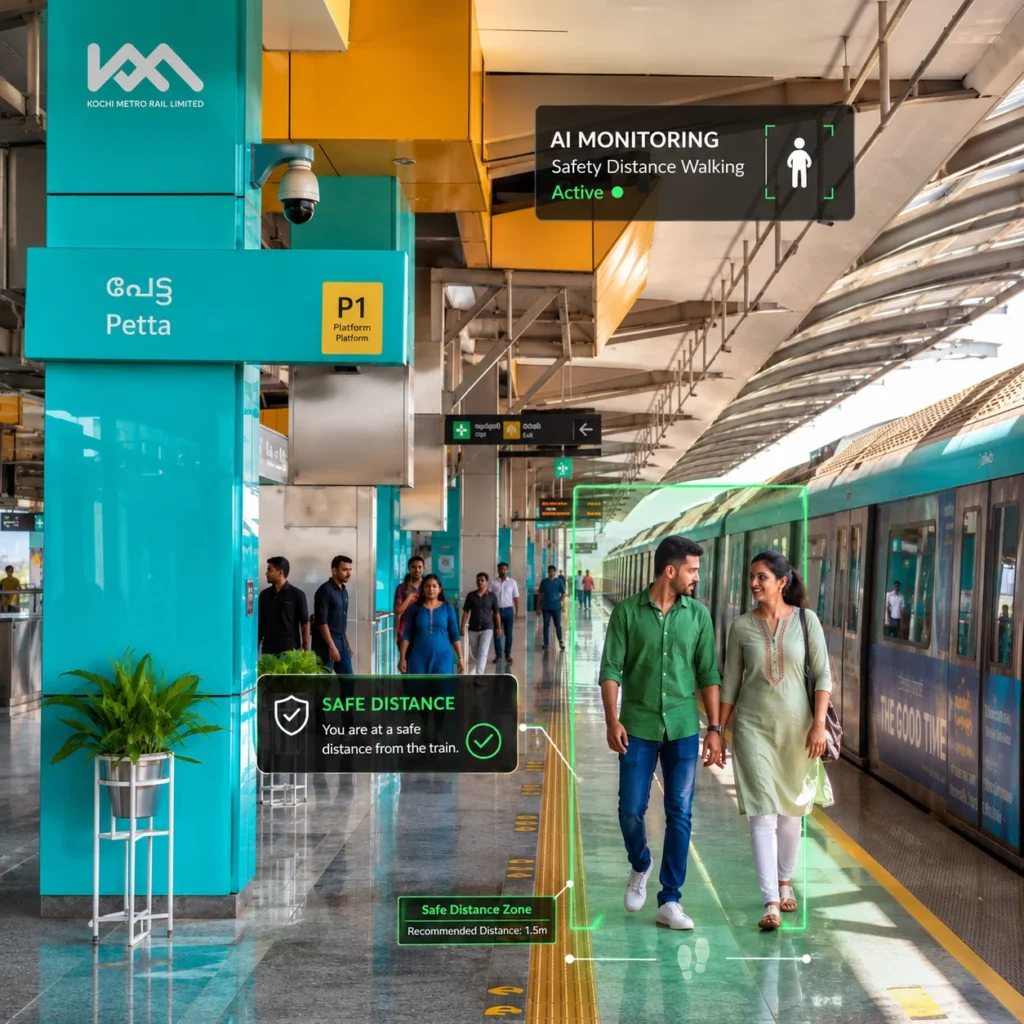
Stations: Passenger-Focused Monitoring
Passenger areas require analytics that can help identify unusual conditions without unnecessarily interfering with normal movement.
Video analytics can monitor selected areas for crowd concentration, restricted access, unattended objects, and other predefined events. During peak hours or service disruptions, such information can help station personnel identify locations requiring additional attention.
Depots: Maintenance Safety
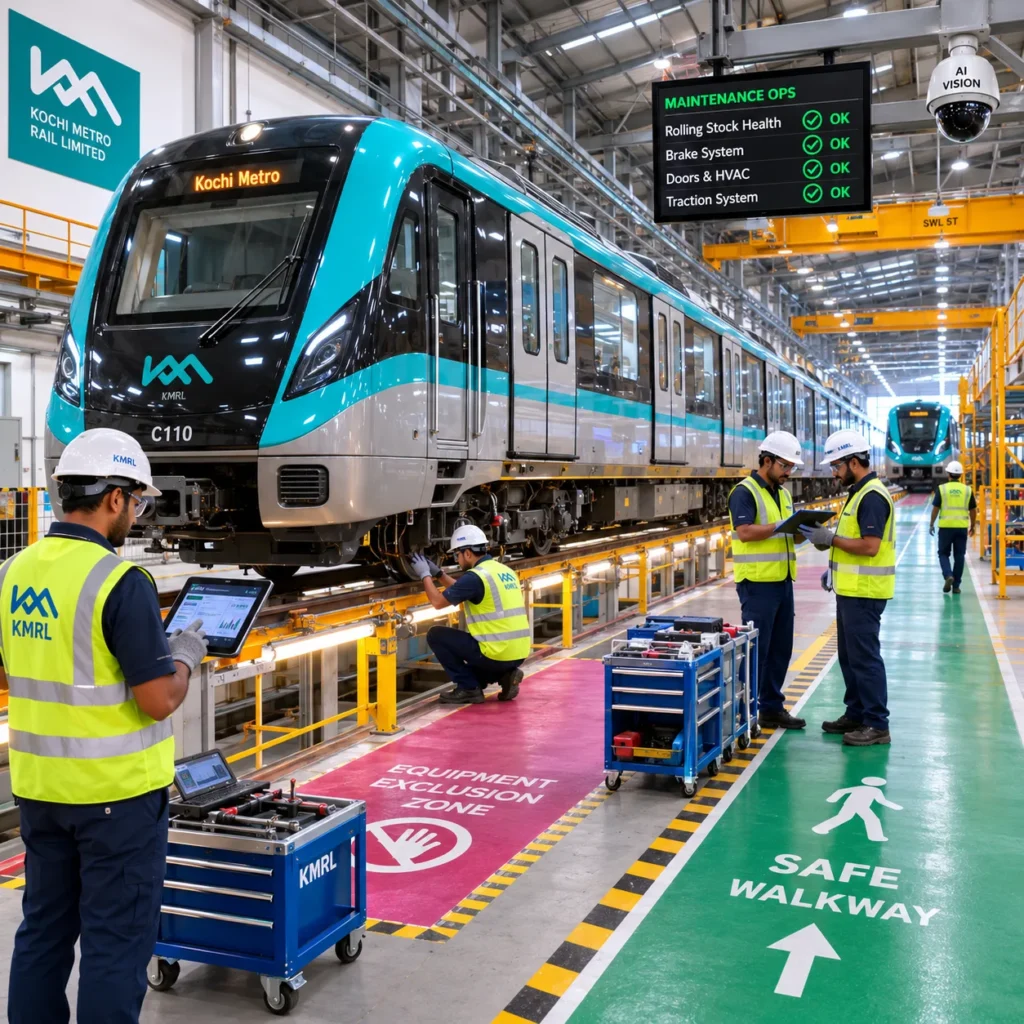
Depots provide a more controlled environment where SOP analytics can be particularly useful. AI can monitor PPE, access to designated maintenance zones, worker-equipment proximity, and vehicle movement.
Because depot activities are more predictable than passenger movement, these locations can also be suitable for pilot deployments.
Construction Areas: Changing Work Conditions
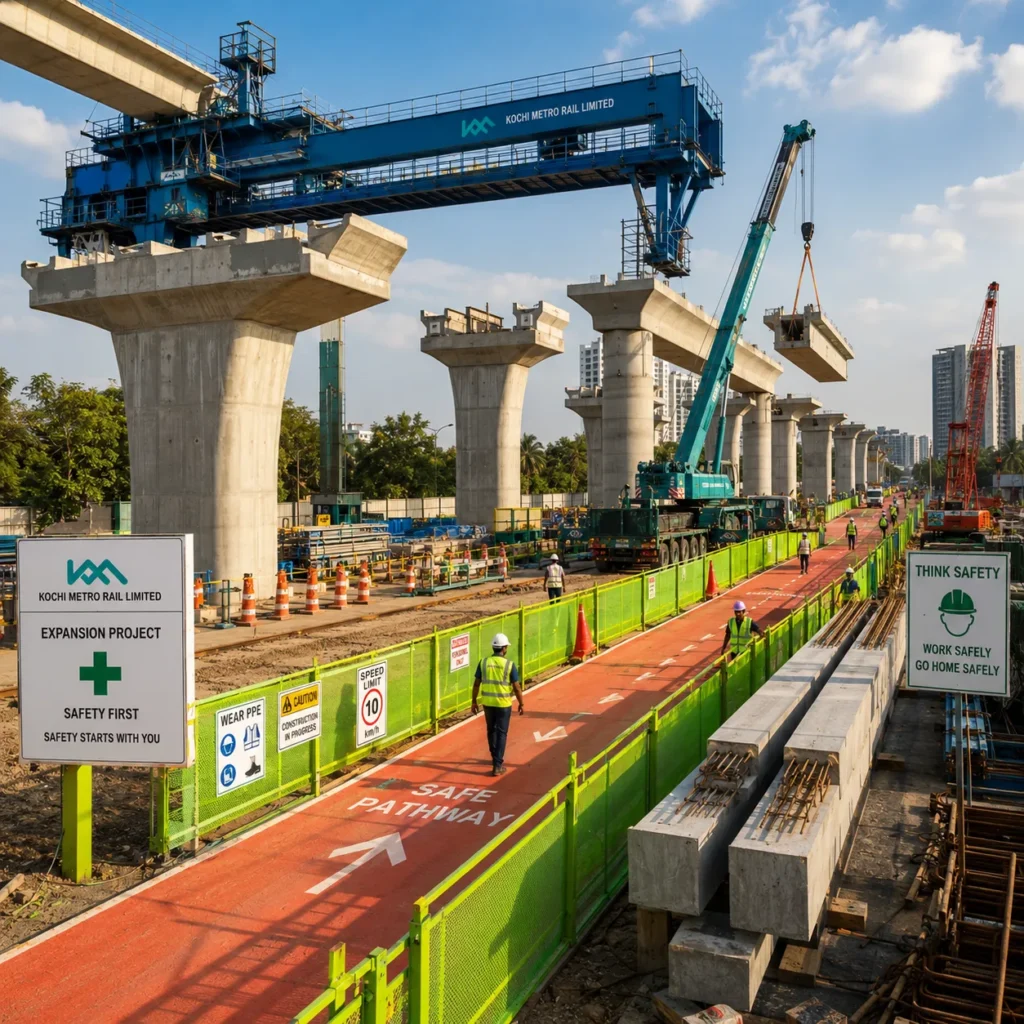
Metro expansion and infrastructure maintenance involve contractors, heavy equipment, temporary barriers, excavation, and changing work zones.
AI can monitor selected requirements such as PPE, restricted work areas, worker-equipment interaction, and vehicle movement. However, analytics rules should be updated as construction stages change.
Passenger And Staff Access Areas: Security Support
Certain station, administrative, technical, or operational areas may require controlled access. Video analytics can identify movement across defined boundaries and generate alerts for authorised personnel to verify.
Turning KMRL SOPs Into Observable Conditions
An SOP can contain many different requirements, but only some are suitable for computer vision.
A useful candidate is a requirement that can be expressed visually and connected with a specific response.
For example, if maintenance personnel must remain outside a designated equipment zone while machinery is operating, cameras can monitor that zone. If a person enters it, the system can generate an alert.
Other potential SOP applications include:
SOP Requirement | AI Monitoring | Possible Response |
PPE | Detect missing visible equipment | Supervisor review |
Restricted access | Identify entry into controlled areas | Security verification |
Equipment zone | Detect personnel proximity | Safety intervention |
Depot movement | Monitor vehicle-person interaction | Operator alert |
Worksite boundary | Detect entry or exit | Site inspection |
Context Can Make Alerts More Accurate
One challenge with basic video analytics is that an event may appear unusual without actually being unsafe.
A person inside a maintenance zone could be an authorised technician carrying out scheduled work. A vehicle in a restricted area could be expected if a maintenance activity is underway.
KMRL can potentially improve alert relevance by connecting video events with:
- Access permissions
- Maintenance schedules
- Work permits
- Depot activities
- Equipment status
- Station conditions
- Emergency information
Using AI When Something Goes Wrong
Video analytics can provide value after an incident as well as during it.
If a passenger incident, maintenance event, security concern, or construction-site occurrence takes place, authorised personnel may need to review footage from multiple cameras.
AI-assisted search can help locate relevant recordings based on time, location, movement, or predefined event categories. This can reduce the time spent searching through routine footage and help establish the sequence of events.
From Repeated Alerts To Better Metro Management
A recurring AI alert can sometimes indicate a wider operational problem.
If a station repeatedly experiences crowding in one location, KMRL can investigate whether passenger-flow arrangements, signage, barriers, or staffing need adjustment.
If depot analytics repeatedly identify people entering an equipment zone, the cause may involve workspace design or workflow rather than individual behaviour.
What KMRL Should Consider Before Scaling
AI performance depends on real-world conditions. Metro environments can involve crowded platforms, changing lighting, reflections, equipment obstruction, moving trains, construction activity, and different camera angles.
Before wider deployment, KMRL should assess:
- Camera positioning and image quality
- Network connectivity
- Night-time performance
- Detection accuracy
- False-alert frequency
- Data storage and retention
- Cybersecurity
- Privacy requirements
- Human response procedures
Measuring The Outcome
The success of AI analytics should be linked to operational results rather than the number of cameras connected.
KMRL can track:
- Recurring SOP deviations
- PPE compliance
- Restricted-area events
- Worker-equipment proximity incidents
- Passenger-safety events
- Alert response time
- False-positive rate
- Incident investigation time
- Corrective-action closure
Frequently Asked Questions
Yes. Depots are suitable for monitoring PPE, maintenance-zone access, worker-equipment proximity, vehicle movement, and other clearly defined safety requirements.
It can identify predefined conditions such as unusual crowd accumulation, restricted-area entry, or unattended objects and alert authorised station personnel for assessment
Yes. It can support monitoring of PPE, work-zone boundaries, heavy-equipment interaction, vehicle movement, and selected contractor safety requirements.
Potentially. Combining video events with work permits, maintenance schedules, access permissions, or equipment status can provide context and improve alert prioritisation.
No. AI should provide additional monitoring and decision support. KMRL personnel should validate significant alerts, assess the circumstances, and make operational and safety decisions.