Bangalore Metro Rail Corporation Limited (BMRCL), which operates Namma Metro, manages a complex urban transport environment where passenger movement, train operations, station safety, maintenance, security, and infrastructure development intersect. The organisation’s operating framework already places emphasis on train safety, security, punctuality, technology, and passenger experience.
As the metro network expands, the volume of visual information generated across stations, depots, trains, construction areas, and supporting facilities also increases. AI-based SOP analytics and video analytics can help BMRCL convert this visual information into useful operational alerts and safety insights.
A Station-Centric Approach To Passenger Safety
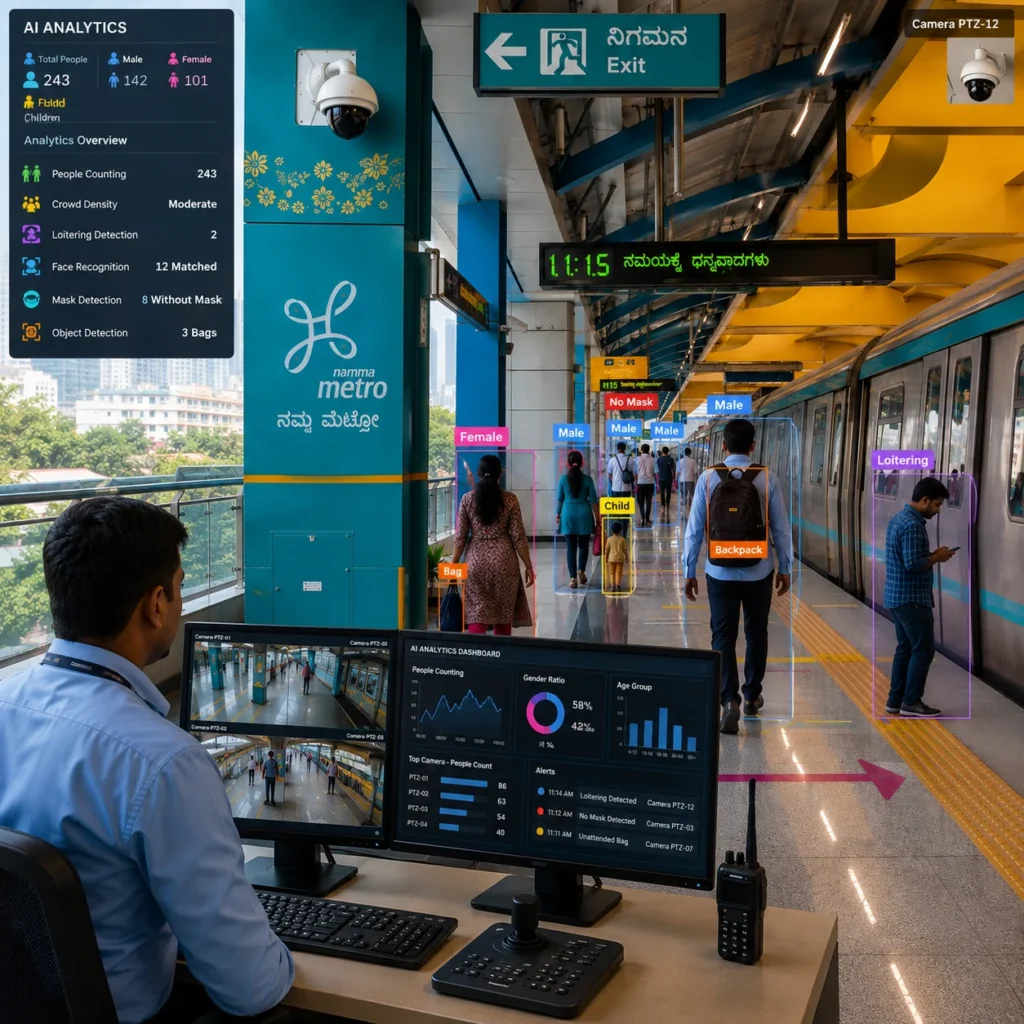
Stations present one of the most immediate opportunities for video analytics because passenger behaviour and density change throughout the day.
AI can identify unusual crowd accumulation in selected areas, monitor restricted spaces, and detect objects left in predefined zones. During peak periods or service disruptions, such information can help station teams understand where additional attention may be required.
The technology can also support monitoring around entrances, concourses, platforms, escalators, and other high-traffic areas.
However, crowd analytics should be used as an assistance mechanism. Station personnel should continue to assess the circumstances before taking action, particularly when crowd movement is influenced by service interruptions or special events.
SOP Analytics For Maintenance And Depot Operations
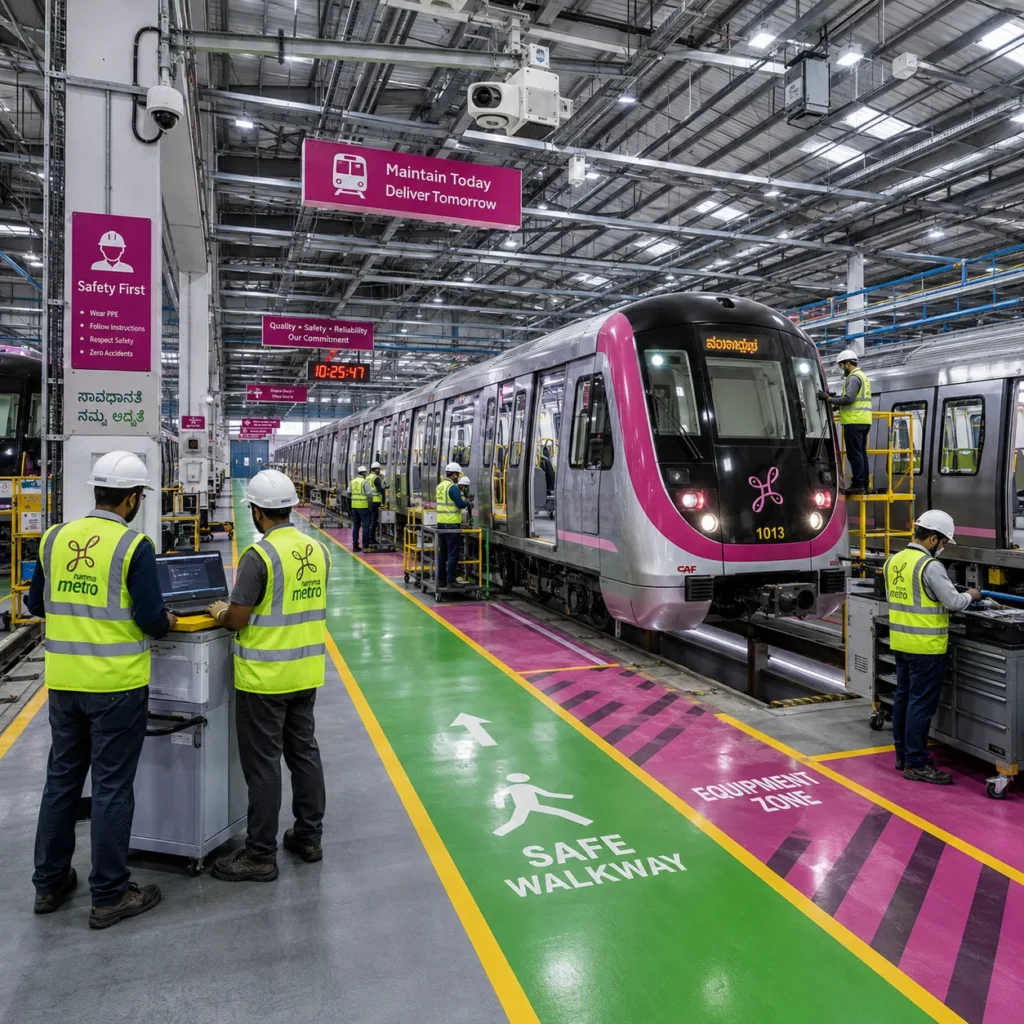
Depots offer a more controlled environment for applying AI-based SOP analytics.
Maintenance teams work around rolling stock, electrical systems, mechanical equipment, tools, vehicles, and other assets. Selected safety requirements can be converted into visual monitoring rules.
Maintenance Requirement | AI Capability | Possible Benefit |
PPE | Detect missing visible PPE | Faster intervention |
Restricted zone | Identify unauthorised entry | Safer maintenance |
Equipment area | Monitor personnel proximity | Reduce exposure |
Vehicle movement | Detect unsafe interaction | Improve depot safety |
Access routes | Identify obstructions | Better housekeeping |
AI should focus on observable requirements. It should not attempt to determine whether a complex technical repair, inspection, or engineering procedure has been correctly completed.
From Camera Footage To Operational Intelligence
Traditional CCTV provides a record of what happened. AI-based video analytics can help identify what deserves attention while an event is taking place.
For BMRCL, the technology can be configured around specific situations rather than attempting to analyse every movement.
Potential applications include:
- Passenger crowding in designated areas
- Entry into restricted locations
- Unattended objects
- Platform-edge safety conditions
- Worker PPE compliance
- Personnel entering maintenance zones
- Worker-equipment proximity
- Unusual activity around stations and depots
- Vehicle movement within controlled areas
This allows operational teams to concentrate on events that may require intervention
Supporting Construction And Expansion Activities
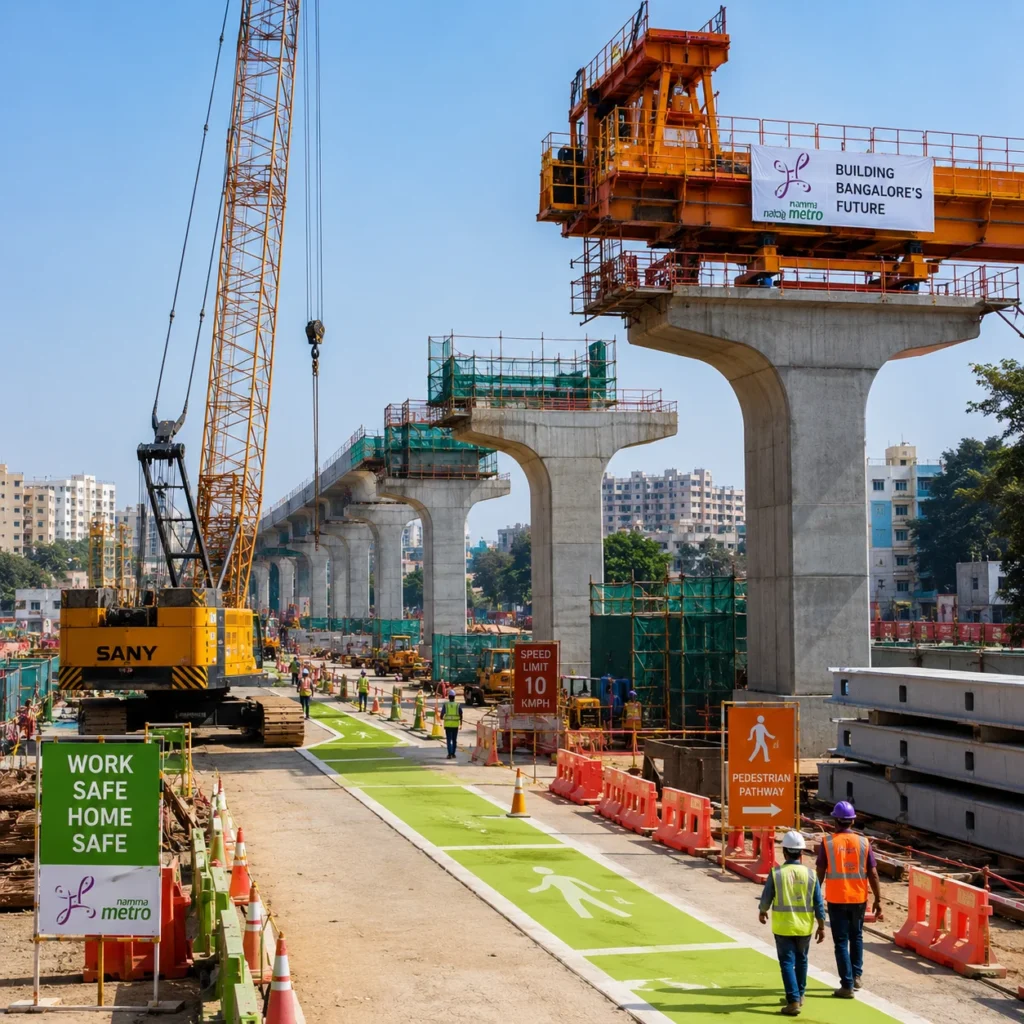
Metro expansion creates another environment where BMRCL can benefit from video analytics. Construction sites may involve excavation, tunnelling, elevated structures, heavy equipment, temporary access routes, contractors, and workers operating close to public areas.
AI-based monitoring can support selected site requirements such as PPE, work-zone boundaries, worker-equipment proximity, vehicle movement, and unauthorised access.
Because construction conditions change frequently, the analytics rules should be updated as work progresses. A detection model that works well during one construction phase may require adjustment when the site layout changes.
Connecting Video Events With BMRCL Information
An AI alert becomes more useful when additional context is available.
BMRCL could potentially associate video events with:
- Access permissions
- Maintenance schedules
- Work permits
- Depot activities
- Station conditions
- Equipment status
- Emergency notifications
- Security systems
For example, a person detected inside a restricted maintenance zone may be authorised if an approved work activity is taking place. Without this context, the same detection could generate an unnecessary alert.
Integrating relevant information can therefore help prioritise events and reduce the burden on control-room personnel.
Using AI To Strengthen Incident Investigation
Video analytics can also be useful after an incident.
If an operational, passenger-safety, security, or maintenance event occurs, authorised personnel may need to review footage from multiple cameras. Searching manually can take considerable time.
AI-assisted search can help locate relevant recordings based on time, location, movement, or predefined event characteristics.
This can support investigations into passenger incidents, equipment-related events, security concerns, and construction-site occurrences. It can also help BMRCL identify whether similar circumstances have occurred previously.
Learning From Repeated Safety Events
The most valuable information may come from patterns rather than individual alerts.
If the same station repeatedly experiences crowding in a particular location, BMRCL can examine passenger-flow arrangements, signage, barriers, or staffing.
If depot analytics repeatedly identify personnel entering an equipment zone, the underlying issue could involve workspace design, access arrangements, or work sequencing.
Similarly, recurring PPE alerts may indicate a training, supervision, or equipment-availability issue.
This turns video analytics into a source of operational learning rather than simply another surveillance tool.
Building A Responsible AI Environment
Metro systems handle sensitive operational and passenger information, so AI deployment should include appropriate safeguards.
BMRCL should consider:
- Role-based access to video
- Secure network architecture
- Data-retention policies
- Audit trails
- Cybersecurity controls
- Privacy requirements
- Controlled integration with operational systems
- Human validation of significant alerts
AI models should also be tested under realistic conditions, including crowded stations, low lighting, equipment obstruction, changing construction layouts, and peak-hour activity.
Frequently Asked Questions
It can monitor selected requirements such as PPE, restricted maintenance zones, worker-equipment proximity, vehicle movement, and access conditions
Yes. AI can identify predefined crowd-density conditions or unusual accumulation in selected station areas, allowing staff to assess whether intervention is needed
Yes. Potential applications include PPE monitoring, work-zone detection, worker-equipment proximity, vehicle movement, and restricted-area monitoring.
Potentially. Connecting video events with work permits and access information can provide context and help distinguish authorised maintenance activity from potential violations.