AI video analytics for Garden Reach Shipbuilders can support safety monitoring, SOP compliance, and security across shipbuilding and defence manufacturing facilities. AI-powered video analytics can help identify safety violations, monitor restricted areas, and improve operational visibility using CCTV infrastructure. For Garden Reach Shipbuilders & Engineers Limited (GRSE), maintaining consistent safety and operational discipline across these activities requires continuous visibility.
GRSE already has a strong technology base for this purpose. The shipyard established an AI-enabled CCTV network across its five Kolkata units, covering more than 152 acres. The system includes capabilities such as intrusion detection, unusual gathering alerts, material tracking, vehicle and personnel monitoring, and camera-tampering detection. GRSE has also continued adopting AI across its operations, reporting six completed AI projects and three under development in its 2024–25 annual report.
Making SOP Compliance Measurable
Standard Operating Procedures are essential in shipbuilding because many activities involve cranes, welding, cutting, scaffolding, heavy components, confined spaces, electrical systems, and other hazards.
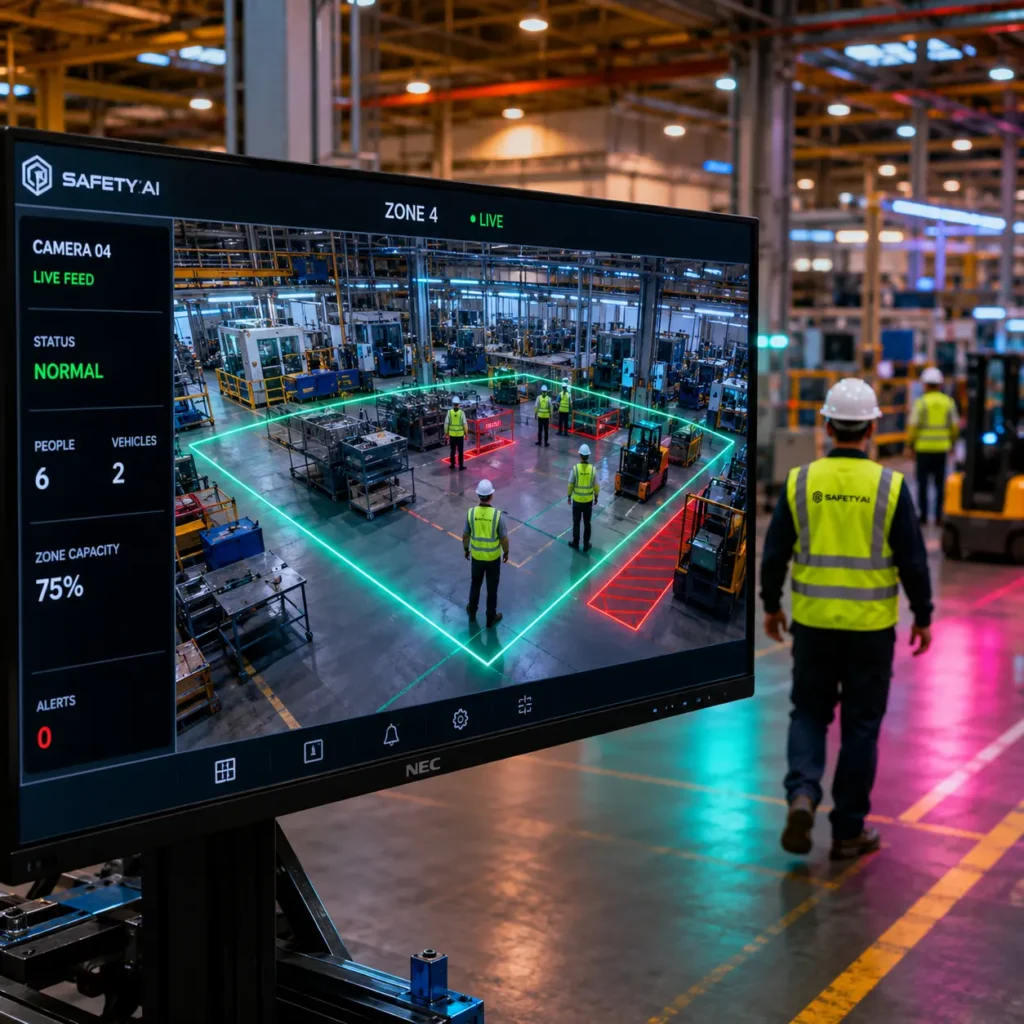
AI-based SOP analytics can convert selected safety requirements into observable rules. For instance, if an SOP requires a specific exclusion zone to remain clear while a crane is operating, computer vision can monitor the zone and generate an alert when a person enters it.
SOP Requirement | AI-Based Monitoring | Potential Response |
PPE usage | Detect missing protective equipment | Supervisor notification |
Crane operations | Detect personnel inside exclusion zones | Immediate intervention |
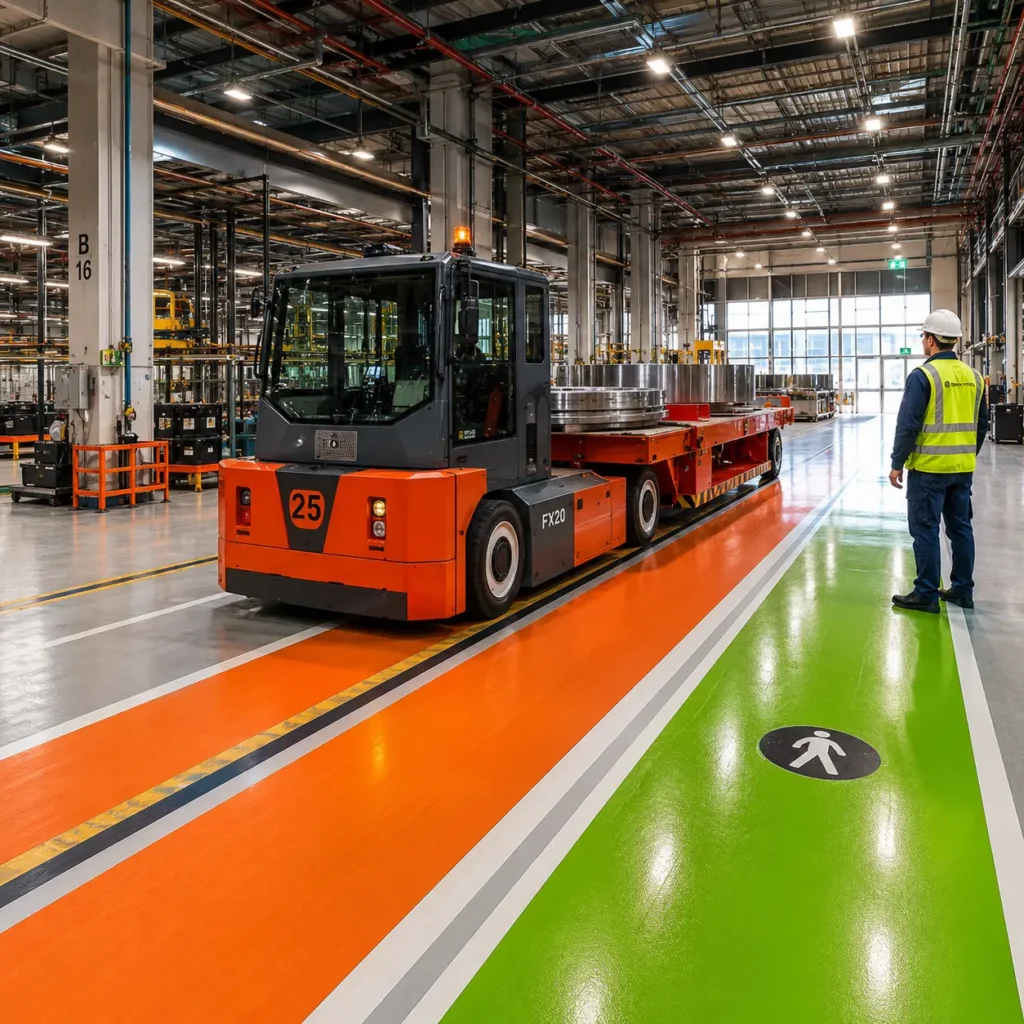
Vehicle movement | Identify unsafe pedestrian interaction | Safety alert |
Restricted access | Detect unauthorised entry | Security escalation |
Work areas | Detect selected obstructions | Inspection request |
Material handling | Monitor defined movement conditions | Operational review |
Turning Shipyard Cameras Into Active Safety Tools
A conventional CCTV network primarily records activities and allows security teams to review footage. AI video analytics can interpret those feeds automatically and identify predefined events that need attention.
For GRSE, this could include:
- PPE compliance in designated work areas
- Workers entering crane or lifting exclusion zones
- Unsafe proximity between personnel and vehicles
- Restricted-area access
- Unusual gatherings around operational areas
- Obstructions along defined pathways
- Unauthorised material or vehicle movement
- Camera tampering or loss of visual coverage
Safety Monitoring Across Shipbuilding Activities
GRSE’s operations provide several areas where video analytics could add value.
Fabrication And Welding Areas
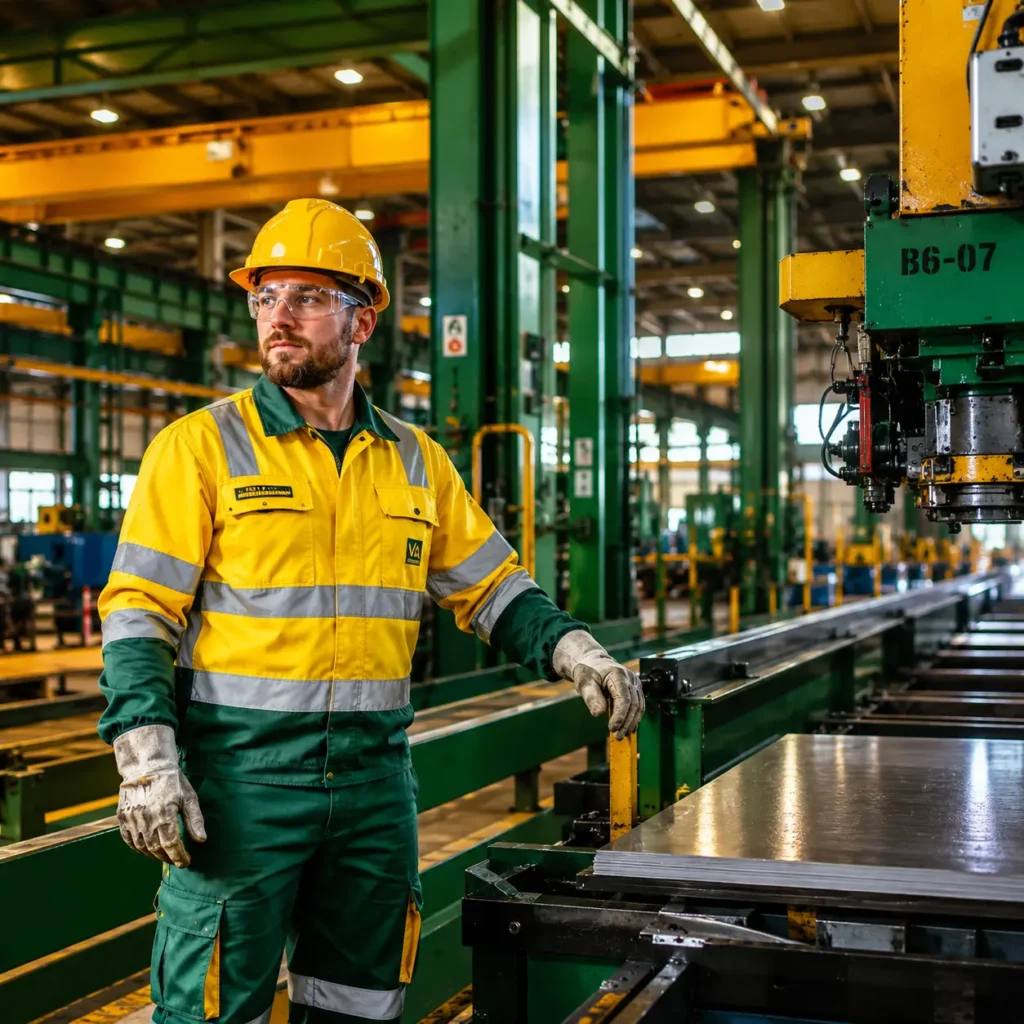
Large fabrication zones can contain multiple simultaneous activities. Computer vision can monitor PPE, worker movement, restricted areas, and selected interactions with machinery and lifting equipment.
Cranes And Material Handling
Shipyards depend heavily on overhead cranes and other lifting equipment. AI can monitor defined crane pathways and exclusion zones to identify personnel or vehicles entering areas that should remain clear.
Assembly And Ship Construction
As ship sections and components are assembled, access routes and work zones can change. Video analytics can help monitor temporary restricted areas, worker movement, material positioning, and other predefined safety conditions.
Gates And Perimeter Areas
Intrusion and vehicle/personnel monitoring are already features of GRSE’s current surveillance system. AI can further support access management by classifying events and directing unusual activity to security personnel.
Connecting Video Analytics With Operational Context
A camera alert becomes more useful when it can be interpreted alongside other information.
GRSE could potentially connect video analytics with:
- Access-control systems
- Crane and equipment status
- Maintenance records
- Safety-management applications
- Material movement systems
- Vehicle information
- Control-room dashboards
Consider a person detected inside a crane exclusion zone. If equipment-status data confirms that the crane is operating, the event can be given higher priority. If the crane is isolated for maintenance, the response may be different.
Using AI To Improve Safety Training
GRSE has already established a Group Safety Training Kiosk designed to provide audio-visual safety training and track training data for workmen, including contract workers. The initiative is intended to reinforce safe behaviour and awareness of workplace hazards.
SOP analytics can complement this training model by identifying recurring workplace deviations after training has been completed.
For example, if a particular safety violation continues to appear in a workshop, the data can help determine whether additional training is needed or whether the underlying issue is related to worksite design, supervision, signage, equipment positioning, or procedure clarity.
A Controlled Approach To Implementation
Because GRSE operates under the Ministry of Defence and handles sensitive shipbuilding activities, AI deployment should incorporate strong cybersecurity, access controls, data governance, and human oversight.
A practical rollout could begin with a few high-value applications:
- Identify critical SOPs that can be visually monitored.
- Select high-risk locations and review camera coverage.
- Test AI models under actual shipyard conditions.
- Establish alert ownership and response procedures.
- Measure accuracy, false alerts, and intervention time.
- Expand successful applications to other units.
Measuring The Business Value
GRSE can evaluate the programme using practical safety and operational indicators rather than the number of cameras or alerts generated.
Potential KPIs include:
- Reduction in repeated SOP deviations
- PPE compliance rate
- Safety-alert response time
- Crane-zone violations
- Restricted-area incidents
- Worker-vehicle proximity events
- False-positive rate
- Incident investigation time
- Corrective-action closure time
Frequently Asked Questions
It is an AI-powered system that examines specific work activities and finds possible deviations by comparing observed conditions with established safety or operating rules.
It can continuously monitor selected areas for PPE violations, restricted access, unsafe proximity to cranes or vehicles, obstructions, and other predefined conditions.
Yes. GRSE has an AI-enabled CCTV network across its Kolkata units with capabilities including intrusion detection, material tracking, unusual gathering alerts, personnel and vehicle monitoring, and camera-tampering detection.
Yes. Cameras can monitor defined crane pathways and exclusion zones and identify people or vehicles entering those areas. Integration with equipment-status information can provide additional context.