AI video analytics for Border Roads Organisation can support safety monitoring, SOP compliance, and security across road construction, infrastructure, and maintenance operations. AI-powered video analytics helps identify safety violations, monitor restricted areas, and improve operational visibility using CCTV infrastructure. The Border Roads Organisation (BRO) works across difficult terrain where steep slopes, extreme weather, snow, landslides, tunnels, heavy machinery, temporary work sites, and restricted-access areas can all affect daily operations.
In this environment, AI-based SOP analytics and video analytics can help BRO strengthen field-level visibility. Instead of depending only on periodic inspections, supervisors can use AI to identify specific safety conditions from cameras and other connected systems, particularly at locations where continuous physical supervision is difficult.
The Most Relevant BRO Use Cases
The value of AI for BRO lies in adapting analytics to the realities of road construction and maintenance in challenging terrain.
BRO Activity | Potential AI Application | Practical Value |
Road Construction | Worker and equipment monitoring | Safer work zones |
Mountain Roads | Slope and access monitoring | Early identification of visible hazards |
Tunnelling | Restricted-zone and PPE detection | Better procedural compliance |
Heavy Equipment | Worker-machine proximity | Reduce exposure to machinery |
Bridges | Access and work-area monitoring | Support controlled operations |
Convoy Routes | Vehicle and pedestrian monitoring | Improve traffic safety |
These applications should be selected according to actual site conditions rather than deploying identical analytics across every BRO project.
Monitoring Safety Where Terrain Creates Risk
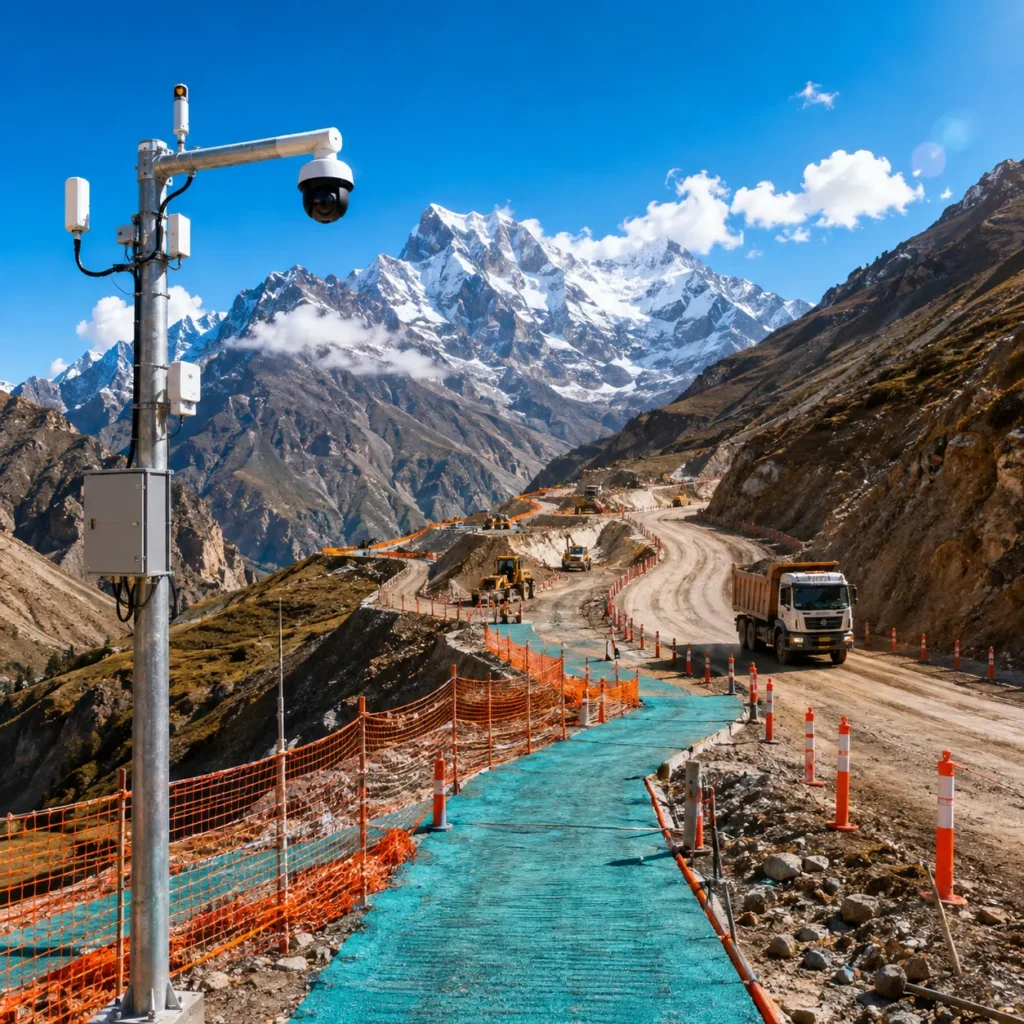
One of the biggest challenges for BRO is that work locations can be dispersed across mountainous and remote areas. A supervisor may not be able to physically observe every activity throughout the working day.
Video analytics can provide additional visibility at selected high-risk locations.
For example, cameras positioned near excavation zones can monitor whether workers or vehicles enter defined areas. At construction sites, AI can identify selected PPE deviations or detect people approaching heavy equipment.
At bridge or elevated-work locations, analytics can monitor defined access areas and selected visible safety conditions.
The technology does not replace geological assessment, engineering judgement, or site inspections. Its role is to provide another source of continuous observation.
SOP Analytics For Heavy Equipment Operations
BRO projects depend heavily on excavators, loaders, dumpers, cranes, drilling equipment, and other machinery. Interaction between workers and mobile equipment can create significant risks, particularly where visibility is limited.
AI-based SOP analytics can be configured around specific equipment-related procedures.
For example, where an SOP establishes an exclusion zone around operating machinery, computer vision can identify a person entering that zone. If equipment-status information is available, the system can determine whether the machinery is operating and prioritise the alert accordingly.
Other potential applications include:
- PPE compliance
- Equipment exclusion zones
- Restricted work areas
- Vehicle movement
- Pedestrian access
- Loading and unloading areas
- Selected maintenance conditions
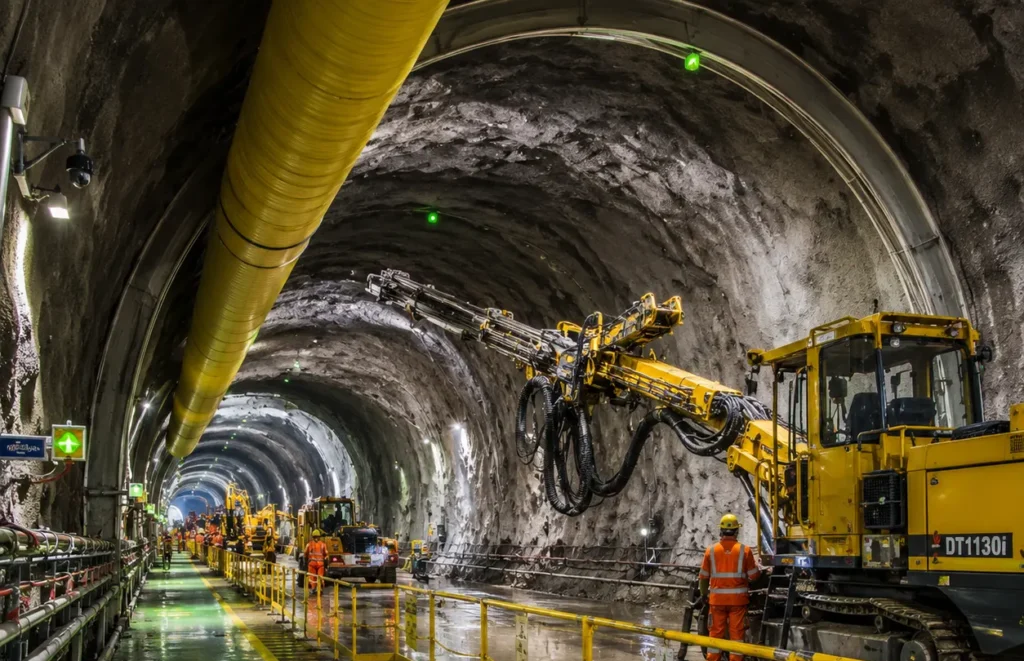
AI For Tunnels And Confined Work Areas
Tunnel construction and maintenance present their own monitoring requirements. Workers may operate in confined environments alongside drilling, excavation, ventilation, electrical, and material-handling activities.
Video analytics can support monitoring of designated entry points, PPE requirements, personnel presence, and restricted areas.
An AI system can also provide event-based searches of recorded footage, helping authorised personnel investigate a specific occurrence without manually reviewing long periods of video.
Where visibility is affected by dust, darkness, equipment obstruction, or other conditions, camera selection and positioning become especially important. AI should be deployed only where detection performance can be validated under actual tunnel conditions.
A Different Role For AI During Harsh Weather
Weather can change rapidly in high-altitude and remote areas. Snow, fog, rain, low visibility, and poor lighting can affect both human observation and computer vision.
Video analytics should therefore not be treated as a standalone hazard-prediction system.
However, cameras can provide useful visual information about predefined conditions, such as:
- Obstructed access routes
- Unusual accumulation in monitored areas
- Vehicle presence
- Blocked work zones
- Personnel movement
- Changes around designated infrastructure
Where AI confidence is low because of visibility conditions, the system should avoid presenting uncertain detections as confirmed incidents.
Connecting Field Monitoring With Operational Data
BRO can potentially obtain more useful alerts by combining video with information from equipment, vehicles, access systems, weather sources, and project-management platforms.
For example, a camera may identify a worker close to a heavy vehicle. Vehicle telemetry can provide additional information about whether the vehicle is moving. This can help determine whether the event needs immediate attention.
Similarly, a camera at a restricted work zone can be linked with authorised access information to distinguish expected activity from an exception.
The objective is to provide field teams with contextual information rather than a stream of isolated camera alerts.
Learning From Recurring Site Conditions
AI analytics can also help BRO identify patterns across projects.
If particular work zones repeatedly produce worker-equipment proximity events, management can investigate whether traffic routes, equipment placement, signage, or work sequencing should be changed.
Repeated PPE deviations at a project location may indicate a need to examine training, supervision, or availability of protective equipment.
This gives safety teams an additional evidence base when reviewing site conditions and deciding where preventive action is required.
What A BRO Deployment Should Prioritise
A successful implementation should begin with use cases where three conditions are present: the safety requirement is important, the condition can be detected reliably, and there is a defined response.
BRO could assess pilot locations based on:
- Risk level
- Camera availability
- Network connectivity
- Environmental conditions
- Equipment density
- Lighting and visibility
- Frequency of safety incidents or deviations
- Availability of local response personnel
Models should be tested under actual field conditions rather than relying solely on performance demonstrated in controlled environments.
Measuring Practical Results
The effectiveness of AI-based SOP and video analytics can be evaluated through operational indicators such as:
- Reduction in recurring SOP deviations
- Worker-equipment proximity events
- PPE compliance
- Restricted-area violations
- Safety-alert response time
- False-positive rate
- Incident investigation time
- Corrective-action closure
- Manual surveillance effort
For BRO, the strongest application of AI is therefore not simply installing more cameras. It is using visual intelligence selectively at difficult and high-risk locations, connecting observations with relevant operational information, and giving field teams better visibility while keeping safety decisions under human control.
Frequently Asked Questions
Yes, but models must be tested under conditions such as snow, fog, glare, low temperatures, poor lighting, and changing visibility. Camera hardware and connectivity also need to be suitable for the location.
AI can monitor predefined equipment zones and identify worker presence, pedestrian movement, PPE conditions, and other visually detectable safety requirements.
Yes. Potential applications include monitoring entrances, restricted zones, PPE, personnel movement, and selected work-area conditions where camera visibility is adequate.
Potentially. Combining camera observations with vehicle location, movement, or equipment-status information can provide greater context and help prioritise safety alerts.
No. AI should complement field inspections, engineering assessments, safety supervision, and established SOPs. Human teams should remain responsible for interpreting conditions and taking corrective action.