Bharat Electronics Limited (BEL) operates in a different environment from conventional heavy-industry organisations. As a defence electronics company, its facilities involve electronics manufacturing, testing, assembly, secure infrastructure, material handling, research and development, and controlled-access areas. In such settings, safety, process discipline, security, and compliance often need to work together.
AI-based SOP analytics and video analytics can help BEL create an additional layer of real-time monitoring across these environments. The opportunity is especially relevant because BEL already develops and uses advanced video analytics technology. Its Drishti Video Surveillance & Analytics System uses AI-based deep neural networks and supports functions including intrusion detection, people counting, vehicle classification, licence-plate recognition, forensic analysis, and camera-tampering detection.
Where BEL Can Apply SOP Intelligence
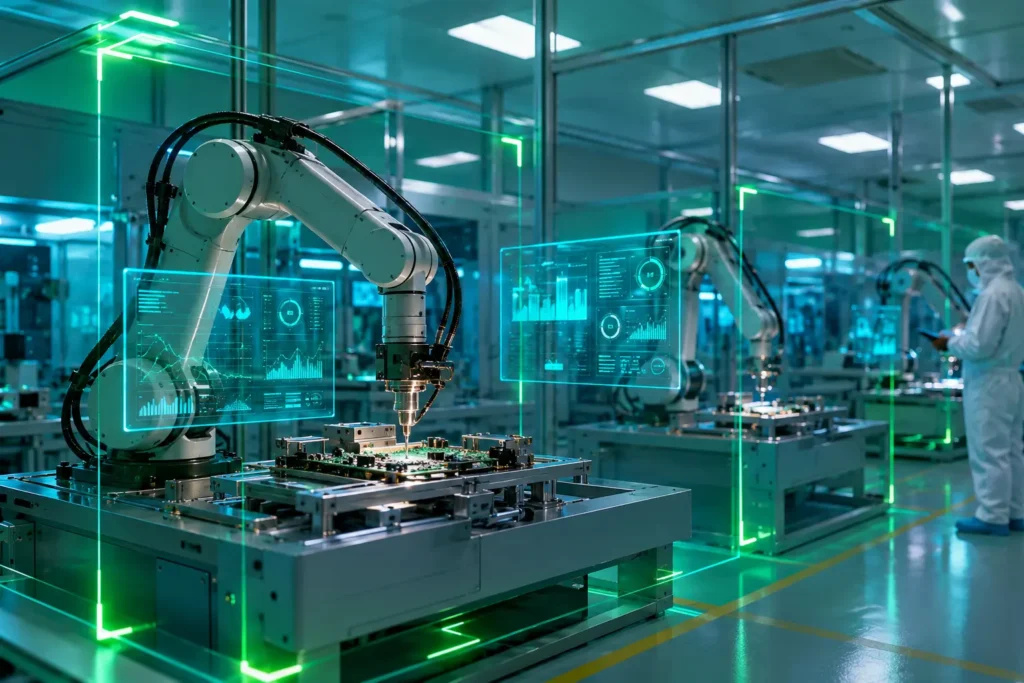
For BEL, SOP analytics should focus on procedures where compliance can be observed through cameras, sensors, access systems, or operational data.
Examples include controlled-area access, PPE requirements, material movement, equipment operation, maintenance activities, and selected manufacturing procedures.
Rather than simply detecting an event, an AI system can compare what is happening with a defined operating rule.
Operational Situation | AI-Based Observation | Possible Response |
Worker without required PPE | Detect missing safety equipment | Notify supervisor |
Restricted-area entry | Identify unauthorised person | Security alert |
Material movement | Track defined movement conditions | Review exception |
Equipment zone access | Detect personnel in protected area | Intervention |
Camera tampering | Identify obstruction or interference | Security notification |
Vehicle movement | Classify and track vehicles | Access or traffic alert |
The important distinction is that AI should support established BEL procedures rather than replace them. Each detection rule should be mapped to a documented SOP, risk assessment, or security requirement.
Video Analytics Beyond Conventional Surveillance
BEL already recognises the limitations of manually monitoring large volumes of surveillance footage. Its Drishti platform is designed to help security teams detect, act upon, and investigate security breaches and other threats, while supporting live viewing, alarms, maps, forensic analysis, and distributed monitoring.
This capability can be extended into workplace and operational monitoring.
For example, computer vision could identify a person entering a designated production zone without the required authorisation. Another camera could detect a worker entering an equipment exclusion area. A vehicle entering a controlled gate could be classified and matched against defined access rules.
This creates an exception-based monitoring model in which personnel focus on events requiring attention instead of continuously watching every camera.
Connecting Safety And Security
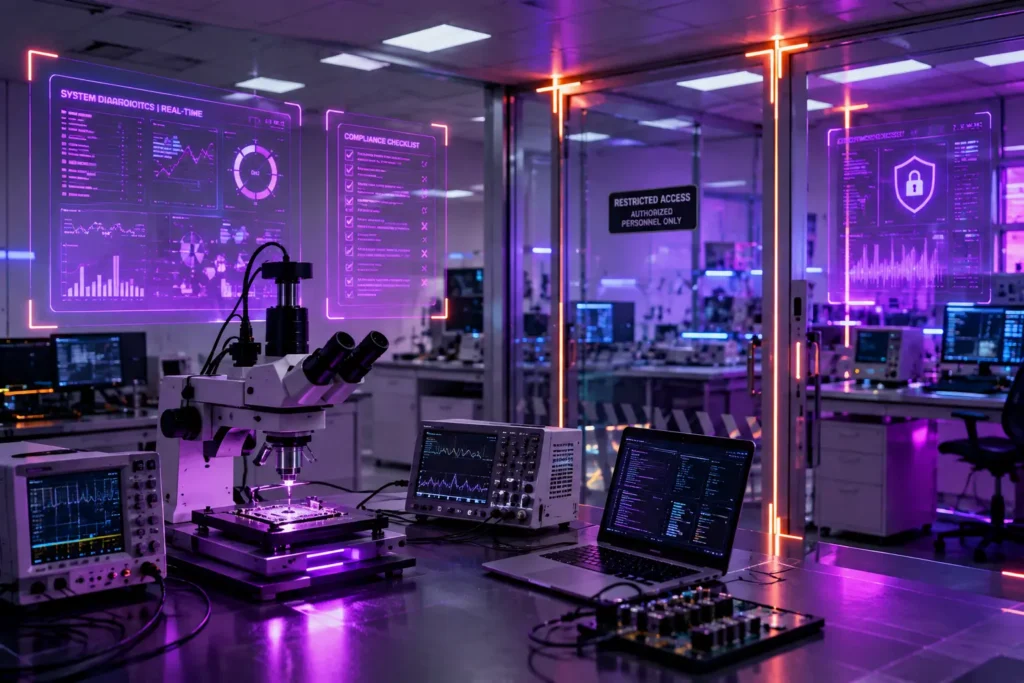
One of the more relevant opportunities for BEL is the convergence of safety and security analytics.
A single industrial location may require monitoring for both physical security and operational safety. AI can support multiple rule sets using the same camera infrastructure.
Access Control
Video analytics can identify people and vehicles entering designated areas and generate alerts for unusual or unauthorised movement.
Workplace Safety
Cameras can monitor PPE, restricted zones, worker-equipment proximity, and selected housekeeping conditions.
Asset And Material Protection
BEL’s vigilance function already identifies CCTV installation and monitoring of material movements among its preventive vigilance activities. AI can add event-based analysis to this existing surveillance approach, helping identify unusual movement patterns or defined material-handling exceptions.
Incident Investigation
When an event occurs, searchable video analytics can reduce the time required to locate relevant footage and reconstruct the sequence of events.
Applying AI Across BEL’s Manufacturing Environment
BEL has multiple manufacturing and operational locations, so analytics should be configured according to the risks and processes at each facility.
In electronics manufacturing and assembly areas, AI can focus on controlled access, PPE, workstation safety, material movement, and selected process conditions. In testing and specialised engineering areas, monitoring can focus on restricted access and defined operating zones.
Making AI Alerts More Context-Aware
A video event becomes more useful when it can be interpreted alongside other information.
BEL could potentially connect video analytics with:
- Access-control systems
- Material gate-pass systems
- Equipment status
- Maintenance systems
- Safety-management applications
- Production or facility-management systems
- Security control rooms
- Central monitoring dashboards
A Secure Implementation Approach
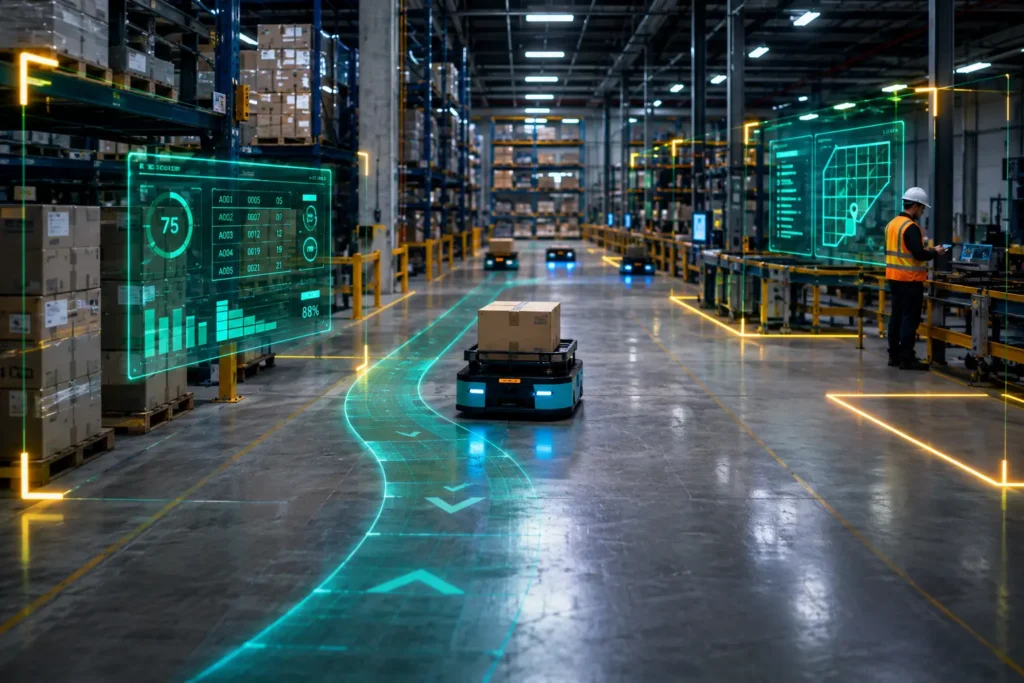
Because BEL operates in defence electronics and other sensitive environments, AI video analytics should be designed with security and data governance from the beginning.
Key considerations include:
- Role-based access to video and analytics
- Secure network architecture
- Data retention policies
- Audit trails for system access
- Protection of sensitive footage
- Cybersecurity testing
- Controlled integration with external systems
- Human validation of important alerts
BEL’s Software SBU Centre already identifies information-security capabilities and AI/ML, predictive maintenance, and advanced video analytics among its technology domains. This provides a relevant technical foundation for developing secure analytics applications.
Measuring The Impact
BEL can evaluate AI-based SOP and video analytics through measurable outcomes rather than simply counting cameras or alerts.
Useful indicators include:
- Reduction in recurring SOP deviations
- Security-alert response time
- False-positive rate
- Restricted-area violations
- Incident investigation time
- Material-movement exceptions
- Corrective-action closure time
- Manual surveillance workload
The strongest implementation would therefore combine BEL’s existing surveillance and AI capabilities with SOP-specific analytics, human review, and secure integration. This can create a practical monitoring framework for manufacturing safety, physical security, process compliance, and operational oversight.
Frequently Asked Questions
It is an AI-enabled approach that compares observable workplace or operational activities with predefined procedures and identifies potential deviations requiring review.
Yes. BEL's Drishti platform provides AI-enabled video analytics with functions such as intrusion detection, people counting, vehicle classification, licence-plate recognition, forensic analysis, and camera-tampering detection.
Yes. The same camera infrastructure can potentially support separate rule sets for workplace safety, restricted access, physical security, material movement, and selected operational requirements.
Yes. Combining video events with access-control information can provide additional context and help distinguish authorised activity from genuine access exceptions