Mining operations depend on disciplined execution, continuous safety monitoring, and timely identification of abnormal conditions. For NMDC Limited, which operates large iron ore mining complexes and associated infrastructure, AI-based SOP analytics and video analytics can strengthen the way safety, operational compliance, and site activities are monitored.
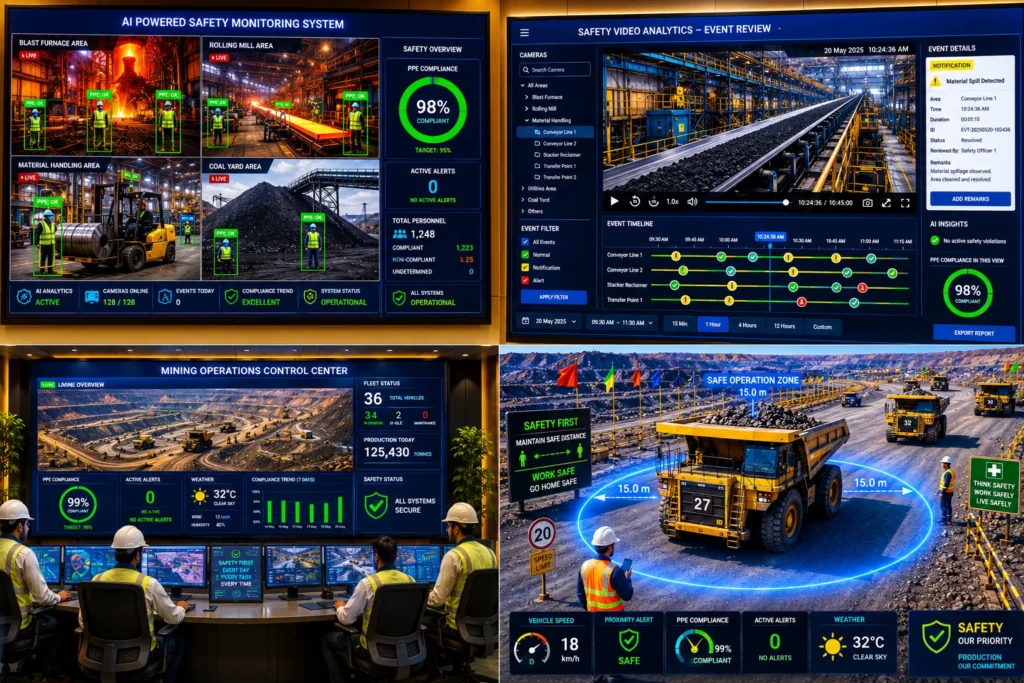
Given that NMDC is currently making investments in digital monitoring infrastructure, this possibility is very pertinent. A 2025 NMDC tender specifies a video management system capable of integrating video analytics, IP cameras, rule-based workflows, alarms, events, and an Integrated Command and Control Centre (ICCC).
From CCTV Monitoring To Operational Intelligence
Conventional CCTV requires personnel to watch screens or review recordings after an event. That approach can become difficult across large mining sites where haul roads, loading zones, conveyor systems, stockyards, workshops, and access points may operate simultaneously.
Video analytics changes this model by allowing software to analyse camera feeds continuously and identify predefined events. Instead of simply recording what happened, the system can highlight situations that require attention.
For NMDC, this could support:
- Detection of people entering restricted areas
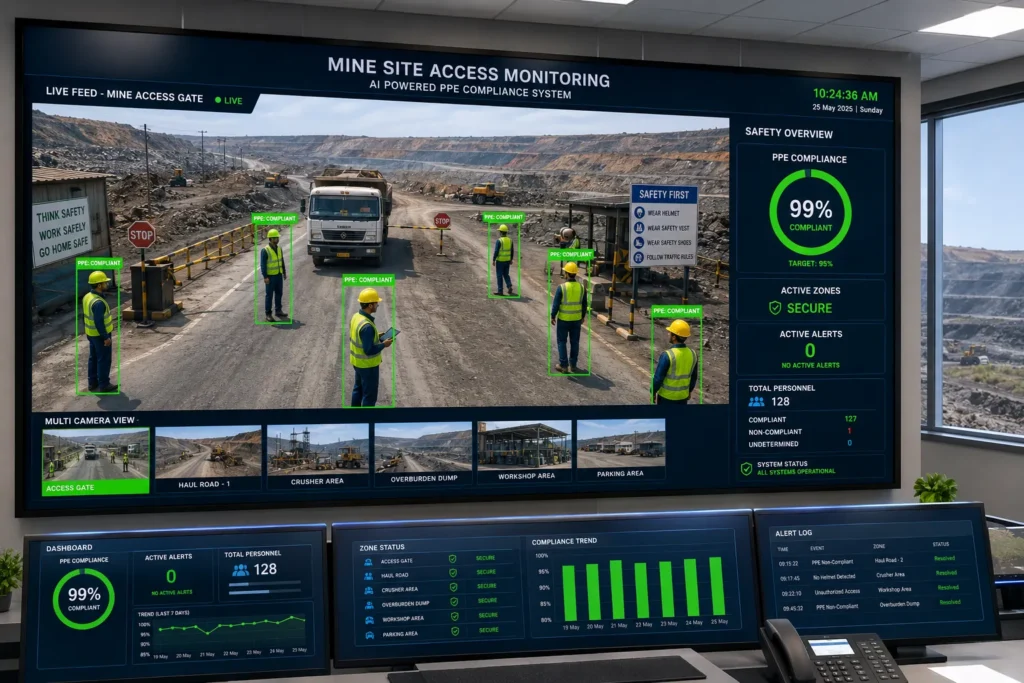
- Monitoring of PPE compliance
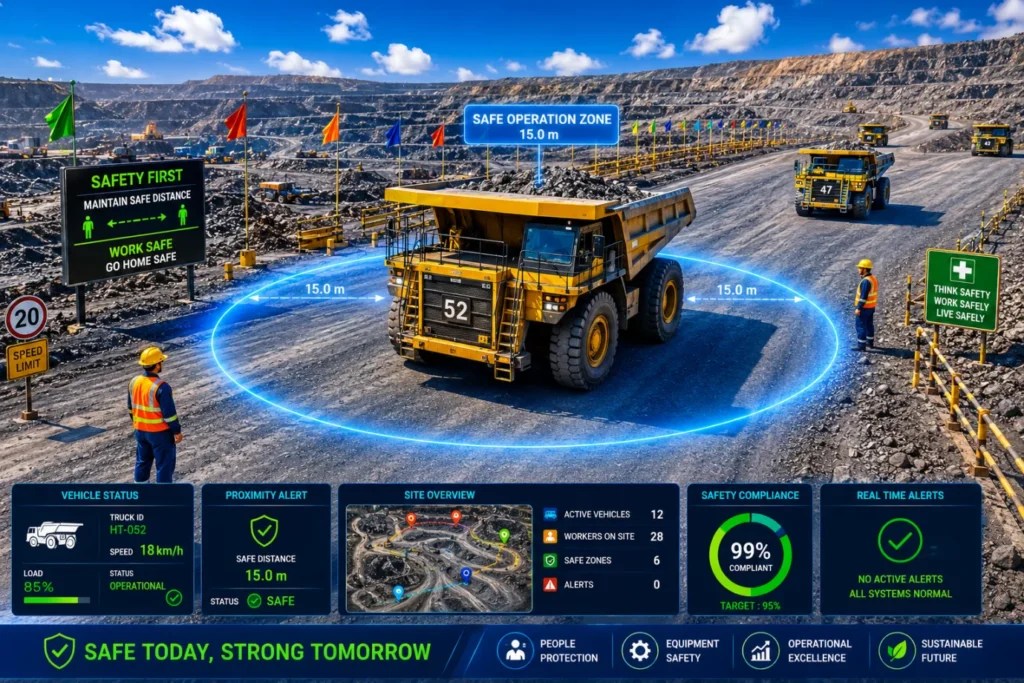
- Identification of unsafe proximity between workers and heavy vehicles
- Detection of vehicles entering designated zones
- Monitoring of congestion or unusual movement
- Identification of objects or obstructions in critical areas
- Event-based searching of recorded footage
Where SOP Analytics Can Add Value
Standard Operating Procedures are particularly important in mining because many activities involve heavy machinery, controlled access, vehicle movement, excavation, maintenance, and material handling.
AI-based SOP analytics can compare observed activities against predefined safety and operational rules. For example, if a procedure requires a particular exclusion zone to remain clear during equipment operation, computer vision can monitor whether people or vehicles enter that area.
Similarly, selected procedures can be monitored for:
SOP Area | Possible AI Monitoring | Operational Purpose |
PPE | Helmet, vest and other required equipment detection | Improve compliance |
Restricted Access | Person or vehicle detection | Control hazardous-area entry |
Haul Roads | Vehicle movement and proximity analysis | Support traffic safety |
Loading Areas | Presence and positioning monitoring | Reduce unsafe interactions |
Maintenance Zones | Worker access and exclusion-zone monitoring | Strengthen worksite controls |
Housekeeping | Detection of selected obstructions | Maintain safer work areas |
Mining-Specific Video Analytics Applications
The most useful applications for NMDC are likely to be those that address conditions unique to open-cast mining and mineral handling.
Haul Road Safety
Vehicle movement, restricted lanes, dangerous closeness, and specific traffic infractions can all be monitored by computer vision. When certain circumstances are met, alerts can be sent to control-room staff.
Excavation And Loading Areas
Cameras can help monitor exclusion zones around excavators, shovels, dumpers, and loading points. Analytics can identify unexpected human presence or other predefined safety events.
Conveyor And Material Handling Areas
Video systems can monitor selected conveyor corridors and transfer points for people, obstructions, or unusual visible conditions. This can supplement existing sensors and control systems.
Access And Perimeter Monitoring
AI-enabled cameras can classify people and vehicles and generate event-based alerts for unauthorised or unusual activity around designated areas.
Building A Practical AI Analytics Programme
Installing cameras and software is not enough for a successful deployment. NMDC would benefit from selecting use cases according to risk, frequency, and measurable business value.
A practical sequence could be:
- Map critical SOPs and high-risk locations.
- Audit existing camera coverage and network infrastructure.
- Select a small number of high-value analytics use cases.
- Establish accuracy, response-time, and false-alert benchmarks.
- Integrate validated alerts with control-room workflows.
Expand successful applications to comparable mining locations
Measuring The Business Impact
The value of AI-based SOP analytics should be measured through operational outcomes rather than the number of cameras or alerts generated.
Relevant indicators could include:
- Reduction in repeated SOP deviations
- Safety-alert response time
- False-alert percentage
- Time required for incident investigation
- Restricted-area violation frequency
- Manual CCTV monitoring workload
- Equipment or process interruptions associated with identified conditions
Frequently Asked Questions
It is an AI-enabled approach that analyses operational and visual information to identify whether selected safety or operating procedures are being followed and highlights predefined deviations.
It can continuously monitor camera feeds for conditions such as PPE violations, restricted-area entry, unsafe proximity, and unusual movement, allowing responsible teams to respond more quickly.
Potentially. NMDC's tender requirements already indicate support for IP cameras, video analytics, centralized video management, and ICCC integration. Actual suitability will depend on camera specifications, positioning, connectivity, and the selected analytics applications.
Yes. Computer vision can monitor selected interactions involving excavators, dumpers, conveyors, and other equipment. For higher-confidence decisions, visual analytics can also be combined with equipment and sensor data.
NMDC should begin with high-risk, clearly defined use cases where camera coverage is adequate and results can be measured. PPE compliance, restricted-zone monitoring, vehicle-pedestrian safety, and critical equipment-area monitoring are practical starting points.