Why Store Productivity Is A Critical Retail Metric
Retail productivity directly influences profitability, customer satisfaction, and operational efficiency. Every minute spent addressing preventable operational issues, managing bottlenecks, or correcting execution errors reduces the time available for customer engagement and revenue-generating activities.
For retailers operating multiple locations, productivity challenges often remain hidden within daily store operations. Small inefficiencies repeated across dozens or hundreds of stores can significantly impact labor utilization, service quality, and overall business performance.
As retail competition increases, organizations are looking for better ways to improve operational visibility and help store teams work more efficiently.
Common Factors That Reduce Store Productivity
Many productivity challenges originate from routine operational activities rather than major disruptions.
Common examples include:
- Long checkout queues
- Delayed shelf replenishment
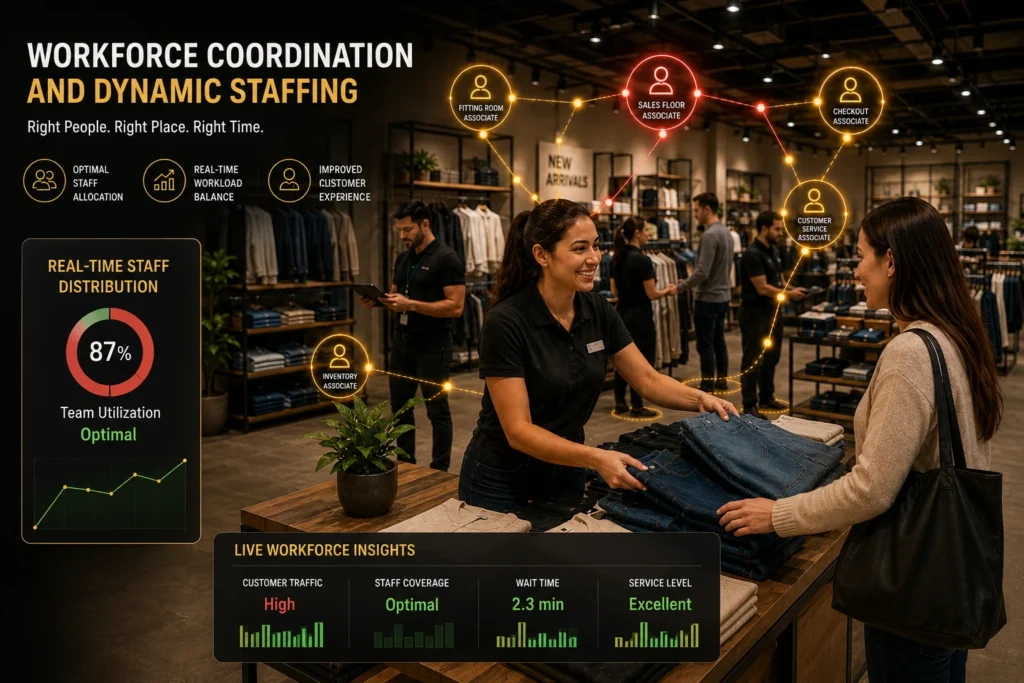
- Inefficient staff allocation
- Poor workflow coordination
- Excessive manual supervision
- Store readiness delays
- Merchandising inconsistencies
- Slow response to operational issues
These difficulties frequently result in productivity losses that are challenging to detect through regular audits or management evaluations.
Why Traditional Productivity Management Has Limitations
Retailers have traditionally measured productivity through:
- Store manager observations
- Labor reports
- Performance reviews
- Operational audits
- Sales metrics
- Mystery shopping programs
While useful, these approaches often focus on outcomes rather than operational activities that drive those outcomes.
Challenges include:
- Limited visibility between reviews
- Delayed identification of inefficiencies
- Inconsistent reporting across locations
- Difficulty comparing store performance
- Resource-intensive monitoring processes
Without continuous operational visibility, opportunities for improvement may remain unnoticed.
How AI-Powered Monitoring Improves Productivity
Existing camera infrastructure is converted into an operational intelligence platform with AI-powered monitoring.
Rather than simply recording activity, AI analyzes operational workflows and provides insights that help store teams improve efficiency.
Queue Management Optimization
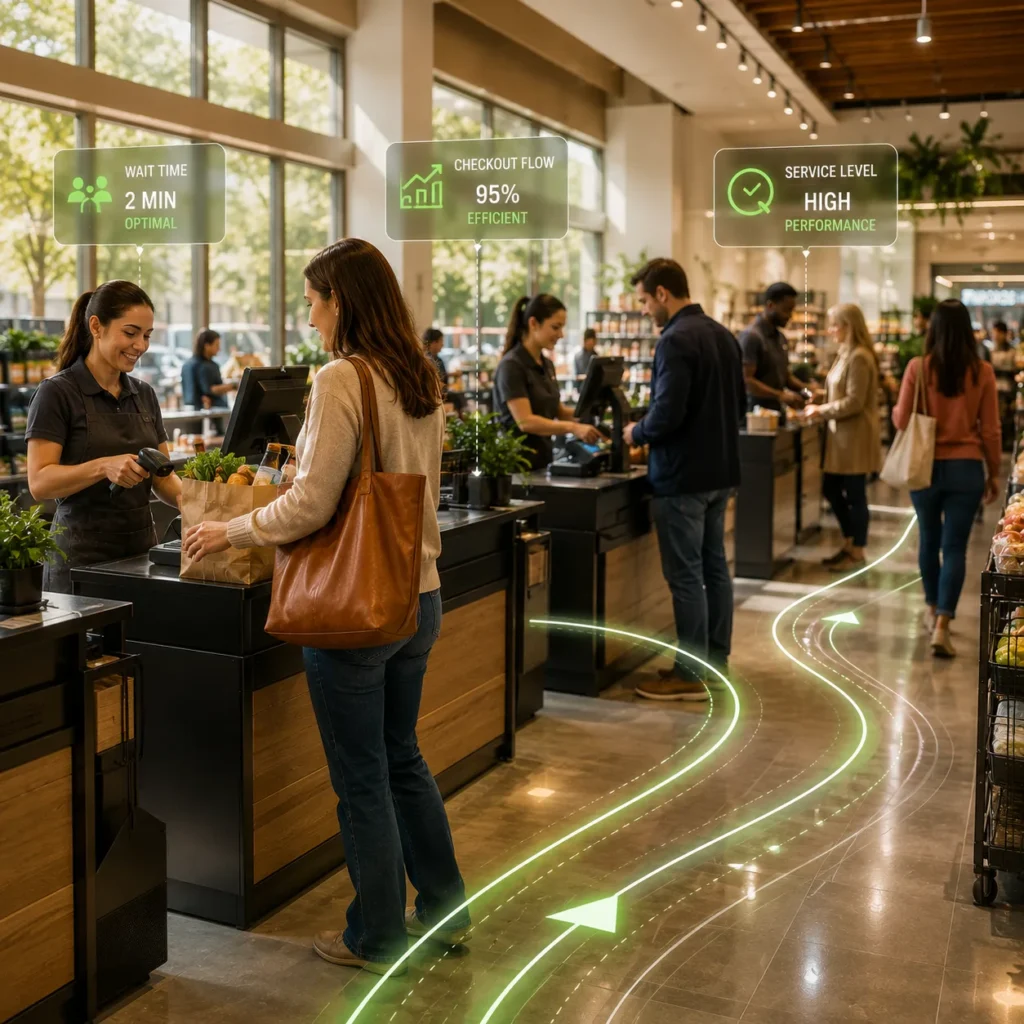
AI can identify growing checkout queues and help managers allocate resources before customer wait times increase.
Workforce Activity Visibility
Retail leaders gain better insight into operational workflows and staff deployment across the store.
Shelf Replenishment Monitoring
By quickly recognising problems with product supply, teams can prioritise restocking activities.
Customer Flow Analysis
Understanding shopper movement patterns helps optimize staffing and store layouts.
Store Readiness Monitoring
Operational conditions can be monitored throughout the day to ensure stores maintain expected standards.
Real-Time Operational Alerts
Potential productivity problems can be promptly identified, allowing for quicker remedial action.
Compare Traditional Productivity Monitoring With AI-Powered Monitoring
Traditional Productivity Management | AI-Powered Monitoring |
Periodic reviews | Continuous visibility |
Manual observations | Automated operational insights |
Reactive management | Earlier issue detection |
Store-specific reporting | Multi-location oversight |
Limited operational data | Real-time performance visibility |
Delayed corrective actions | Faster response opportunities |
When retailers compare these approaches, AI provides a more scalable way to identify and address productivity challenges.
Business Benefits Of Improved Store Productivity
Better Customer Experience
Efficient operations help reduce wait times and improve service quality.
Stronger Labor Utilization
Managers can allocate resources more effectively based on operational needs.
Increased Operational Efficiency
Teams spend less time reacting to problems and more time focusing on customer-facing activities.
Greater Consistency Across Stores
Retailers can standardize operational performance throughout their store network.
Improved Profitability
Higher productivity helps optimize labor costs while supporting stronger store performance.
Retail Areas Where Productivity Gains Are Most Visible
AI-powered monitoring can improve productivity in:
- Checkout Operations
- Shelf Replenishment
- Merchandising Execution
- Customer Service Activities
- Store Opening Procedures
- Workforce Coordination
- Housekeeping Activities
- Multi-Location Operations
These improvements help retailers create more efficient stores while maintaining service quality.
How CAPASai Supports Retail Productivity
CAPASai helps retailers improve productivity through AI-powered video analytics and operational intelligence.
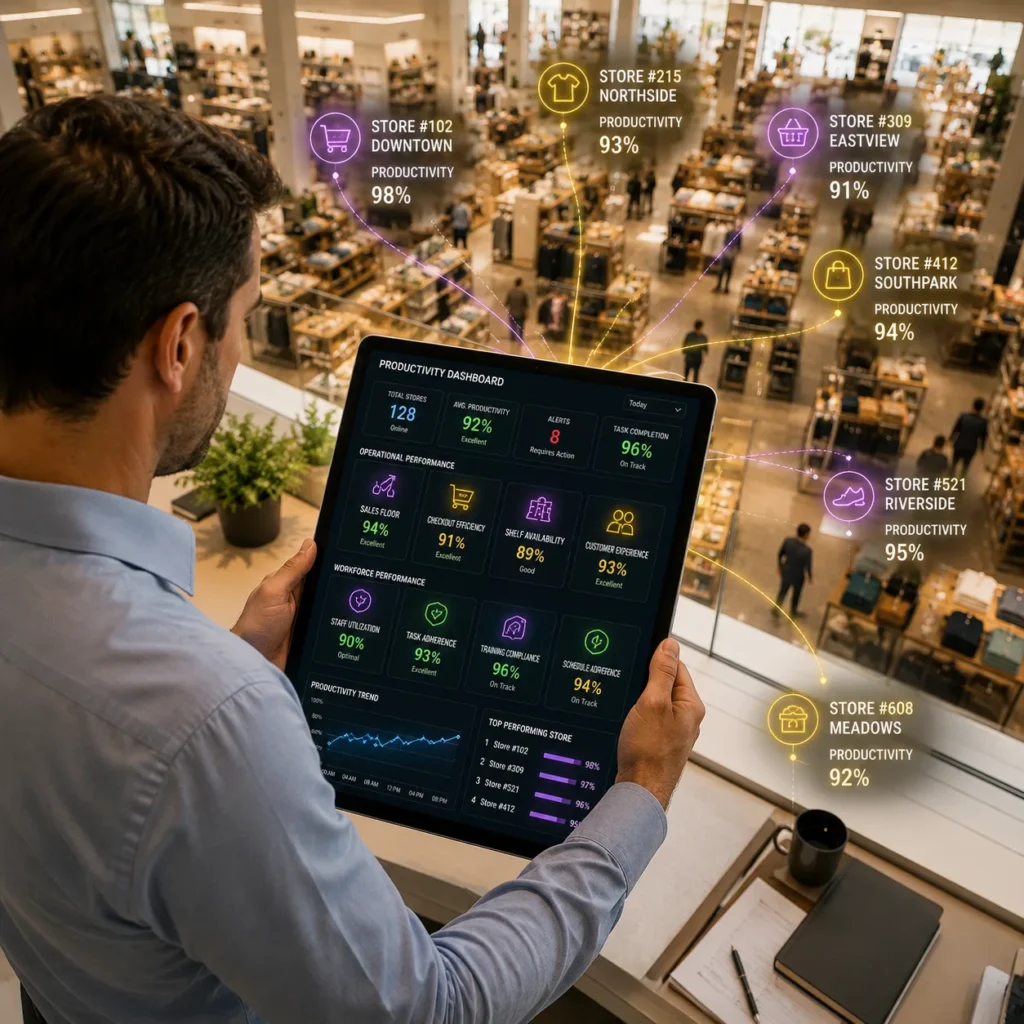
By monitoring queue conditions, workforce activities, customer flow, shelf availability, store execution, and operational processes, CAPASai provides actionable insights that help managers identify inefficiencies and improve performance. Real-time alerts support faster decision-making, while centralized oversight enables consistent productivity improvements across multiple locations.
This helps retailers strengthen operational efficiency while enhancing customer experiences and store performance.
Creating More Productive Stores Through Operational Visibility
Productivity improvements rarely come from a single initiative. They are often achieved through continuous refinement of operational processes, better resource allocation, and greater visibility into daily store activities.
Retailers can find inefficiencies, enhance operations, and facilitate data-driven decision-making with the help of AI-powered monitoring. As retailers continue to place a high priority on operational efficiency, productivity visibility is becoming an increasingly important competitive advantage.