Why Retail Management Is Becoming More Complex
Retail leaders today face increasing pressure to improve customer experience, maintain operational consistency, manage labor effectively, and ensure compliance across multiple locations. As store networks grow, the challenge is no longer simply managing inventory or sales performance. It is about maintaining visibility into daily operations and ensuring that every store delivers the expected standard of execution.
Traditional store management relies heavily on supervisors, regional managers, audits, and periodic reviews. While these methods remain important, they often provide only a partial view of what happens throughout the day.
As a result, retailers are increasingly adopting AI-powered operational intelligence to support store teams and improve decision-making.
Why Retail Management Is Becoming More Complex
Retail leaders today face increasing pressure to improve customer experience, maintain operational consistency, manage labor effectively, and ensure compliance across multiple locations. As store networks grow, the challenge is no longer simply managing inventory or sales performance. It is about maintaining visibility into daily operations and ensuring that every store delivers the expected standard of execution.
Traditional store management relies heavily on supervisors, regional managers, audits, and periodic reviews. While these methods remain important, they often provide only a partial view of what happens throughout the day.
As a result, retailers are increasingly adopting AI-powered operational intelligence to support store teams and improve decision-making.
The Rise Of The Digital Store Manager
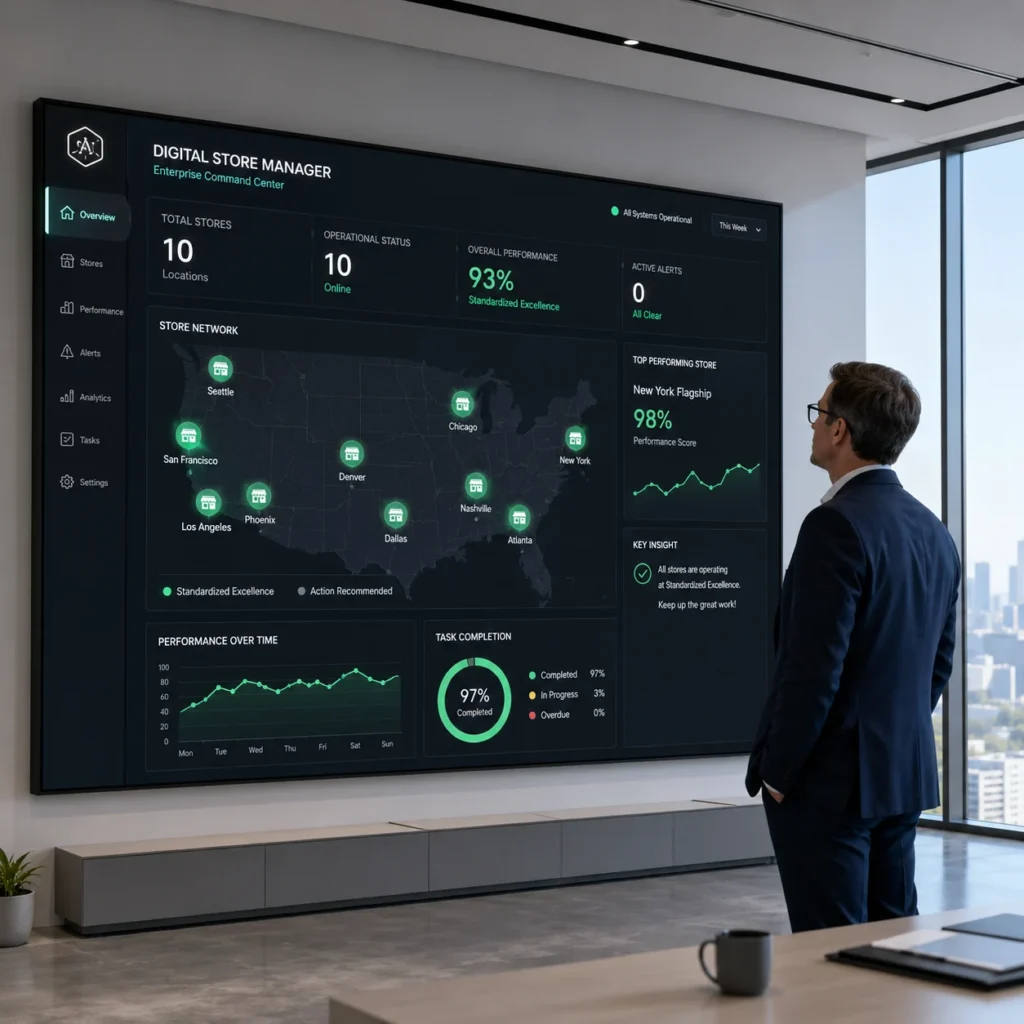
The concept of a digital store manager is emerging as retailers seek continuous visibility into store operations.
Rather than replacing human managers, AI acts as a digital layer of operational oversight that helps identify issues, monitor performance, and support consistent execution.
By analyzing video feeds and operational activities in real time, AI can help retailers gain insights that would otherwise be difficult to capture manually across multiple locations.
The result is a more proactive approach to retail management.
Common Operational Challenges In Retail Stores
Retail organizations frequently encounter challenges such as:
- Long checkout queues
- Inconsistent customer service
- Shelf replenishment delays
- Planogram non-compliance
- Store readiness issues
- Labor allocation inefficiencies
- Safety and housekeeping concerns
- Variations in operational standards between locations
These challenges directly influence customer satisfaction, operational efficiency, and brand perception.
Retail Applications Of The Digital Store Manager Concept
AI-powered operational intelligence can support:
- Grocery Chains
- Supermarkets
- Hypermarkets
- Fashion Retailers
- Convenience Stores
- Pharmacy Chains
- Electronics Stores
- Department Stores
- Home Improvement Retailers
- Quick Service Restaurants
Across these environments, operational visibility plays a key role in delivering consistent customer experiences.
Compare Traditional Store Management With AI-Assisted Operations
Traditional Store Management | AI-Assisted Retail Operations |
Periodic observations | Continuous visibility |
Manual reporting | Automated operational insights |
Reactive issue management | Earlier issue identification |
Limited store coverage | Comprehensive operational awareness |
Store-specific oversight | Multi-location monitoring |
Delayed performance feedback | Near real-time insights |
When retailers compare these approaches, AI provides a scalable way to support operational excellence across large store networks.
Why Retailers Are Investing In Operational Intelligence
Improved Customer Experience
Faster service and better store execution contribute to a smoother shopping journey.
Stronger Operational Consistency
AI helps retailers maintain standards across stores, shifts, and regions.
Better Labor Utilization
Managers gain insights that support more effective staffing decisions.
Enhanced Compliance Monitoring
Operational procedures can be monitored more consistently.
Increased Management Visibility
Leadership teams gain access to operational insights across multiple locations without relying solely on store visits.
How AI Functions As A Digital Store Manager
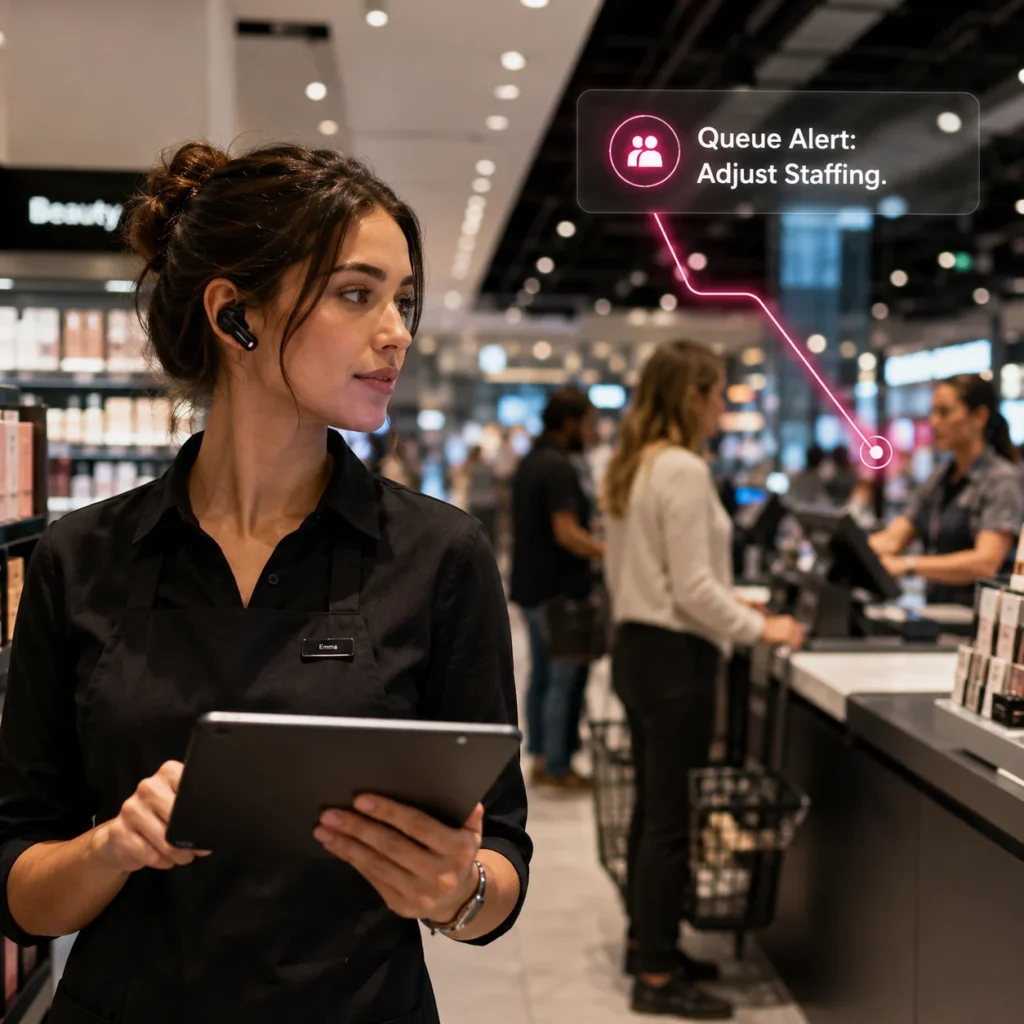
AI-powered video analytics continuously monitors operational activities and provides actionable insights to store teams and leadership.
Queue And Checkout Monitoring
AI can identify growing queues and help managers respond before customer wait times increase significantly.
Store Standards Verification
Retailers can monitor compliance with operational procedures and store standards throughout the day.
Shelf Availability Monitoring
AI helps identify potential stock-out conditions and replenishment opportunities.
Customer Flow Analysis
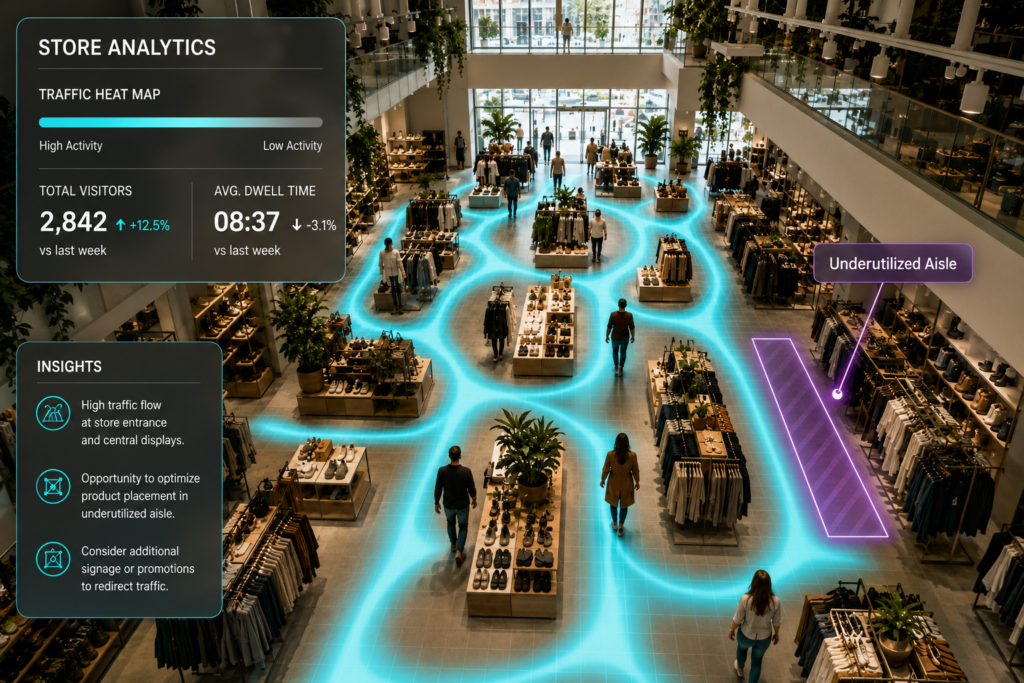
Understanding customer movement patterns helps improve store layouts, staffing decisions, and product placement strategies.
Workforce Visibility
Operational insights help managers understand how resources are being utilized across different areas of the store.
Housekeeping And Safety Monitoring
AI can help identify blocked aisles, cluttered areas, and operational conditions that may affect customer experience.
How CAPASai Supports Modern Retail Operations
CAPASai helps retailers transform existing camera infrastructure into a source of operational intelligence.
Using AI-powered video analytics, CAPASai helps monitor queue conditions, store compliance, customer flow, shelf availability, employee activities, merchandising execution, and operational performance. Real-time alerts and centralized visibility help store teams and retail leadership identify issues quickly and take corrective action when needed.
This enables organizations to strengthen operational consistency, improve customer experiences, and support data-driven retail management.
Moving From Reactive Management To Continuous Visibility
The future of retail operations is increasingly centered on visibility, consistency, and informed decision-making. While human managers remain essential, AI provides an additional layer of operational awareness that helps organizations identify issues earlier and respond more effectively.
As retailers continue to expand and customer expectations evolve, digital store management supported by AI is becoming an important tool for maintaining operational excellence at scale.