Why Workplace Safety Requires Continuous Visibility
Workplace safety remains a top priority for organizations across manufacturing plants, warehouses, construction sites, healthcare facilities, energy operations, retail environments, and logistics centers. While businesses invest heavily in safety policies, training programs, and compliance initiatives, maintaining consistent oversight across daily operations continues to be a challenge.
Many workplace incidents are not caused by a single event. Instead, they often result from a series of overlooked safety violations, process deviations, or unsafe behaviors that develop over time. In the absence of constant visibility, these risks may go unnoticed until they cause mishaps, interruptions to operations, or problems with compliance.
As organizations seek to strengthen safety performance and operational consistency, continuous visual intelligence is becoming an important component of modern workplace safety strategies.
Understanding The Visibility Gap In Workplace Safety
Traditional safety management relies heavily on:
- Manual inspections
- Supervisor observations
- Periodic audits
- Incident reporting
- Safety checklists
While these methods remain valuable, they often provide only snapshots of workplace conditions rather than continuous insight into operational activities.
Common challenges include:
- Limited monitoring across large facilities
- Difficulty overseeing multiple shifts
- Delayed identification of unsafe behaviors
- Inconsistent reporting practices
- Limited visibility across multiple locations
These visibility gaps can make it difficult to address risks before they escalate into larger operational concerns.
What Is Continuous Visual Intelligence?
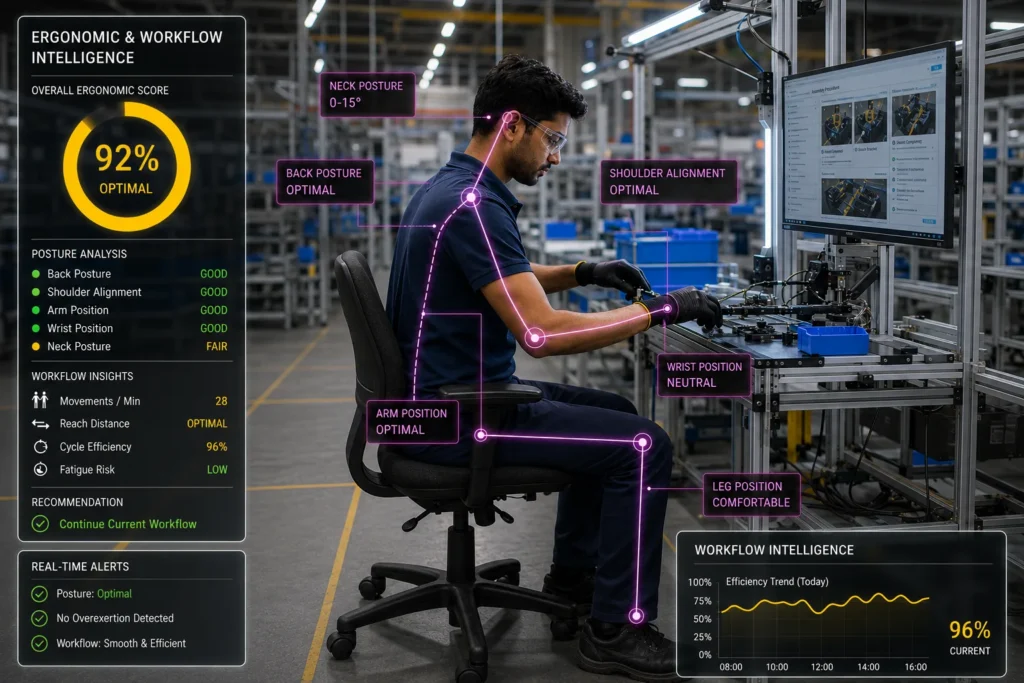
The term “continuous visual intelligence” describes the real-time monitoring of workplace activities using computer vision and video analytics technology driven by artificial intelligence.
Rather than simply recording video footage, intelligent systems analyze operational environments continuously to identify patterns, detect deviations, and provide actionable insights.
By doing this, conventional camera infrastructure is transformed into an operational intelligence tool that promotes process adherence, worker safety, and compliance monitoring.
How Continuous Visual Intelligence Supports Workplace Safety
Organizations can use visual intelligence to gain greater awareness of workplace conditions and identify potential risks before incidents occur.
PPE Compliance Monitoring
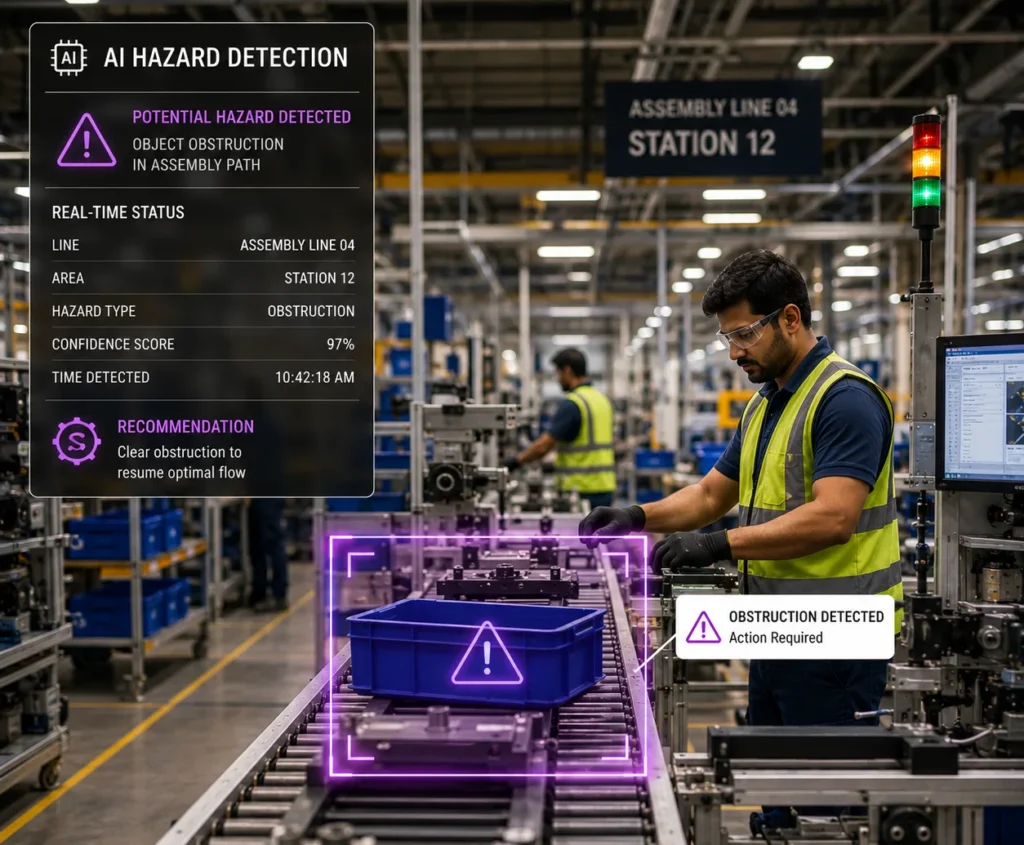
AI can help verify whether workers are wearing required personal protective equipment in designated operational areas.
Unsafe Behavior Detection
Continuous monitoring can identify behaviors that may increase workplace risk and require corrective action.
Restricted Area Monitoring
Organizations can monitor access to hazardous or controlled zones and ensure operational policies are followed.
Worker And Equipment Interaction Monitoring
Visual intelligence can help improve awareness of interactions between personnel, vehicles, machinery, and operational assets.
SOP Adherence Verification
AI-powered monitoring supports consistent execution of standard operating procedures by identifying process deviations.
Real-Time Safety Alerts
Alerts can be issued instantly to facilitate quicker intervention when specific risk situations are identified.
Compare Traditional Safety Oversight With Continuous Visual Intelligence
Traditional Safety Monitoring | Continuous Visual Intelligence |
Periodic inspections | Continuous monitoring |
Manual observations | AI-assisted analysis |
Reactive incident response | Proactive risk detection |
Limited visibility | Real-time operational awareness |
Site-specific oversight | Multi-site visibility |
Delayed reporting | Immediate alerts |
When organizations compare these approaches, continuous visibility provides a stronger foundation for proactive safety management.
Business Benefits Of Continuous Visual Intelligence
Reduced Workplace Risk
Early identification of unsafe conditions helps organizations address issues before they contribute to incidents.
Stronger Compliance Monitoring
Adherence to operating guidelines, legal obligations, and workplace safety standards is supported by ongoing oversight.
Improved Accountability
Objective operational data creates greater transparency across teams, shifts, and facilities.
Enhanced Operational Consistency
Organizations can promote standardized safety practices across multiple locations.
Better Decision-Making
Operational intelligence provides leaders with actionable insights that support continuous improvement initiatives.
Industry Applications Of Continuous Visual Intelligence
Continuous visual intelligence can support workplace safety across numerous industries, including:
- Manufacturing Plants
- Pharmaceutical Manufacturing
- Construction Sites
- Warehouses And Logistics Centers
- Retail Chains
- Quick Service Restaurants
- Healthcare Facilities
- Energy And Utilities
- Transportation And Fleet Operations
- Education Campuses
- Hospitality Environments
Each environment benefits from increased operational visibility and proactive risk identification.
How CAPASai Supports Safer Workplaces
CAPASai uses operational information, real-time monitoring, and AI-powered video analytics to assist businesses in creating safer workplaces.
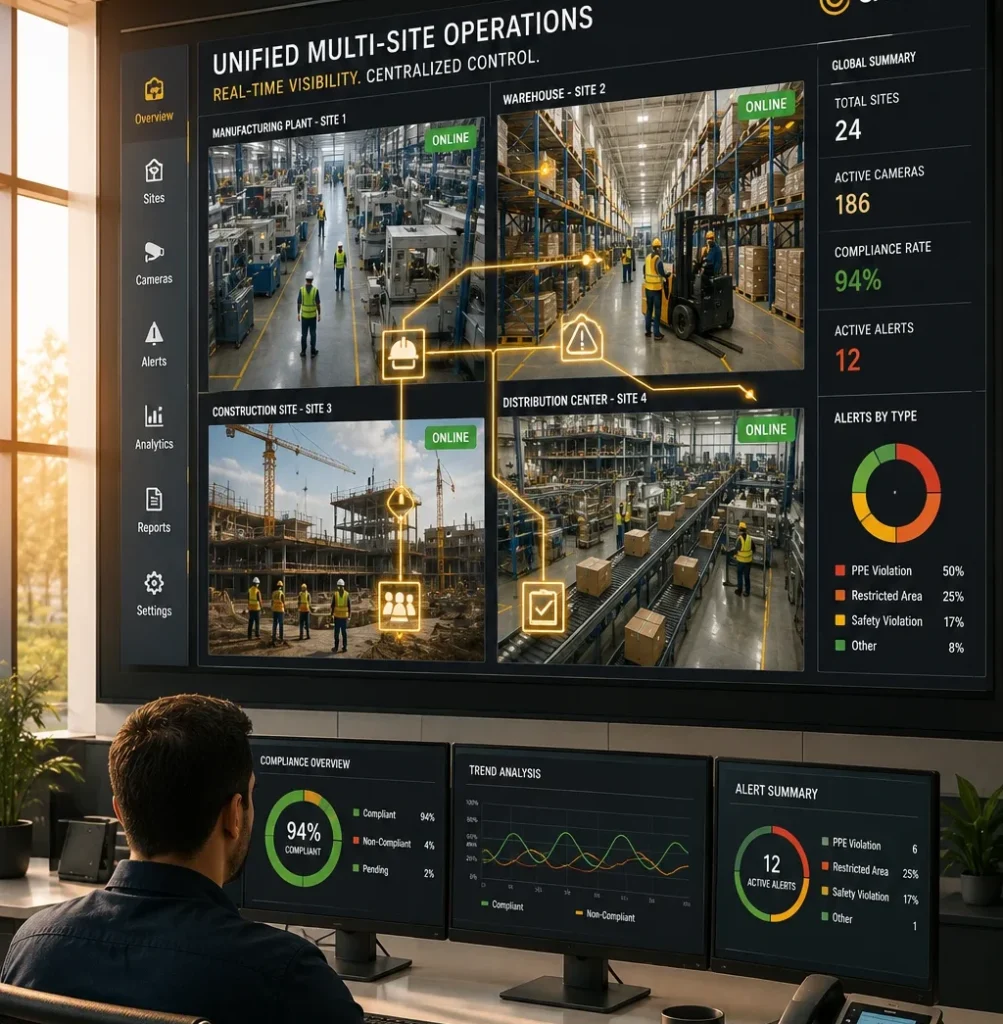
By continuously analyzing workplace activities, safety compliance, PPE adherence, operational workflows, and potential risk conditions, CAPASai provides actionable visibility into day-to-day operations. Intelligent alerts enable rapid response when predefined safety events occur, while centralized monitoring supports consistent standards across multiple facilities.
This helps organizations strengthen compliance, improve accountability, reduce operational blind spots, and support long-term safety objectives.
Building A Proactive Safety Culture
Creating safer workplaces requires more than responding to incidents after they occur. Organizations need continuous visibility into operational activities, workplace behaviors, and compliance performance.
Continuous visual intelligence enables enterprises to identify risks earlier, improve operational awareness, and support a culture focused on prevention rather than reaction. As organizations pursue operational excellence, AI-powered monitoring is becoming an increasingly valuable tool for enhancing workplace safety and operational consistency.