The Growing Challenge of Retail Loss Prevention
Retail businesses worldwide face increasing pressure to reduce inventory shrinkage, prevent theft, improve operational compliance, and maintain profitability. Whether managing a single outlet or a large chain of stores, retailers must constantly monitor customer activity, employee behavior, and operational processes to minimize losses.
Loss prevention has become more challenging as stores handle higher transaction volumes, larger inventories, and multiple locations. As a result, many retailers compare different monitoring technologies to determine which approach offers the best balance of security, efficiency, and operational visibility.
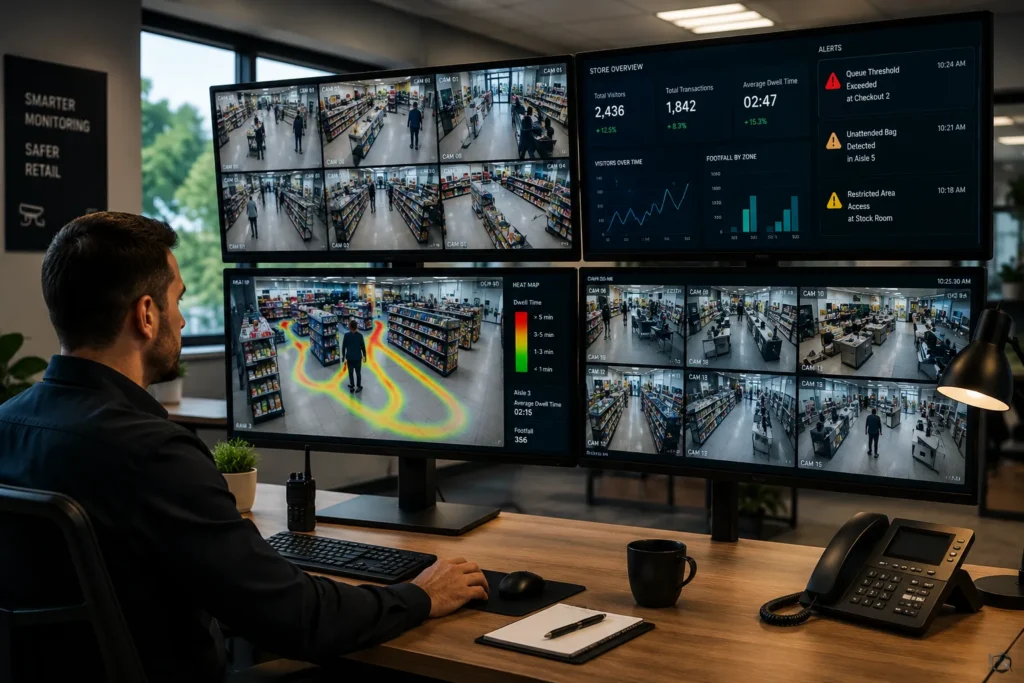
How Modern Retailers Are Improving Store Visibility
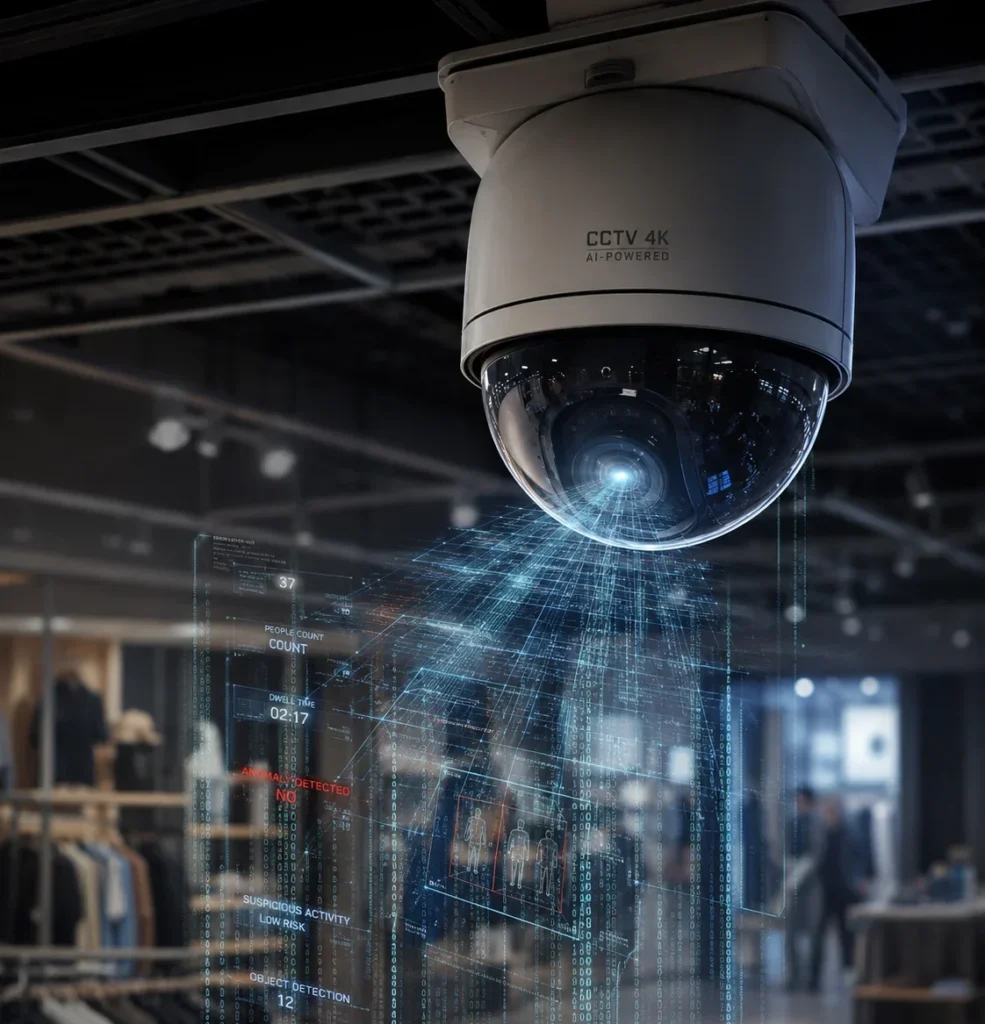
Advancements in artificial intelligence have transformed how organizations use existing CCTV infrastructure. Instead of relying solely on recorded footage, businesses can now leverage intelligent systems that analyze video feeds in real time.
AI-powered monitoring solutions help retailers identify unusual activities, monitor operational procedures, track occupancy levels, detect unauthorized access, and generate instant alerts when predefined events occur.
This shift enables retailers to move from reactive investigations to proactive loss prevention strategies.
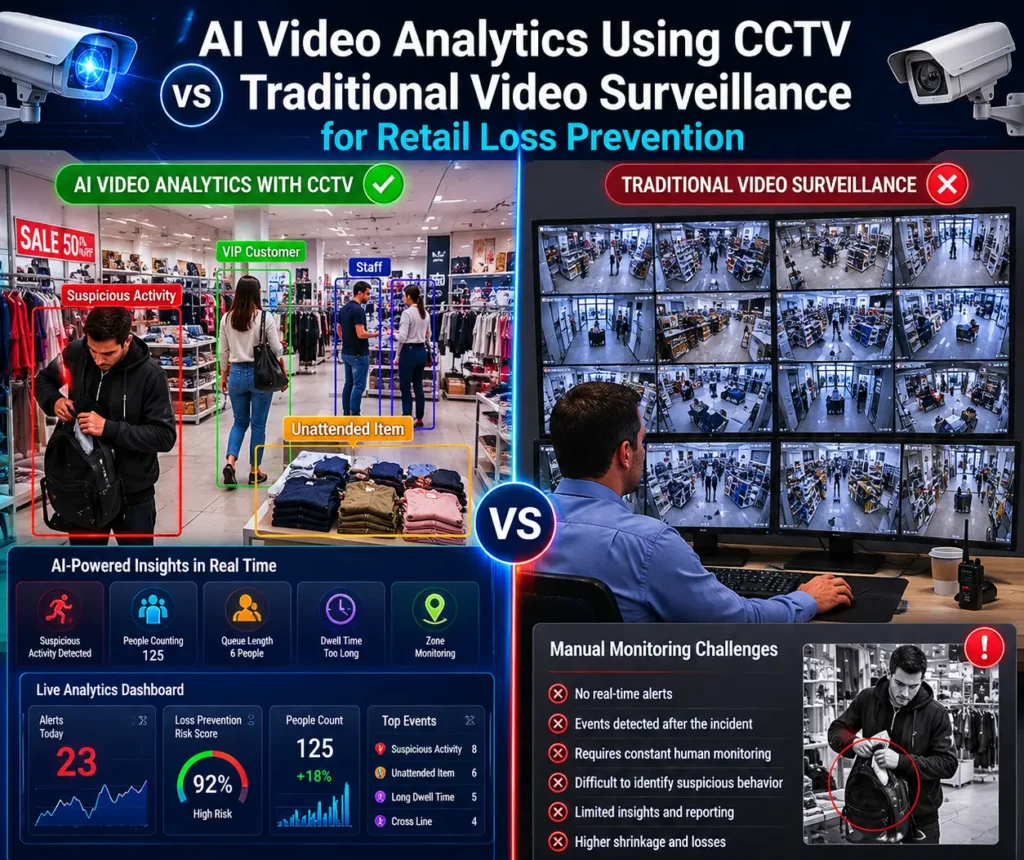
Compare AI Video Analytics Using CCTV vs Traditional Video Surveillance
Both technologies utilize CCTV cameras, but their capabilities differ significantly.
Feature | Traditional Video Surveillance | AI Video Analytics Using CCTV |
Monitoring Approach | Manual observation | Automated real-time analysis |
Incident Detection | Post-event review | Real-time detection |
Alert Generation | Limited | Instant notifications |
Theft Prevention | Reactive | Proactive |
Multi-Store Visibility | Challenging | Centralized monitoring |
Investigation Process | Manual search | Intelligent event filtering |
Operational Insights | Basic | Actionable analytics |
Scalability | Resource intensive | Highly scalable |
When retailers compare these approaches, the primary difference lies in how quickly incidents are identified and addressed.
Common Pain Points in Traditional Retail Monitoring
Traditional video surveillance has been a cornerstone of retail security for decades. However, many retailers struggle with limitations that affect their ability to prevent losses proactively.
Common challenges include:
- Theft detected only after incidents occur
- Manual review of hours of recorded footage
- Limited visibility across multiple store locations
- Delayed response to suspicious activities
- Dependence on security personnel for continuous monitoring
- Difficulty identifying operational non-compliance
- Increased labor costs associated with surveillance review
These challenges often result in missed incidents, delayed investigations, and reduced effectiveness of loss prevention programs.
Compare the Business Impact on Retail Operations
Retailers increasingly evaluate surveillance solutions based on their contribution to overall business performance rather than security alone.
AI video analytics can support:
- Faster theft detection
- Improved employee compliance
- Reduced shrinkage risks
- Better operational consistency
- Enhanced customer experience
- Stronger security oversight
- Improved decision-making through data-driven insights
Traditional surveillance remains valuable for recording evidence, but intelligent analytics adds an additional layer of operational awareness.
How CAPASai Helps Retailers Strengthen Loss Prevention
CAPASai provides AI-Powered Intelligent Video Analytics that transforms existing CCTV systems into proactive monitoring tools.
Through intelligent video analytics, remote store monitoring, and real-time alerts, CAPASai helps retailers:
- Monitor multiple locations from a centralized platform
- Detect critical events in real time
- Improve operational compliance
- Enhance security monitoring
- Reduce response times to incidents
- Strengthen loss prevention efforts
- Gain actionable insights from video data
By leveraging existing camera infrastructure, retailers can improve visibility and operational control without completely replacing their surveillance systems.
Retail Use Cases Beyond Theft Prevention
Modern video analytics supports numerous retail applications, including:
Checkout Monitoring
Detect unusual activity around cash counters and self-checkout stations.
Employee Compliance Monitoring
Verify adherence to operational procedures and restricted-area policies.
Customer Flow Analysis
Understand traffic patterns and optimize store layouts.
Queue Management
Monitor waiting times and improve customer service efficiency.
After-Hours Security Monitoring
Receive alerts when unexpected activities occur outside business hours.
These use cases demonstrate why many retailers compare AI-powered monitoring solutions with conventional surveillance systems when modernizing their loss prevention strategies.
Building a More Proactive Loss Prevention Strategy
Retail loss prevention is evolving from passive video recording to intelligent, real-time monitoring. Organizations that compare modern video analytics with traditional surveillance often discover significant advantages in visibility, response speed, and operational efficiency. As retailers continue seeking smarter ways to reduce shrinkage and improve store performance, AI-powered solutions such as CAPASai provide the tools needed to support a more proactive and data-driven approach to loss prevention.
Frequently Asked Questions
How does AI video analytics compare to traditional video surveillance?
Can AI video analytics work with existing CCTV cameras?
Why do retailers compare AI analytics with traditional surveillance?
Can AI video analytics help reduce retail shrinkage?
Is AI video analytics suitable for multi-store retail chains?
Reduce shrinkage across every store. No capex. See CAPASai on your existing cameras . Book a retail loss prevention demo