Why Organizations Are Looking Beyond Traditional Video Monitoring
Video surveillance has become an essential part of modern business operations. CCTV systems are used by businesses in the manufacturing, retail, healthcare, banking, logistics, education, hospitality, and critical infrastructure sectors to enhance security, keep an eye on activities, and assist with investigations.
As camera deployments continue to grow, businesses are generating vast amounts of video footage every day. While storing and managing this data is important, many organizations are discovering that simply recording video does not necessarily provide the visibility needed to improve safety, compliance, operational efficiency, or risk management.
This growing demand for actionable insights has led businesses to evaluate whether traditional video management tools are sufficient or if more intelligent monitoring capabilities are required.
Common Limitations of Basic Video Management Systems
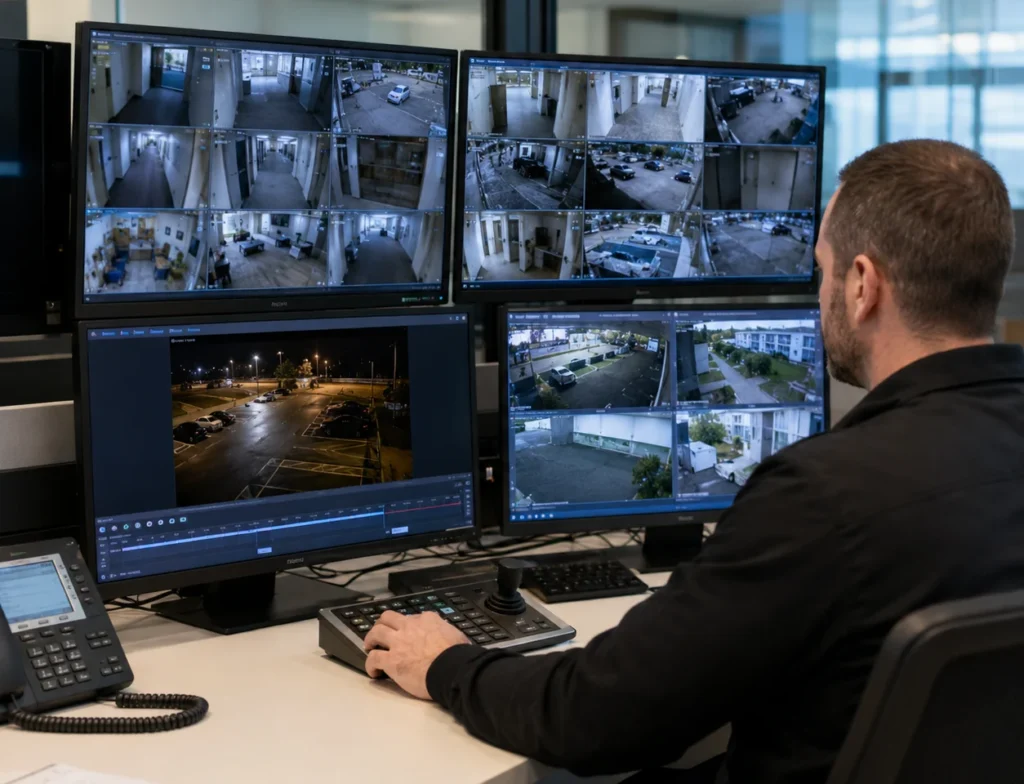
The main platform for watching, recording, storing, and organising CCTV footage is a Video Management System (VMS). These systems play a valuable role in organizing surveillance infrastructure and enabling video retrieval when needed.
However, many organizations encounter challenges when relying solely on a basic VMS.
Common limitations include:
- Heavy dependence on manual monitoring
- Time-consuming video searches
- Delayed identification of incidents
- Limited automated analysis
- Difficulty reviewing large volumes of footage
- Minimal operational intelligence
- Reactive investigation workflows
As camera networks expand, finding critical events within thousands of hours of recorded footage can become increasingly difficult.
Understanding AI Video Analytics Using CCTV
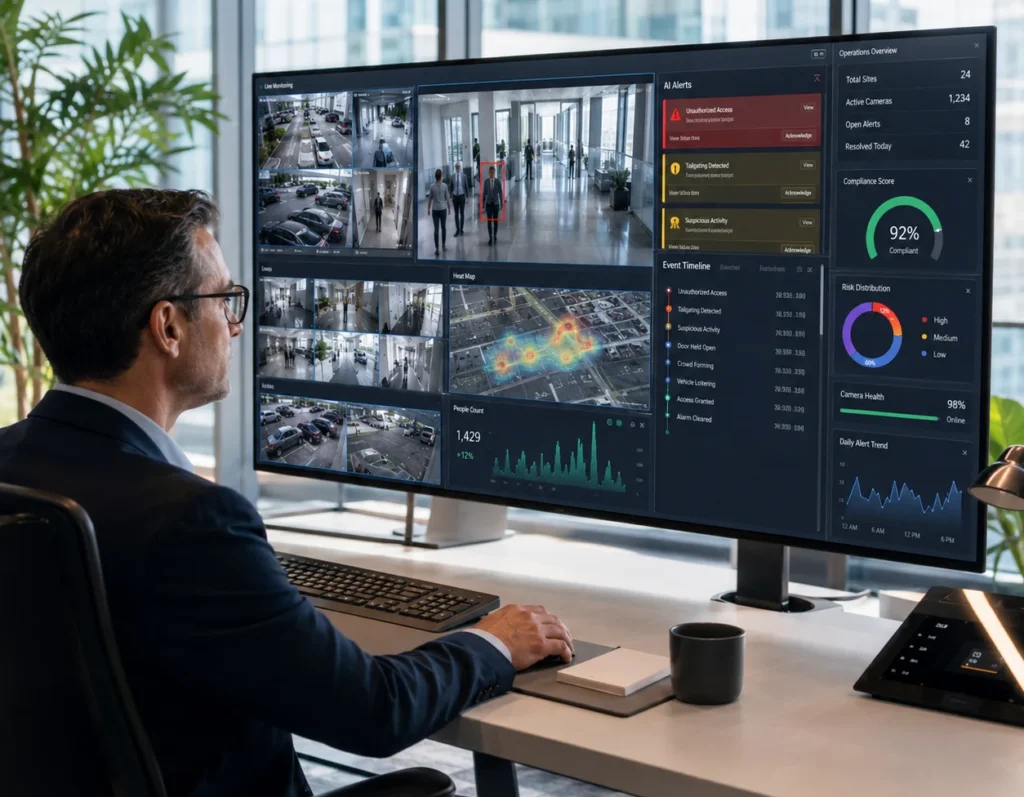
AI video analytics applies artificial intelligence to CCTV footage to automatically identify activities, objects, behaviors, and operational events. Instead of requiring personnel to continuously observe screens or manually review recordings, AI systems analyze video streams in real time and generate alerts when predefined conditions are detected.
This transforms surveillance systems from passive recording environments into active monitoring solutions capable of supporting security, safety, compliance, and operational oversight.
Organizations increasingly compare intelligent analytics platforms with traditional VMS environments when looking to improve monitoring effectiveness.
Compare AI Video Analytics Using CCTV vs Basic Video Management Systems (VMS)
Although both technologies work with CCTV infrastructure, they serve different purposes.
Feature | Basic Video Management System (VMS) | AI Video Analytics Using CCTV |
Primary Function | Video recording and management | Intelligent video analysis |
Monitoring Approach | Manual observation | Automated analysis |
Event Detection | User-dependent | Real-time identification |
Alert Generation | Limited or manual | Automated notifications |
Search Capability | Manual footage review | Event-based retrieval |
Compliance Monitoring | Limited support | Automated visibility |
Operational Insights | Minimal | Actionable intelligence |
Incident Response Support | Investigation-focused | Detection and response-focused |
The fundamental difference is that a VMS manages video content, while AI analytics interprets video content and identifies meaningful events.
Compare How Organizations Extract Value from Video Data
With a basic VMS, teams typically review footage after an event has been reported. This approach is effective for evidence collection but often provides limited support for proactive monitoring.
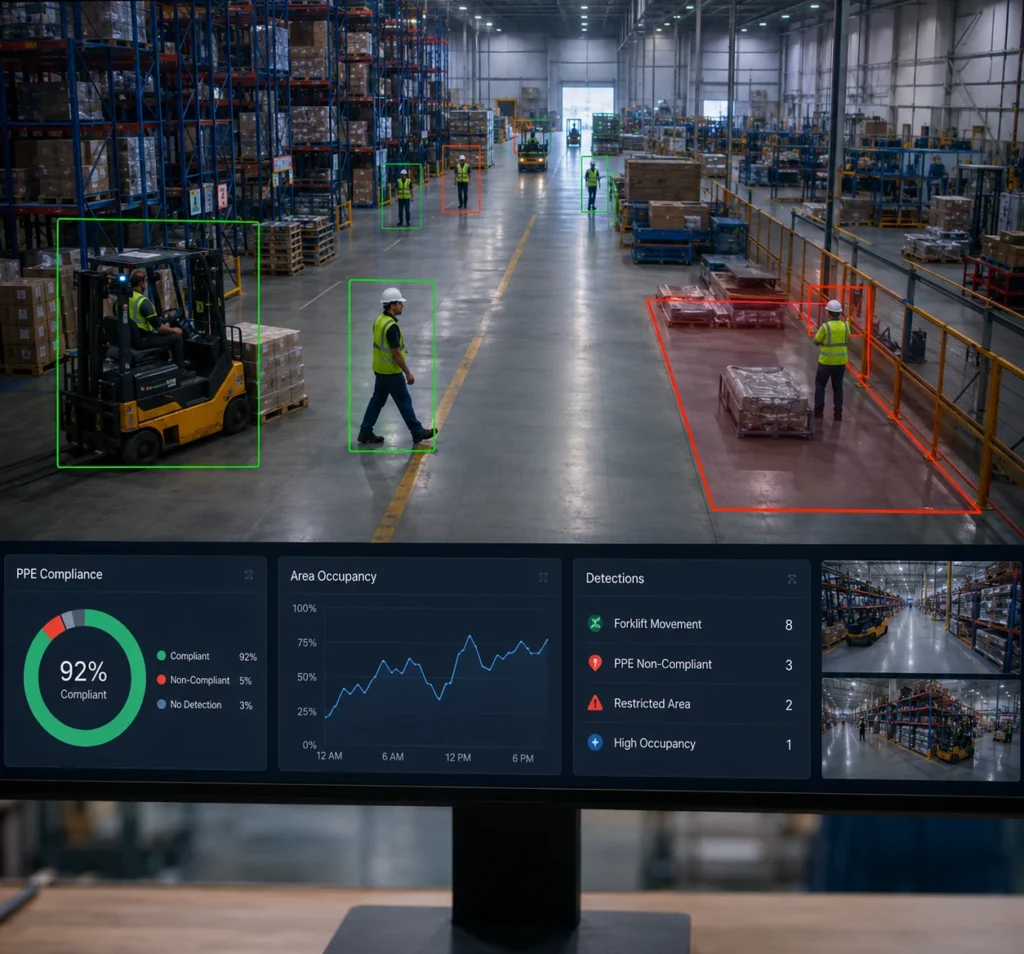
AI-powered analytics can help identify:
- Safety violations
- Unauthorized access attempts
- Restricted-area activities
- Compliance deviations
- Occupancy concerns
- Operational anomalies
- Security-related events
- Process-related issues
By turning video data into actionable insights, organizations can improve awareness and respond more quickly to emerging situations.
How CAPASai Enhances CCTV Monitoring by Adding Conventional VMS Features
CAPASai combines AI-powered video analytics, remote monitoring, and real-time alerts to help organizations gain greater value from their existing CCTV infrastructure.
Rather than functioning solely as a video repository, CAPASai continuously analyzes activities occurring across monitored environments and identifies predefined events that may require attention.
Key capabilities include:
- Real-time event detection
- Automated alert generation
- Operational monitoring support
- Compliance visibility
- Safety monitoring
- Remote monitoring capabilities
- Centralized oversight across locations
- Investigation support through intelligent event tracking
The Function of AI Analytics and VMS Is Changing
For many organizations, the discussion is not necessarily about choosing one technology over the other.
A VMS remains essential for managing video recordings, camera configurations, storage policies, and system administration. AI video analytics adds an additional layer of intelligence by helping identify important events within the video environment.
In practice, many modern monitoring strategies combine both technologies to improve efficiency, visibility, and response capabilities.
Organizations frequently compare these solutions when evaluating how to maximize the return on their surveillance investments.
Benefits of AI-Powered Video Analytics
Organizations implementing intelligent monitoring solutions often experience:
- Faster incident awareness
- Reduced manual video review
- Improved compliance oversight
- Enhanced operational visibility
- Better resource utilization
- Increased situational awareness
- More efficient investigations
- Stronger decision-making support
These benefits help organizations transform surveillance footage into a valuable operational resource.
Compare the Future of Video Management and Intelligent Analytics
The role of surveillance technology is shifting from simple video storage toward intelligent operational awareness. While Video Management Systems remain essential for organizing and managing surveillance infrastructure, organizations increasingly require tools that can identify risks, highlight important events, and support proactive decision-making. AI video analytics fulfills this need by transforming recorded footage into actionable intelligence. As monitoring requirements continue to evolve, businesses that combine effective video management with intelligent analytics will be better positioned to improve security, compliance, and operational performance.