Why Organizations Are Moving Beyond Incident-Based Monitoring
Businesses today operate in environments where security risks, safety concerns, compliance requirements, and operational disruptions can have significant consequences. Across industries such as manufacturing, retail, healthcare, logistics, banking, education, and critical infrastructure, organizations depend on surveillance systems to improve visibility and support decision-making.
Traditionally, surveillance has been used to document events and provide evidence after incidents occur. While this approach remains valuable, many organizations are seeking ways to identify risks earlier and reduce the likelihood of costly incidents. Instead of focusing solely on what has already happened, businesses increasingly want tools that help them recognize patterns, anticipate issues, and take action before problems escalate.
This shift is driving interest in more intelligent forms of video monitoring that go beyond traditional surveillance practices.
The Challenges of Reactive Surveillance
Reactive surveillance is designed primarily around observation, recording, and post-incident investigation. Cameras capture footage, which is later reviewed when a security event, safety concern, compliance issue, or operational disruption is reported.
While widely adopted, this approach often presents several challenges:
- Incidents may be discovered after they occur
- Investigations can require extensive video review
- Response opportunities may be missed
- Risks can develop unnoticed between reviews
- Monitoring relies heavily on human observation
- Operational trends may be difficult to identify
- Preventive intervention is limited
For organizations seeking greater operational awareness, waiting for an incident to happen before taking action may not always be sufficient.
Understanding Predictive AI Video Analytics
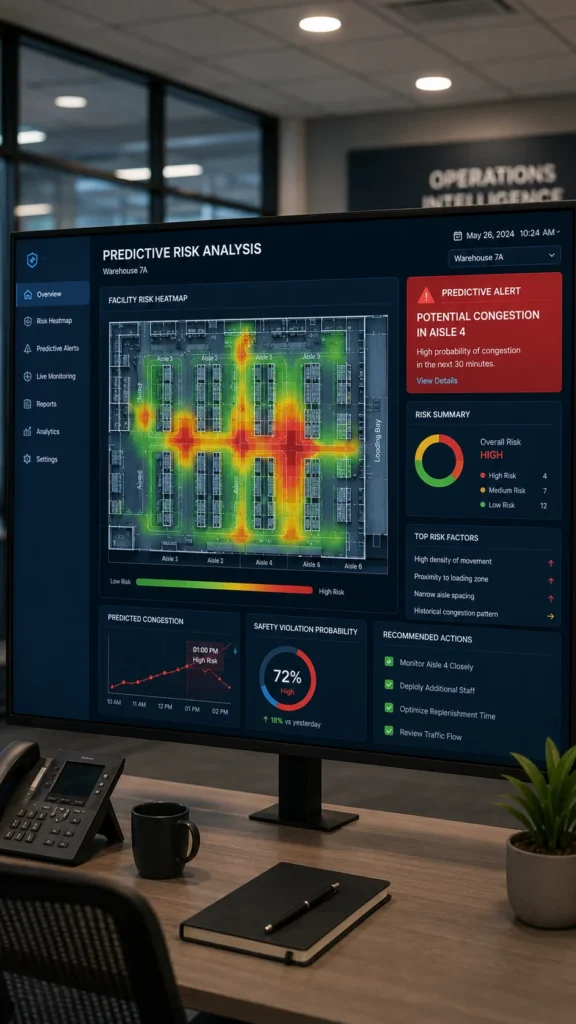
Predictive AI video analytics applies artificial intelligence to CCTV footage to identify patterns, behaviors, anomalies, and operational conditions that may indicate elevated risk. AI continuously analyses video streams and produces warnings when predetermined signs are found, as opposed to concentrating only on capturing events.
The objective is not simply to document incidents but to provide earlier visibility into activities that may require attention. This aids organisations in enhancing situational awareness, bolstering prevention initiatives, and responding more skilfully to new threats.
Many enterprises compare traditional surveillance approaches with predictive analytics when exploring ways to improve operational resilience and risk management
Compare Reactive Surveillance vs Predictive AI Video Analytics Using CCTV
Although both approaches use CCTV infrastructure, they differ significantly in purpose and operational outcomes.
Feature | Reactive Surveillance | Predictive AI Video Analytics |
Primary Focus | Event recording | Risk identification and prevention |
Incident Detection | After occurrence | Early warning capabilities |
Monitoring Method | Observation and review | Continuous AI analysis |
Alert Generation | Limited or manual | Automated notifications |
Response Timing | Reactive | Proactive |
Pattern Recognition | Minimal | Advanced analytics |
Operational Insights | Historical information | Forward-looking visibility |
Decision Support | Investigation-focused | Prevention-focused |
The key distinction is that reactive surveillance helps explain what happened, while predictive analytics helps identify conditions that may require intervention before a larger issue develops.
Compare How Organizations Approach Risk Management
The way organizations manage risk often influences the monitoring technologies they adopt.
Reactive surveillance supports:
- Incident investigations
- Evidence collection
- Security reviews
- Post-event analysis
- Documentation requirements
Predictive AI analytics can support:
- Early anomaly detection
- Safety risk identification
- Operational trend monitoring
- Compliance oversight
- Behavioral pattern analysis
- Proactive intervention strategies
How CAPASai Enables Proactive Monitoring
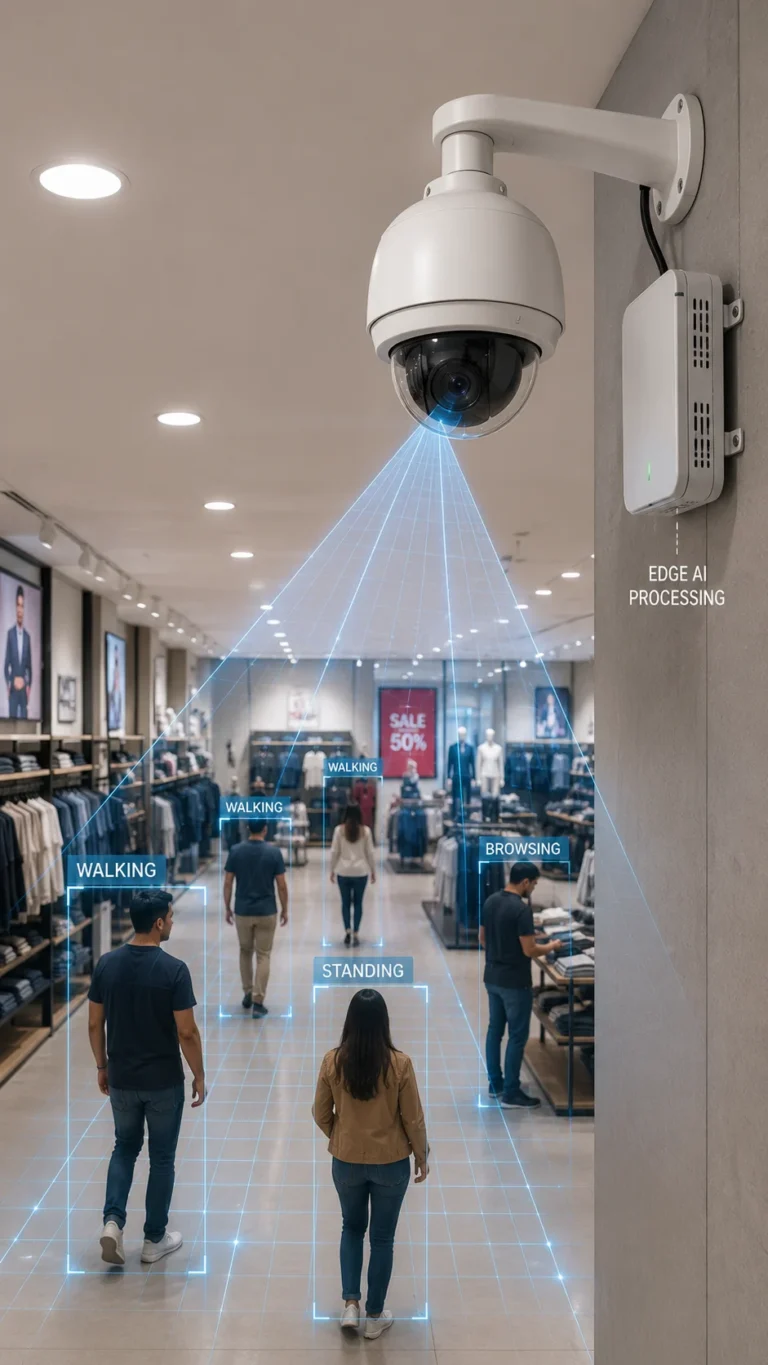
CAPASai uses AI-powered video analytics, remote monitoring, and real-time alarms to improve current CCTV infrastructure.
Instead of relying solely on historical footage review, CAPASai continuously analyzes operational activities and identifies predefined events, behavioral patterns, and potential risk indicators. This allows teams to receive timely notifications and respond before issues escalate.
Key capabilities include:
- Real-time event detection
- Automated alert generation
- Compliance monitoring support
- Safety risk visibility
- Operational monitoring
- Remote oversight capabilities
- Multi-location monitoring
- Centralized incident awareness
By transforming video data into actionable intelligence, CAPASai helps organizations strengthen both prevention and response capabilities.
Proactive Monitoring Creates Value Beyond Security
Organizations are increasingly using intelligent analytics to support broader operational objectives.
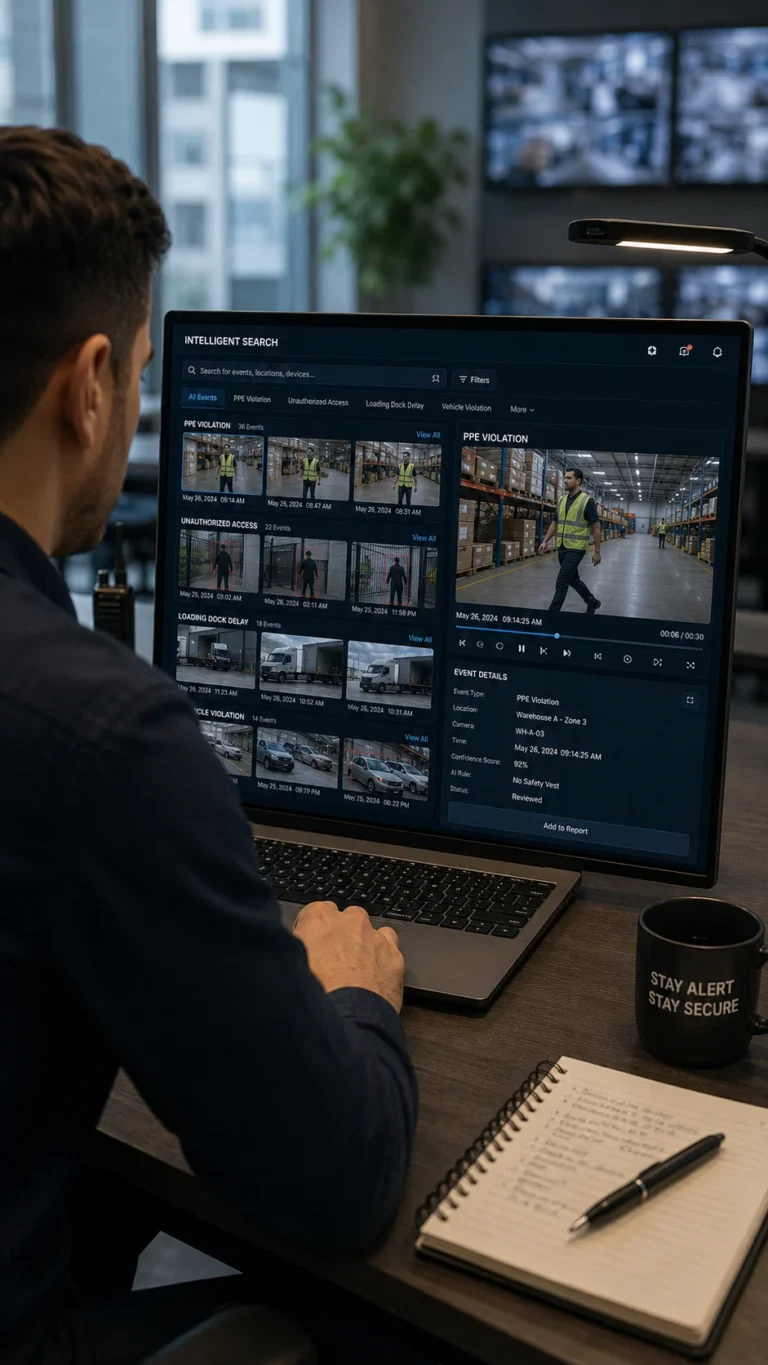
For example, safety teams may use predictive monitoring to identify recurring workplace risks. Compliance teams can gain greater visibility into procedural deviations. Operations managers may use insights to identify inefficiencies, while security teams can improve awareness of emerging threats.
Rather than treating surveillance footage solely as evidence, organizations are beginning to use video data as a source of operational intelligence that supports continuous improvement and risk reduction.
Benefits of Predictive AI Video Analytics
Organizations implementing predictive monitoring solutions may achieve:
- Earlier risk identification
- Faster response to emerging issues
- Improved operational visibility
- Enhanced compliance oversight
- Better resource allocation
- Reduced investigation effort
- Increased situational awareness
- Stronger preventive capabilities
Compare Predictive Intelligence and Reactive Monitoring in the Future
The role of surveillance is evolving from passive observation toward proactive operational intelligence. While reactive surveillance remains valuable for investigations and documentation, organizations increasingly need tools that provide earlier awareness of potential risks and emerging issues. Predictive AI video analytics addresses this need by helping businesses identify patterns, monitor conditions, and support preventive action. As monitoring strategies continue to mature, organizations that combine traditional surveillance with intelligent analytics will be better positioned to improve safety, strengthen compliance, and reduce operational risk.