Accountability is one of the most important foundations of operational excellence. Organizations depend on employees, teams, processes, and departments consistently performing their responsibilities to maintain productivity, quality, compliance, and customer satisfaction. However, creating accountability across large enterprises can be challenging, especially when operations span multiple locations, shifts, and teams. An AI operational monitoring system helps address these challenges by providing real-time visibility into workflows, employee activities, and operational performance. By leveraging intelligent analytics and automated monitoring, organizations can strengthen accountability, improve transparency, and ensure consistent execution of business processes across the enterprise.
Traditional accountability frameworks often rely on manual supervision, periodic audits, management reviews, and incident reporting. While these methods remain important, they frequently provide only limited visibility into day-to-day operational execution. As organizations pursue greater efficiency and consistency, AI-based operational monitoring is emerging as a powerful tool for strengthening accountability across the enterprise.
Why Accountability Matters In Modern Operations
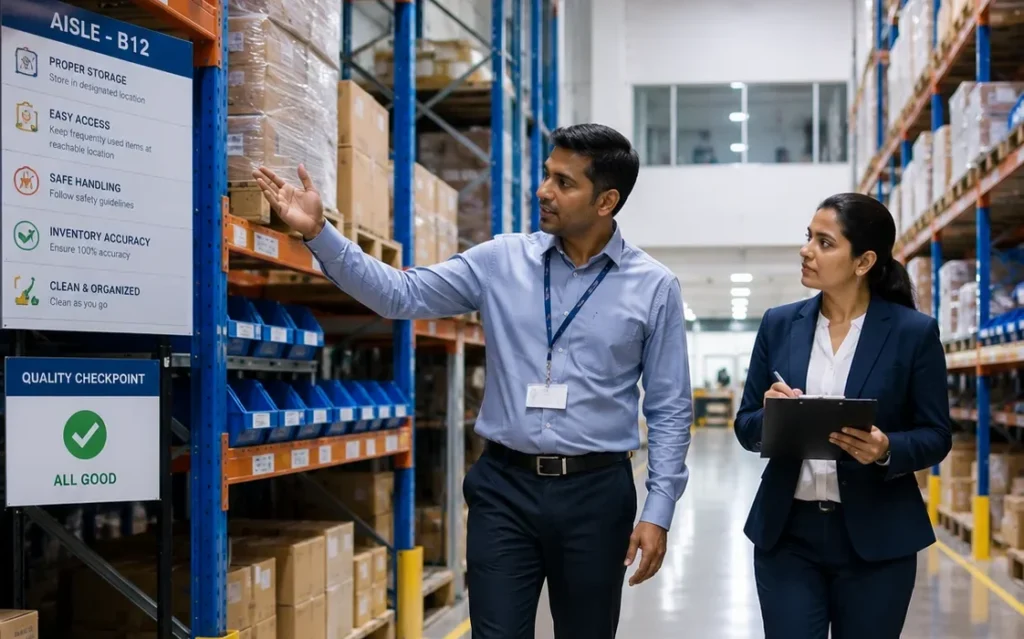
Accountability ensures that operational activities are performed according to established standards, procedures, and business objectives.
Strong accountability helps organizations:
- Improve operational consistency
- Reduce errors and process deviations
- Strengthen compliance
- Increase productivity
- Improve quality outcomes
- Enhance customer experiences
- Support continuous improvement
Without clear accountability, operational risks and inefficiencies can accumulate over time.
Challenges Of Traditional Accountability Systems
Many organizations struggle to maintain consistent accountability because traditional monitoring approaches have limitations.
Limited Visibility
Managers cannot continuously observe activities across every location and shift.
Delayed Issue Identification
Problems are often discovered only after operational performance has already been affected.
Inconsistent Oversight
Supervisory practices may vary across departments, facilities, and teams.
Reactive Management
Organizations frequently respond to incidents after they occur rather than preventing them proactively.
These difficulties may lead to discrepancies between operational policies and their actual implementation.
What Is AI-Based Operational Monitoring?
AI-based operational monitoring uses Artificial Intelligence, computer vision, video analytics, and operational intelligence technologies to continuously observe and analyze activities occurring within physical environments.
Unlike traditional monitoring systems that primarily record events, AI-based monitoring helps organizations understand operational execution in real time.
This enables businesses to:
- Verify process adherence
- Detect operational deviations
- Monitor workflow execution
- Identify performance issues
- Improve visibility across locations
- Support accountability initiatives
The result is a more transparent and data-driven operational environment.
How AI-Based Monitoring Strengthens Accountability
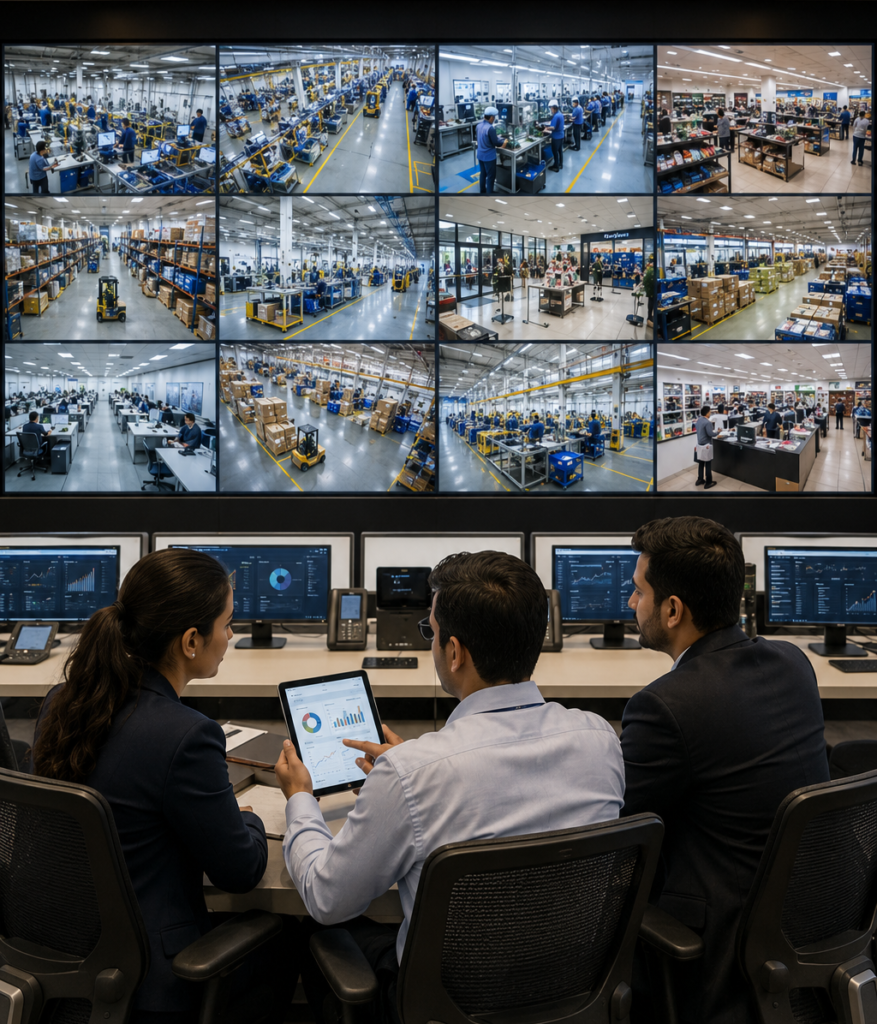
Continuous Operational Visibility
Organizations gain real-time awareness of operational activities throughout the enterprise.
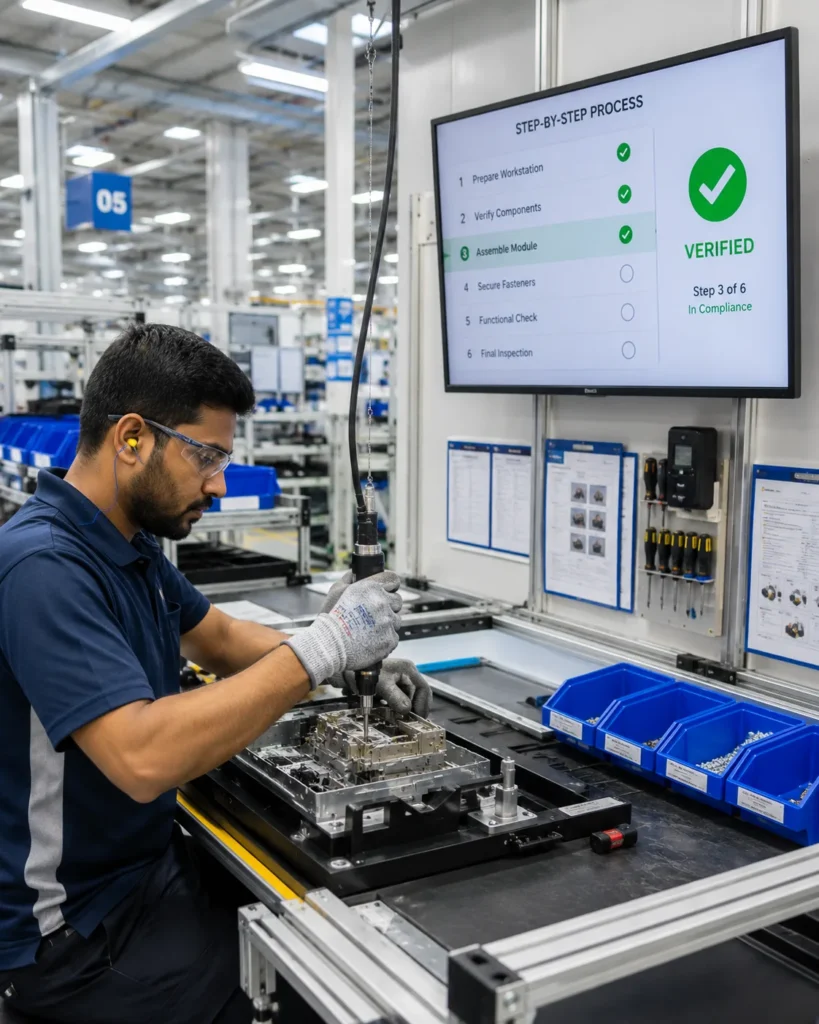
Process Adherence Verification
AI helps verify that employees and teams follow established procedures consistently.
Objective Performance Measurement
Accountability can be based on observable operational data rather than subjective evaluations.
Early Detection Of Deviations
Potential issues can be identified before they develop into larger operational problems.
Consistent Standards Across Locations
Organizations can maintain uniform operational expectations across facilities and shifts.
Compare Traditional Accountability Methods And AI-Based Monitoring
Traditional Accountability Methods | AI-Based Operational Monitoring |
Manual supervision | Continuous AI-driven observation |
Periodic audits | Real-time operational visibility |
Reactive issue management | Proactive deviation detection |
Limited oversight coverage | Enterprise-wide monitoring |
Subjective assessments | Objective operational insights |
Delayed reporting | Immediate visibility and alerts |
This comparison highlights why AI-driven monitoring is becoming increasingly valuable for operational governance.
The Role Of Computer Vision In Accountability
Computer vision enables organizations to transform visual operational activities into actionable business intelligence.
Using computer vision, organizations can:
- Monitor workflow execution
- Verify compliance with procedures
- Detect operational anomalies
- Analyze process adherence
- Support audit readiness
- Improve operational transparency
These capabilities help organizations build a stronger culture of accountability.
Benefits Of AI-Based Operational Monitoring
Organizations implementing AI-driven monitoring can achieve several significant advantages.
Improved Accountability
Create greater visibility into operational execution and responsibilities.
Enhanced Compliance
Support adherence to internal policies and regulatory requirements.
Better Operational Consistency
Ensure processes are performed according to established standards.
Faster Corrective Action
Identify and address issues before they impact performance.
Increased Productivity
Reduce inefficiencies and process deviations that affect operational outcomes.
Stronger Governance
Provide leadership with greater visibility into enterprise-wide operations.
AI-Based Accountability Across Industries
AI-powered operational monitoring can support accountability across many sectors.
Industry | Accountability Applications |
Manufacturing | Process adherence, production discipline, quality monitoring |
Retail Chains | Store operations consistency, SOP compliance |
Logistics & Warehousing | Workflow verification, operational visibility |
Healthcare | Procedure adherence, operational governance |
Banking & BFSI | Branch operations monitoring, compliance oversight |
Hospitality | Service quality consistency |
Education | Campus operations monitoring and accountability |
Organizations across industries are increasingly adopting AI technologies to strengthen operational accountability.
How CAPASai Creates Accountability Through AI-Based Monitoring
CAPASai helps organizations strengthen accountability through AI-powered video analytics, operational intelligence, real-time monitoring, and intelligent alerts. By continuously observing workflows, operational activities, process adherence, and compliance requirements, CAPASai enables enterprises to improve transparency, reduce operational deviations, strengthen governance, and maintain consistent standards across multiple locations.