Why Organizations Need More Than Video Storage
CCTV systems have been widely used for decades to enhance security, support investigations, and maintain visibility across facilities. From retail stores and manufacturing plants to hospitals, warehouses, banks, and educational institutions, surveillance cameras play an important role in daily operations.
However, modern organizations face challenges that extend beyond recording incidents. Businesses increasingly need faster response times, improved safety oversight, stronger compliance monitoring, and greater operational visibility. As facilities grow larger and camera networks expand, simply storing video footage is no longer sufficient for many operational requirements.
This shift has encouraged organizations to evaluate technologies that can provide real-time awareness rather than relying solely on post-incident review.
Challenges Associated with Conventional CCTV Recording
Traditional CCTV systems are highly effective at capturing and storing footage. However, the value of recorded video often depends on someone reviewing it at the right time.
Organizations commonly encounter challenges such as:
- Delayed incident discovery
- Time-consuming footage investigations
- Dependence on manual monitoring
- Difficulty reviewing large volumes of video
- Limited operational intelligence
- Reactive incident management
- Challenges monitoring multiple locations simultaneously
Important events are frequently discovered only after a complaint, audit finding, safety incident, or security issue has already taken place.
Understanding Real-Time AI Video Analytics
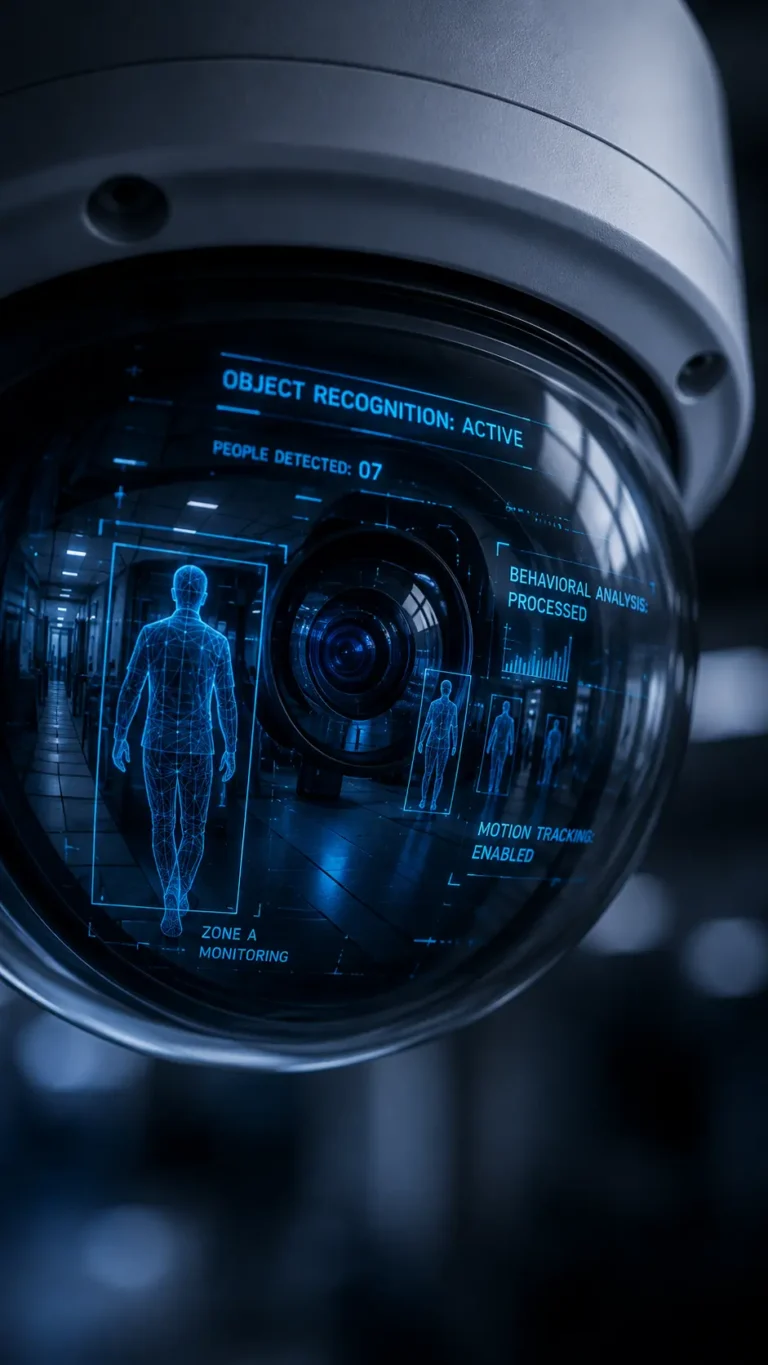
Real-time AI video analytics applies artificial intelligence to CCTV footage as events occur. Instead of simply recording activity, the system continuously analyzes video streams, identifies predefined conditions, and generates alerts when attention is required.
This transforms surveillance systems into active monitoring tools capable of supporting security, compliance, safety, and operational decision-making.
Organizations increasingly compare conventional recording systems with AI-driven monitoring technologies when looking to improve visibility and responsiveness.
Compare Conventional CCTV Recording vs Real-Time AI Video Analytics Using CCTV
Although both approaches use CCTV infrastructure, they deliver very different operational outcomes.
Feature | Conventional CCTV Recording | Real-Time AI Video Analytics |
Principal Role | Capture and preserve video | Examine events as they happen. |
Monitoring Approach | Manual review | Automated analysis |
Incident Detection | Often after occurrence | Real-time identification |
Alert Generation | Not typically automated | Instant notifications |
Investigation Process | Manual footage review | Event-focused analysis |
Operational Visibility | Limited | Continuous visibility |
Compliance Monitoring | Manual verification | Automated monitoring support |
Scalability | Resource dependent | Highly scalable |
The most significant difference is that conventional systems document events, while AI-powered systems help identify events as they happen.
Compare How Organizations Use Video Data
Historically, surveillance footage has been used primarily for investigations after incidents occur. Security teams review recordings to determine what happened and collect evidence.
Today, organizations are finding new ways to use video data.
Real-time AI analytics can support:
- Workplace safety monitoring
- SOP compliance verification
- Unauthorized access detection
- Occupancy monitoring
- Queue management
- Asset protection
- Operational oversight
- Incident escalation workflows
Rather than waiting for someone to review footage, organizations can receive immediate visibility into activities that require attention.
How CAPASai Transforms CCTV Into an Active Monitoring System
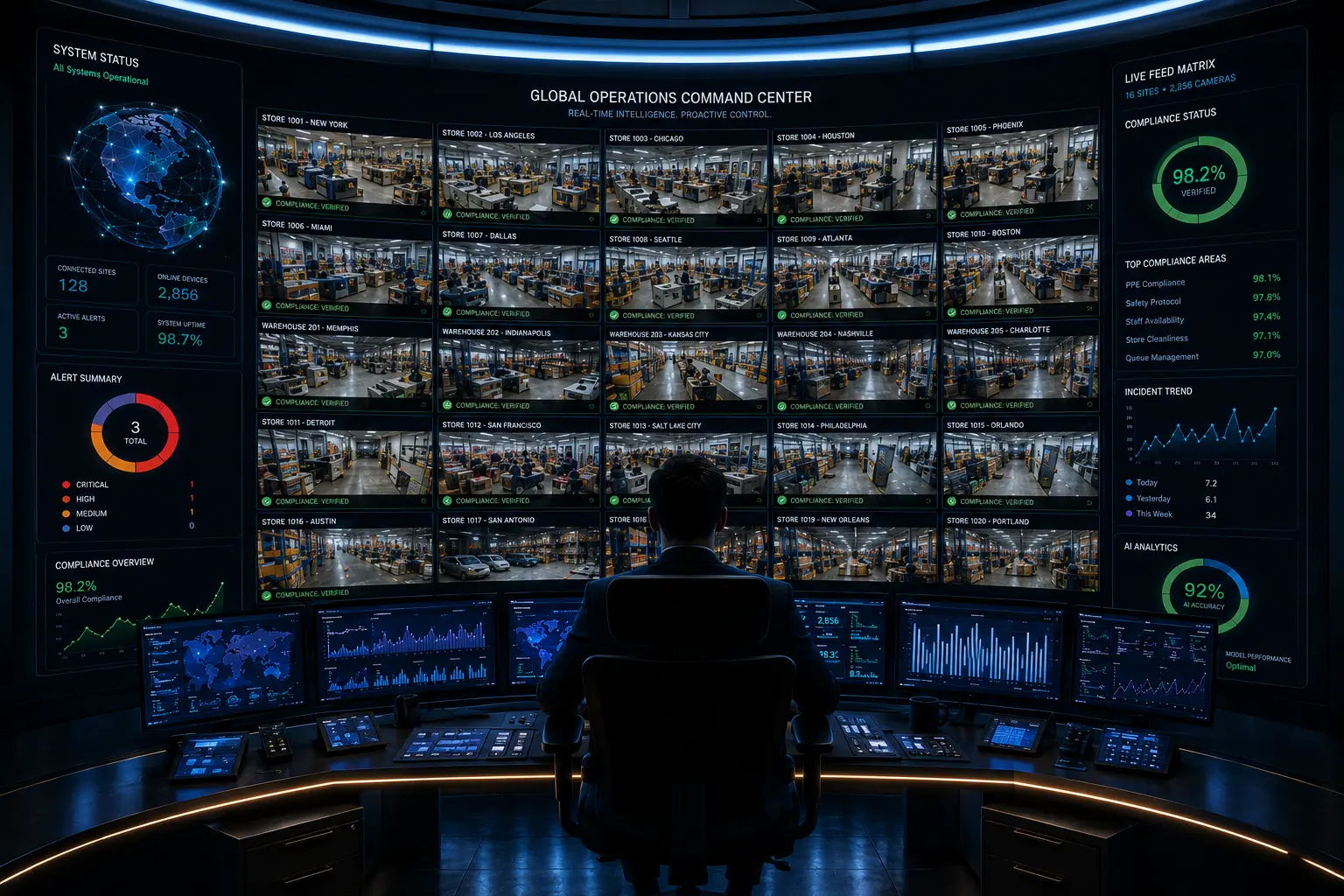
CAPASai enhances existing CCTV infrastructure through AI-powered video analytics, remote monitoring, and real-time alerts.
Instead of treating surveillance footage as a historical record, CAPASai continuously evaluates operational activities and identifies predefined events that may indicate safety concerns, compliance deviations, security risks, or operational issues.
Key capabilities include:
- Real-time event detection
- Automated alert generation
- Remote monitoring capabilities
- Compliance monitoring support
- Operational visibility across facilities
- Multi-location oversight
- Incident investigation assistance
Centralized monitoring
Moving from Reactive Surveillance to Proactive Monitoring
The way businesses handle risk and operations is evolving due to the advancement of monitoring technology.
A manufacturing facility may use real-time analytics to identify safety violations before an incident occurs. A retail chain may receive immediate alerts regarding unusual activities within stores. Healthcare organizations can improve visibility into sensitive areas, while logistics operators can gain better oversight of warehouse activities.
Rather than functioning solely as evidence repositories, modern surveillance systems are increasingly becoming operational intelligence tools that support day-to-day decision-making.
Organizations frequently compare these approaches when seeking to improve efficiency, reduce risk, and strengthen operational control.
Benefits of Real-Time AI Video Analytics
Organizations implementing AI-powered monitoring often achieve:
- Faster incident awareness
- Improved response times
- Better compliance visibility
- Enhanced operational oversight
- Reduced investigation effort
- Greater situational awareness
- More efficient resource allocation
- Improved decision-making support
These benefits help organizations derive greater value from existing CCTV investments.

Compare the Future of Video Recording and Intelligent Video Analytics
As organizations seek greater value from surveillance investments, the role of CCTV is expanding beyond simple recording and storage. Conventional CCTV systems remain valuable for documentation and investigations, but many businesses now require faster visibility into operational events and potential risks. Real-time AI video analytics addresses this need by transforming video footage into actionable intelligence. For organizations evaluating modern monitoring strategies, the ability to detect, analyze, and respond to events in real time represents a significant advancement over traditional recording-only approaches.