Why Organizations Are Seeking Better Operational Visibility
Modern organizations are under increasing pressure to improve safety, security, compliance, and operational efficiency. Whether managing manufacturing facilities, warehouses, retail stores, hospitals, logistics hubs, or critical infrastructure, decision-makers need timely information to identify risks, prevent disruptions, and maintain smooth operations, especially when evaluating AI video analytics using CCTV vs IoT sensors.
Traditionally, organizations have relied on a combination of surveillance systems, physical inspections, and monitoring technologies to gain visibility into daily activities. However, as operations become more complex, businesses are looking for solutions that can provide faster insights, broader coverage, and more proactive monitoring capabilities.
This has led many organizations to evaluate different technologies that can help detect events, monitor conditions, and support operational decision-making.
Monitoring Challenges in Modern Operations
Obtaining accurate and timely information across large facilities can be difficult. Organizations often face challenges such as:
- Limited visibility into operational activities
- Delayed identification of safety risks
- Difficulty monitoring multiple locations
- Resource-intensive manual inspections
- Compliance monitoring challenges
- Slow response to operational incidents
- Fragmented monitoring systems
To address these issues, businesses increasingly explore technologies that automate monitoring and provide actionable insights in real time.
Understanding AI Video Analytics and IoT Sensor-Based Monitoring
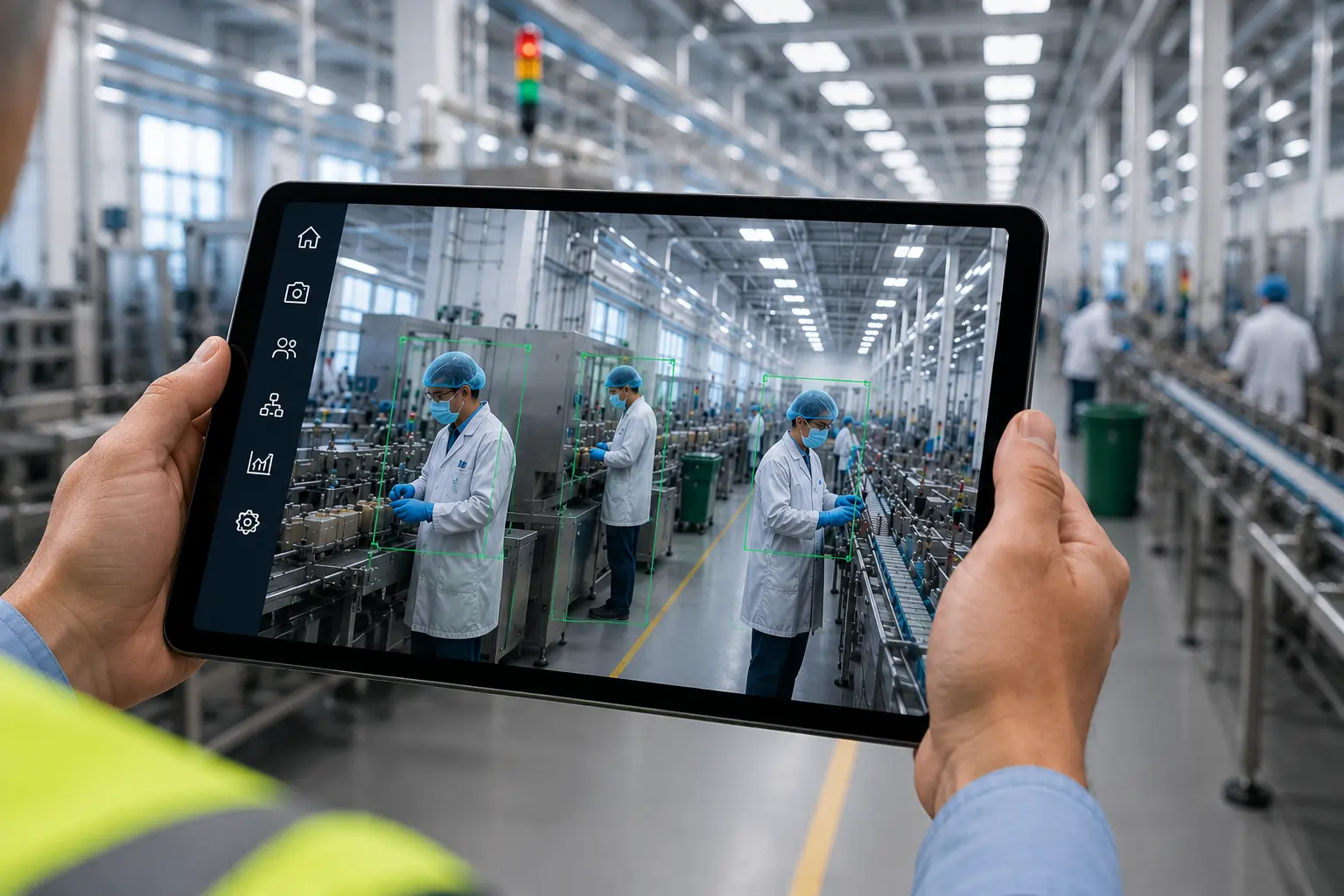
AI Video Analytics uses artificial intelligence to analyze CCTV footage and identify activities, behaviors, objects, and operational events. Instead of simply recording video, the system interprets what is happening within the camera view and generates alerts when predefined conditions are detected.
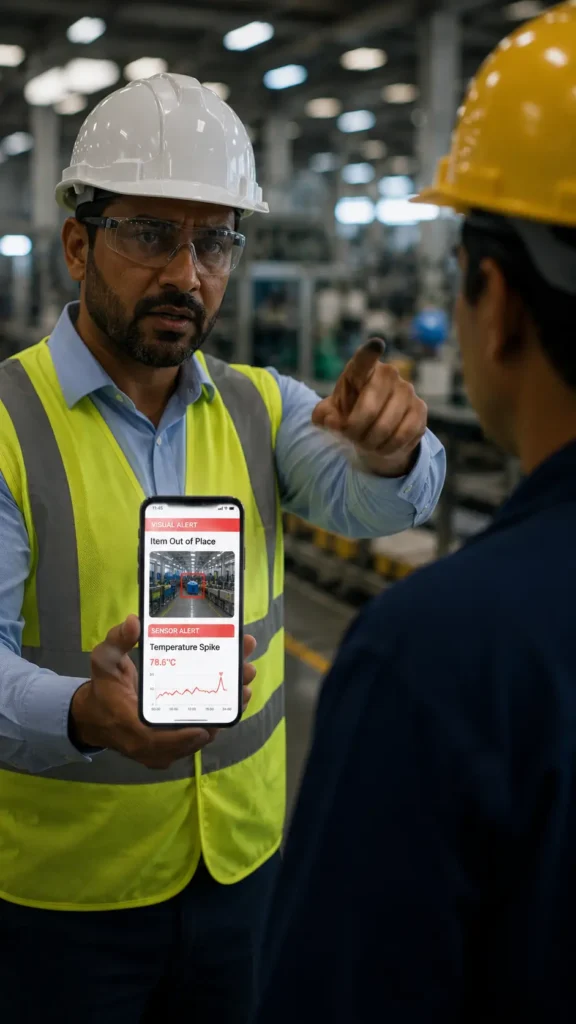
IoT Sensor-Based Monitoring relies on connected devices that measure specific parameters such as temperature, vibration, pressure, humidity, motion, occupancy, equipment status, or environmental conditions. These sensors transmit data that can be analyzed to identify abnormalities or operational issues.
Both approaches support intelligent monitoring, but they collect and interpret information in fundamentally different ways.
Compare AI Video Analytics Using CCTV vs IoT Sensor-Based Monitoring Systems
Feature | IoT Sensor-Based Monitoring | AI Video Analytics Using CCTV |
Data Source | Sensor readings | Video footage |
Monitoring Method | Parameter-based measurement | Visual activity analysis |
Context Awareness | Limited to measured variables | High contextual understanding |
Event Verification | Requires additional investigation | Visual evidence available |
Behavioral Analysis | Limited | Advanced capabilities |
Compliance Monitoring | Partial visibility | Comprehensive visibility |
Operational Insights | Condition-focused | Activity-focused |
Incident Investigation | Sensor data review | Video-supported analysis |
The primary difference is that sensors monitor specific conditions, while AI video analytics monitors activities and events occurring within operational environments.
Examine the Advantages of Sensor Data and Visual Intelligence
Organizations often compare these technologies based on the type of information they provide.
IoT sensors excel at monitoring measurable conditions such as:
- Temperature fluctuations
- Equipment vibration
- Air quality
- Humidity levels
- Energy consumption
- Machine performance metrics
AI video analytics is particularly effective for monitoring:
- Safety compliance
- Workplace activities
- Restricted-area access
- Operational procedures
- Occupancy levels
- Human behavior patterns
- Security-related events
In many situations, the two technologies provide complementary rather than competing capabilities.
How CAPASai Enhances Operational Monitoring
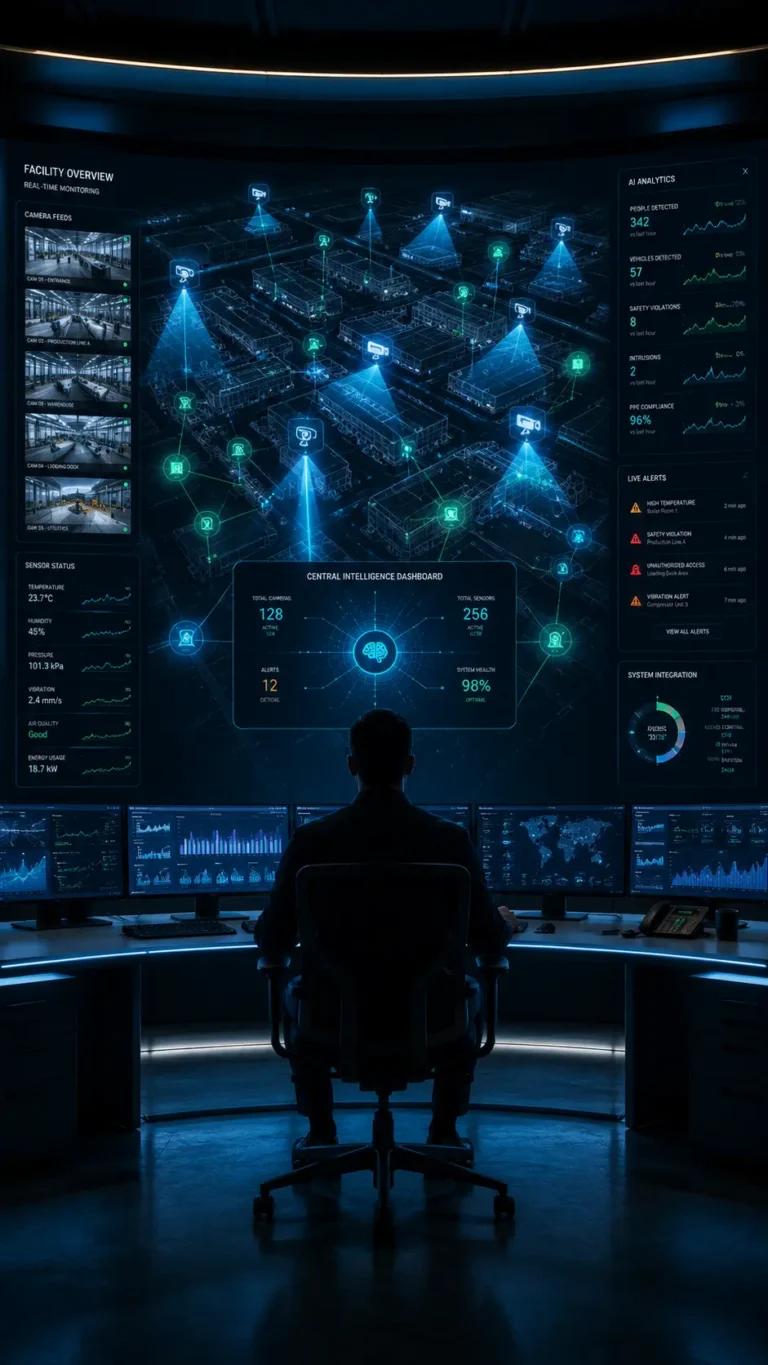
CAPASai uses AI-powered video analytics, remote monitoring, and real-time alerting capabilities to turn CCTV infrastructure into an intelligent monitoring platform.Rather than simply capturing footage, CAPASai continuously analyzes operational activities and identifies predefined events that may indicate safety risks, compliance deviations, security concerns, or operational inefficiencies.
Key capabilities include:
- Real-time event detection
- Automated alert generation
- Compliance monitoring support
- Operational visibility enhancement
- Remote monitoring across facilities
- Safety monitoring capabilities
- Centralized oversight
- Incident investigation support
This enables organizations to gain actionable insights from video data while improving response times and operational awareness.
Different Technologies Solve Different Business Problems
The choice between video analytics and sensor-based monitoring often depends on the nature of the problem being addressed.
For instance, a manufacturing facility might utilise AI video analytics to confirm PPE compliance and workplace safety while using sensors to track machine health. A warehouse may track environmental conditions through sensors while leveraging video analytics for operational visibility and access monitoring.
Rather than selecting one technology exclusively, many organizations combine multiple monitoring solutions to create a more complete view of operations.
When evaluating monitoring strategies, organizations frequently compare how each technology contributes to safety, efficiency, compliance, and risk management objectives
Benefits of AI-Powered Video Analytics
Organizations implementing AI-driven monitoring solutions can achieve:
- Improved situational awareness
- Faster incident identification
- Enhanced compliance visibility
- Better operational oversight
- Reduced investigation times
- Stronger security monitoring
- More informed decision-making
- Greater visibility across multiple locations
These advantages help organizations move beyond isolated data points and gain a broader understanding of operational activities.
Compare Sensor-Based Monitoring with Visual Intelligence’s Future
As organizations continue to invest in digital transformation and operational intelligence, monitoring technologies are becoming increasingly interconnected. IoT sensors provide valuable data about equipment and environmental conditions, while AI video analytics delivers contextual understanding of activities and events. Both technologies have special benefits, and their worth varies according to the particular problems an organization is attempting to resolve. For many businesses, the future of intelligent monitoring lies in combining multiple data sources to create a more complete, accurate, and actionable view of operations.