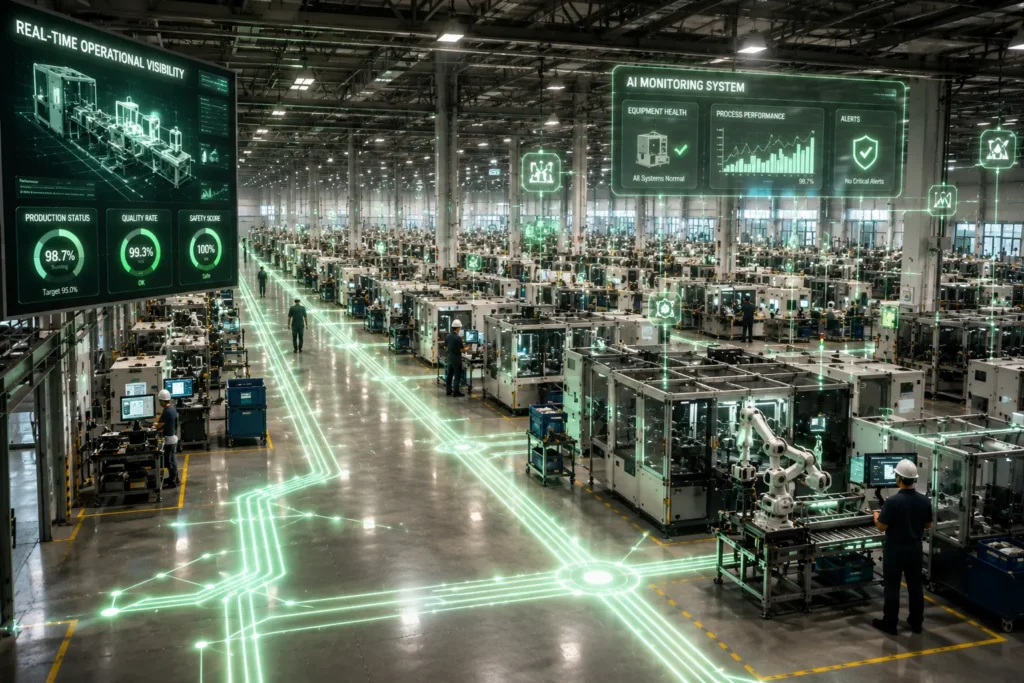
Modern manufacturing facilities operate in increasingly complex environments where productivity, quality, safety, and efficiency must be maintained simultaneously. As production volumes grow and operations become more interconnected, manufacturers need immediate access to operational information to make informed decisions and respond quickly to emerging issues.
However, many factories still rely on periodic reports, manual observations, and retrospective analysis to understand what is happening on the shop floor. While these methods provide useful information, they often fail to deliver the real-time visibility required to maintain optimal operational performance.
As manufacturing continues to evolve, real-time operational visibility is becoming a critical requirement for organizations seeking greater efficiency, consistency, and competitiveness.
Why Traditional Factory Monitoring Creates Blind Spots
Many manufacturers depend on supervisor observations, manual audits, and production reports to evaluate operational performance.
Although valuable, these methods often present several limitations.
Delayed Information
Reports typically provide information after activities have already occurred, limiting opportunities for immediate intervention.
Limited Visibility
Supervisors cannot continuously observe every production line, workstation, and operational activity across a facility.
Reactive Problem Solving
Issues are frequently identified after they have already affected productivity, quality, or compliance.
Inconsistent Oversight
Monitoring effectiveness can vary between shifts, teams, and facilities, creating operational inconsistencies.
These challenges can reduce efficiency and increase operational risk.
What Is Real-Time Operational Visibility?
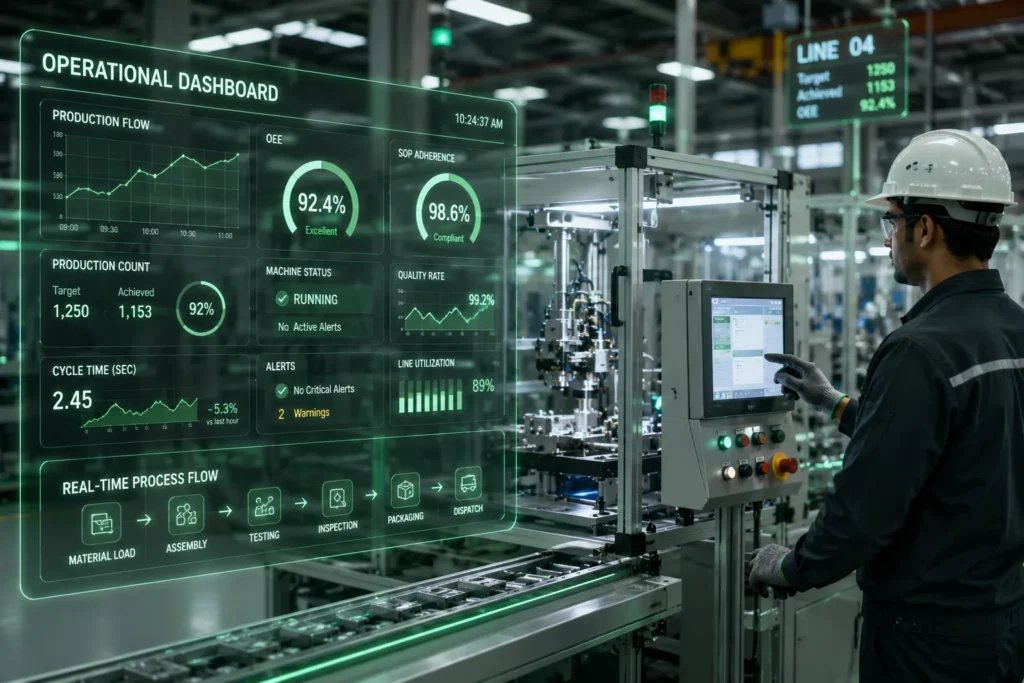
Real-time operational visibility refers to the ability to continuously monitor and understand activities occurring throughout manufacturing operations as they happen.
Rather than relying solely on historical reports, organizations gain immediate insight into:
- Production activities
- Workflow execution
- Equipment utilization
- Process adherence
- Quality performance
- Safety compliance
- Operational bottlenecks
This visibility enables faster decision-making and more proactive operational management.
Why Real-Time Visibility Matters In Modern Manufacturing
Manufacturing success increasingly depends on the ability to identify and address issues before they escalate.
Real-time visibility helps organizations:
Detect Operational Issues Earlier
Production delays, workflow interruptions, and process deviations can be identified as they emerge.
Improve Decision-Making
Managers gain access to current operational information rather than relying solely on historical data.
Reduce Operational Risk
Early visibility enables faster corrective action and helps prevent larger disruptions.
Support Continuous Improvement
Organizations can continuously evaluate performance and identify opportunities for optimization.
How AI Enables Real-Time Operational Visibility
Artificial Intelligence helps transform manufacturing environments by continuously analyzing operational activities and generating actionable insights.
Continuous Monitoring
AI systems can observe operations around the clock, providing uninterrupted visibility into manufacturing processes.
Process Adherence Verification
AI helps ensure that established procedures and workflows are being followed consistently.
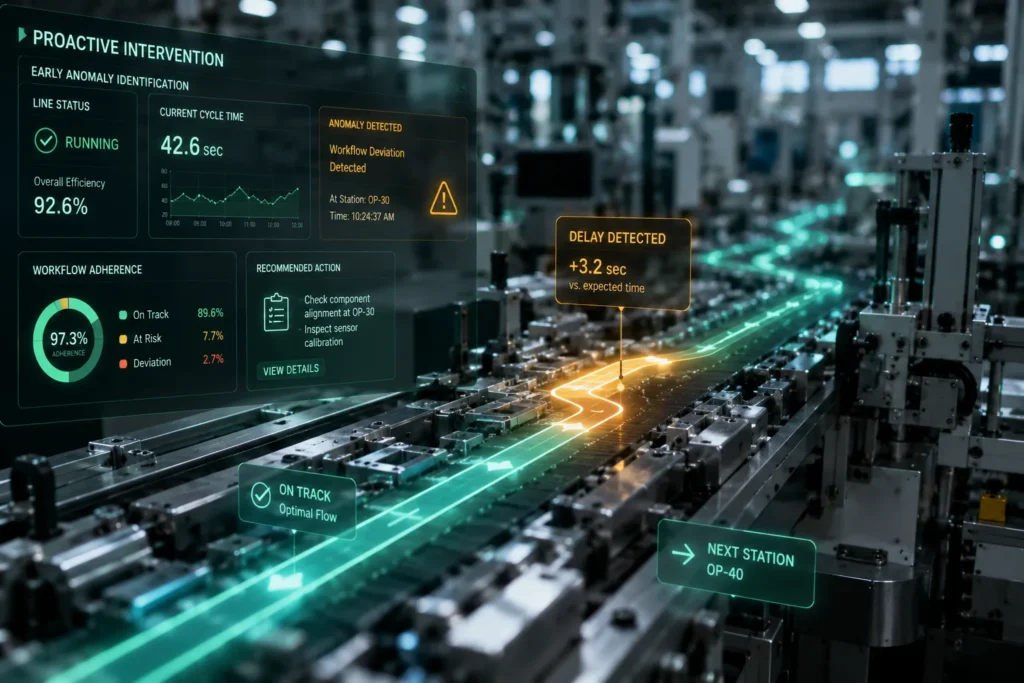
Anomaly Detection
Operational irregularities can be identified early, allowing teams to investigate and resolve issues before they impact performance.
Intelligent Alerts
Real-time notifications help managers respond quickly to emerging operational concerns.
Compare Traditional Monitoring And Real-Time Operational Visibility
Traditional Monitoring | Real-Time Operational Visibility |
Periodic reporting | Continuous monitoring |
Historical information | Live operational insights |
Manual observations | Automated visibility |
Reactive responses | Proactive intervention |
Limited oversight | Facility-wide awareness |
Delayed issue detection | Immediate anomaly identification |
This comparison demonstrates why manufacturers are increasingly investing in technologies that provide continuous operational awareness.
The Role Of Computer Vision In Factory Visibility
Many critical manufacturing activities occur within physical environments that traditional enterprise systems cannot fully observe.
Computer vision helps bridge this gap by transforming visual information into operational intelligence.
Manufacturers can use computer vision to:
- Monitor production activities
- Verify process adherence
- Detect workflow deviations
- Identify bottlenecks
- Improve safety monitoring
- Support quality initiatives
This creates a more complete view of operational performance across the factory floor.
Benefits Of Enhanced Operational Visibility
Organizations that improve operational visibility can achieve several measurable advantages.
These include:
- Increased productivity
- Improved quality performance
- Faster issue resolution
- Better resource utilization
- Stronger compliance outcomes
- Reduced operational disruptions
- Enhanced manufacturing consistency
These benefits contribute directly to operational excellence and long-term competitiveness.
Building Smarter And More Responsive Factories
The future of manufacturing depends on the ability to understand operations as they happen. Real-time operational visibility provides the foundation for smarter decision-making, stronger process control, and more agile manufacturing environments.
By combining AI, computer vision, and continuous monitoring, manufacturers can move beyond reactive management and develop operations that are more efficient, resilient, and performance-driven. As factories continue to modernize, real-time visibility will become an essential component of manufacturing success.
How CAPASai Supports Real-Time Operational Visibility
CAPASai helps manufacturers achieve real-time operational visibility through AI-powered video analytics, intelligent monitoring, remote oversight, and real-time alerts. By continuously monitoring production activities, workflow execution, process adherence, and operational performance, CAPASai enables organizations to identify issues earlier, improve decision-making, and strengthen operational control across manufacturing facilities.