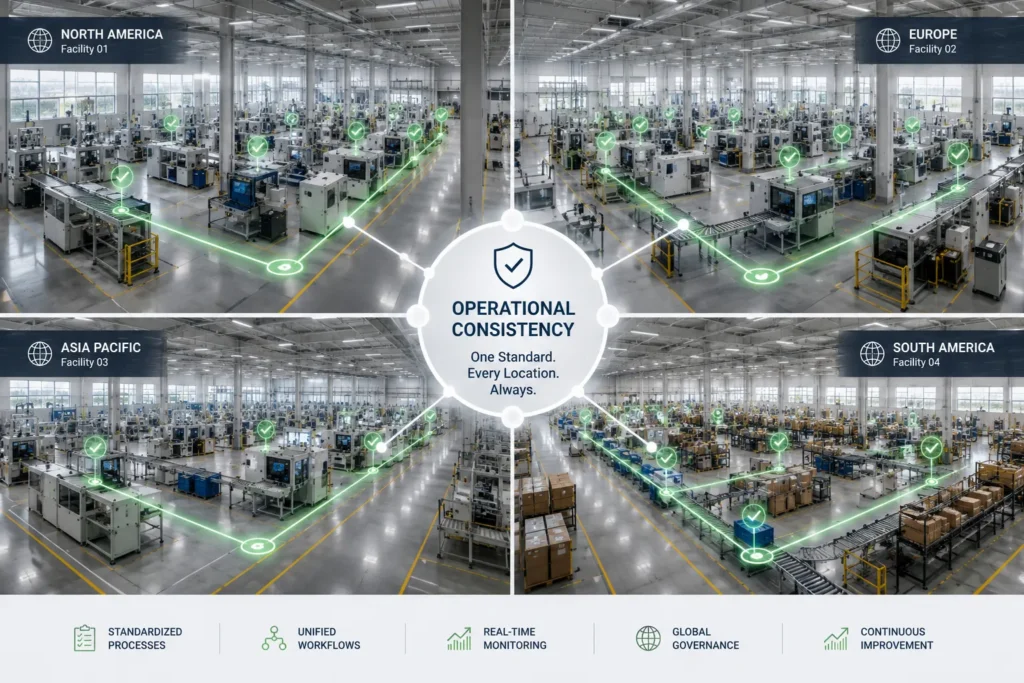
As organizations expand across regions, countries, and continents, maintaining operational consistency becomes increasingly challenging. Different teams, facilities, regulatory environments, and cultural practices can create variations in how processes are executed, making it difficult to ensure that every location operates according to the same standards.
Yet operational consistency remains one of the most important drivers of quality, compliance, efficiency, and customer satisfaction. Organizations that can deliver the same level of performance across all locations are better positioned to scale effectively, reduce risk, and strengthen their competitive advantage.
Modern enterprises are increasingly turning to AI-powered monitoring, operational intelligence, and computer vision to help achieve consistency across geographically distributed operations.
Why Operational Consistency Matters
Consistency is the foundation of operational excellence.
When processes are executed uniformly across locations, organizations can achieve:
- Predictable operational outcomes
- Higher quality standards
- Stronger compliance performance
- Improved customer experiences
- Reduced operational risk
- Greater scalability
Without consistency, even well-designed processes can produce significantly different results depending on where and how they are executed.
The Challenges Of Global Operations
Managing a single facility is fundamentally different from managing dozens or hundreds of locations.
Large enterprises often face challenges such as:
Process Variability
Different facilities may interpret procedures differently or develop local workarounds that gradually diverge from established standards.
Over time, these variations can impact efficiency, quality, and compliance.
Limited Visibility
Corporate leaders rarely have direct visibility into daily operational activities occurring across every location.
As a result, organizations often depend on:
- Reports
- Audits
- Site visits
- Performance reviews
Workforce Differences
Global operations frequently involve diverse workforces with varying levels of experience, training, and operational maturity.
Ensuring consistent execution across these environments requires continuous oversight and support.
Regulatory Complexity
Different regions may operate under different compliance requirements, making standardization more difficult while increasing the need for visibility and governance.
The Hidden Cost Of Inconsistency
Small process variations can create significant enterprise-wide impacts when multiplied across multiple facilities.
Common consequences include:
- Quality inconsistencies
- Operational inefficiencies
- Increased waste
- Compliance risks
- Customer experience variations
- Reduced productivity
These issues can make it difficult for organizations to maintain performance standards at scale.
Moving Beyond Periodic Oversight
Traditional oversight methods often rely on scheduled audits and periodic reviews.
While important, these approaches provide only limited visibility into ongoing operations.
Organizations increasingly require:
- Real-time awareness
- Continuous monitoring
- Operational intelligence
- Early detection of deviations
This shift enables faster identification of issues and more consistent operational execution across locations.
How AI Supports Global Consistency
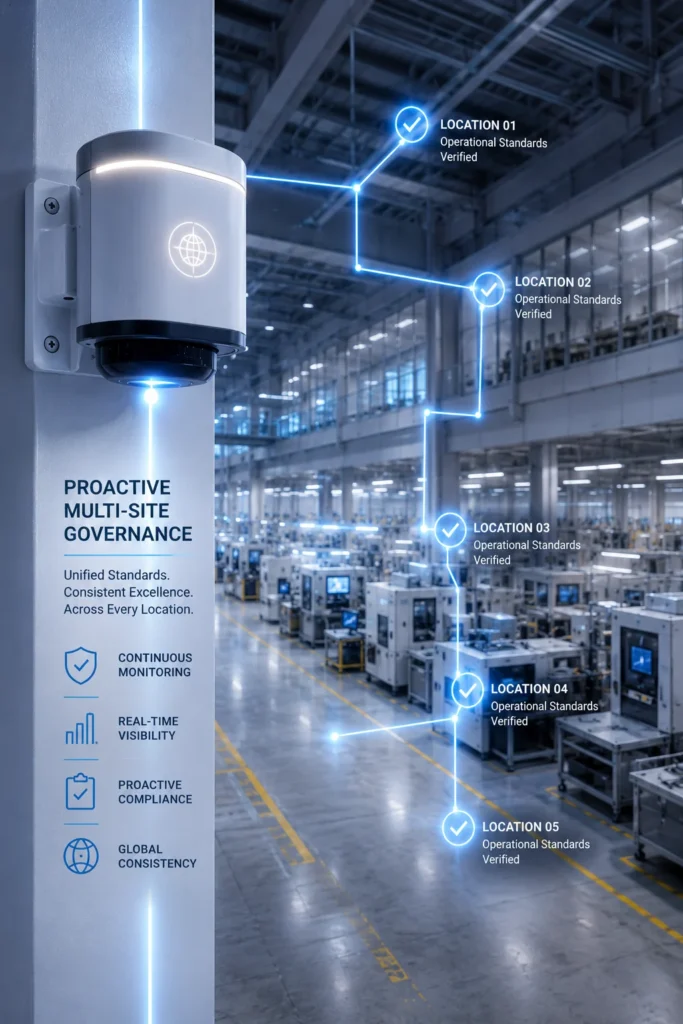
Artificial Intelligence helps organizations maintain consistency by continuously analyzing operational activities and identifying deviations from established standards.
Continuous Process Verification
AI can monitor operational workflows and verify whether procedures are being executed consistently across facilities.
This helps organizations identify variations before they become larger operational challenges.
Early Detection Of Operational Deviations
Small deviations often emerge long before they appear in performance reports.
AI can detect:
- Process inconsistencies
- Workflow interruptions
- Compliance concerns
- Operational anomalies
This allows organizations to respond proactively rather than reactively.
Enterprise-Wide Visibility
AI provides leaders with a broader view of operational performance across distributed locations.
Instead of relying solely on historical reporting, organizations gain access to continuous operational intelligence that supports informed decision-making.
Supporting Standardization Efforts
Organizations can use AI-generated insights to strengthen training programs, improve procedures, and reinforce best practices across all locations.
The Role Of Computer Vision
Many operational processes occur in physical environments where traditional enterprise systems provide limited visibility.
Computer vision extends operational awareness by transforming visual activity into actionable intelligence.
Organizations can use computer vision to:
- Verify process adherence
- Monitor workflow execution
- Support compliance initiatives
- Detect operational deviations
- Improve consistency across locations
- Strengthen governance oversight
This creates a more complete picture of operational performance across the enterprise.
Global Consistency Requires Local Visibility
Achieving operational consistency does not mean eliminating local flexibility. Instead, it requires ensuring that critical processes, quality standards, and compliance requirements are executed consistently while allowing locations to operate effectively within their specific environments.
Organizations that combine standardized processes with continuous visibility are better positioned to maintain consistency at scale.
Creating A Unified Operating Model Across Every Location
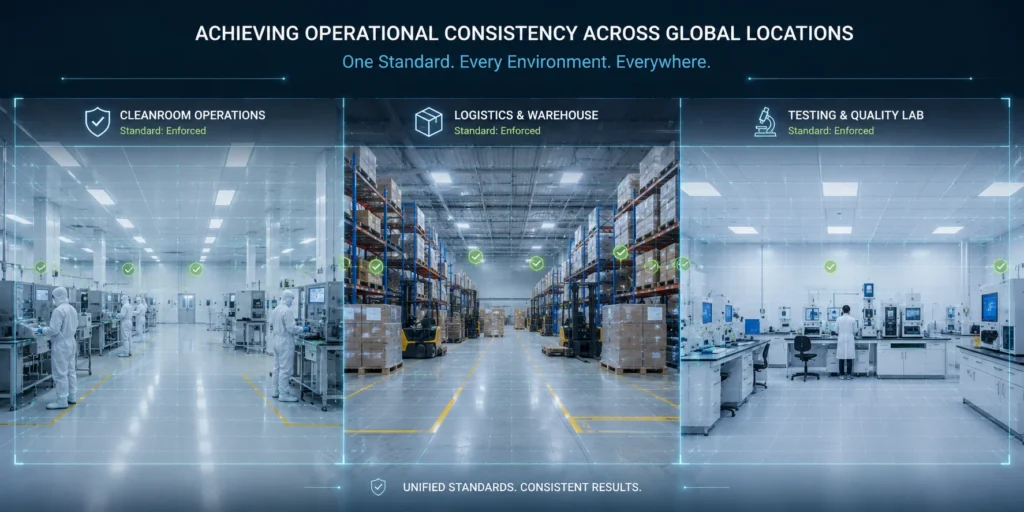
Operational consistency is one of the defining characteristics of high-performing global enterprises. As organizations continue to expand, maintaining the same standards across multiple locations requires more than policies and periodic audits. It requires continuous operational awareness, proactive monitoring, and data-driven decision-making.
AI and computer vision provide the visibility needed to understand how processes are being executed across distributed operations, helping organizations reduce variability, strengthen governance, improve compliance, and support sustainable operational excellence on a global scale.
How CAPASai Supports Global Operational Consistency
CAPASai helps organizations achieve operational consistency through AI-powered video analytics, real-time monitoring, operational intelligence, and automated alerts. By providing continuous visibility into process execution, workflow adherence, and operational performance across multiple facilities, CAPASai enables enterprises to identify deviations early, reinforce best practices, and maintain consistent standards across global operations.