
A retail store may appear successful from the outside—well-stocked shelves, active customers, and busy employees. Yet beneath the surface, countless operational decisions influence profitability, customer experience, compliance, and brand consistency. The challenge for retail leaders is that many of these activities occur simultaneously across multiple locations, making them difficult to monitor and manage effectively.
Store operations have traditionally depended on manual supervision, periodic audits, mystery shopping programs, and performance reports. While these methods remain valuable, they often provide a delayed view of operational reality. By the time a problem appears in a report, the opportunity to prevent it may already be gone.This growing need for real-time operational visibility is driving retailers toward computer vision as a new tool for operational excellence.
The Modern Retail Visibility Challenge
Retail environments are becoming increasingly complex.
Store managers must balance customer service, inventory availability, employee productivity, safety compliance, merchandising standards, and loss prevention—all while maintaining a consistent brand experience.
Large retail chains face an even greater challenge. Regional managers may oversee dozens or hundreds of locations without the ability to observe daily operations directly.
As a result, common operational issues often remain hidden:
- Empty or poorly stocked shelves
- Long checkout queues
- Inconsistent store execution
- Safety hazards
- Compliance violations
- Delayed customer assistance
- Inefficient workforce deployment
These challenges can directly affect revenue, customer satisfaction, and operational efficiency.
From Store Audits To Continuous Operational Awareness
For decades, retailers relied on scheduled inspections and performance reviews to evaluate store performance.
Today, many organizations are exploring a more continuous approach.
Computer vision enables retailers to transform existing video infrastructure into a source of operational intelligence. Rather than simply recording activities, computer vision systems can analyze store environments, identify operational events, and generate actionable insights in real time.
This creates a significant shift in how store performance is monitored and managed.
What Changes?
Instead of asking:
“What happened last week?”
Retail leaders can increasingly ask:
“What is happening right now?”
Creating More Consistent Customer Experiences
Customer expectations continue to rise.
Shoppers expect products to be available, service to be prompt, stores to be organized, and staff to be responsive. Meeting these expectations consistently across multiple locations can be challenging.
Computer vision helps bridge the gap between operational execution and customer experience by providing visibility into conditions that directly affect shoppers.
When operational issues are identified earlier, organizations can respond faster and maintain more consistent service standards.
Compare Traditional Store Management And Computer Vision-Enabled Operations
Operational Area | Traditional Approach | Computer Vision Approach |
Store Audits | Periodic Reviews | Continuous Visibility |
Shelf Monitoring | Manual Inspection | Automated Detection |
Queue Management | Employee Observation | Real-Time Alerts |
Compliance Checks | Scheduled Audits | Ongoing Monitoring |
Multi-Store Oversight | Limited Visibility | Centralized Intelligence |
Retailers increasingly compare these approaches not as replacements but as complementary capabilities that strengthen operational decision-making.
Key Areas Where Computer Vision Is Reshaping Store Operations
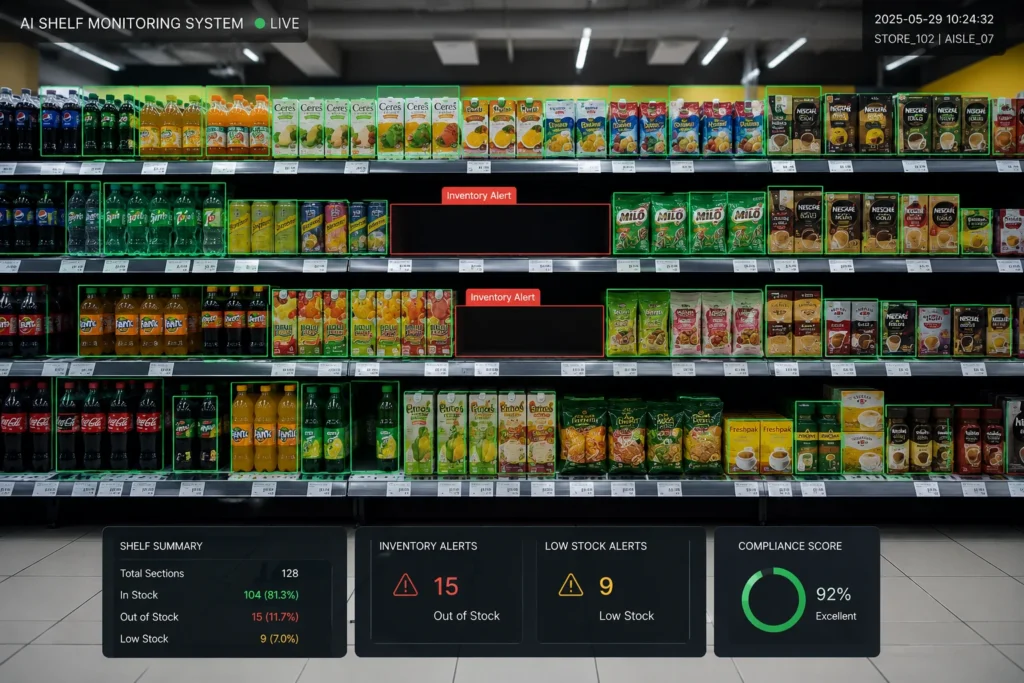
Shelf Availability Monitoring
Out-of-stock products represent lost sales opportunities and customer frustration.
Computer vision can help retailers identify inventory gaps, empty shelves, and merchandising inconsistencies more quickly, allowing corrective actions before customer experience is affected.
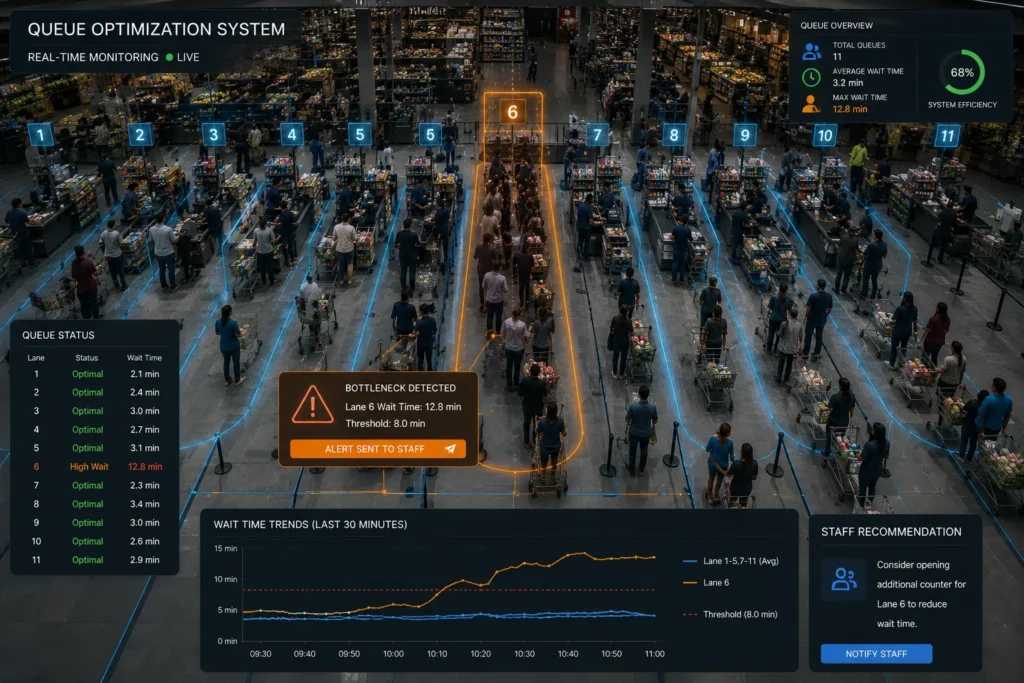
Queue Management
Long waiting times remain one of the most common customer complaints in retail environments.
Visual monitoring can help detect growing queues and alert staff when additional checkout support may be required.
Store Compliance
Retail organizations often maintain detailed operational standards covering merchandising, safety, cleanliness, and customer service.
Computer vision can support compliance efforts by providing greater visibility into whether these standards are being consistently followed.
Workforce Optimization
Store managers gain better insight into customer traffic patterns, staffing allocation, and operational activity levels throughout the day.
Safety And Risk Management
Potential hazards such as blocked aisles, restricted access violations, and unsafe conditions can be identified more rapidly, supporting a safer retail environment.
Multi-Store Retail Management At Scale
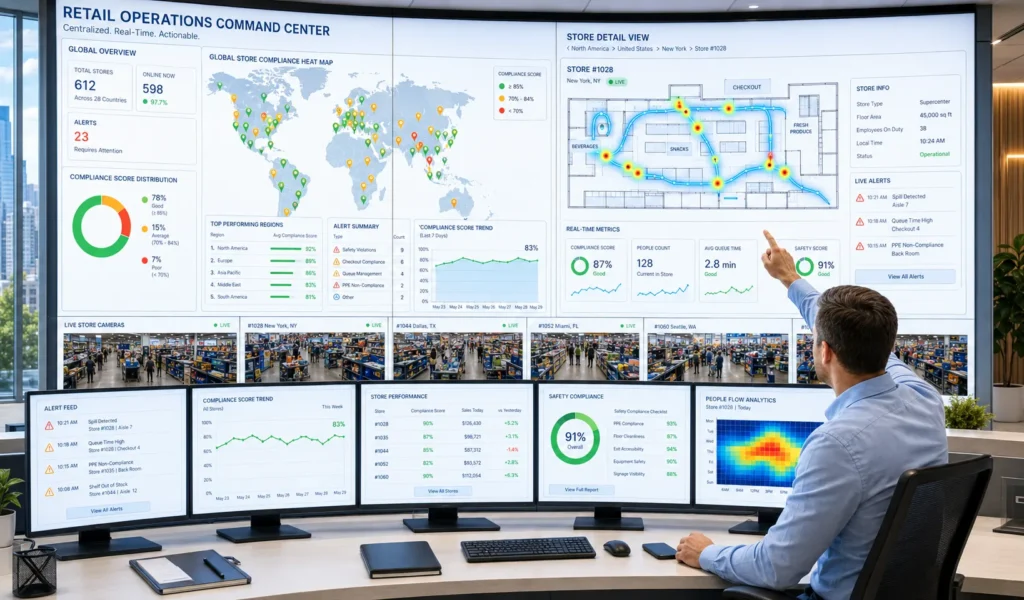
One of the most compelling benefits of computer vision is its ability to support large-scale retail operations.
Managing a single store is challenging enough. Managing hundreds of locations introduces entirely different complexities.
Computer vision allows retailers to monitor operational trends across locations using a centralized framework. Leaders can identify recurring issues, compare store performance, and prioritize attention where it is needed most.
This approach helps organizations move from reactive management toward proactive operational governance.
The Future Of Intelligent Store Operations
Retail transformation is no longer limited to e-commerce platforms and digital customer engagement. Increasingly, innovation is focused on improving the physical store itself.
Computer vision represents an important step in this evolution by turning everyday store activities into measurable operational insights. Rather than relying solely on historical reports, retailers gain greater awareness of operational conditions as they unfold.
The result is stronger decision-making, improved consistency, and a more responsive retail environment.
How CAPASai Supports Retail Operations
Retail organizations seeking greater operational visibility increasingly require technologies capable of transforming video data into actionable business intelligence. CAPASai supports retail operations through AI-powered video analytics, remote monitoring, and real-time alerting capabilities that help organizations improve compliance oversight, strengthen store execution, monitor customer-facing operations, and enhance operational awareness across multiple locations. By converting visual information into meaningful insights, retailers can support both operational performance and customer experience objectives.