Operational waste reduction is one of the most persistent challenges facing modern organizations. Whether in manufacturing, logistics, retail, healthcare, or warehousing, inefficiencies often develop gradually and remain hidden within day-to-day operations. Small delays, unnecessary movement, workflow interruptions, and process deviations can accumulate over time, creating significant impacts on productivity, quality, and profitability. Effective operational waste reduction requires continuous visibility into processes, enabling organizations to identify inefficiencies early, eliminate non-value-added activities, optimize resource utilization, and improve overall operational performance. By leveraging AI-powered analytics and real-time monitoring, businesses can uncover hidden waste, streamline workflows, reduce costs, and drive sustainable operational excellence.
Traditional waste reduction initiatives typically rely on manual observations, periodic audits, and historical reporting. While these approaches can identify major issues, they often struggle to provide the continuous visibility needed to uncover inefficiencies as they occur.
Computer vision is changing this approach by enabling organizations to monitor operations continuously, identify waste in real time, and support data-driven improvement efforts.
Understanding Operational Waste
Lean methodologies traditionally classify waste as activities that consume resources without creating value.
Common forms of operational waste include:
- Waiting time
- Excess movement
- Unnecessary transportation
- Process delays
- Rework and defects
- Underutilized resources
- Workflow bottlenecks
- Inconsistent process execution
Many of these inefficiencies are difficult to detect because they occur across physical environments where traditional systems provide limited visibility.
This is where computer vision creates significant value.
How Computer Vision Identifies Waste
Computer vision uses AI-powered video analytics to observe operational environments and transform visual activity into actionable intelligence.
Instead of relying solely on periodic observations, organizations gain continuous awareness of workflows and operational performance.
Detecting Waiting Time
Waiting is one of the most common forms of waste in operational environments.
Computer vision can identify:
- Idle production stations
- Material shortages
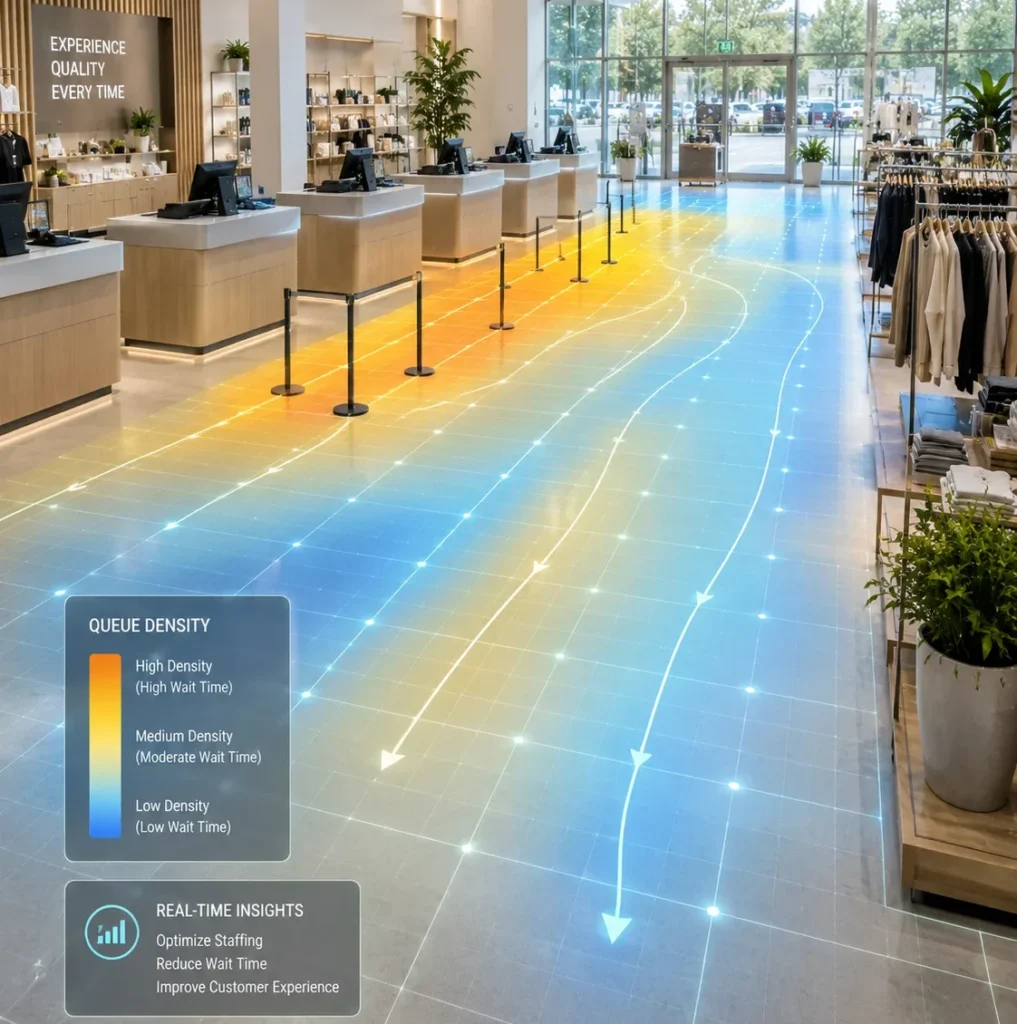
- Queue buildup
- Delayed handoffs between processes
By highlighting these conditions in real time, organizations can respond before delays impact throughput.
Identifying Workflow Bottlenecks
Bottlenecks often develop gradually and may not be immediately visible through traditional reporting systems.
Computer vision can continuously monitor process flow and identify areas where activities slow down, accumulate, or deviate from expected performance levels.
This enables faster corrective action and improved resource allocation.
Reducing Unnecessary Movement
Excessive movement by employees, equipment, or materials can significantly reduce operational efficiency.
Computer vision helps organizations analyze movement patterns and identify opportunities to:
- Improve facility layouts
- Optimize workflows
- Reduce travel distances
- Improve material handling processes
These improvements contribute directly to Lean operational objectives.
Improving Process Adherence
Operational waste is often caused by inconsistent process execution.
Computer vision can help verify whether established procedures are being followed consistently across locations and shifts.
This supports:
- Standardization
- Quality improvement
- Reduced process variation
- Stronger operational discipline
The Visibility Challenge
Organizations often have access to extensive operational data but limited insight into what is actually happening on the ground.
Managers may rely on:
- Manual inspections
- Employee reporting
- Periodic process reviews
- Historical performance metrics
These methods provide valuable information but often reveal issues only after productivity has already been affected.
Without continuous visibility, organizations may struggle to identify:
- Repetitive workflow interruptions
- Material flow inefficiencies
- Equipment-related delays
- Process adherence issues
- Hidden operational bottlenecks
Computer vision helps bridge this visibility gap.
Benefits Across Industries
The ability to identify operational waste through computer vision extends beyond manufacturing.
Manufacturing
- Production bottleneck detection
- Process adherence monitoring
- Material flow optimization
Logistics And Warehousing
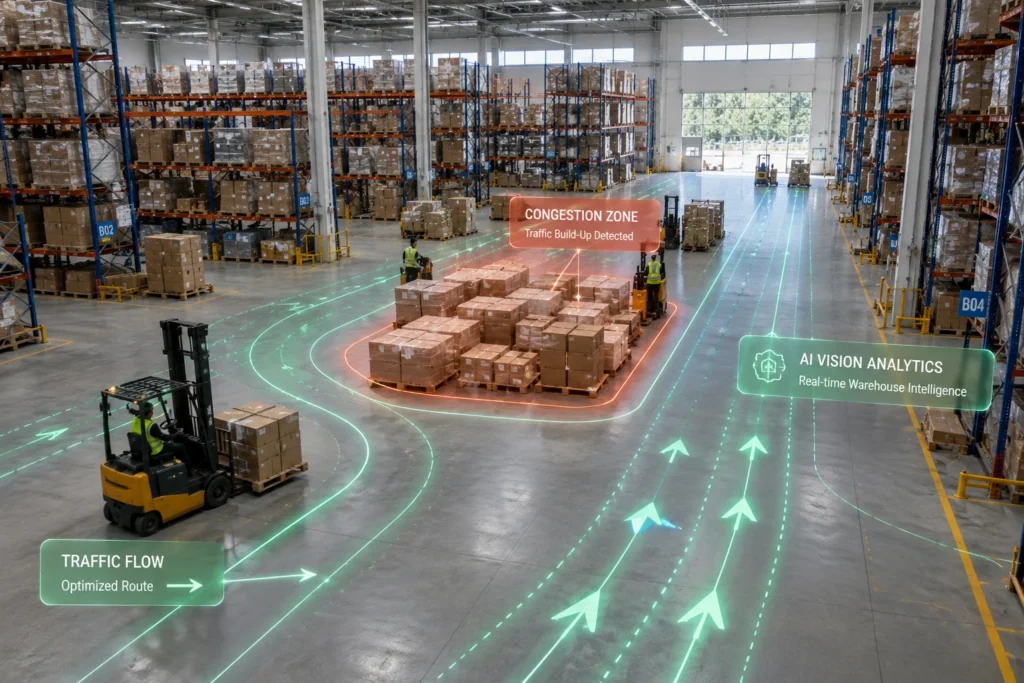
- Warehouse traffic analysis
- Loading and unloading efficiency
- Resource utilization visibility
Retail
- Queue monitoring
- Store operations visibility
- Workforce optimization insights
Healthcare
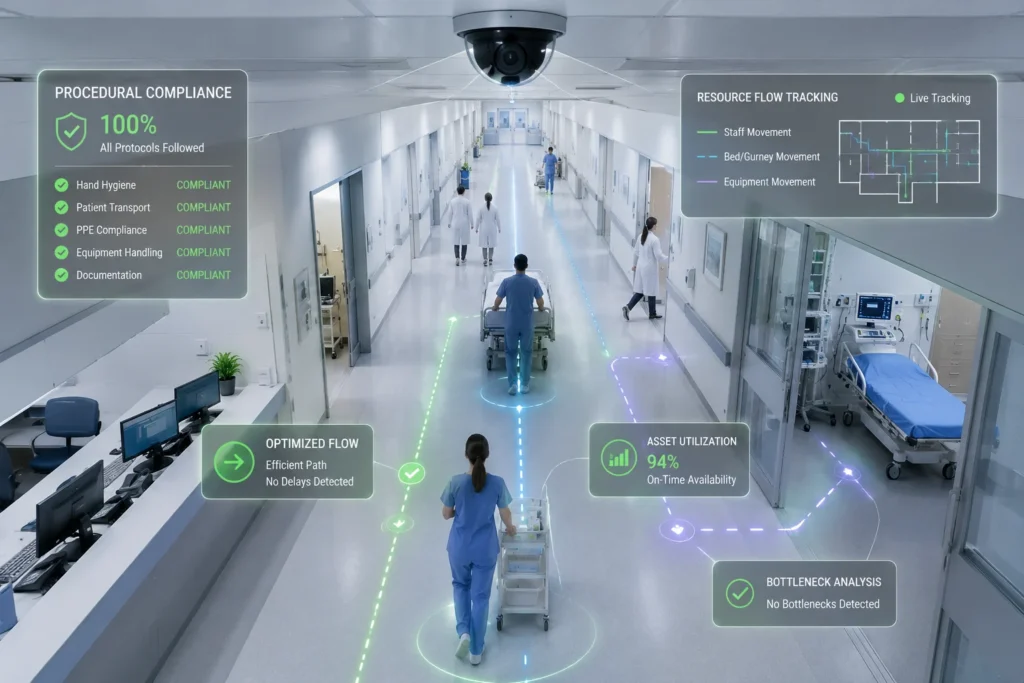
- Patient flow visibility
- Resource allocation awareness
- Process efficiency improvements
Regardless of industry, the goal remains the same: improve visibility and eliminate non-value-added activities.
From Observation To Operational Intelligence
The greatest advantage of computer vision is its ability to transform visual observations into operational intelligence.
Traditional Waste Detection | Computer Vision Approach |
Periodic Audits | Continuous Monitoring |
Manual Observations | Automated Analysis |
Historical Reporting | Real-Time Insights |
Reactive Improvement | Proactive Optimization |
Limited Visibility | Continuous Operational Awareness |
This shift enables organizations to identify inefficiencies earlier and respond more effectively.
Supporting Continuous Improvement
Traditional improvement programs often depend on periodic reviews and manual investigations.
Computer vision introduces a continuous improvement model by providing ongoing operational intelligence.
Organizations can use visual insights to:
- Measure process performance
- Track improvement initiatives
- Monitor operational trends
- Prioritize optimization opportunities
- Validate corrective actions
This allows improvement efforts to become more proactive and data-driven.
Conclusion
Eliminating operational waste has always been a central objective of operational excellence and Lean initiatives. However, achieving this goal requires visibility into how work is actually performed across complex operational environments.
Computer vision provides organizations with the ability to continuously monitor workflows, identify bottlenecks, detect inefficiencies, and support data-driven improvement efforts. By transforming visual activity into actionable intelligence, organizations gain the awareness needed to reduce waste, improve consistency, and optimize performance.
As enterprises continue to pursue greater efficiency and operational excellence, computer vision will play an increasingly important role in helping organizations identify and eliminate hidden sources of waste.
How CAPASai Supports Waste Reduction
CAPASai helps organizations reduce operational waste through AI-powered video analytics, real-time monitoring, operational intelligence, and automated alerts. By providing continuous visibility into workflows, process adherence, material movement, and operational performance, CAPASai helps enterprises identify inefficiencies early and drive continuous improvement across their operations.