Lean manufacturing has long been one of the most effective approaches for improving operational efficiency, reducing waste, and delivering greater value to customers. Built around the principle of maximizing value while minimizing non-value-added activities, Lean has helped manufacturers streamline processes, improve quality, and strengthen competitiveness.
However, modern manufacturing environments are becoming increasingly complex. Global supply chains, rising customer expectations, labor challenges, and growing operational demands require organizations to make faster and more informed decisions than ever before.
As a result, many manufacturers are turning to artificial intelligence (AI) to strengthen and accelerate Lean initiatives. By providing continuous visibility, real-time insights, and data-driven decision support, AI enables organizations to apply Lean principles more effectively across their operations.
Understanding The Core Principles Of Lean Manufacturing
Lean manufacturing focuses on creating more value while reducing waste throughout the production process.
Key Lean principles include:
- Identifying customer value
- Mapping the value stream
- Eliminating waste
- Creating continuous workflow
- Improving process consistency
- Pursuing continuous improvement
The ultimate goal is to maximize efficiency while maintaining quality and customer satisfaction.
While these principles remain unchanged, AI provides new tools that help organizations achieve them more effectively.
The Challenge Of Traditional Lean Programs
Many Lean initiatives rely on manual observations, periodic audits, process reviews, and historical performance reports.
Although these methods can be effective, they often face limitations such as:
- Delayed identification of issues
- Limited operational visibility
- Inconsistent monitoring
- Human reporting errors
- Slow response times
As manufacturing operations scale, maintaining continuous awareness becomes increasingly difficult.
AI helps address these challenges by introducing real-time intelligence into Lean operations.
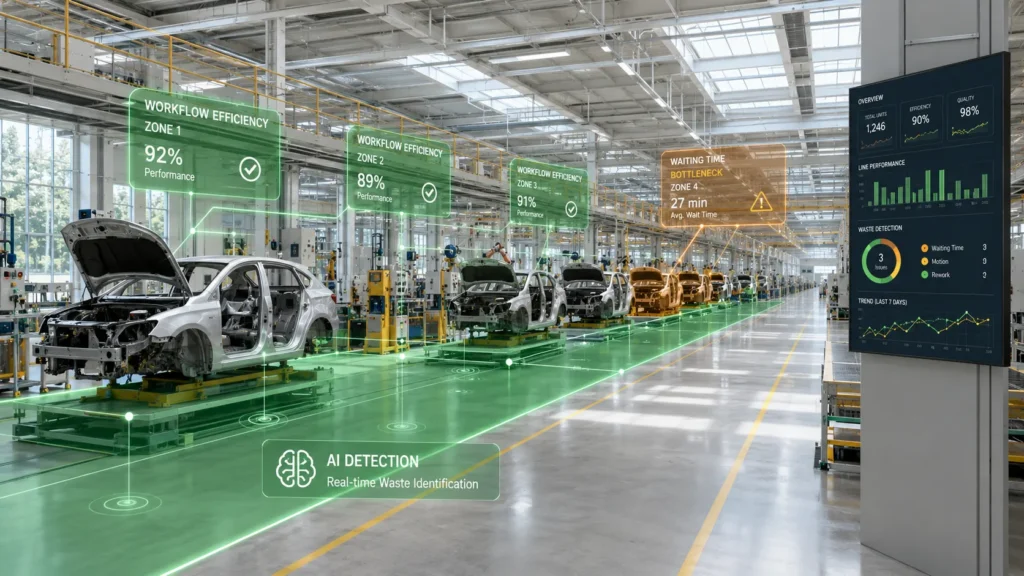
AI And Waste Reduction
Waste elimination is one of the central objectives of Lean manufacturing.
Traditionally, identifying waste often required extensive manual analysis and observation.
AI can continuously monitor operations and identify inefficiencies that may otherwise go unnoticed.
Examples include:
- Production bottlenecks
- Excess movement
- Waiting time between processes
- Resource underutilization
- Process deviations
- Workflow interruptions
By detecting these issues earlier, organizations can take corrective action before waste impacts productivity.
Enhancing Continuous Improvement
Continuous improvement is fundamental to Lean manufacturing.
AI supports this principle by providing ongoing operational insights rather than relying solely on periodic reviews.
Organizations can use AI-generated intelligence to:
- Monitor process performance
- Identify recurring issues
- Measure improvement outcomes
- Track operational trends
- Prioritize optimization efforts
This creates a more proactive and data-driven approach to continuous improvement.
.
Improving Process Consistency
Consistent execution is critical for maintaining quality and operational efficiency.
Variations in process execution can lead to defects, delays, rework, and compliance challenges.
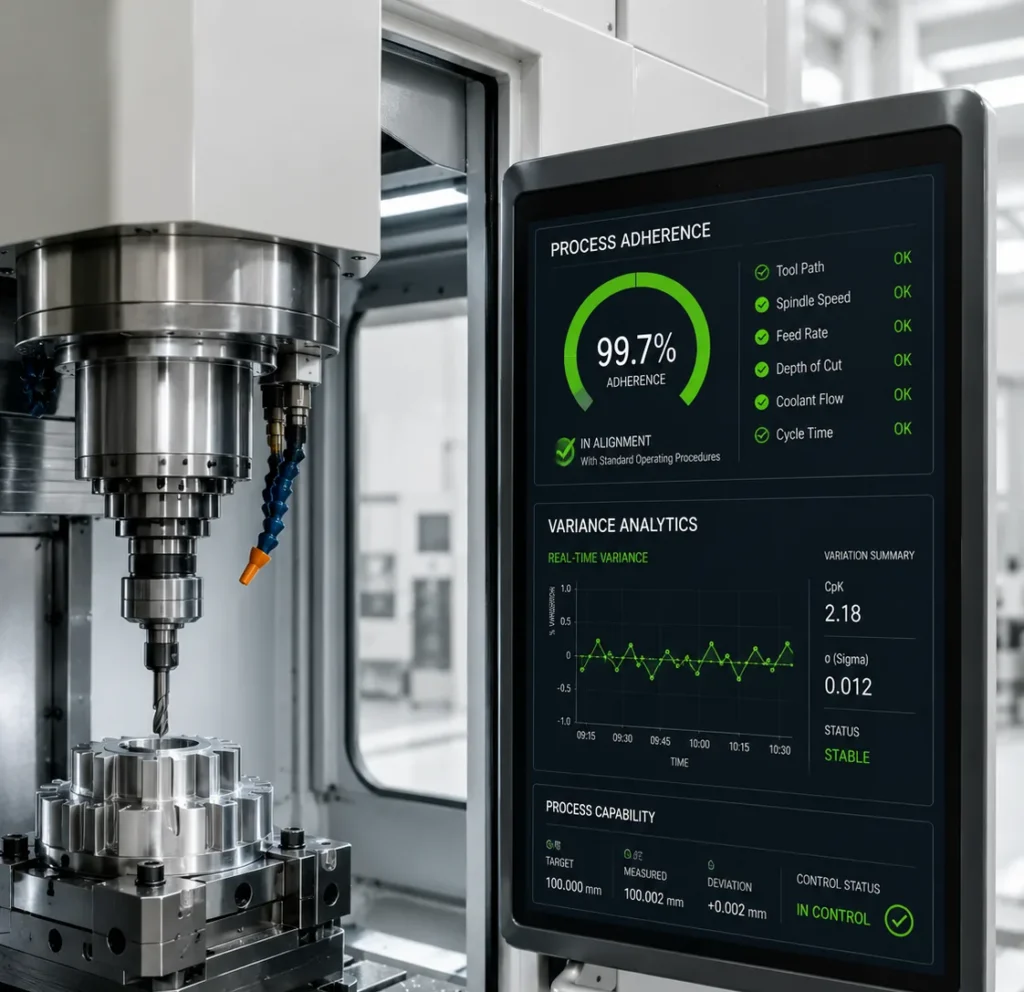
AI helps manufacturers improve consistency by continuously monitoring operational activities and identifying deviations from established procedures.
Benefits include:
- Improved standardization
- Reduced variability
- Better quality outcomes
- Enhanced operational control
Greater consistency helps organizations achieve Lean objectives while supporting long-term operational excellence.
Supporting Faster Decision-Making
Lean environments depend on timely decision-making.
When operational leaders lack visibility into ongoing activities, small issues can quickly become larger disruptions.
AI-powered analytics provide real-time awareness that supports:
- Faster issue identification
- Improved prioritization
- Better resource allocation
- More informed operational decisions
This allows teams to respond proactively rather than reactively.
The Role Of Computer Vision In Lean Manufacturing
Computer vision is becoming an increasingly valuable tool for Lean initiatives.
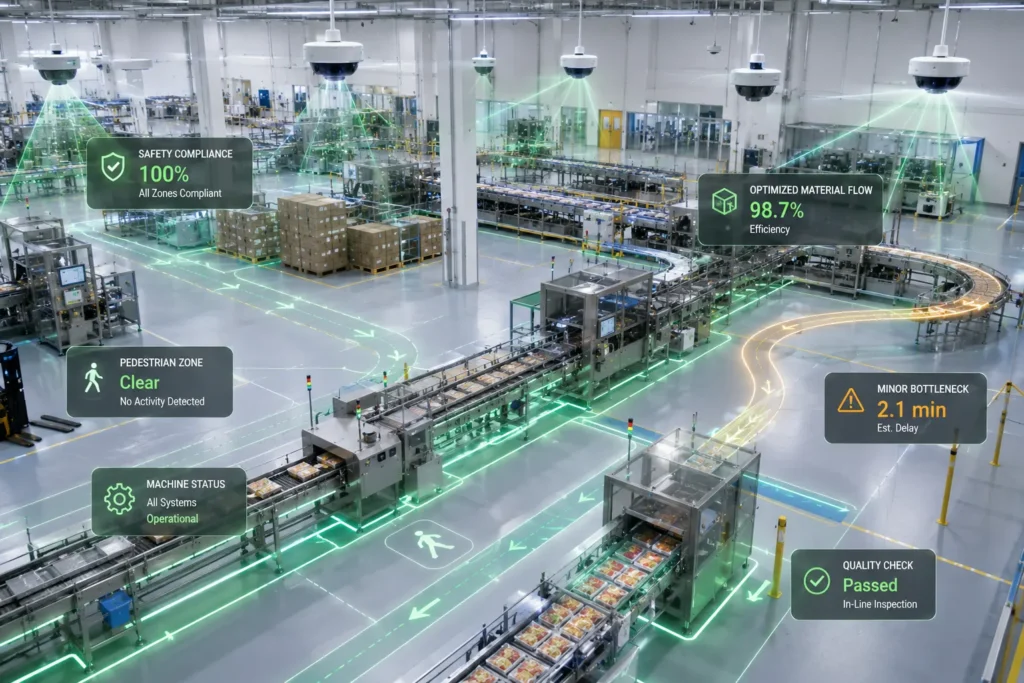
By analyzing visual information from operational environments, computer vision systems can help organizations:
- Monitor workflows
- Verify process adherence
- Identify bottlenecks
- Detect inefficiencies
- Improve safety compliance
- Support quality control initiatives
This creates a continuous source of operational intelligence that complements traditional Lean methodologies.
AI And The Future Of Lean Manufacturing
AI does not replace Lean manufacturing principles. Instead, it strengthens them.
Lean provides the framework for operational improvement, while AI provides the visibility and intelligence needed to execute those improvements more effectively.
Organizations that combine Lean methodologies with AI-powered monitoring and analytics can create operations that are:
Lean Objective | AI Contribution |
Waste Reduction | Continuous inefficiency detection |
Process Consistency | Real-time process monitoring |
Continuous Improvement | Ongoing operational insights |
Quality Enhancement | Early deviation detection |
Faster Decision-Making | Real-time intelligence |
Operational Efficiency | Proactive optimization opportunities |
Together, Lean and AI create a powerful foundation for modern manufacturing excellence.
Conclusion
Lean manufacturing remains one of the most effective approaches for driving operational efficiency and continuous improvement. However, today’s manufacturing environments require greater visibility, responsiveness, and adaptability than traditional methods alone can provide.
AI enhances Lean initiatives by enabling continuous monitoring, real-time operational awareness, early issue detection, and data-driven decision-making. Rather than changing the principles of Lean, AI helps organizations apply those principles with greater precision and effectiveness.
As manufacturers continue to pursue operational excellence, the combination of Lean methodologies and AI-powered intelligence will play an increasingly important role in building efficient, resilient, and high-performing operations.
How CAPASai Supports Lean Manufacturing
CAPASai helps manufacturers strengthen Lean initiatives through AI-powered video analytics, real-time monitoring, operational intelligence, and automated alerts. By providing continuous visibility into workflows, process adherence, and operational performance, CAPASai helps organizations identify waste, improve consistency, and support continuous improvement efforts across manufacturing environments.