Process Excellence in the AI Era is redefining how organizations achieve operational success. Organizations across industries have invested heavily in methodologies, frameworks, and best practices designed to improve efficiency, reduce waste, enhance quality, and drive consistent performance. For decades, process excellence initiatives focused on standardization, continuous improvement, and performance measurement. Today, AI is taking process excellence to the next level by enabling real-time insights, intelligent automation, and data-driven decision-making across enterprise operations.
Today, however, organizations operate in a vastly different environment. Increasing operational complexity, distributed workforces, global supply chains, and growing compliance requirements have created new challenges that traditional approaches alone cannot fully address.
As artificial intelligence (AI) becomes an integral part of enterprise operations, process excellence is evolving from a discipline focused primarily on optimization to one centered on intelligence, adaptability, and continuous operational awareness.

The Traditional Foundation Of Process Excellence
Historically, process excellence has been built around a few key principles:
- Process standardization
- Waste reduction
- Continuous improvement
- Performance measurement
- Quality management
- Operational consistency
Frameworks such as Lean, Six Sigma, and Total Quality Management helped organizations create structured approaches for improving operational performance.
While these methodologies remain valuable, many organizations now face challenges that require greater speed, visibility, and responsiveness than traditional models were designed to provide.
Why Process Excellence Is Evolving
Modern enterprises generate enormous volumes of operational information every day.
Processes span multiple locations, teams, technologies, and business functions. As operations become more interconnected, leaders need faster access to accurate information and greater visibility into how work is actually being performed.
Common challenges include:
- Limited real-time visibility
- Delayed issue identification
- Inconsistent process execution
- Compliance monitoring difficulties
- Operational silos
- Slow response to emerging risks
These challenges are driving organizations to incorporate AI-powered capabilities into their process excellence strategies.
From Process Optimization To Process Intelligence
The next evolution of process excellence is not simply about making processes faster or more efficient. It is about creating intelligent operations capable of continuously monitoring, learning, and adapting.
Traditional process improvement often relies on:
- Periodic audits
- Manual observations
- Historical reports
- Reactive investigations
AI introduces new capabilities such as:
- Continuous monitoring
- Real-time analytics
- Automated anomaly detection
- Predictive insights
- Intelligent recommendations
This shift enables organizations to move from reactive management toward proactive operational excellence.
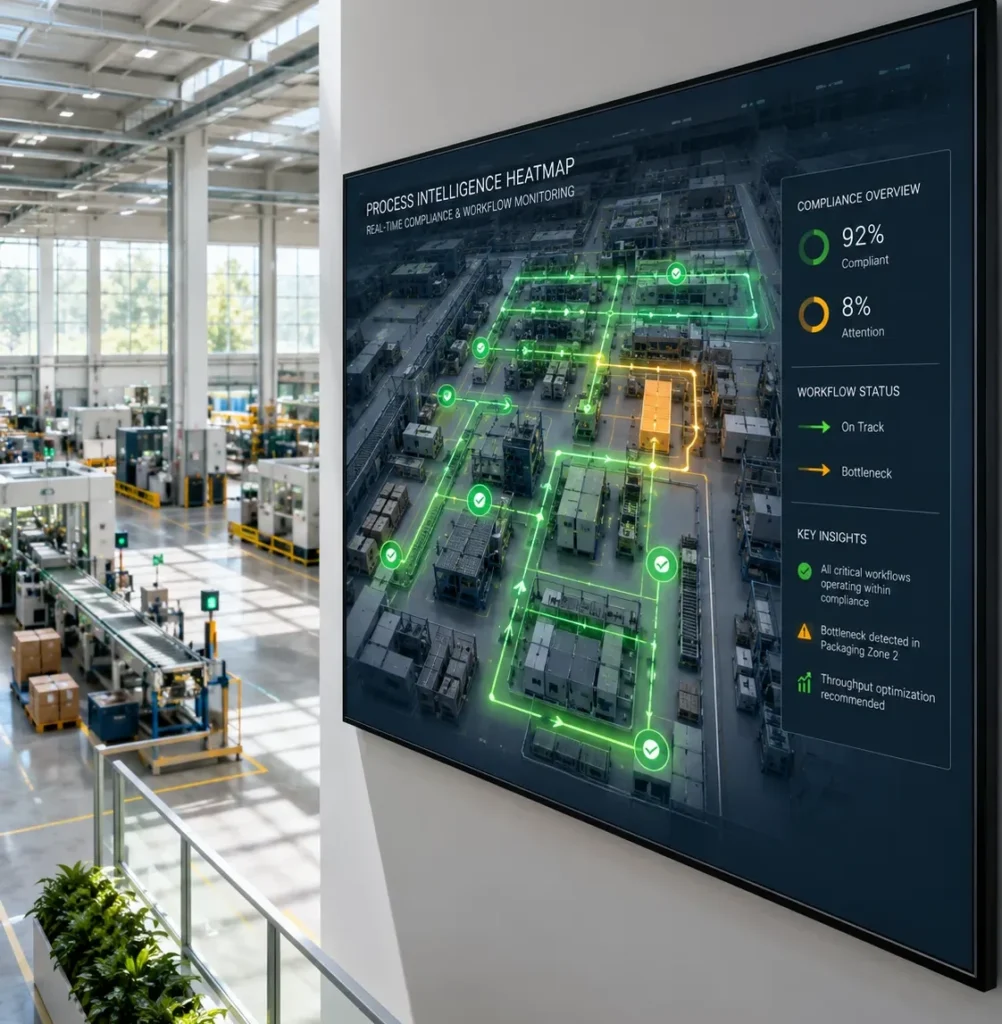
The Role Of AI In Modern Process Excellence
AI supports process excellence by transforming operational data into actionable intelligence.
Continuous Visibility
AI enables organizations to gain ongoing awareness of workflows, operational conditions, and process performance.
Instead of waiting for reports, leaders can access real-time insights that support faster decision-making.
Early Issue Detection
Many process issues remain hidden until they create measurable impacts.
AI can identify deviations, bottlenecks, and inefficiencies as they emerge, allowing organizations to respond before performance is affected.
Enhanced Decision Support
AI-powered systems help operational leaders evaluate information more effectively by providing recommendations, prioritizing issues, and highlighting potential risks.
Continuous Improvement
Rather than relying solely on periodic improvement initiatives, organizations can use AI-generated insights to support ongoing process refinement.
The Emergence Of Visual Process Intelligence
One of the most significant developments in process excellence is the growing use of computer vision and visual analytics.
Many operational activities occur in physical environments that traditional systems cannot easily measure.
Visual process intelligence helps organizations:
- Monitor workflows
- Verify process adherence
- Identify operational bottlenecks
- Measure process consistency
- Improve compliance oversight
This provides a new layer of visibility that complements existing operational data sources.
Characteristics Of AI-Driven Process Excellence
Organizations that successfully integrate AI into process excellence initiatives often demonstrate several common characteristics.
Traditional Process Excellence | AI-Driven Process Excellence |
Periodic Reviews | Continuous Awareness |
Historical Reporting | Real-Time Intelligence |
Manual Analysis | Automated Insights |
Reactive Improvements | Proactive Optimization |
Sample-Based Monitoring | Continuous Observation |
These capabilities help organizations improve performance while strengthening resilience and adaptability.
.
Human Expertise Remains Essential
Despite advances in AI, process excellence remains fundamentally human-led.
Technology can identify patterns, generate recommendations, and monitor operations at scale, but people remain responsible for strategic decisions, governance, problem-solving, and continuous improvement initiatives.
The most successful organizations do not replace human expertise with AI. Instead, they combine operational experience with intelligent technologies to achieve better outcomes.
This collaborative approach aligns closely with the principles of modern enterprise operations and Industry 5.0.
The Future Of Process Excellence
The future of process excellence will be defined by intelligence, visibility, and adaptability.
Organizations will increasingly rely on AI-powered monitoring, operational analytics, computer vision, and intelligent decision-support systems to maintain consistency and improve performance across complex operational environments.
As enterprises continue to evolve, process excellence will move beyond optimization alone and become a continuous capability powered by real-time operational intelligence.
Organizations that embrace this evolution will be better positioned to improve efficiency, strengthen governance, reduce risk, and sustain operational excellence in an increasingly dynamic business landscape.
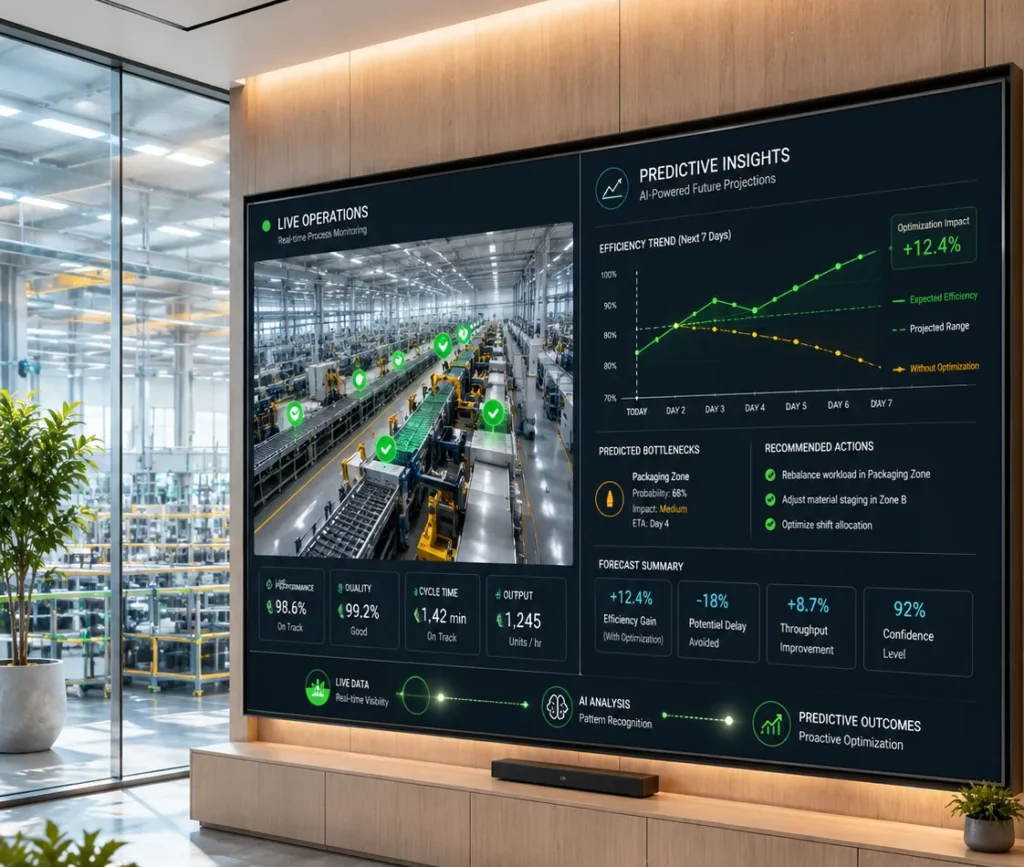
How CAPASai Supports Process Excellence
CAPASai helps organizations strengthen process excellence through AI-powered video analytics, remote monitoring, real-time alerts, and operational intelligence. By providing continuous visibility into operational activities, CAPASai supports process adherence, compliance monitoring, workflow optimization, and data-driven decision-making across distributed environments.