Business environments rarely remain stable for long. Market conditions shift, customer expectations evolve, supply chains face disruptions, and operational risks emerge without warning. In such conditions, organizations can no longer rely solely on rigid processes designed for predictable environments. Instead, enterprises are increasingly seeking ways to build operations that can respond, adjust, and improve continuously.
This need for agility is driving interest in adaptive operations.
Adaptive operations combine real-time visibility, intelligent decision-making, and operational flexibility to help organizations respond effectively to changing circumstances. At the center of this transformation are artificial intelligence (AI) and automation technologies that enable enterprises to move from reactive management toward proactive operational control.
As Industry 5.0 continues to gain momentum, adaptive operations are becoming a critical component of resilient and human-centered business strategies.
Why Traditional Operational Models Struggle To Adapt
Many organizations still rely on processes built around periodic reviews, manual reporting, and historical performance analysis.
While these methods provide valuable information, they often create challenges such as:
- Delayed identification of operational issues
- Limited visibility across distributed locations
- Slow response to emerging risks
- Inconsistent process execution
- Difficulty managing operational complexity
By the time leaders receive reports, opportunities for corrective action may already have passed.
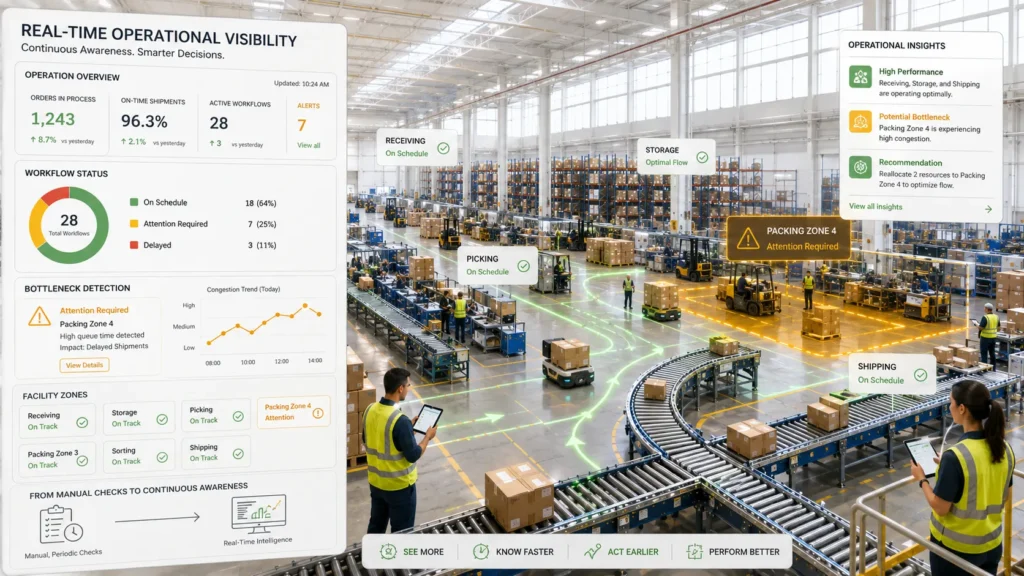
Adaptive operations address this challenge by enabling continuous awareness and faster responses.
What Are Adaptive Operations?
Adaptive operations refer to an organization’s ability to continuously monitor operational conditions, evaluate changing circumstances, and adjust activities in real time.
Rather than following fixed processes regardless of conditions, adaptive operations use intelligence and automation to support dynamic decision-making.
Key characteristics include:
Real-Time Visibility
Organizations gain immediate awareness of operational conditions across facilities and processes.
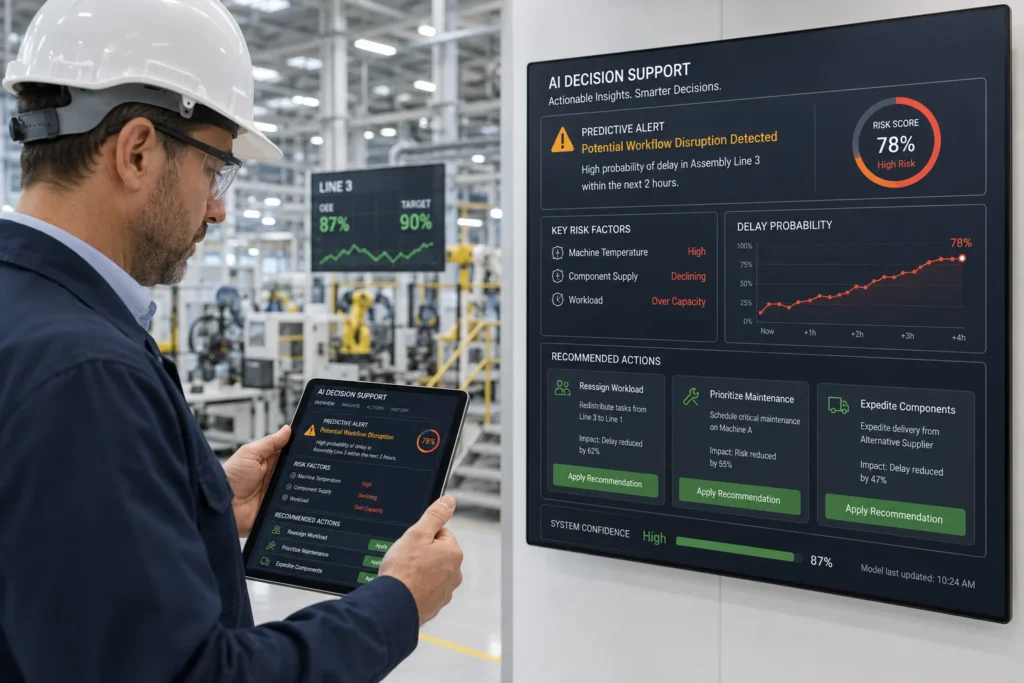
Intelligent Decision Support
AI analyzes information and provides actionable recommendations to operational teams.
Automated Response Mechanisms
Certain routine actions can be executed automatically based on predefined rules and operational conditions.
Continuous Improvement
Operational data helps identify opportunities for optimization and refinement.
Together, these capabilities help enterprises respond more effectively to change.
Compare Traditional Operations And Adaptive Operations
Operational Area | Traditional Operations | Adaptive Operations |
Visibility | Periodic Reporting | Real-Time Monitoring |
Decision-Making | Historical Analysis | Continuous Intelligence |
Issue Detection | Reactive Response | Early Identification |
Process Management | Fixed Workflows | Dynamic Adjustments |
Operational Agility | Limited | High |
Organizations increasingly compare these approaches when developing long-term transformation strategies.
How AI Enables Operational Adaptability
AI plays a central role in helping organizations understand and respond to operational conditions.
Pattern Recognition
AI identifies trends, anomalies, and emerging issues that may not be visible through manual analysis.
Predictive Insights
Organizations can anticipate potential disruptions and take preventive action.
Decision Support
Operational teams receive recommendations that help improve speed and accuracy of decision-making.
Risk Identification
AI helps detect operational risks before they escalate into larger issues.
These capabilities create a stronger foundation for adaptability and resilience.
The Role Of Automation In Adaptive Operations
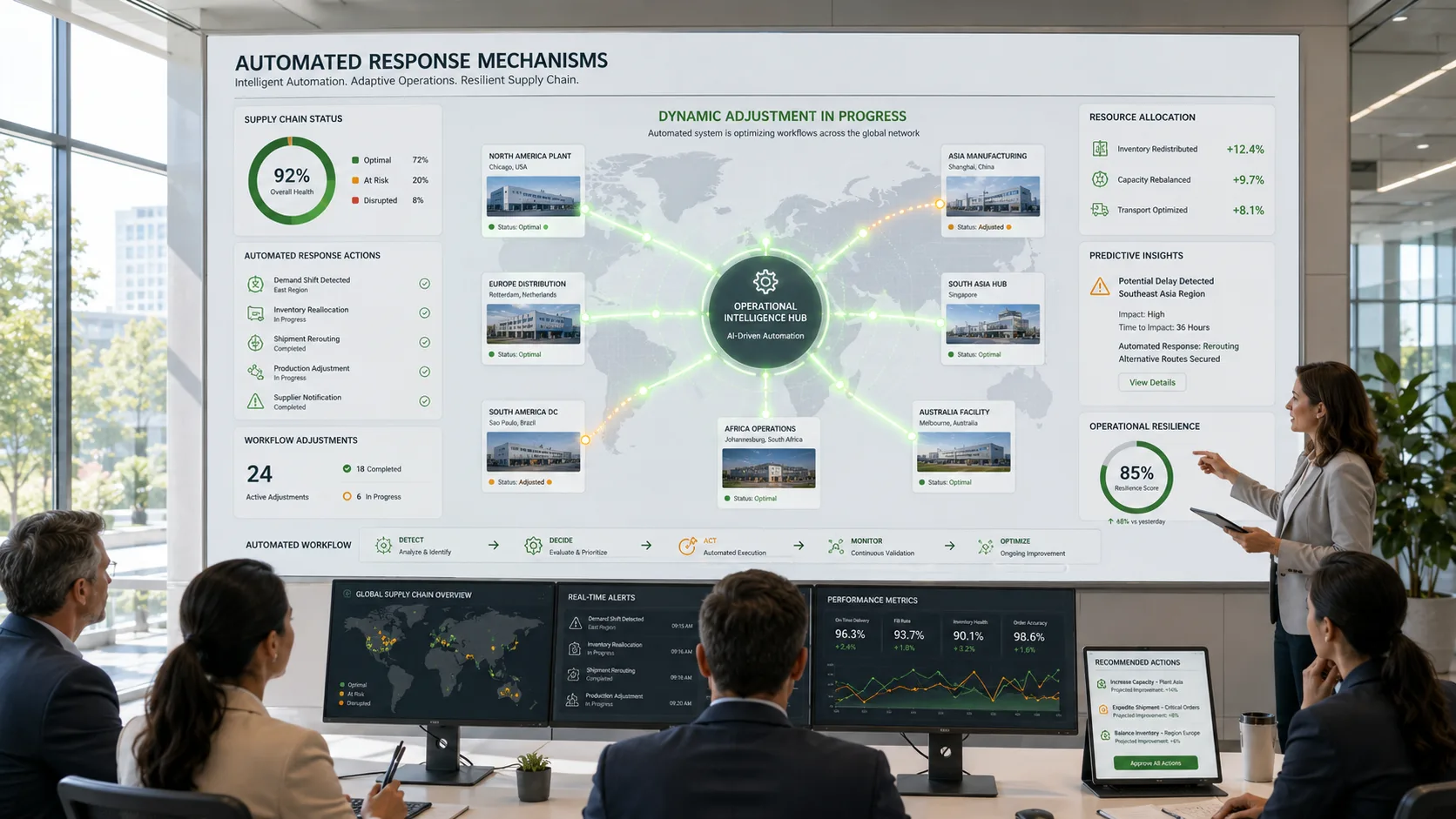
Automation complements AI by enabling faster execution of operational responses.
Examples include:
- Automated alerts and notifications
- Workflow routing
- Compliance monitoring
- Process verification
- Operational escalation procedures
Rather than replacing people, automation reduces repetitive tasks and allows teams to focus on higher-value activities.
This supports the Industry 5.0 principle of technology enhancing human capabilities.
Adaptive Operations Across Industries
The need for adaptability extends across multiple sectors.
Manufacturing
Organizations improve production flexibility, quality management, and operational visibility.
Logistics And Supply Chain
Teams respond more effectively to bottlenecks, delays, and changing demand patterns.
Retail
Managers gain visibility into store performance and operational execution.
Healthcare
Healthcare providers improve coordination, resource utilization, and process consistency.
Public Infrastructure
Organizations enhance operational awareness and service reliability.
Across industries, the goal remains the same: create operations capable of responding intelligently to changing conditions.
Human Oversight Remains Essential
Adaptive operations do not eliminate the role of people. In fact, human expertise becomes even more important.
AI and automation provide insights, recommendations, and execution support, but people remain responsible for strategy, judgment, governance, and decision-making.
The strongest adaptive organizations combine:
- Human experience
- Operational expertise
- Real-time intelligence
- Automated workflows
- Continuous learning
This balance helps enterprises improve performance while maintaining accountability and control.
The Future Belongs To Adaptive Enterprises
Creating adaptive operations is becoming a strategic priority for organizations seeking resilience and long-term competitiveness. As operational environments grow more complex, enterprises need systems that can detect changes, support decisions, and respond quickly.
AI and automation provide the foundation for this capability, enabling organizations to become more responsive, informed, and agile. By combining intelligent technologies with human expertise, enterprises can create operations that continuously adapt to changing business realities.
How CAPASai Supports Adaptive Operations
CAPASai supports adaptive operations through AI-powered video analytics, remote monitoring, real-time alerts, and operational intelligence capabilities. By providing continuous visibility into operational environments, CAPASai helps organizations identify risks earlier, improve compliance oversight, support faster decision-making, and strengthen operational resilience across multiple locations