The first wave of industrial digitalization focused on automation, connectivity, and data-driven operations. Organizations invested heavily in smart technologies, predictive analytics, connected equipment, and intelligent workflows to improve efficiency and productivity. These developments defined the Industry 4.0 era and transformed how enterprises operate.
Yet many business leaders have realized that technology alone cannot solve every operational challenge. Workforce shortages, regulatory pressures, supply chain disruptions, and growing expectations for sustainability require a broader approach.
This is where Industry 5.0 enters the conversation.
Rather than focusing solely on automation, Industry 5.0 emphasizes the relationship between people and technology. It promotes a future where intelligent systems support human expertise, helping organizations become more resilient, adaptable, and sustainable.
For enterprise leaders, Industry 5.0 is not simply the next technology trend. It represents a shift in how operational success is defined and achieved.
Why Enterprises Are Looking Beyond Automation
Industry 4.0 delivered significant benefits through:
- Industrial IoT platforms
- Artificial intelligence
- Smart manufacturing systems
- Predictive maintenance
- Advanced analytics
- Connected operations
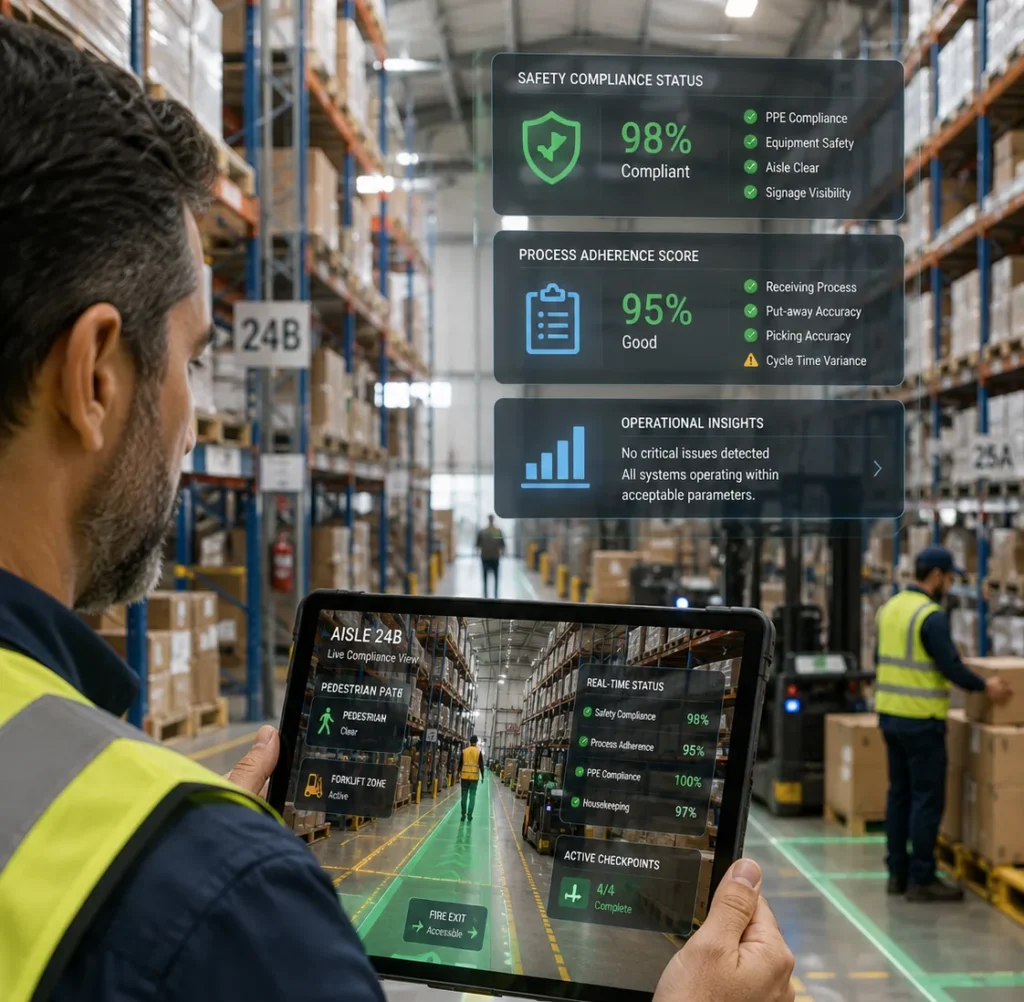
These technologies improved visibility and efficiency, but many organizations still face challenges that cannot be addressed through automation alone.
Examples include:
- Workforce development
- Operational resilience
- Compliance management
- Knowledge retention
- Safety performance
- Decision-making during uncertainty
These challenges require both technological intelligence and human judgment.
The Core Principles Of Industry 5.0
Industry 5.0 builds upon Industry 4.0 but expands the focus beyond operational efficiency.
Human-Centric Operations
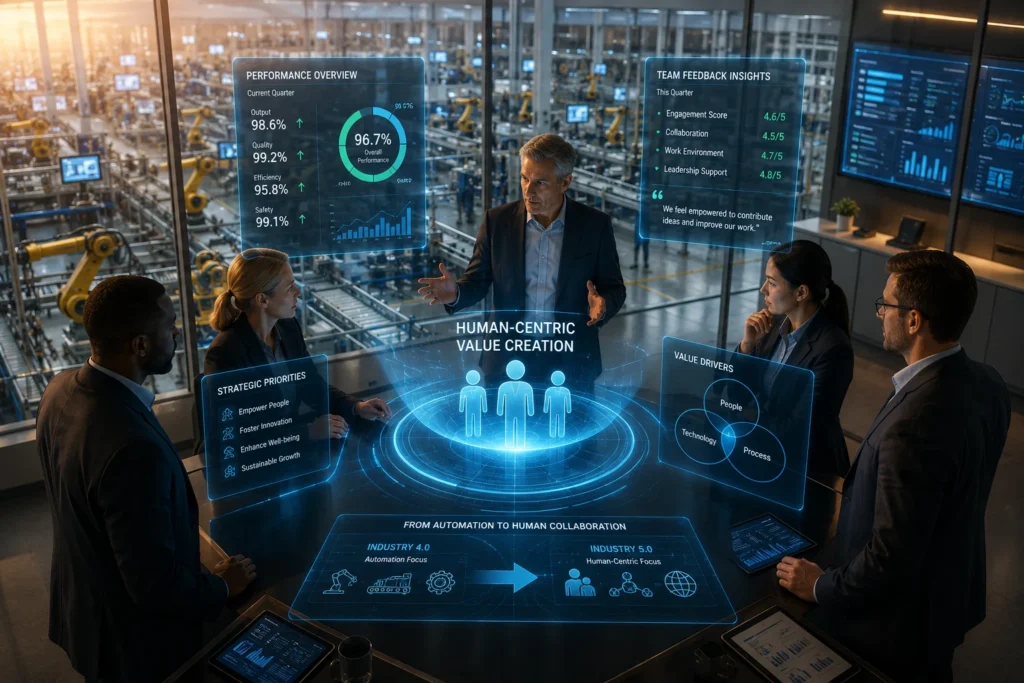
Technology exists to support employees, improve decision-making, and enhance workplace experiences rather than simply replace human involvement.
Resilient Enterprises
Organizations develop the ability to adapt quickly to disruptions, market changes, and operational risks.
Sustainable Value Creation
Business growth is balanced with long-term operational, social, and environmental objectives.
Together, these principles create a more balanced approach to enterprise transformation.
What This Means For Enterprise Leaders
Industry 5.0 requires leaders to rethink how technology investments create business value.
The conversation shifts from:
“How much can we automate?”
to:
“How can technology help people perform better?”
This perspective influences decisions across operations, compliance, workforce management, and governance.
Leadership teams are increasingly focused on:
- Strengthening human-AI collaboration
- Improving operational visibility
- Enhancing resilience
- Supporting workforce productivity
- Building sustainable operating models
The goal is not simply smarter systems, but smarter organizations.
Compare Industry 4.0 And Industry 5.0 Leadership Priorities
Leadership Focus | Industry 4.0 | Industry 5.0 |
Primary Objective | Efficiency And Automation | Human-Centered Value Creation |
Workforce Role | Technology User | Technology Collaborator |
Decision Support | Data Availability | Actionable Intelligence |
Risk Management | Process Optimization | Resilience And Adaptability |
Success Metrics | Productivity | Productivity, Resilience, Sustainability |
This comparison highlights why Industry 5.0 is often viewed as an evolution of Industry 4.0 rather than a replacement.
The Rise Of Human-AI Collaboration
One of the most important characteristics of Industry 5.0 is the partnership between people and intelligent systems.
Artificial intelligence can analyze large volumes of data, identify patterns, and provide operational insights in real time. Human expertise remains essential for interpreting context, solving complex problems, and making strategic decisions.
This collaboration is becoming increasingly valuable across industries.
Manufacturing
Operators use intelligent insights to improve quality, productivity, and safety.
Logistics
Teams gain better visibility into workflows, bottlenecks, and operational performance.
Retail
Managers use operational intelligence to improve store execution and customer experiences.
Healthcare
Professionals leverage technology to support decision-making and operational coordination.
Building Resilience In An Uncertain Environment
Recent years have demonstrated the importance of organizational resilience.
Supply chain disruptions, labor challenges, and changing regulations have shown that efficiency alone is not enough. Organizations must also be capable of adapting quickly.
Industry 5.0 encourages enterprises to combine:
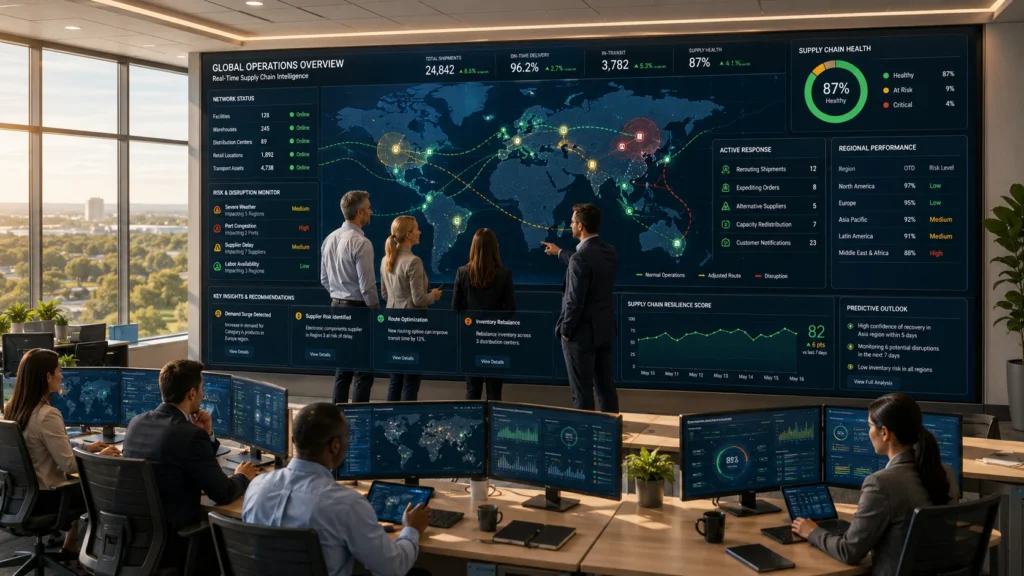
- Real-time operational visibility
- Intelligent monitoring
- Predictive analytics
- Human decision-making
- Continuous improvement
This combination enables organizations to respond more effectively to changing conditions while maintaining operational performance.
Governance As A Strategic Capability
As enterprises become more connected, governance is evolving beyond traditional compliance activities.
Leaders increasingly require visibility into:
- Process adherence
- Operational performance
- Safety conditions
- Compliance status
- Emerging risks
Industry 5.0 supports more proactive governance by combining intelligent monitoring with human oversight. This approach helps organizations improve consistency, transparency, and decision quality across distributed operations.
A New Leadership Opportunity
Industry 5.0 is redefining what operational excellence means in a technology-enabled world. The organizations most likely to succeed will not necessarily be those with the highest level of automation, but those that create the strongest collaboration between people and intelligent systems.
By combining human expertise with real-time operational intelligence, enterprises can improve resilience, strengthen governance, and create sustainable long-term value.
How CAPASai Supports Industry 5.0
CAPASai supports Industry 5.0 initiatives through AI-powered video analytics, remote monitoring, real-time alerts, and intelligent operational visibility. By transforming visual data into actionable insights, CAPASai helps organizations strengthen governance, improve compliance oversight, and support human-led decision-making across distributed