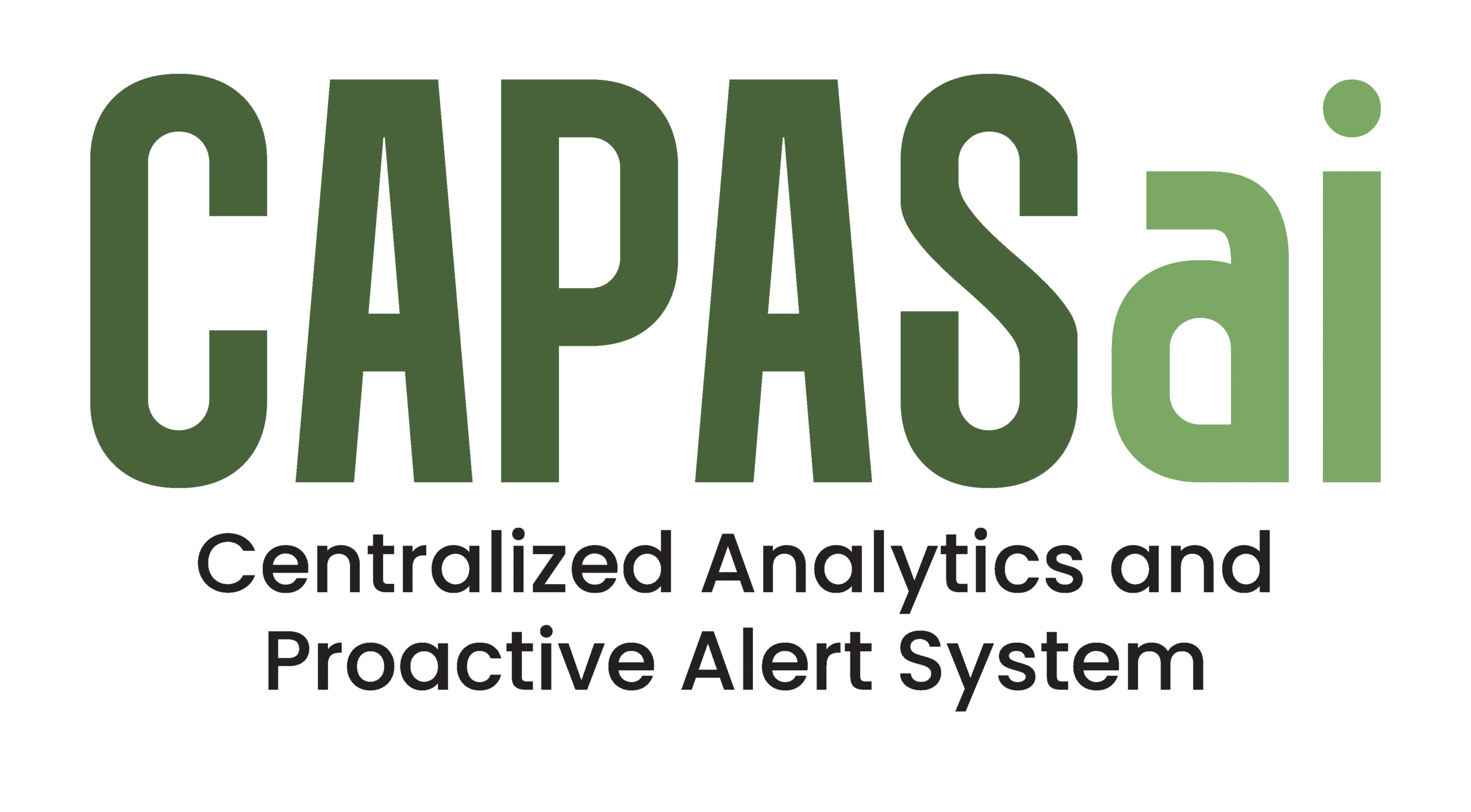
Governance has traditionally depended on policies, audits, inspections, and reporting mechanisms designed to ensure organizations operate safely, consistently, and within regulatory requirements. While these controls remain essential, the growing complexity of modern enterprises is exposing the limitations of governance models built primarily around periodic reviews and manual oversight.
Today’s organizations manage distributed facilities, global supply chains, remote operations, and increasingly stringent compliance obligations. As operations become more interconnected, leaders face a difficult challenge: how to maintain governance standards across environments that cannot be continuously monitored by human supervisors alone.
This challenge is accelerating interest in compliance automation as a critical component of the Industry 5.0 movement.
The Shift From Periodic Audits To Continuous Assurance
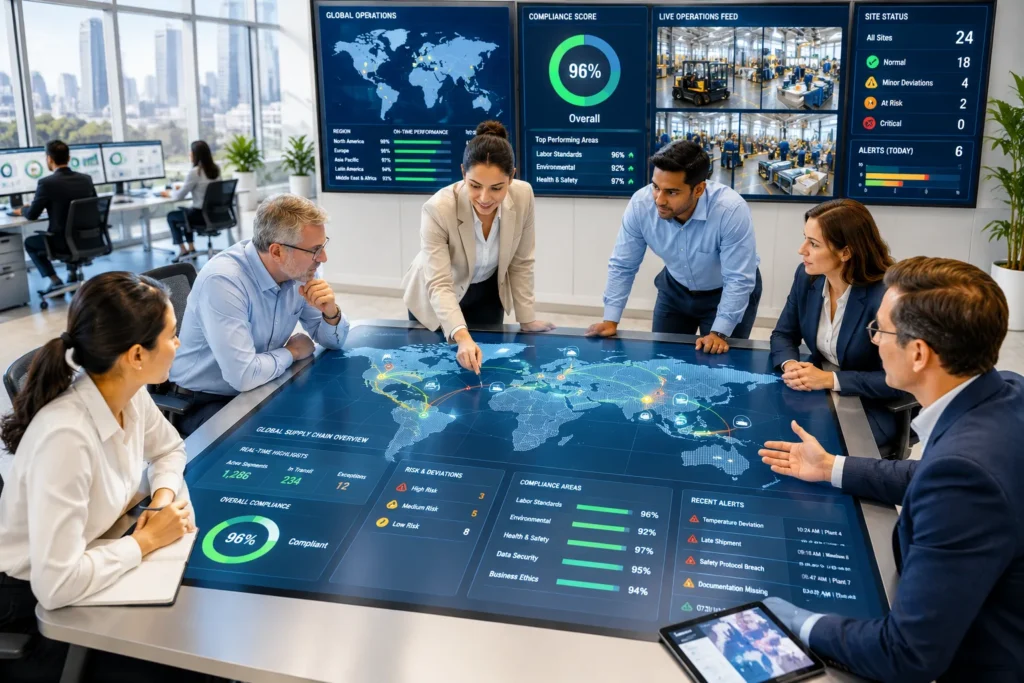
One of the defining characteristics of Industry 5.0 is the emphasis on intelligent collaboration between people and technology. Rather than replacing human expertise, advanced technologies support decision-making, improve visibility, and automate repetitive oversight activities.
In governance and compliance management, this means moving beyond occasional audits toward continuous assurance models.
Instead of asking:
“Were procedures followed last month?”
Organizations can increasingly ask:
“Are procedures being followed right now?”
This transition is changing how compliance is monitored, measured, and managed.
Understanding Compliance Automation In Industry 5.0
Compliance automation refers to the use of intelligent technologies to continuously monitor operational activities, identify deviations, and support governance objectives.
These technologies may include:
Computer Vision Systems
Monitoring operational environments to verify adherence to safety procedures, process standards, and workplace policies.
AI-Powered Analytics
Identifying trends, anomalies, and compliance risks that may require intervention.
Automated Alerting
Notifying relevant stakeholders when operational deviations occur.
Digital Governance Workflows
Creating auditable records of compliance-related events and corrective actions.
The goal is not to eliminate human oversight but to provide leaders with better information and faster visibility into operational realities.
Why Traditional Compliance Models Are Under Pressure
Many organizations still rely heavily on audits, manual inspections, checklists, and incident investigations to verify compliance. While these methods can identify issues, they often do so after deviations have already occurred.
Common governance challenges include:
- Delayed detection of compliance violations
- Inconsistent enforcement of operational standards
- Limited visibility across multiple locations
- Manual reporting burdens
- Human error in monitoring processes
- Difficulty verifying real-time adherence to procedures
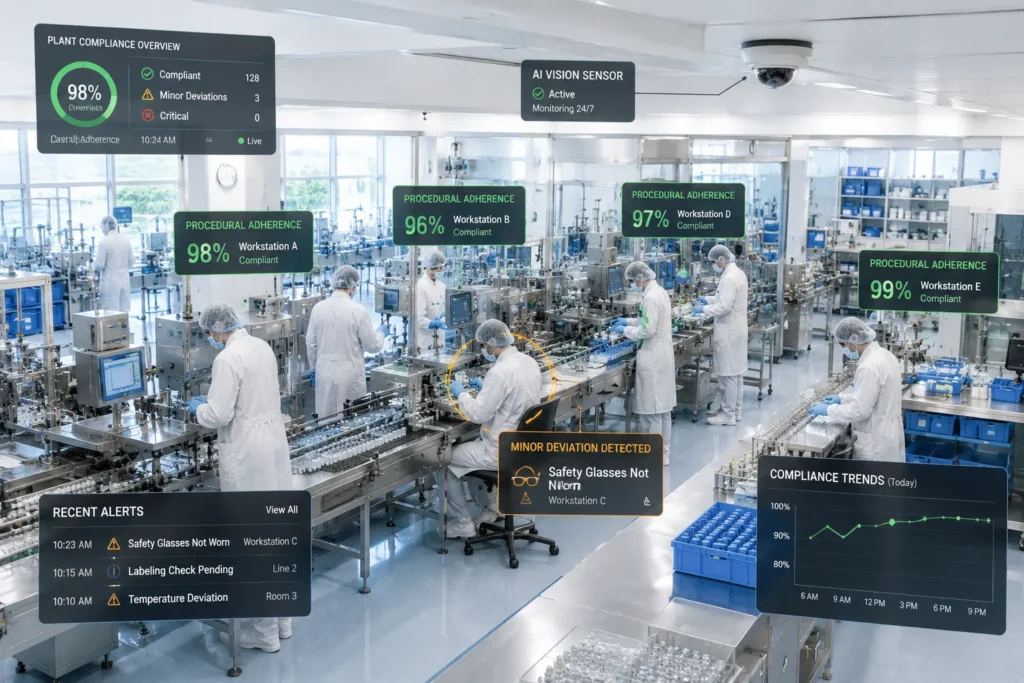
Compare Traditional Governance And Compliance Automation
Governance Area | Traditional Approach | Compliance Automation |
Compliance Monitoring | Periodic Audits | Continuous Observation |
Issue Detection | After Occurrence | Near Real-Time |
Evidence Collection | Manual Documentation | Automated Data Capture |
Multi-Site Oversight | Limited Visibility | Centralized Monitoring |
Corrective Actions | Reactive | More Proactive |
This comparison illustrates why compliance automation is becoming a strategic priority for organizations pursuing Industry 5.0 initiatives.
Governance Benefits Beyond Regulatory Compliance
While compliance requirements often drive investment decisions, the benefits of automated governance extend beyond regulatory obligations.
Improved Operational Consistency
Organizations gain greater visibility into whether procedures are being executed consistently across locations.
Faster Risk Identification
Potential issues can be detected before they escalate into larger operational or compliance failures.
Better Decision-Making
Leaders have access to more timely and objective information about operational conditions.
Enhanced Accountability
Automated monitoring creates stronger evidence-based governance frameworks.
Reduced Administrative Burden
Teams spend less time on manual verification activities and more time addressing meaningful operational improvements.
Industry 5.0 And The Human-Centric Governance Model
A common misconception is that automation reduces the role of people in governance. Industry 5.0 promotes the opposite perspective.
The objective is not to remove human judgment but to strengthen it.
Compliance automation enables managers, auditors, and operational leaders to focus on strategic decisions rather than repetitive monitoring tasks. By providing continuous visibility into operational activities, technology supports more informed governance without replacing human accountability.
Industries Driving Compliance Automation Adoption
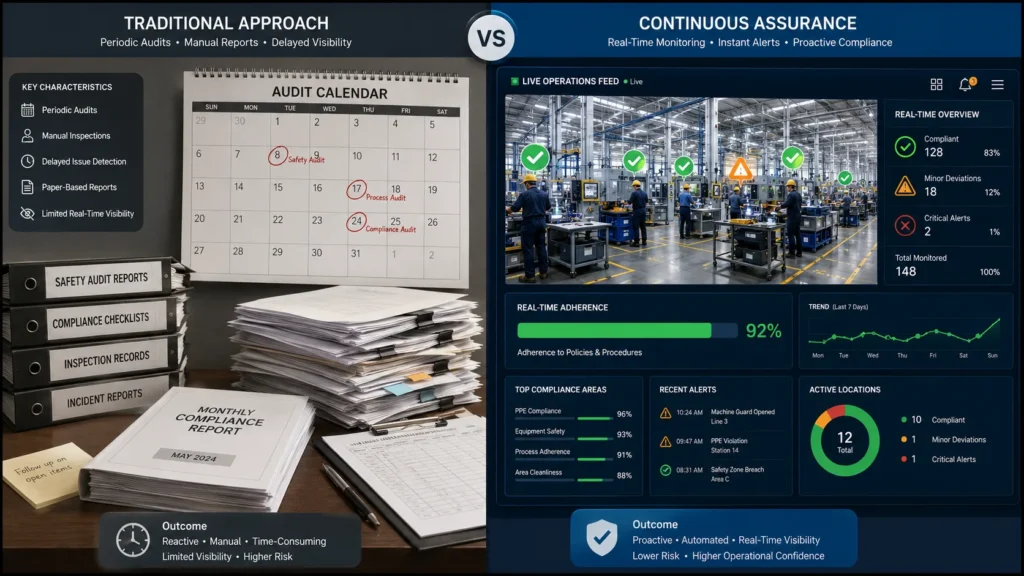
Compliance automation is becoming increasingly important across multiple sectors.
Manufacturing And Industrial Operations
Organizations monitor production processes, safety compliance, and operational procedures.
Pharmaceuticals And Healthcare
Facilities strengthen regulatory oversight and procedural consistency.
Retail And Quick Service Restaurants
Businesses verify operational standards across distributed locations.
Logistics And Transportation
Companies improve visibility into operational activities, safety procedures, and workflow compliance.
Smart Infrastructure And Public Services
Authorities enhance governance capabilities while improving operational transparency.
Building Governance For The Next Generation Enterprise
The future of governance is unlikely to be defined by more paperwork, more audits, or more manual inspections. Instead, it will be shaped by greater operational visibility, faster access to information, and stronger collaboration between people and intelligent technologies.
Compliance automation represents a significant step toward this future by helping organizations move from reactive oversight to continuous governance. As Industry 5.0 continues to evolve, enterprises that embrace intelligent governance models will be better positioned to manage risk, improve consistency, and maintain operational resilience.
How CAPASai Supports Intelligent Governance
As organizations pursue Industry 5.0 initiatives, technologies that transform operational visibility into actionable intelligence are becoming increasingly important. CAPASai supports intelligent governance through AI-powered video analytics, remote monitoring, real-time alerting, and compliance-focused operational visibility. By helping organizations identify deviations, monitor critical processes, and strengthen oversight across distributed facilities, CAPASai contributes to more effective and proactive governance frameworks.