Why Detecting Suspicious Behavior Matters in Retail
Today’s retailers are under more and more pressure to minimise shrinkage, enhance store security, safeguard staff, and uphold satisfying client experiences. Even while theft is still a big problem, a lot of retail losses start long before a crime ever happens. Early warning indicators that something strange might be occurring on the sales floor are frequently provided by suspicious behaviours..
Traditional CCTV systems typically record events for later review, but they rarely help store teams identify risks as they occur. Security personnel cannot continuously monitor dozens of camera feeds while simultaneously managing daily operations.
As a result, many retailers are turning to AI-powered video analytics to detect suspicious activities in real time and enable faster intervention.
The Challenges of Manual Surveillance
Conventional monitoring approaches often struggle with:
- Continuous observation requirements
- Human fatigue and distraction
- Large store footprints
- Multiple entrances and exits
- High customer volumes
- Delayed incident detection
- Time-consuming investigations
- Limited visibility across multiple locations
Many suspicious activities go unnoticed until inventory audits or incident investigations reveal a problem.
Common Suspicious Behaviors AI Can Detect
Unusual Product Handling
Repeated handling of high-value merchandise without normal purchasing behavior may trigger alerts.
Extended Loitering
Customers remaining in specific areas for unusually long periods can be identified for additional monitoring.
Concealment-Related Actions
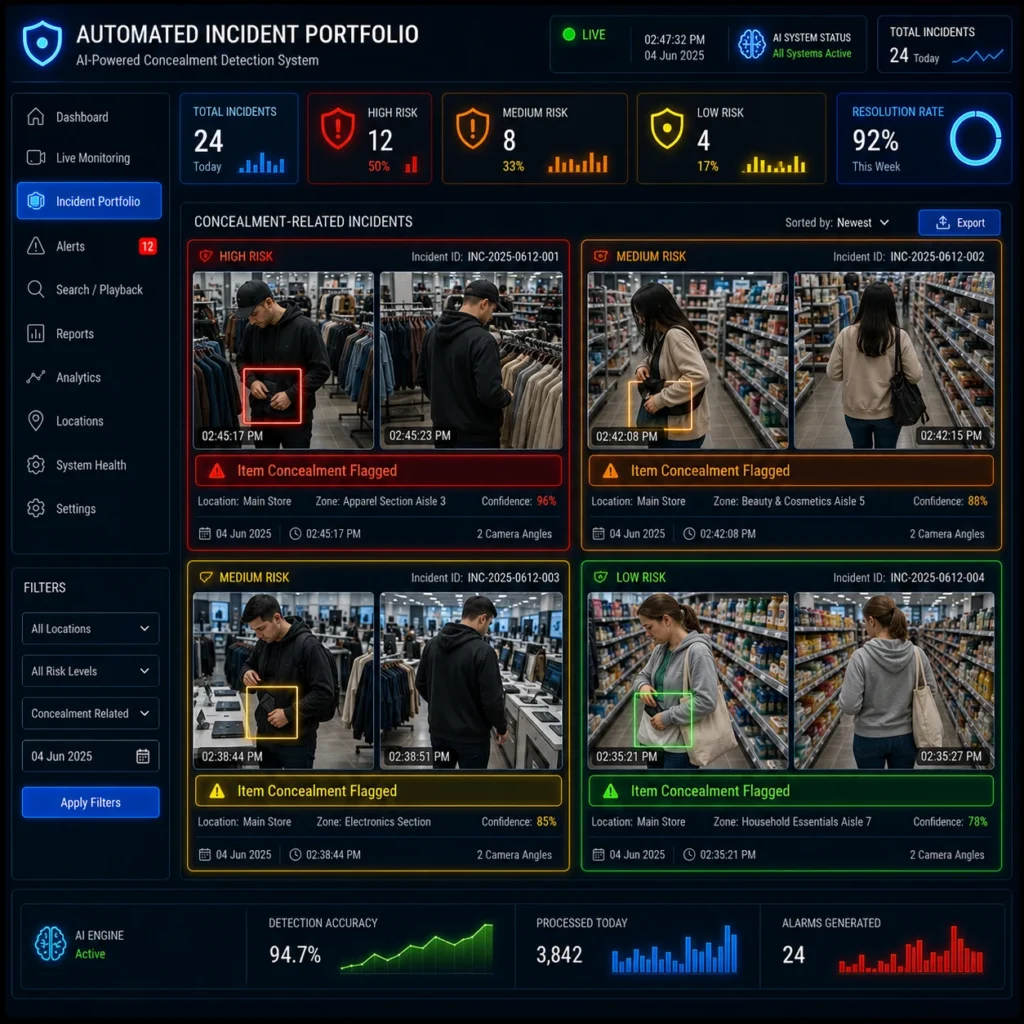
Behavior patterns associated with hiding products inside bags, clothing, or personal belongings may be flagged.
Multiple Visits to High-Risk Areas
Repeated movement between premium merchandise sections can indicate elevated risk.
Restricted Area Access Attempts
Unauthorized entry into stockrooms, employee-only zones, or inventory storage areas can be detected immediately.
Coordinated Group Activity
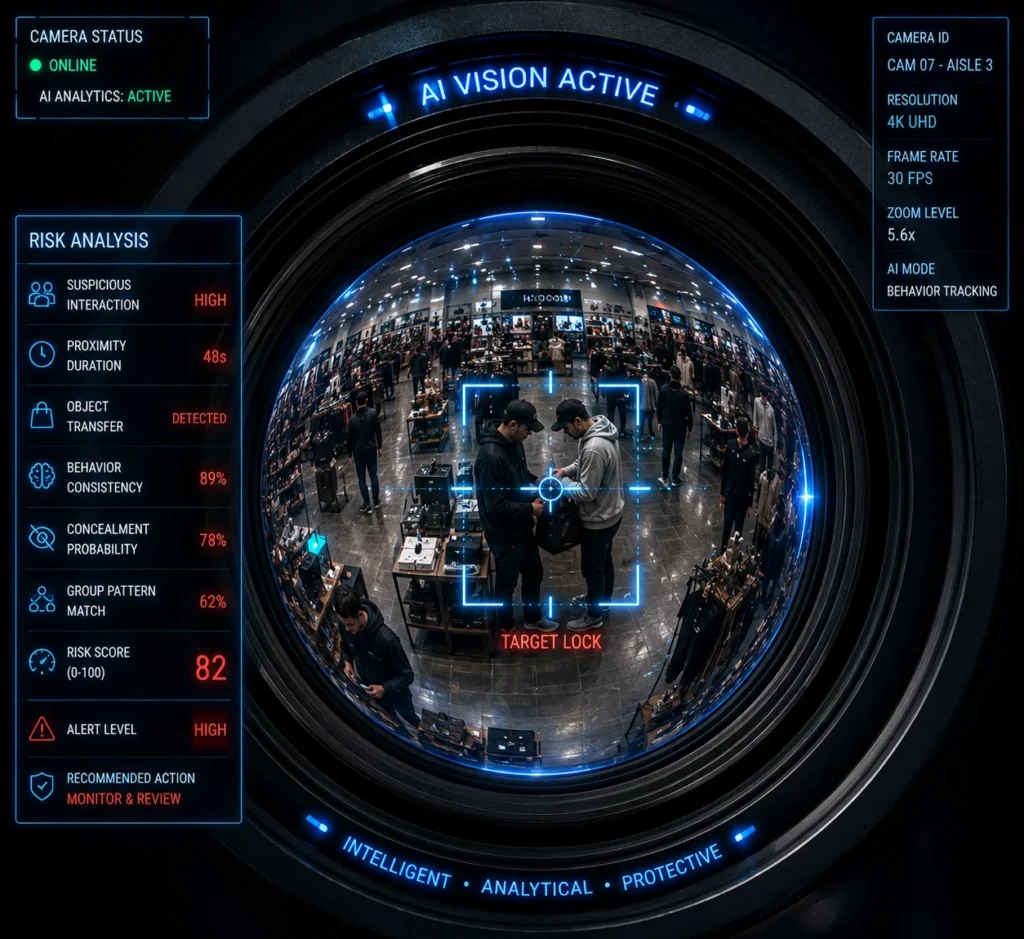
AI can identify synchronized movements, unusual group interactions, and organized activity patterns.
Self-Checkout Anomalies
Scanning irregularities and unusual transaction behaviors can be detected in real time.
How CAPASai Detects Suspicious Behavior
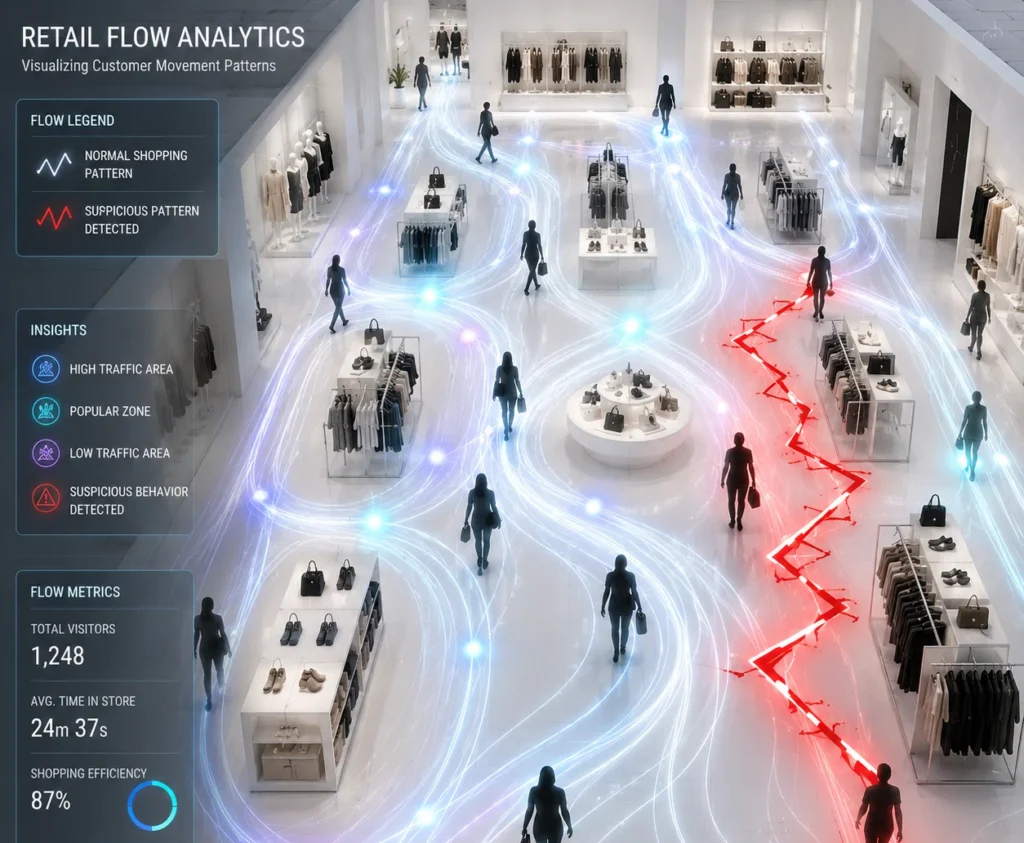
CAPASai combines AI-powered video analytics, remote store monitoring, and real-time alerting to transform existing CCTV cameras into intelligent retail monitoring systems.
Rather than simply recording video, CAPASai continuously analyzes customer movements, product interactions, traffic patterns, and behavioral indicators to identify activities that may require attention.
CAPASai helps retailers:
- Detect suspicious behaviors in real time
- Improve loss prevention programs
- Reduce retail shrinkage
- Strengthen operational visibility
- Accelerate investigations
- Support multi-store monitoring
- Improve store security
The platform supports supermarkets, pharmacies, department stores, convenience stores, electronics retailers, specialty stores, and large retail chains.
What Is Suspicious Behavior Detection?
Suspicious behavior detection uses AI algorithms to identify activities that differ from typical customer shopping patterns.
Instead of waiting for theft or fraud to occur, AI looks for behavioral indicators that may signal elevated risk.
The system focuses on patterns rather than assumptions, helping security teams prioritize events that require review.
Traditional CCTV Monitoring vs AI-Powered Detection
Traditional CCTV | AI Video Analytics |
Passive recording | Active monitoring |
Manual observation | Automated detection |
Reactive investigations | Real-time alerts |
Limited staff coverage | Continuous analysis |
Delayed response | Immediate visibility |
Footage review after incidents | Proactive risk identification |
This allows retailers to intervene earlier and reduce potential losses.
How Real-Time Alerts Improve Response
When suspicious activity is detected, managers and security teams can receive immediate notifications containing:
- Event timestamps
- Camera locations
- Incident snapshots
- Behavioral classifications
- Relevant video clips
- Live monitoring access
This enables faster decision-making and more effective intervention.
High-Risk Retail Areas Commonly Monitored
Electronics Departments
Smartphones, accessories, gaming devices, and premium electronics.
Cosmetics and Personal Care
Small, high-value products that are frequently targeted.
Pharmacy Sections
Health and wellness products requiring enhanced monitoring.
Luxury Merchandise Areas
Premium products with elevated theft risk.
Self-Checkout Zones
Transaction monitoring and scanning anomaly detection.
Supporting Retail CAPA and Loss Prevention Programs
AI video analytics helps retailers move beyond incident response and toward continuous improvement.
Evidence Collection
Relevant video clips are automatically captured and organized.
Faster Investigations
Teams can locate incidents quickly without reviewing hours of footage.
Behavioral Trend Analysis
Recurring patterns can reveal operational vulnerabilities.
Root Cause Identification
Organizations can better understand how and why incidents occur.
Corrective Action Support
Store designs, hiring practices, and security protocols are all improved by insights.
Why Retailers Are Investing in AI Video Analytics
Retail organizations increasingly require proactive solutions that provide operational intelligence rather than simple surveillance.
AI-powered video analytics helps retailers:
- Reduce shrinkage
- Improve store security
- Strengthen loss prevention efforts
- Enhance operational visibility
- Accelerate investigations
- Improve multi-store governance
- Support data-driven decision-making
Retailers can detect suspicious activity earlier and take action before incidents worsen by converting their current CCTV systems into intelligent monitoring platforms.