Why Shoplifting Remains a Growing Retail Challenge
CCTV shoplifting detection is becoming an important tool for retailers looking to reduce theft and improve store security. AI-powered video analytics can monitor customer activity in real time and identify suspicious behavior. Retailers of all sizes—from convenience stores and supermarkets to pharmacies, fashion retailers, electronics stores, and large retail chains—face ongoing challenges in preventing theft while maintaining a positive customer experience.
Conventional loss prevention techniques frequently depend on security guards, manual CCTV surveillance, and post-event investigations. While these approaches can help identify theft after it occurs, they often struggle to provide real-time visibility into suspicious activities happening throughout the store.
As retail theft becomes more sophisticated, businesses are increasingly turning to AI video analytics to improve detection capabilities and strengthen loss prevention programs.
The Limitations of Traditional Shoplifting Detection
Conventional surveillance systems typically record events for later review rather than actively helping prevent theft.
Common challenges include:
- Security teams monitoring multiple screens simultaneously
- Suspicious activities being overlooked
- Delayed incident response
- Limited visibility in large stores
- Difficulty identifying repeat behavioral patterns
- Time-consuming footage reviews
- Inconsistent monitoring across locations
- Limited coverage during peak business hours
As a result, many theft incidents are only discovered after inventory discrepancies appear.
How CAPASai Helps Detect Shoplifting in Real Time
CAPASai combines AI-powered video analytics, remote store monitoring, and real-time alerts to help retailers identify suspicious activities as they occur.
In order to spot circumstances that could need attention, CAPASai continually examines consumer behaviour, movement patterns, product interactions, and store activities using the current CCTV infrastructure.
CAPASai helps retailers:
- Detect potential shoplifting behaviors
- Monitor high-risk merchandise zones
- Generate real-time alerts
- Improve loss prevention effectiveness
- Reduce investigation time
- Support multi-store monitoring
- Strengthen operational governance
The platform supports retail chains, supermarkets, pharmacies, department stores, convenience stores, specialty retailers, and quick service restaurant operations
How AI Video Analytics Detects Potential Shoplifting
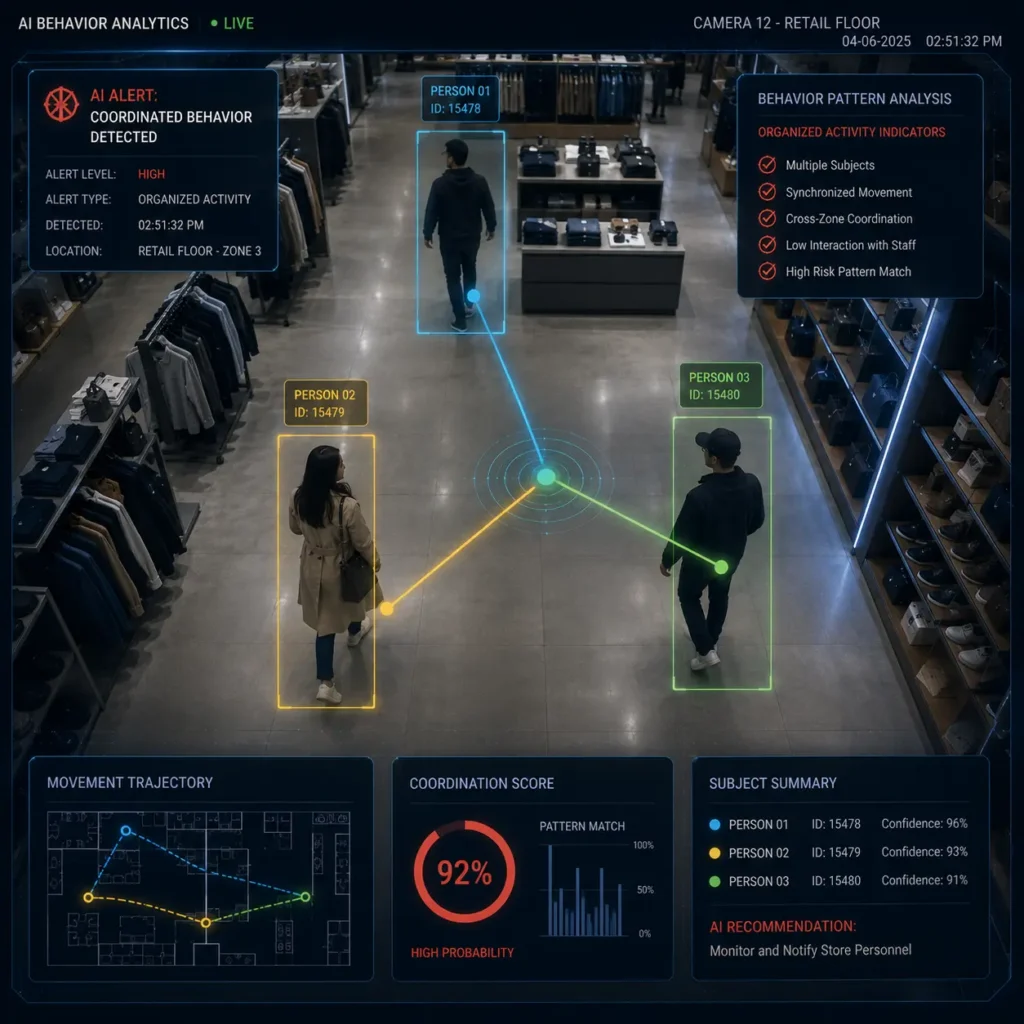
AI does not simply watch for theft events. Instead, it analyzes behavioral patterns that may indicate elevated risk.
Unusual Product Handling
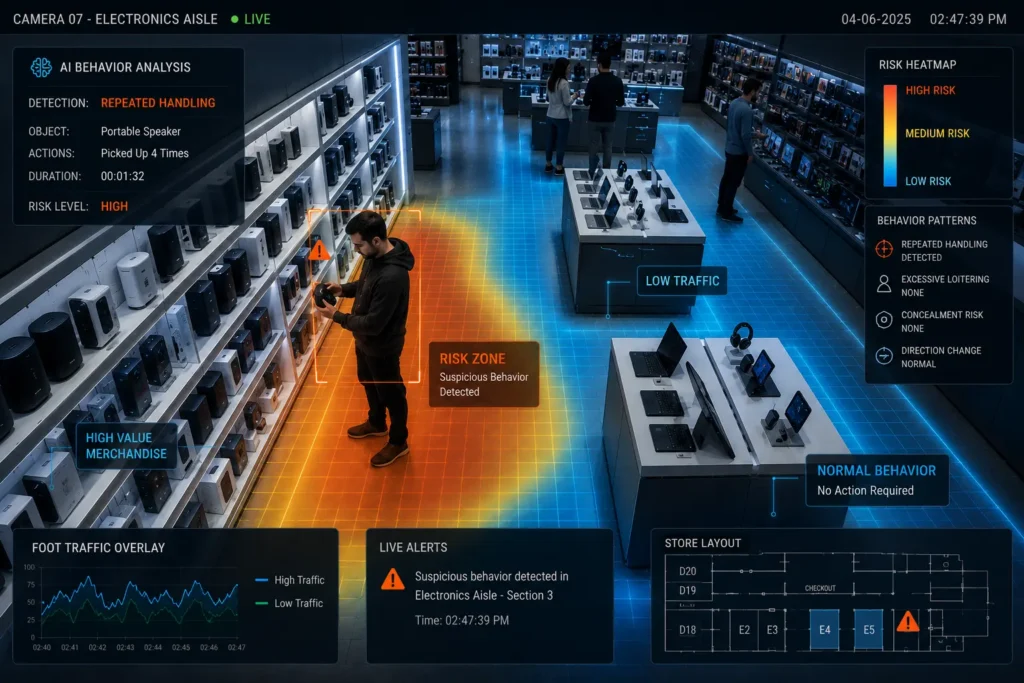
AI can identify repeated handling of merchandise without purchase activity, particularly in high-value product areas.
Concealment Behaviors
Suspicious movements associated with hiding products in bags, clothing, or personal belongings may trigger alerts for review.
Loitering Near High-Value Merchandise
Prolonged presence near displays of high-end products may be noted for additional observation.
Restricted Area Access
AI can identify unauthorized entry into stockrooms, employee-only areas, or inventory storage zones.
Coordinated Group Activity
Patterns involving multiple individuals working together may indicate organized retail theft attempts.
Suspicious Movement Patterns
Unusual travel routes, repeated visits to specific areas, or rapid movement toward exits can be analyzed as part of broader behavioral assessments.
Traditional CCTV Monitoring vs AI Shoplifting Detection
Traditional CCTV | AI Video Analytics |
Passive recording | Active monitoring |
Manual observation | Automated detection |
Reactive investigations | Real-time awareness |
Limited staff coverage | Continuous monitoring |
Delayed incident discovery | Immediate alerts |
Hours of footage review | Automated event identification |
This shift enables retailers to respond more quickly to suspicious activities while reducing manual monitoring burdens.
High-Risk Retail Areas Commonly Monitored
Electronics Sections
Smartphones, accessories, gaming products, and consumer electronics often experience higher theft risks.
Cosmetics & Personal Care
Small, high-value products are frequently targeted.
Pharmaceutical & Health Products
Wellness products and over-the-counter drugs may call for further supervision.
Luxury Merchandise
Premium products benefit from continuous behavioral monitoring.
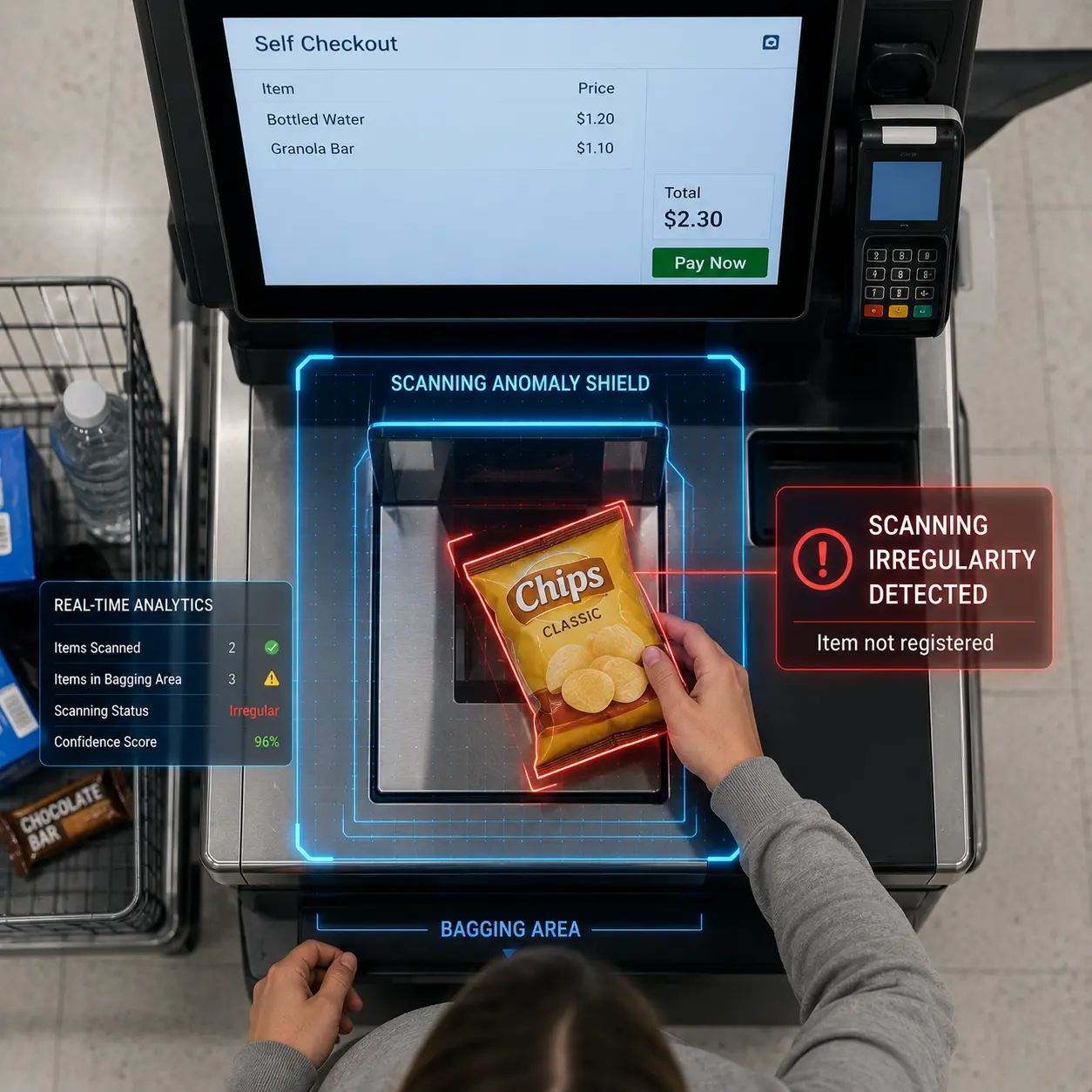
Self-Checkout Areas
AI can help identify transaction anomalies and scanning irregularities.
Benefits of AI-Powered Shoplifting Detection
Faster Incident Response
Store personnel can receive alerts while events are occurring.
Improved Loss Prevention
Potential risks can be addressed before losses occur.
Reduced Investigation Time
Relevant footage can be located quickly.
Multi-Store Visibility
Centralized monitoring helps retailers manage multiple locations.
Better Resource Allocation
Instead of constantly checking video feeds, security professionals can concentrate on more important occurrences.
How AI Supports Retail CAPA and Loss Prevention Programs
It need more than just incident detection to effectively avert losses. It requires understanding why they occur.
AI video analytics helps organizations:
Capture Objective Evidence
Video-based records support investigations and incident reviews.
Identify Recurring Patterns
Behavioral trends can reveal weaknesses in store operations.
Accelerate Root Cause Analysis
Relevant incidents can be located without reviewing hours of footage.
Support Corrective Actions
Insights help retailers improve procedures, staffing strategies, and store layouts.
Why Retailers Are Investing in AI Video Analytics
Retailers increasingly need proactive solutions that help prevent losses rather than simply documenting them.
AI-powered video analytics helps organizations:
- Reduce shrinkage
- Improve store security
- Strengthen loss prevention programs
- Enhance operational visibility
- Accelerate investigations
- Improve multi-location oversight
- Support data-driven decision-making
By transforming CCTV systems into intelligent monitoring tools, retailers can gain greater visibility into potential theft risks while improving operational control and profitability.