Continuous improvement has long been a cornerstone of operational excellence. Across manufacturing facilities, logistics centers, retail operations, healthcare institutions, and service environments, organizations invest significant effort in refining processes, eliminating inefficiencies, and improving consistency. Yet many improvement initiatives encounter the same obstacle: limited visibility into what is actually happening within daily operations.
Most organizations measure outcomes. They track production volumes, compliance rates, service levels, downtime, and quality metrics. While these indicators reveal performance results, they often provide limited insight into the operational behaviors and process variations that created those results in the first place.
As enterprises seek faster and more sustainable improvement cycles, a new capability is emerging at the intersection of operational visibility and intelligent analytics: Visual Process Intelligence.
Why Traditional Improvement Programs Often Stall
Continuous improvement frameworks depend on identifying opportunities, understanding root causes, implementing changes, and measuring results. However, collecting accurate operational evidence remains one of the most challenging aspects of the process.
Teams frequently rely on:
- Manual observations
- Periodic audits
- Employee feedback
- Sample-based inspections
- Historical reports
- Incident investigations
Although valuable, these methods can create gaps between actual operations and reported conditions.
A process may appear compliant during an audit while experiencing routine deviations throughout the day. Bottlenecks may occur repeatedly between reporting periods. Safety risks may emerge only under specific operational circumstances that are difficult to observe consistently.
These blind spots can slow improvement efforts and make it difficult to sustain long-term gains.
Looking Beyond Performance Metrics
Many organizations focus heavily on measuring outcomes without fully understanding the operational activities that influence those outcomes.
For example:
Manufacturing
A decline in production efficiency may be caused by workflow interruptions rather than equipment failures.
Logistics
Warehouse congestion may stem from process sequencing issues rather than labor shortages.
Retail
Customer experience challenges may result from operational inconsistencies rather than staffing levels.
Healthcare
Process delays may originate from workflow variations rather than resource constraints.
Understanding these operational dynamics requires visibility into how work is actually performed.
This is where Visual Process Intelligence begins to create value.
What Makes Visual Process Intelligence Different?
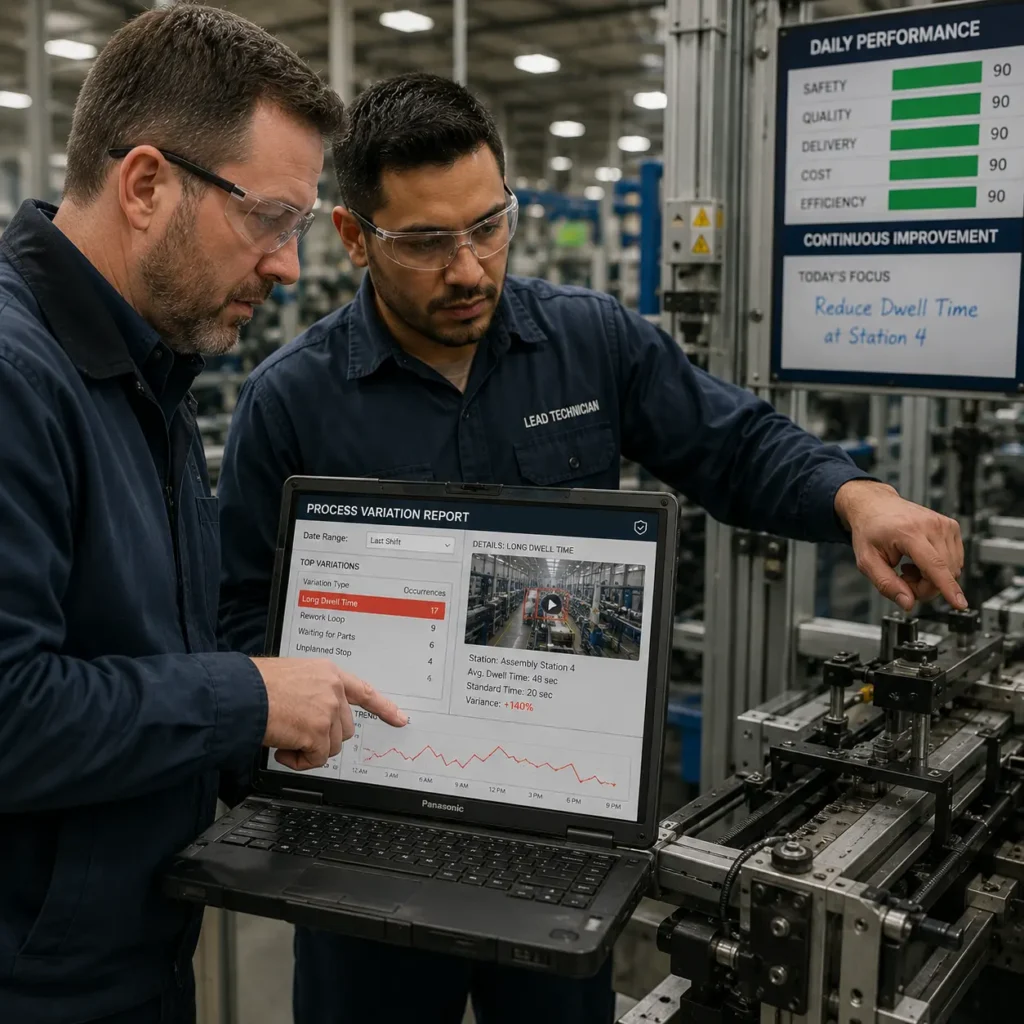
Visual Process Intelligence combines computer vision, operational analytics, and real-time monitoring to help organizations understand how processes unfold within physical environments.
Rather than simply recording events or reviewing performance after the fact, it enables organizations to continuously observe operational workflows and identify patterns that may affect performance.
This capability supports continuous improvement initiatives by providing objective operational evidence.
Key Areas Of Insight
- Workflow efficiency
- Process adherence
- Operational bottlenecks
- Safety compliance
- Resource utilization
- Quality control activities
- Facility performance trends
Compare Traditional Process Analysis And Visual Process Intelligence
Improvement Dimension | Traditional Analysis | Visual Process Intelligence |
Data Collection | Manual Observation | Continuous Monitoring |
Process Visibility | Limited Samples | Real-Time Visibility |
Root Cause Discovery | Retrospective Analysis | Live Operational Context |
Improvement Tracking | Periodic Reviews | Continuous Measurement |
Multi-Site Comparison | Difficult | Centralized Insights |
Organizations increasingly compare these approaches as complementary tools rather than replacements. Traditional analytics explains performance outcomes, while visual intelligence helps explain the operational activities behind those outcomes
Turning Everyday Operations Into Improvement Opportunities
One of the most significant advantages of Visual Process Intelligence is its ability to uncover improvement opportunities that may otherwise remain hidden.
Identifying Workflow Friction
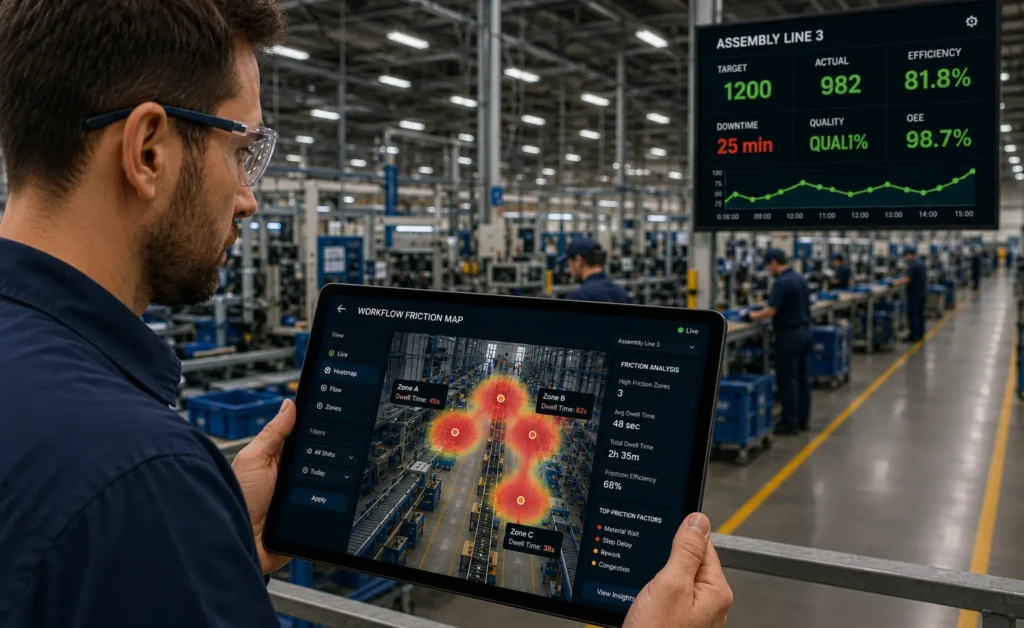
Small inefficiencies often accumulate over time. Visual monitoring can help reveal recurring interruptions, unnecessary movements, and process delays.
Detecting Process Variations
Organizations can identify where procedures are being executed differently across teams, shifts, or facilities.
Improving Compliance Consistency
Continuous visibility helps ensure operational standards are followed consistently rather than only during audit periods.
Supporting Lean Initiatives
Visual insights provide objective evidence that supports waste reduction, process optimization, and operational standardization programs.
Creating A Culture Of Continuous Improvement
Technology alone does not create operational excellence. Sustainable improvement requires a culture built around measurement, accountability, and learning.
Visual Process Intelligence supports this culture by providing teams with objective operational information that can be used to guide improvement discussions.
Instead of debating assumptions, teams can focus on observable evidence. Instead of reacting to incidents, they can identify emerging trends before performance is affected.
The Growing Importance Of Enterprise-Wide Visibility
As organizations expand across multiple facilities, maintaining consistent improvement practices becomes increasingly challenging.
Visual Process Intelligence enables leaders to compare operational performance across locations using a common framework for observation and analysis. This supports better decision-making while helping organizations scale improvement initiatives more effectively.
The ability to identify best practices, monitor compliance, and track process consistency across facilities creates a stronger foundation for enterprise-wide operational excellence.
How CAPASai Supports Visual Process Intelligence
Organizations seeking greater visibility into operational performance increasingly require tools that transform visual data into actionable insights. CAPASai supports this objective through AI-powered video analytics, remote monitoring capabilities, and real-time alerting systems that help enterprises identify workflow inefficiencies, monitor compliance, and improve operational awareness. By turning everyday operational activities into measurable intelligence, organizations can strengthen continuous improvement initiatives and make more informed decisions.