
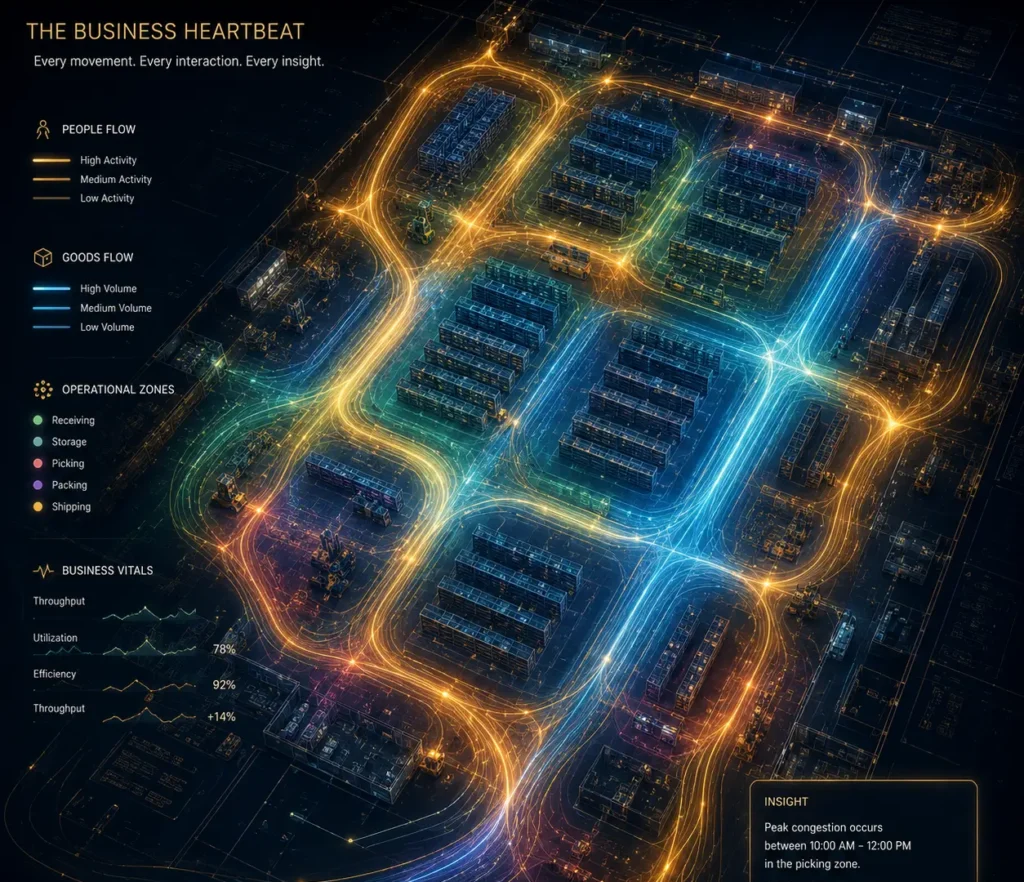
The Enterprise Asset Nobody Accounted For
Every organization understands the importance of information. Financial records guide investments. Customer data shapes marketing strategies. Operational metrics influence performance decisions. Over the years, businesses have invested heavily in systems designed to collect, organize, and analyze these valuable resources.
Yet one of the largest sources of enterprise knowledge remained largely overlooked.
Every day, warehouses, manufacturing plants, retail stores, logistics facilities, healthcare environments, and corporate campuses generate an enormous amount of visual activity. Employees perform tasks, equipment operates, goods move through supply chains, customers interact with services, and facilities adapt to changing conditions. These activities create a continuous stream of information about how a business actually functions.
For decades, most of this visual information existed only as archived footage. It was collected, stored, and rarely used unless a specific incident required investigation.
How Enterprise Information Has Evolved
The definition of valuable business information has changed significantly over time.
In earlier decades, organizations relied heavily on financial reporting to evaluate performance. Later, enterprise software transformed how businesses managed transactions, inventory, procurement, and planning. As digital channels expanded, customer data became one of the most valuable resources for understanding markets and consumer behavior.
Each stage introduced a new source of competitive advantage.
The Shift From Recorded Activity to Observable Reality
Traditional business systems are designed to record outcomes. They document transactions, sales figures, inventory movements, service records, and operational metrics.
It provides direct visibility into the activities that produce those outcomes.
Instead of simply showing what happened, visual data helps organizations understand how it happened. This distinction is becoming increasingly important as enterprises seek deeper insight into operational performance and business execution.
Why Physical Operations Matter More Than Ever
Many business decisions ultimately depend on activities occurring in the physical world.
Products are manufactured on production lines. Goods move through warehouses. Customers visit retail locations. Employees perform tasks across facilities and operational environments.
Understanding these activities has traditionally required observation, manual reviews, and periodic assessments. Visual data creates an opportunity to capture and analyze these environments at a scale that was previously difficult to achieve.
Visual Data Captures What Traditional Systems Cannot
Most enterprise technologies are designed around structured information.
A financial system records transactions. A CRM platform tracks customer interactions. A supply chain application monitors inventory and logistics events.
Visual information operates differently because it captures the environment itself.
Information Source | Primary Focus |
Financial Systems | Financial transactions |
ERP Platforms | Business processes and records |
CRM Systems | Customer relationships |
IoT Devices | Sensor-based measurements |
Visual Data | Activities, interactions, movement, and context |
This contextual understanding is what makes visual information uniquely valuable.
The Difference Between Data and Context
Organizations often possess large quantities of information but limited understanding of the circumstances surrounding that information.
A report may indicate that productivity changed. A dashboard may reveal a performance trend. A business application may highlight a shift in operational results.
Visual data provides context around these outcomes by helping organizations understand the conditions, activities, and interactions occurring within operational environments.
As enterprises seek greater clarity in decision-making, context is becoming just as valuable as the underlying data itself.
The Strategic Rise of Visual Intelligence
The growing importance of visual data is not simply a technology trend. It reflects a broader shift in how organizations think about enterprise knowledge.
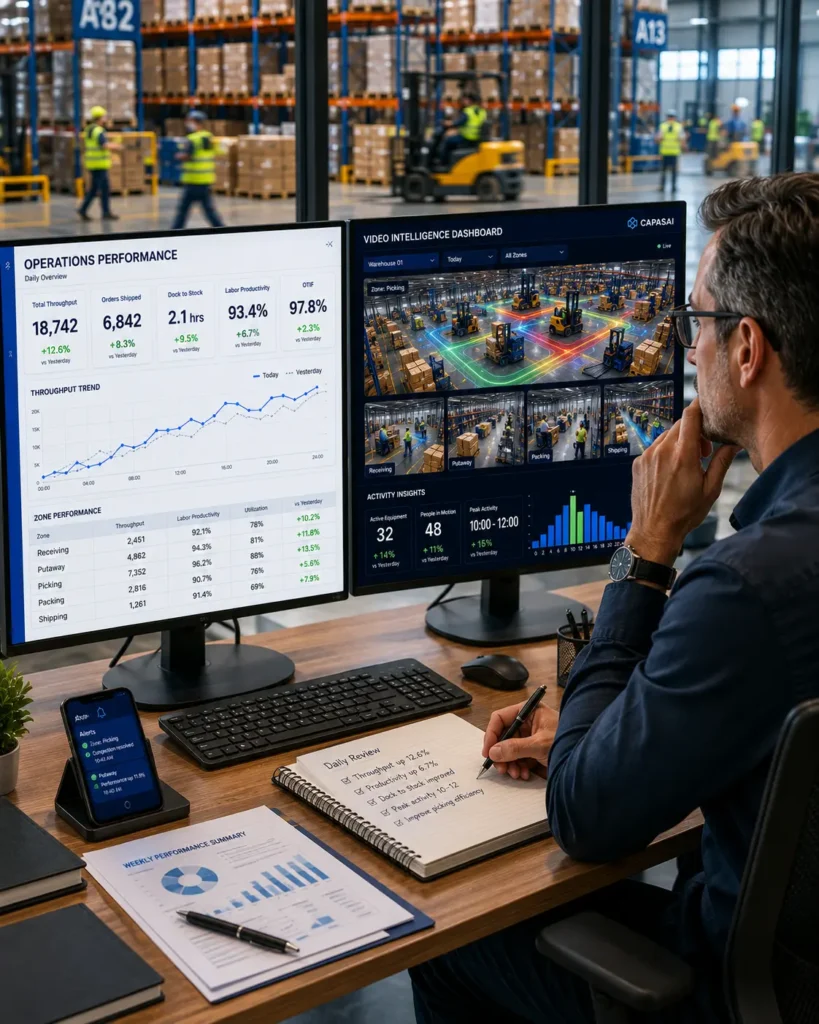
Beyond Security and Surveillance
Historically, visual systems were associated primarily with security functions.
Today, organizations are increasingly recognizing that visual information contains operational, commercial, and strategic value far beyond traditional surveillance purposes.
The same environments once observed solely for protection can now contribute insights that support business planning, operational analysis, resource allocation, and performance improvement initiatives.
Why Leadership Teams Are Paying Attention
Executives are under constant pressure to make decisions faster while managing increasingly complex operations.
As organizations expand across locations, facilities, and business functions, gaining a complete understanding of operational reality becomes more difficult.
By giving a more comprehensive picture of how business operations take place throughout the company, visual intelligence helps close this gap. It enables leaders to move beyond reports and metrics alone and gain a deeper appreciation of the operational environments that drive business outcomes.
The Next Chapter in Enterprise Information
For many years, competitive advantage was closely tied to the ability to collect and manage data. Today, the challenge is evolving.
Organizations are no longer asking whether they have enough information. Instead, they are asking whether they are extracting enough value from the information they already possess.
CAPASai helps organizations unlock the potential of visual data through AI-powered video analytics and intelligent insight generation. By transforming visual information into meaningful business intelligence, CAPASai enables enterprises to gain a deeper understanding of operations, resources, and business performance.
The next generation of enterprise intelligence may not come from collecting entirely new forms of data. It may come from recognizing the strategic value hidden within the visual information that organizations have been generating all along.