Why Human Errors Continue to Impact Business Performance
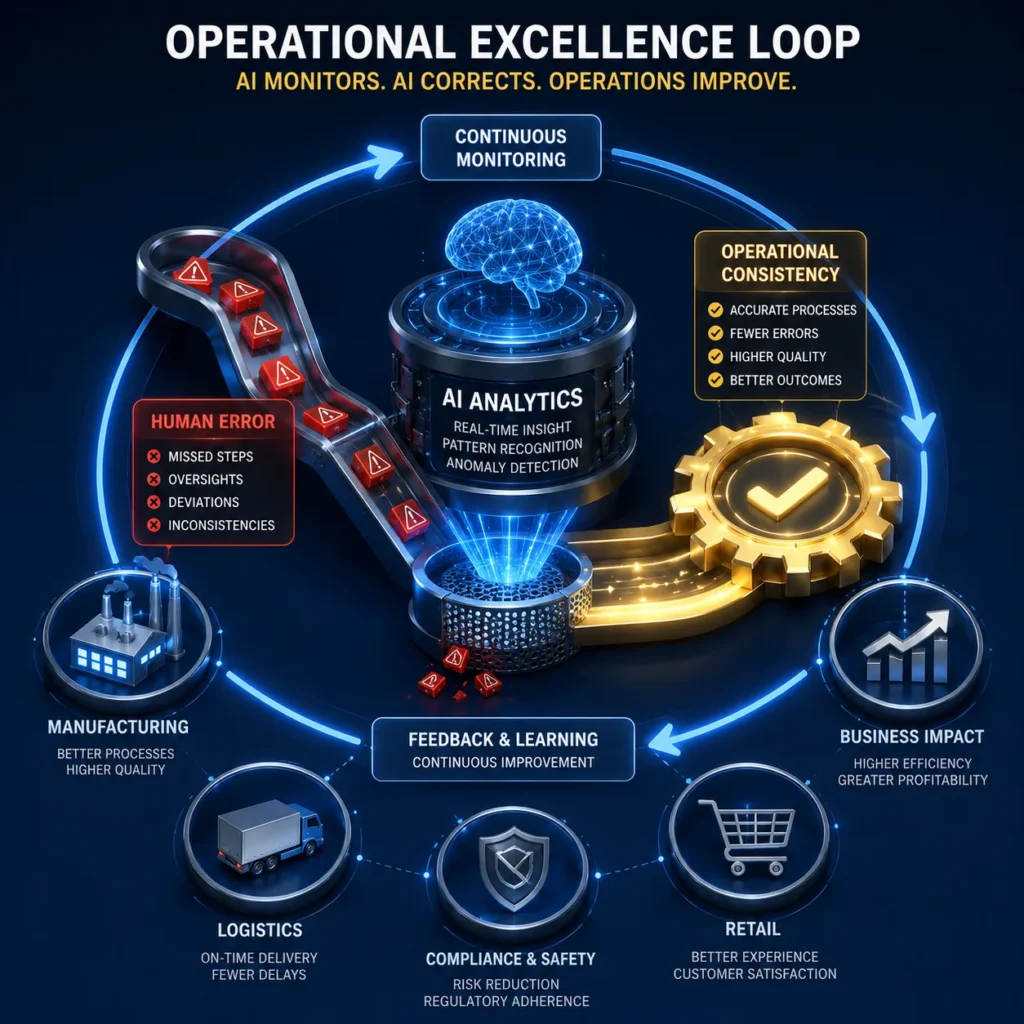
Human error remains one of the most common causes of operational disruptions, safety incidents, compliance violations, quality issues, and financial losses across industries. Even highly trained employees can overlook critical steps, miss safety procedures, forget compliance requirements, or make mistakes during repetitive tasks.
Organizations in manufacturing, pharmaceutical production, healthcare, retail, logistics, banking, construction, hospitality, and transportation face constant pressure to maintain operational consistency while managing complex workflows. As operations become larger and more distributed, relying solely on manual supervision becomes increasingly difficult.
Businesses are now exploring technologies that can help reduce operational mistakes before they escalate into larger problems.
The Challenges of Manual Monitoring and Supervision
Conventional operational monitoring frequently relies on employee self-reporting, audits, inspections, and supervisors. Although these techniques are still crucial, human limitations may have an impact.
Common challenges include:
- Missed safety violations
- Inconsistent SOP adherence
- Delayed incident reporting
- Inspection fatigue
- Limited visibility across multiple locations
- Errors during repetitive tasks
- Incomplete documentation
- Delayed corrective actions
In many cases, mistakes are only identified after they have already affected productivity, compliance, quality, or customer experience.
How CAPASai Helps Minimize Human Errors
CAPASai combines AI-powered video analytics, remote monitoring, and real-time alerting to continuously monitor operational activities through existing CCTV infrastructure.
Rather than relying entirely on manual observation, CAPASai automatically analyzes live video feeds to identify deviations, unsafe behaviors, compliance gaps, and operational anomalies as they occur.
CAPASai helps organizations:
- Detect errors in real time
- Improve SOP compliance
- Enhance workplace safety
- Support CAPA initiatives
- Reduce manual monitoring workloads
- Accelerate corrective actions
- Improve operational consistency
Retail chains, quick service restaurants, pharmaceutical manufacturing, manufacturing facilities, banking and BFSI, healthcare facilities, agricultural operations, dairy and meat processing, educational institutions, hospitality businesses, transportation networks, construction sites, utilities, smart cities, and e-commerce fulfilment centers are all supported by the platform.
Where Human Errors Commonly Occur
Safety Compliance
Workers may disregard safety protocols, enter prohibited places, or neglect necessary personal protective equipment.
Process Execution
It is possible for crucial operational procedures to be omitted, carried out erroneously, or out of order.
Quality Control
Inspection requirements and verification processes may be overlooked during busy operations.
Security Monitoring
Unauthorised access incidents or suspicious activity can go unreported.
Operational Oversight
Managers may struggle to continuously monitor multiple locations and large workforces.
How AI Video Analytics Reduces Human Error
Continuous Monitoring
AI systems monitor activities 24/7 without fatigue, distraction, or inconsistent attention.
Real-Time Alerts
Potential issues are identified immediately, allowing teams to respond quickly.
Automated SOP Verification
AI can verify whether employees follow established operational procedures.
Consistent Oversight
Every monitored area receives the same level of attention regardless of location or shift.
Objective Decision-Making
Relying less on presumptions and subjective observations is made possible by ideo-based evidence.
Human Monitoring vs AI-Assisted Monitoring
Traditional Monitoring | AI Video Analytics Monitoring |
Dependent on human attention | Continuous automated monitoring |
Subject to fatigue | Consistent performance |
Periodic inspections | Real-time detection |
Manual investigations | Automated event identification |
Reactive response | Proactive intervention |
Limited visibility | Continuous operational awareness |
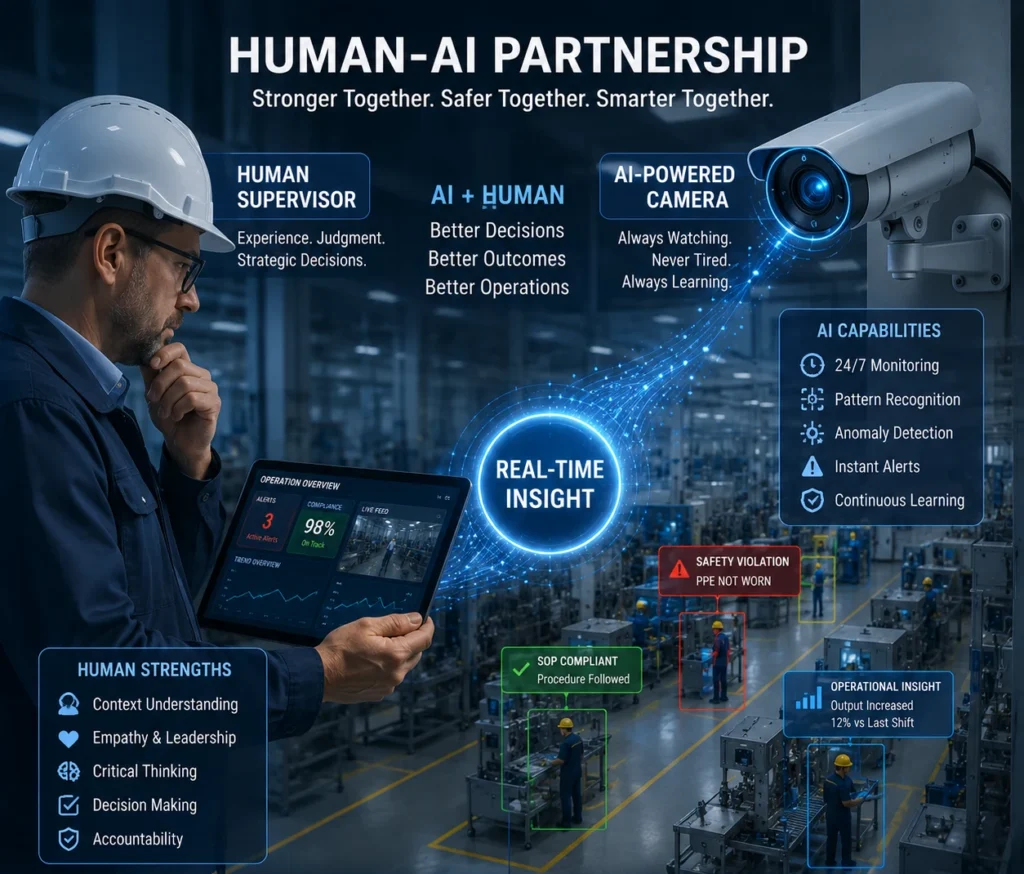
This combination of human expertise and AI assistance helps organizations improve
Industry Applications
Manufacturing Plants
Identify dangerous behaviours, process deviations, PPE infractions, and workflow interruptions.
Pharmaceutical Manufacturing
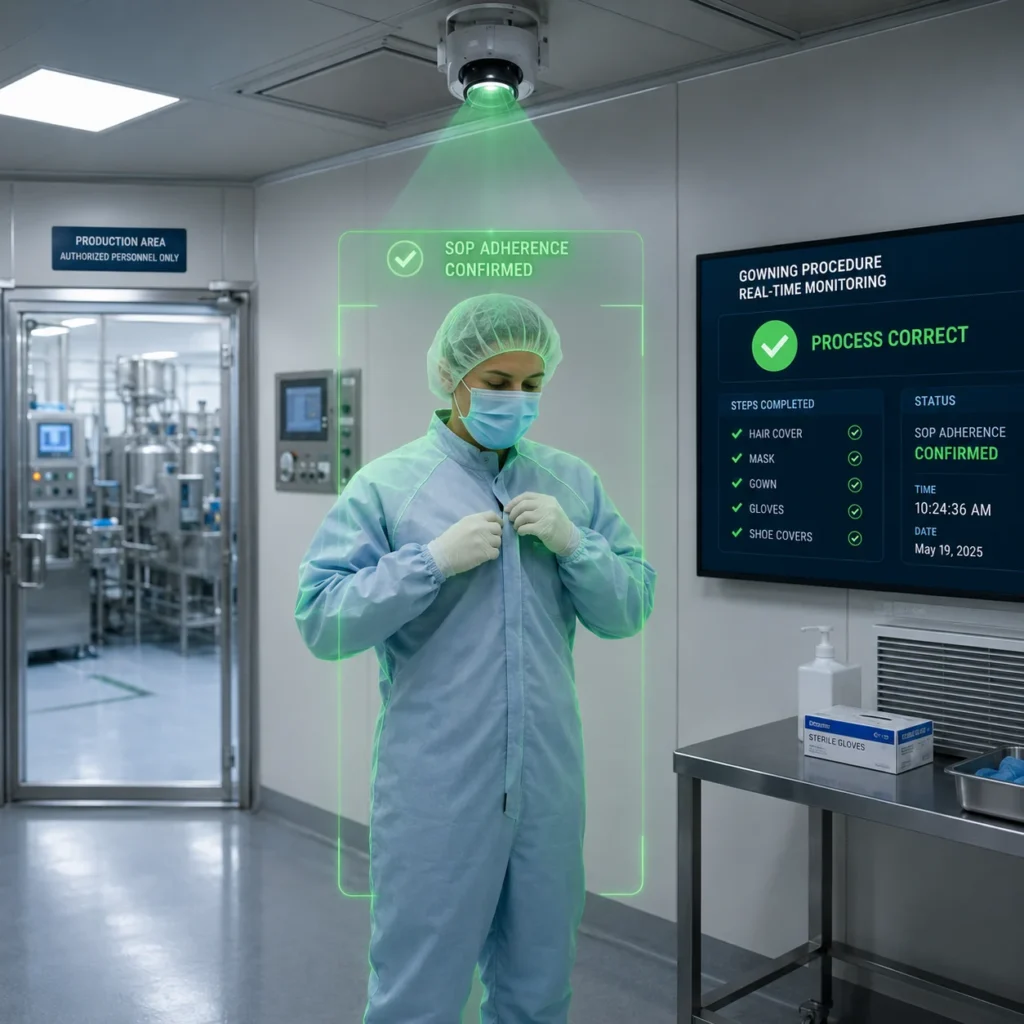
Monitor hygiene procedures, gowning compliance, and GMP-related activities.
Retail Chains & QSRs
Improve operational consistency, customer service compliance, and loss prevention.
Healthcare & Hospitals
Keep an eye on protocol adherence, limited access zones, and safety measures.
Logistics & Warehousing
Track forklift safety, loading procedures, pedestrian zones, and inventory handling.
Banking & BFSI
Improve branch oversight and identify operational anomalies more quickly.
How AI Supports CAPA and Continuous Improvement
Reducing human error is an important part of effective CAPA programs.
AI video analytics helps organizations:
Identify Deviations Early
Issues can be detected before they become larger operational problems.
Capture Objective Evidence
Video-based documentation supports investigations and audits.
Accelerate Root Cause Analysis
Relevant events can be located quickly without extensive manual review.
Prevent Recurring Issues
Continuous monitoring helps identify patterns and recurring process weaknesses.
Why Organizations Are Investing in AI-Powered Monitoring
Businesses increasingly recognize that preventing errors is more cost-effective than correcting them later.
AI-powered video analytics helps organizations:
- Improve operational accuracy
- Strengthen compliance programs
- Enhance workplace safety
- Reduce operational risks
- Improve workforce accountability
- Support quality initiatives
- Drive continuous improvement
By transforming CCTV systems into intelligent monitoring tools, organizations can reduce avoidable mistakes while improving efficiency, compliance, and overall operational performance.