
The Most Underutilized Technology in the Enterprise
Walk through almost any large enterprise and one technology is impossible to miss. Cameras are mounted in warehouses, production facilities, retail stores, logistics hubs, corporate campuses, and distribution centers. Over the years, organizations have invested heavily in CCTV infrastructure to improve security, reduce risk, and support investigations.
Yet despite this widespread deployment, most cameras continue to serve a remarkably limited purpose.
In many organizations, video footage is only reviewed when something goes wrong. A security incident occurs, an investigation is launched, or management needs to verify a specific event. Outside these situations, vast amounts of visual information remain untouched.
This creates an interesting business challenge. Enterprises already possess an extensive network of devices that continuously observe operations, but very little of that information contributes to everyday decision-making.
The question is no longer whether cameras are valuable. The question is whether organizations are extracting their full value.
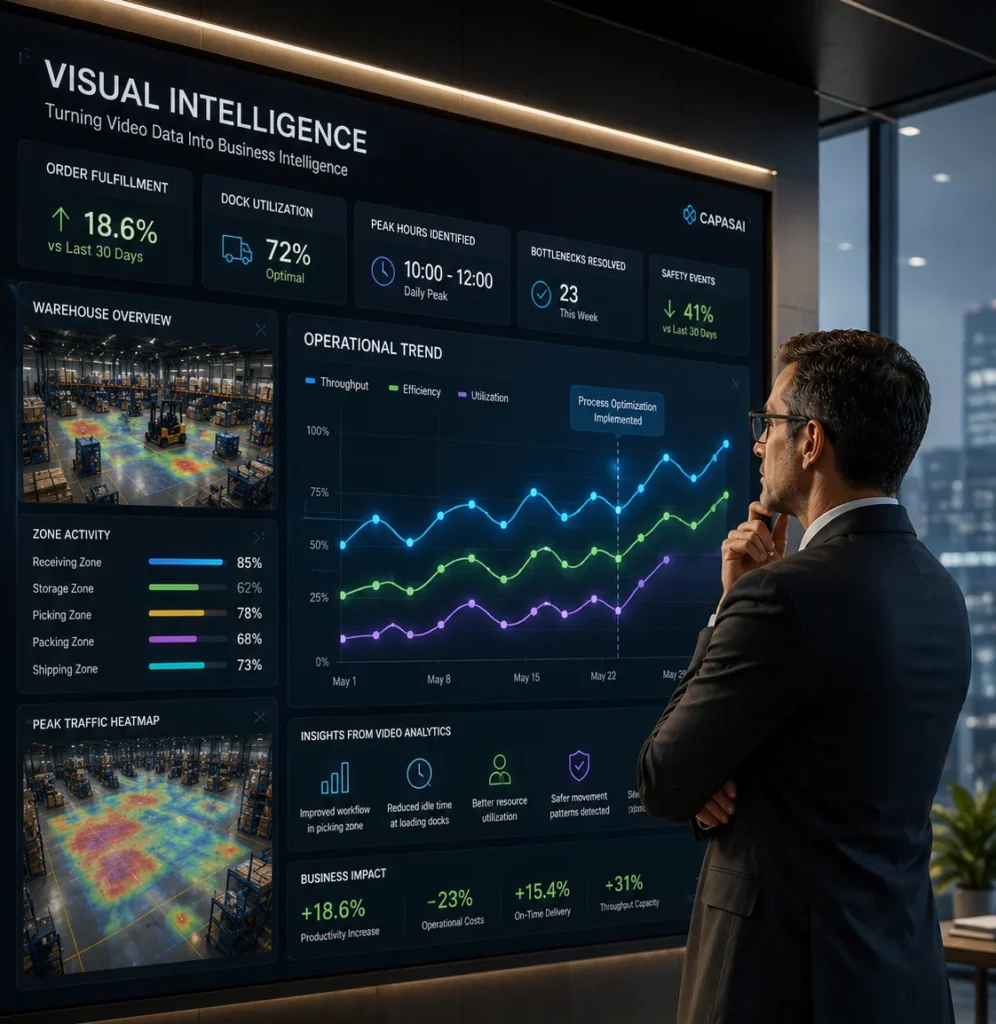
CCTV Was Designed to Record Events, Not Interpret Them
For decades, the role of CCTV remained relatively unchanged. Cameras captured footage, stored recordings, and provided evidence when required.
This model worked well for security purposes, but it created an important limitation. While cameras could see operational activities, they could not explain what those activities meant.
The Problem with Manual Video Review
A large enterprise may generate thousands of hours of footage every day. Reviewing that volume of video manually is neither practical nor scalable.
As a result, most operational activities captured by cameras are never analyzed. Valuable information about workflows, facility utilization, equipment activity, customer interactions, and operational trends often remains locked inside video archives.
The organization owns the data but rarely benefits from the intelligence hidden within it.
When Visual Information Becomes Invisible
Ironically, enterprises often invest in systems that can observe nearly everything while still struggling to understand what is happening across operations.
The issue is not a lack of visibility. It is the inability to convert visual observations into meaningful business information.
What Changes When AI Learns to Understand Visual Data
Artificial intelligence introduces a fundamentally different approach to enterprise video systems.
Instead of simply recording activities, AI can analyze visual environments and identify patterns, movements, behaviors, and operational events at a scale that would be impossible through manual review alone.
From Video Footage to Operational Signals
Every operational environment generates visual activity. Employees move through facilities. Equipment operates continuously. Inventory flows through warehouses. Customers interact with stores and service locations.
When AI interprets these activities, cameras become more than recording devices. They become sources of operational signals that help organizations better understand how their business functions.
What Cameras Observe | Potential Business Insight |
Workforce movement | Workflow and productivity trends |
Equipment activity | Asset utilization patterns |
Facility occupancy | Space utilization insights |
Customer movement | Service and engagement indicators |
Vehicle traffic | Logistics and transportation visibility |
The value does not come from the footage itself. It comes from the ability to transform observations into usable intelligence.
Creating Context from Everyday Operations
Many operational decisions are based on reports, metrics, and periodic reviews. AI-powered video analytics introduces an additional layer of context by helping organizations understand the physical activities behind those numbers.
Rather than relying exclusively on summaries, leaders gain access to information derived directly from operational environments.
The Rise of Visual Business Intelligence
As enterprises continue searching for new sources of competitive advantage, visual data is emerging as an increasingly valuable business resource.
Unlocking Value from Existing Infrastructure
One of the most attractive aspects of AI-powered video analytics is that organizations often do not need to replace existing camera systems.
Instead, they can build additional value on top of infrastructure that is already installed throughout their facilities.
This changes the conversation from technology replacement to technology enhancement.
What was once viewed primarily as a security investment can begin contributing to operational awareness, business analysis, and strategic decision-making.
A New Perspective on Enterprise Assets
Historically, cameras were categorized as security tools. Today, many organizations are beginning to view them differently.
When visual data can be analyzed, interpreted, and connected to business objectives, CCTV infrastructure becomes part of a broader intelligence ecosystem.
The same cameras that once served only as observers can become contributors to operational understanding.
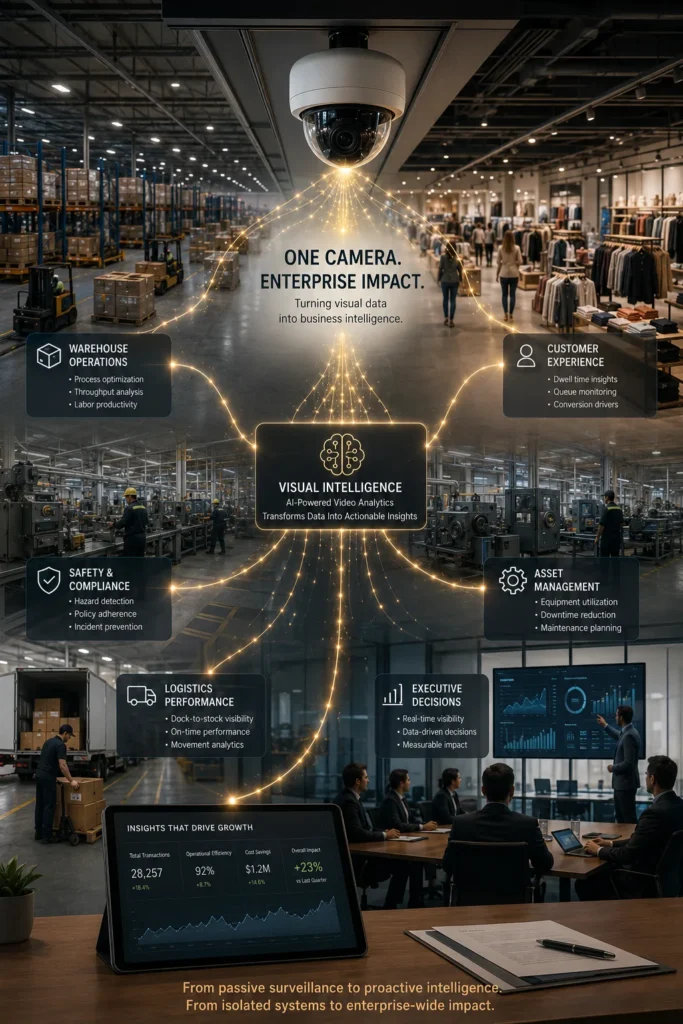
Extracting More Value from What Already Exists
Many organizations approach business improvement by searching for new systems, new technologies, and new investments.
However, some of the most valuable opportunities may already be present within existing infrastructure.
CAPASai helps organizations transform CCTV networks into business intelligence assets through AI-powered video analytics and intelligent insight generation. By converting visual observations into actionable information, organizations can unlock greater value from systems they already own while improving operational understanding across facilities.
The future of business intelligence is not always about collecting more data. Sometimes it is about discovering the value hidden within data that has been there all along.