Following the rules is no longer the only aspect of compliance.
Most organizations invest significant effort in developing policies, training employees, conducting inspections, and establishing operational controls. Yet when an audit, investigation, customer inquiry, or regulatory review occurs, a critical question inevitably emerges:
Can the organization prove that the required process was followed?
For years, compliance programs have focused primarily on establishing rules and encouraging adherence. Increasingly, however, regulators, customers, auditors, and internal stakeholders are placing equal importance on verification. It is no longer sufficient to state that a procedure exists or that employees have been trained to follow it. Organizations are expected to demonstrate evidence that standards are consistently being applied in day-to-day operations.
This shift is driving a new approach to compliance management—one that places digital evidence at the center of operational accountability.
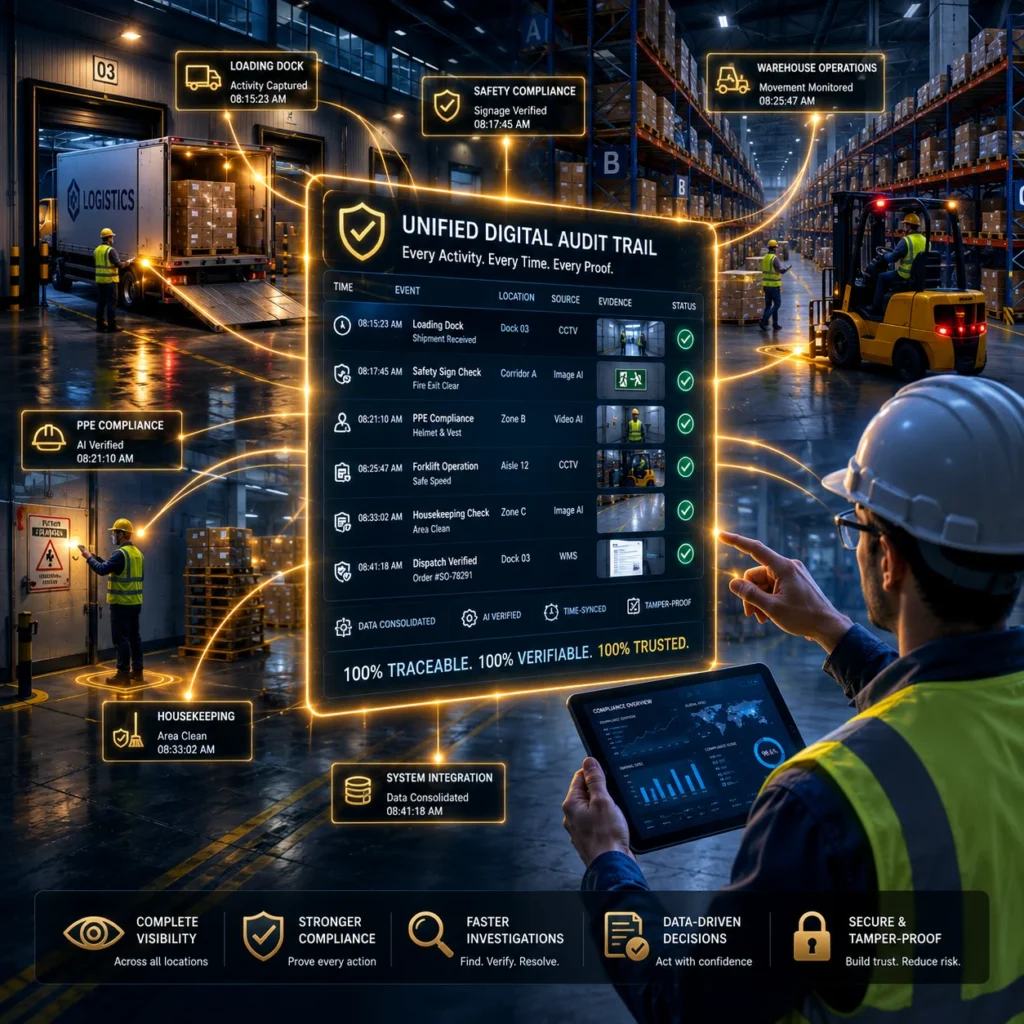
Following the rules is no longer the only aspect of compliance.
Most organizations invest significant effort in developing policies, training employees, conducting inspections, and establishing operational controls. Yet when an audit, investigation, customer inquiry, or regulatory review occurs, a critical question inevitably emerges:
Can the organization prove that the required process was followed?
For years, compliance programs have focused primarily on establishing rules and encouraging adherence. Increasingly, however, regulators, customers, auditors, and internal stakeholders are placing equal importance on verification. It is no longer sufficient to state that a procedure exists or that employees have been trained to follow it. Organizations are expected to demonstrate evidence that standards are consistently being applied in day-to-day operations.
This shift is driving a new approach to compliance management—one that places digital evidence at the center of operational accountability.
The Growing Challenge of Proving Compliance
In many enterprises, compliance records are scattered across multiple systems. Audit checklists may exist in spreadsheets. Inspection records may be stored in paper files. Incident reports may reside in separate applications. Operational activities themselves often leave little verifiable evidence beyond written statements or supervisor observations.
The result is a common problem faced by compliance teams across industries: proving what actually happened can be far more difficult than defining what should have happened.
Consider a manufacturing facility investigating a safety incident. A logistics company reviewing adherence to loading procedures. A shopkeeper handling a complaint from a consumer. In each case, the discussion quickly moves beyond policies and enters the realm of evidence.
Questions begin to surface:
- Was the required process followed?
- Who performed the activity?
- When did it occur?
- Were standards consistently applied?
- Is there objective proof available?
The ability to answer these questions accurately often determines the effectiveness of compliance programs.
Why Traditional Evidence Collection Creates Gaps
Historically, organizations have relied on periodic documentation to create compliance records. While documentation remains important, it often captures only a small portion of operational reality.
Traditional Evidence Sources | Common Limitations |
Audit checklists | Point-in-time verification |
Supervisor observations | Limited coverage |
Employee sign-offs | Depend on manual reporting |
Inspection reports | Periodic rather than continuous |
Incident records | Created after issues occur |
These methods can establish that reviews took place, but they may not always provide comprehensive visibility into what occurred between inspections.
As organizations become larger and more distributed, maintaining complete and reliable evidence trails becomes increasingly difficult.
The Emergence of Digital Evidence
Digital evidence introduces a fundamentally different approach.
Rather than relying exclusively on retrospective documentation, organizations can create objective records directly from operational activities. Cameras, intelligent monitoring systems, workflow applications, sensor networks, and automated verification technologies collectively generate evidence that can support compliance validation.
This evolution is changing how organizations think about accountability.
Instead of asking teams to reconstruct events after an incident, businesses can increasingly access records that capture operational activity as it occurred.
The significance extends beyond audits. Digital evidence can support investigations, process improvement initiatives, operational reviews, training programs, customer dispute resolution, and risk management efforts.
Most importantly, it creates a more objective foundation for decision-making.
From Assumption to Verification
One of the most important benefits of digital evidence is the reduction of uncertainty.
Traditional compliance models often rely on assumptions:
- The process was probably followed.
- The inspection was likely completed.
- The procedure appears to have been performed correctly.
Digital evidence enables organizations to move closer to verification.
This does not mean every activity must be reviewed manually. Instead, organizations gain access to documented records that can be retrieved when needed, helping teams validate events, investigate exceptions, and demonstrate compliance more effectively.
As operational complexity continues to increase, this capability is becoming a strategic advantage rather than simply a compliance requirement.
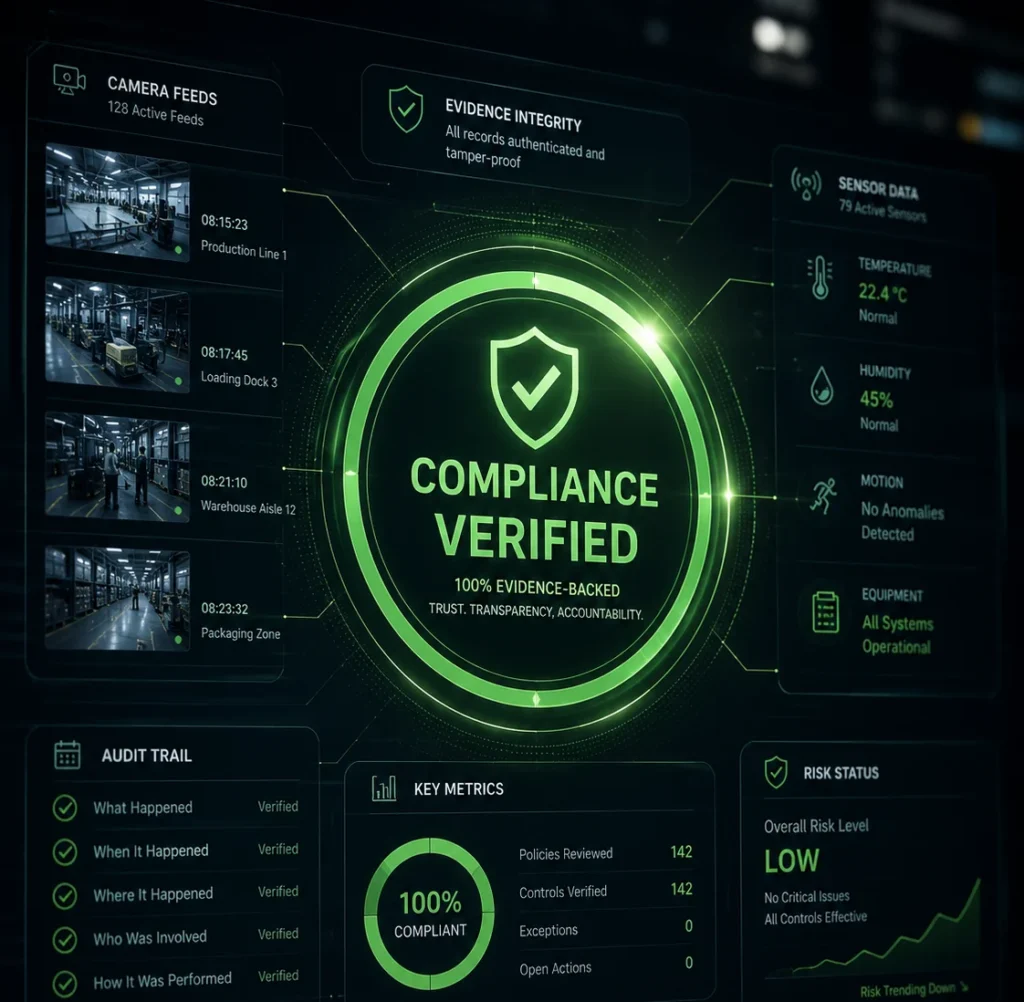
From Assumption to Verification
One of the most important benefits of digital evidence is the reduction of uncertainty.
Traditional compliance models often rely on assumptions:
- The process was probably followed.
- The inspection was likely completed.
- The procedure appears to have been performed correctly.
Digital evidence enables organizations to move closer to verification.
This does not mean every activity must be reviewed manually. Instead, organizations gain access to documented records that can be retrieved when needed, helping teams validate events, investigate exceptions, and demonstrate compliance more effectively.
As operational complexity continues to increase, this capability is becoming a strategic advantage rather than simply a compliance requirement.
Building the Evidence-Driven Enterprise
Forward-looking organizations are beginning to view compliance as more than a reporting function. They are building environments where evidence is generated naturally as part of everyday operations.
In this model:
- Critical activities create verifiable records.
- Operational events become traceable.
- Investigations become faster.
- Compliance reviews become more objective.
- Leadership gains greater confidence in reported performance.
The objective is not to gather additional information. The goal is to create trustworthy evidence that supports better decisions and stronger accountability across the organization.
CAPASai supports this approach through AI-powered video analytics, remote monitoring, and intelligent event detection capabilities. By leveraging existing CCTV infrastructure, CAPASai helps organizations generate operational evidence, improve traceability, and strengthen compliance verification across distributed facilities.