Audits Were Designed for a Different Era
For decades, compliance audits have served as the primary mechanism for verifying whether organizations follow established policies, regulatory requirements, and operational standards. The process has remained largely unchanged across industries. Auditors review records, inspect facilities, interview personnel, and evaluate selected samples of operational activity to determine whether compliance requirements are being met.
This approach has worked reasonably well in environments where operations were relatively centralized and business processes changed at a manageable pace. Today, however, organizations operate across dozens or even hundreds of locations, process thousands of transactions daily, and manage increasingly complex operational requirements. The scale of modern enterprise activity has created a challenge that traditional auditing was never designed to solve.
An audit offers a perspective on what transpired. Seldom does it give a full picture of the current situation.
As operational environments become faster and more interconnected, organizations are beginning to ask whether periodic inspections alone can provide the level of assurance they need.
Why Compliance Is Moving Beyond Periodic Reviews
The transition from retrospective review to continuous awareness is one of the biggest transformations taking place in business operations. Business leaders increasingly recognize that risks, deviations, and operational inconsistencies do not emerge only during audit periods. They develop gradually through everyday activities that often go unnoticed until they create measurable consequences.
Consider a large logistics network operating across multiple facilities. A minor deviation from an approved process may occur dozens of times before an auditor observes it. A manufacturing plant may experience inconsistent adherence to safety procedures between shifts without triggering immediate concern. A retail organization may unknowingly develop operational variations between locations that affect customer experience and compliance performance.
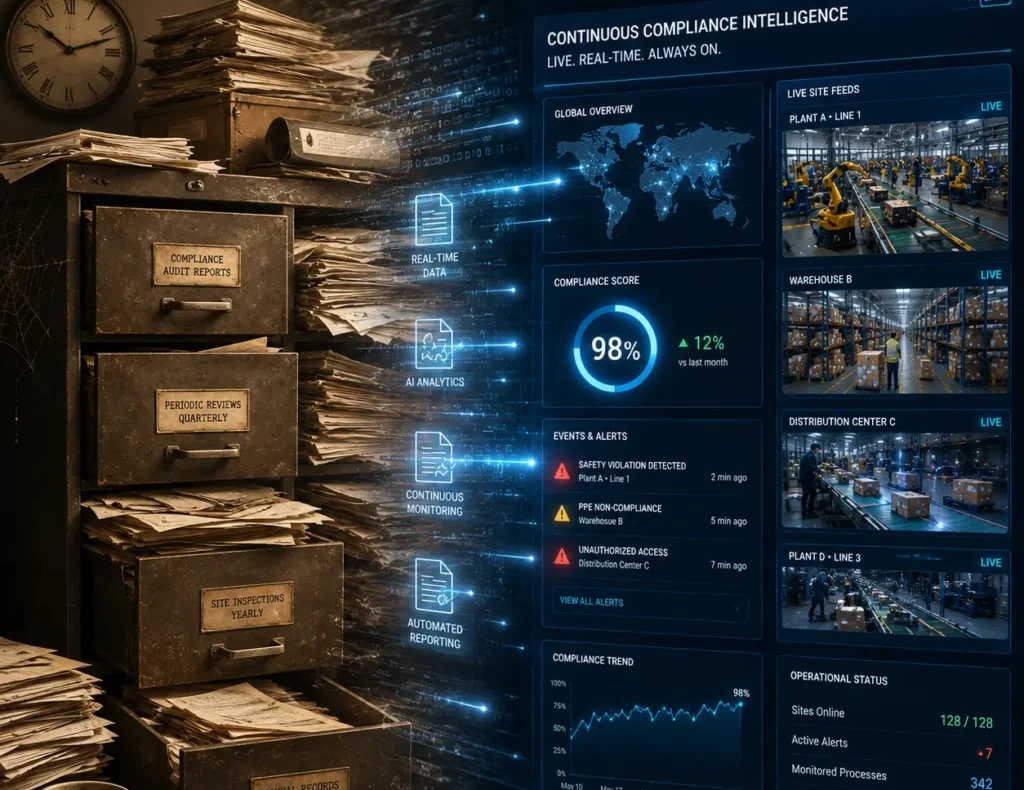
Continuous AI monitoring introduces a different model. Instead of waiting for scheduled inspections, organizations gain the ability to evaluate operational activities as they occur. This creates an environment where compliance becomes an ongoing operational function rather than a periodic event.
The change is comparable to how cybersecurity has developed. Annual security checks are no longer the only method used by organisations. Because dangers are constantly changing, they keep an eye on systems. The similar approach is starting to be taken by compliance management.
What Continuous AI Monitoring Changes
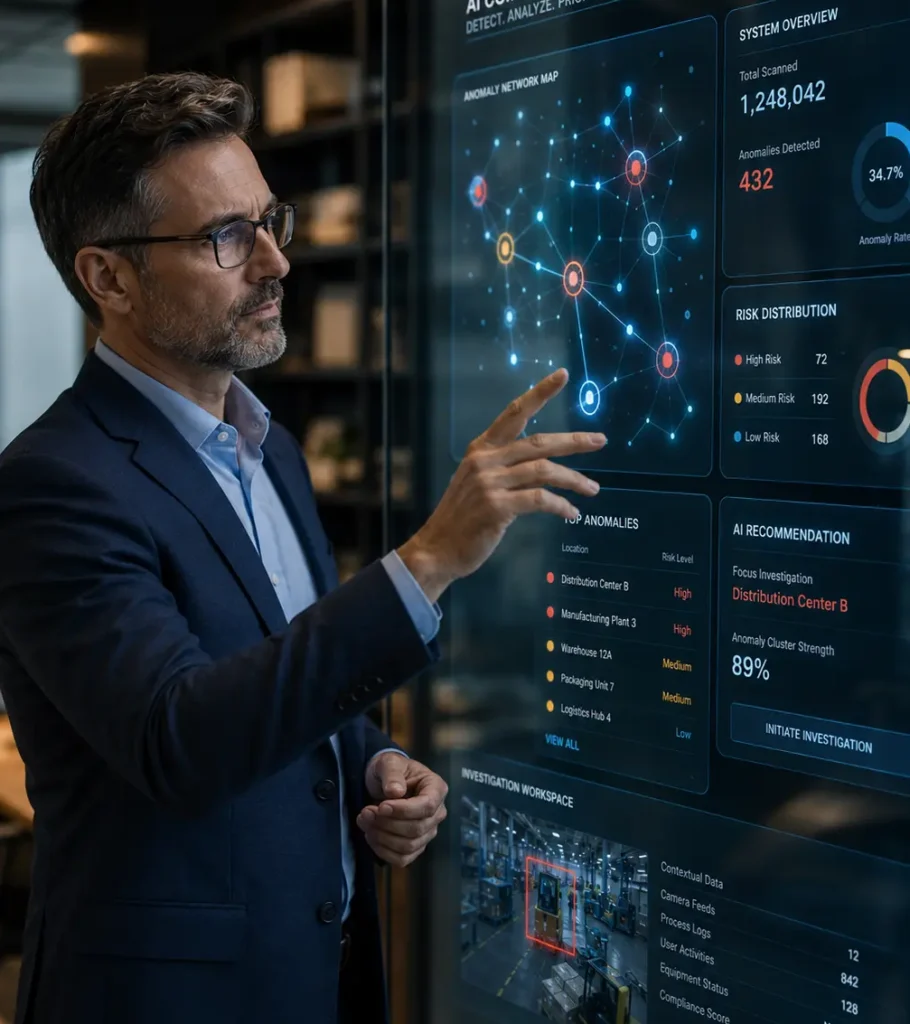
The most important contribution of AI is not automation alone. Its value comes from the ability to process information at a scale that would be impractical through human observation.
Modern facilities already generate enormous amounts of operational data. Cameras observe workflows, employees interact with systems, and business processes leave digital footprints throughout the day. Historically, much of this information remained unused because reviewing it manually required significant time and resources.
AI-powered monitoring changes that equation.
Organisations can assess wider operational patterns instead than focusing on tiny samples of activity. They can find particular exceptions that need to be addressed rather than depending on haphazard checks. Rather than reviewing incidents after they occur, they can gain earlier visibility into developing risks.
The difference can be illustrated through the following comparison:
Traditional Audit Model | Continuous AI Monitoring Model |
Periodic inspections | Ongoing verification |
Sample-based reviews | Broader operational coverage |
Manual evidence collection | Automated evidence generation |
Delayed issue identification | Earlier exception detection |
Limited visibility between audits | Continuous operational awareness |
The Emerging Role of the Human Auditor
A common misconception is that AI monitoring will eventually replace compliance professionals. In reality, the future audit model is likely to become more collaborative rather than fully automated.
AI can identify anomalies, monitor process adherence, and surface exceptions. Human judgement is something it finds difficult to imitate.
Compliance professionals understand organizational context. They evaluate intent, assess business impact, interpret policies, and determine appropriate corrective actions. These responsibilities require experience, critical thinking, and organizational understanding that remain difficult to automate.
The future auditor may spend less time conducting routine inspections and more time investigating complex issues, validating findings, and guiding operational improvements. In many ways, AI is positioned to become a force multiplier for compliance teams rather than a replacement.
Building a More Proactive Compliance Framework
The future of compliance audits is not about conducting more audits. The objective is to boost confidence in between audits.
Continuous AI monitoring allows organizations to move beyond isolated compliance checkpoints and toward a model of ongoing operational verification. This approach helps reduce blind spots, improve consistency, and provide leadership with a clearer understanding of how standards are being followed across multiple locations.
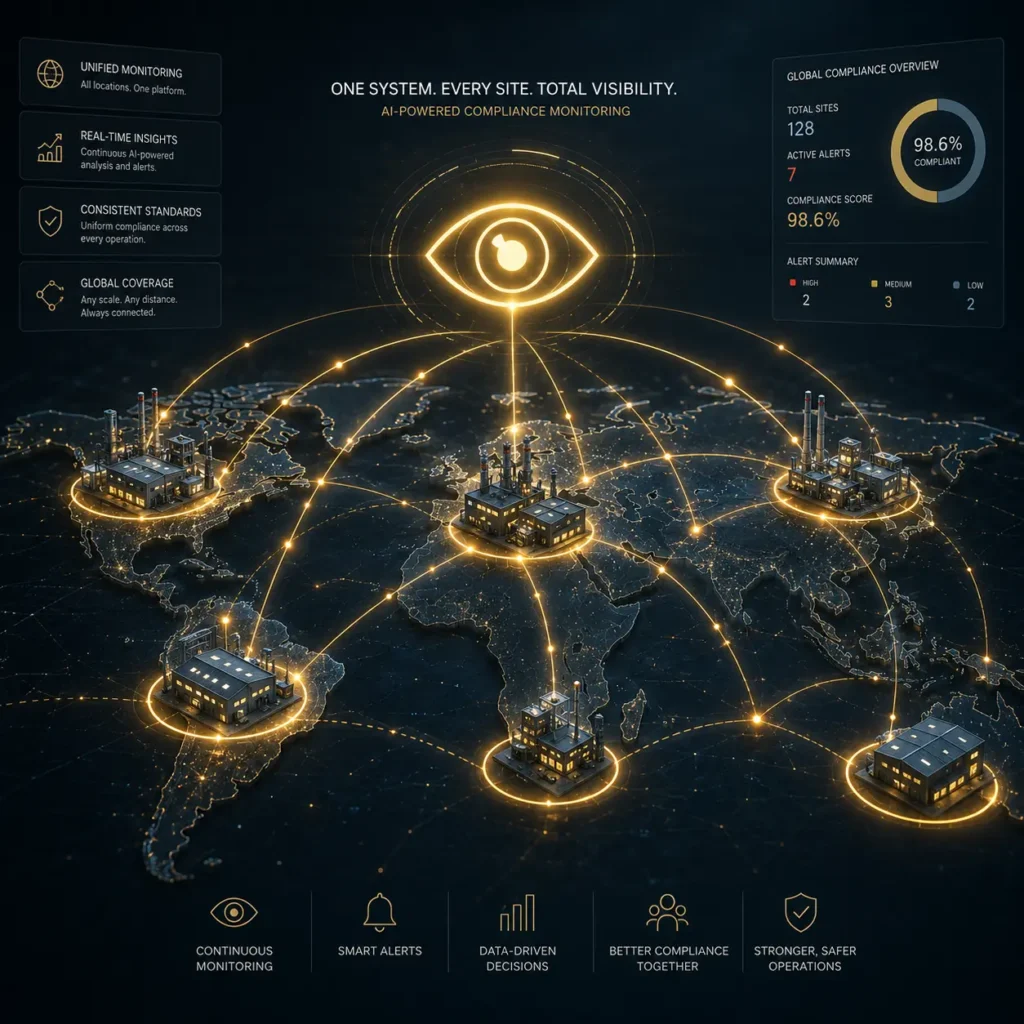
With its AI-powered video analytics, remote monitoring, and intelligent alerting features, CAPASai facilitates this transition. CAPASai enables businesses identify process irregularities, improve compliance assurance across dispersed operations, and obtain continuous visibility into operational activities by utilising existing CCTV infrastructure.
As enterprises continue to expand and operational complexity increases, the organizations that succeed will not simply be those that audit effectively. They will be those that create continuous confidence in how their standards are executed every day.