Why Traditional CCTV Monitoring No Longer Meets Modern Business Needs
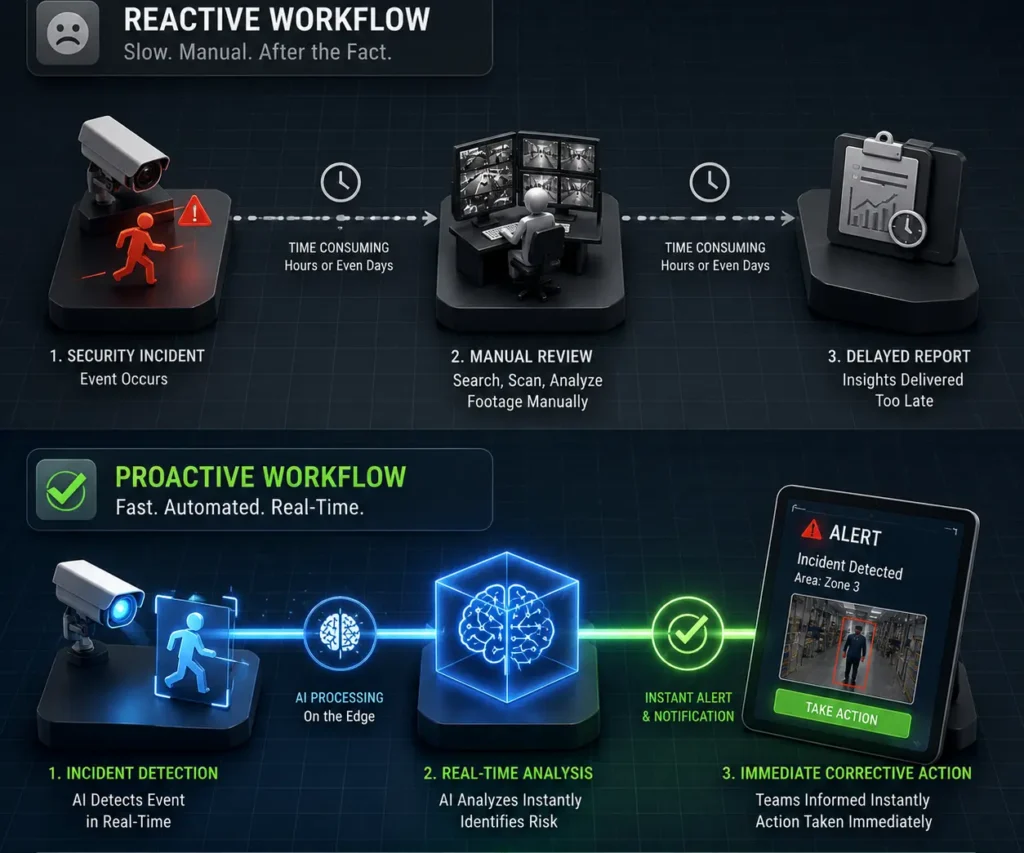
For decades, organizations have relied on CCTV systems primarily as surveillance tools. Cameras were installed to record activities, deter security threats, and provide footage for investigations after incidents occurred. While this approach helped improve security, it often left businesses operating in a reactive mode, where valuable information was only discovered after a problem had already impacted operations.
Organisations in a variety of industries, including manufacturing, retail, healthcare, logistics, finance, education, hospitality, and critical infrastructure, are under growing pressure to increase productivity, bolster compliance, improve workplace safety, and make operational choices more quickly. It is no longer sufficient to just record video. These days, businesses require solutions that enable them to comprehend real-time events.
This growing demand is driving the transition from passive surveillance to operational intelligence powered by AI video analytics.
The Hidden Limitations of Passive Surveillance Systems
Traditional CCTV systems generate vast amounts of footage, but much of that data remains unused unless an incident triggers a manual investigation.
Common challenges include:
- Hours spent reviewing recorded footage
- Delayed identification of operational issues
- Limited visibility into compliance violations
- Reactive incident management
- Missed safety risks
- Inconsistent monitoring across facilities
- Lack of actionable business insights
- Difficulty scaling oversight across multiple locations
As organizations expand, relying solely on human observation becomes increasingly inefficient.
How CAPASai Converts Video into Operational Intelligence
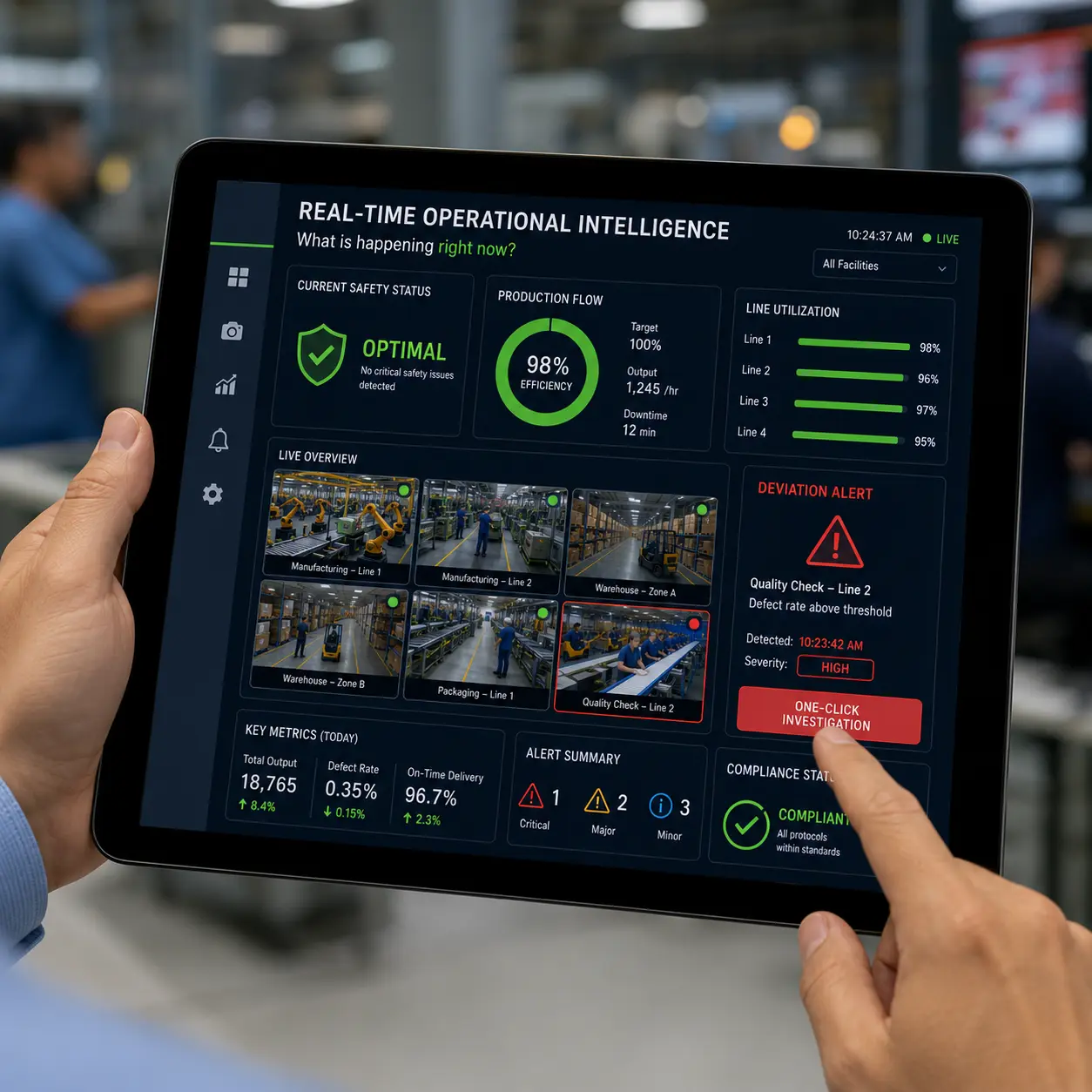
CAPASai helps organizations unlock greater value from existing CCTV infrastructure through AI-powered video analytics, remote monitoring, and real-time alerts.
Instead of simply recording activities, CAPASai continuously analyzes video streams to identify operational events, compliance deviations, safety concerns, process bottlenecks, and security incidents as they occur.
CAPASai enables organizations to:
- Gain real-time operational visibility
- Detect incidents automatically
- Improve compliance monitoring
- Support CAPA initiatives
- Reduce manual surveillance efforts
- Accelerate investigations
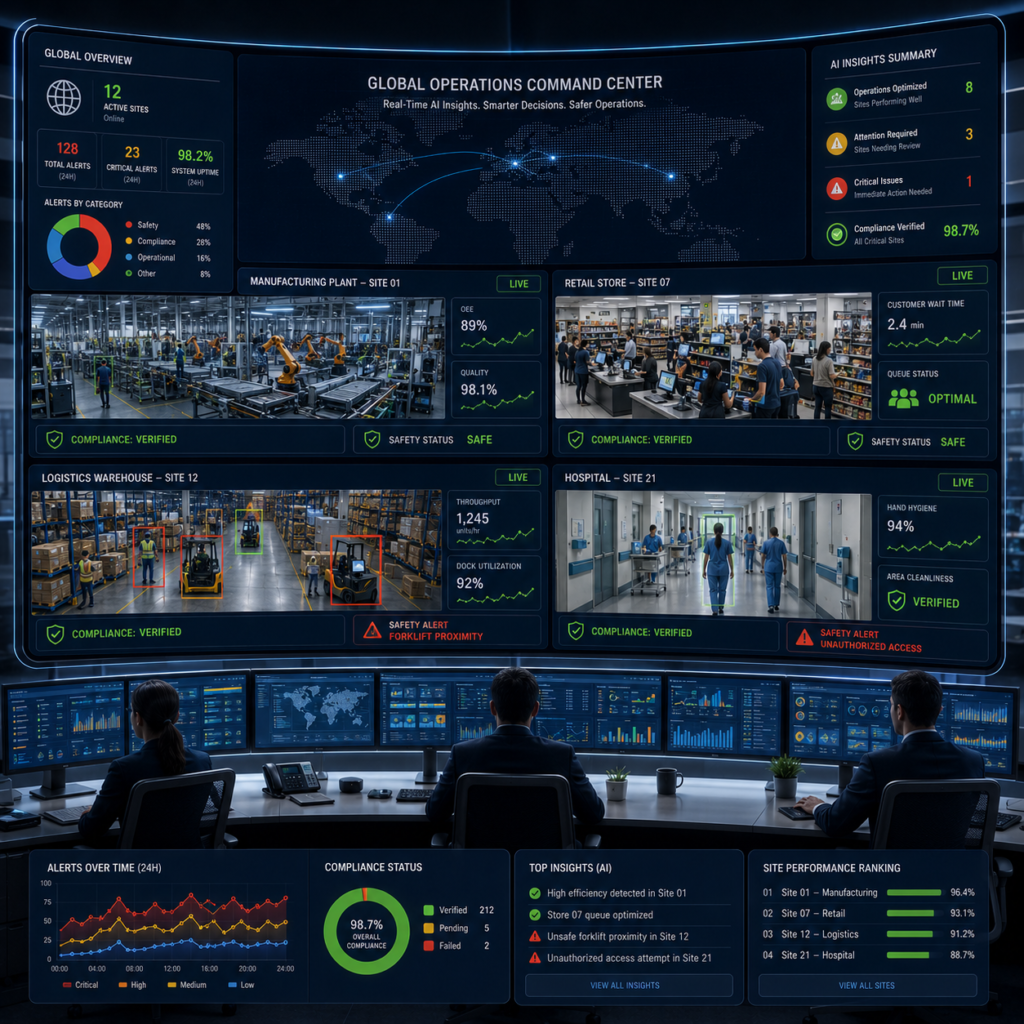
- Keep an eye on several locations from a single platform
The solution supports retail chains, quick service restaurants, pharmaceutical manufacturing, manufacturing plants, banking & BFSI, healthcare facilities, agriculture operations, dairy processing, meat processing, construction sites, educational institutions, transportation networks, hospitality businesses, utilities, smart cities, and e-commerce fulfillment centers.
What Is Operational Intelligence in Video Analytics?
Operational intelligence refers to the ability to transform video data into meaningful insights that support business decisions.
Rather than simply answering:
“What happened?”
Organizations can begin answering:
- What is happening right now?
- Where are operational risks developing?
- Which processes require attention?
- Are compliance procedures being followed?
- Where can efficiency be improved?
This shift allows CCTV systems to become active contributors to operational performance.
Passive Surveillance vs Operational Intelligence
Traditional Surveillance | Operational Intelligence |
Records activities | Interprets activities |
Reactive investigations | Real-time awareness |
Manual video review | Automated detection |
Security-focused | Operations-focused |
Historical evidence | Actionable insights |
Limited business value | Continuous intelligence |
The result is a more proactive approach to managing operations.
Industry Applications
Manufacturing Plants
Monitor production workflows, safety compliance, equipment utilization, and process adherence.
Pharmaceutical Manufacturing
Support GMP compliance, hygiene monitoring, and deviation detection.
Retail Chains & QSRs
Track operational consistency, customer service standards, and store compliance.
Healthcare & Hospitals
Boost understanding of operational procedures, restricted-area access, and safety regulations.
Logistics & Warehousing
Monitor loading activities, forklift safety, inventory movement, and workforce operations.
Banking & BFSI
Enhance branch oversight and improve incident response capabilities.
How AI Video Analytics Creates Business Value
Organizations increasingly use AI-driven monitoring to support broader operational objectives.
Key benefits include:
Faster Decision-Making
Teams can react before problems worsen thanks to real-time warnings.
Improved Compliance Visibility
Continuous monitoring helps identify procedural deviations.
Enhanced Workplace Safety
Early detection of potential hazards reduces exposure to incidents.
Better Resource Utilization
Managers gain insights into operational workflows and bottlenecks.
Stronger CAPA Support
Video-based evidence helps accelerate investigations and root cause analysis.
Why Businesses Are Investing in Operational Intelligence
Modern organizations want more than surveillance footage. They want visibility, accountability, and actionable information that helps improve daily operations.
AI video analytics enables businesses to:
- Improve operational performance
- Reduce manual monitoring
- Strengthen compliance programs
- Enhance workplace safety
- Accelerate investigations
- Support continuous improvement initiatives
- Gain greater control across multiple locations
As digital transformation initiatives continue to expand, operational intelligence is becoming a key advantage for organizations seeking greater efficiency and resilience.