Why Data Privacy Has Become a Major Concern in Video Surveillance
Organizations across industries are deploying CCTV systems to improve security, safety, compliance, and operational visibility. However, as video monitoring expands, businesses are facing growing concerns about how video data is collected, transmitted, stored, and accessed.
Industries such as healthcare, banking, pharmaceutical manufacturing, education, retail, logistics, and critical infrastructure often manage sensitive environments where privacy and data protection are essential. Traditional surveillance systems frequently rely on transmitting large amounts of video to centralized servers or cloud platforms, creating concerns about unauthorized access, excessive data sharing, and regulatory compliance.
As privacy requirements become stricter, organizations are seeking smarter ways to gain operational insights while minimizing data exposure.
The Privacy Challenges of Traditional Video Processing
In many conventional video analytics deployments, raw video footage is continuously transmitted across networks for centralized processing.
This approach can create several concerns:
- Large volumes of sensitive video data leaving the facility
- Increased cybersecurity exposure
- Higher risk of unauthorized access
- Greater data storage requirements
- Complex regulatory compliance obligations
- Challenges managing employee and customer privacy
- Increased network vulnerability
For organizations operating in regulated industries, protecting video data is becoming just as important as monitoring operations.
How CAPASai Uses Edge AI to Strengthen Privacy Protection
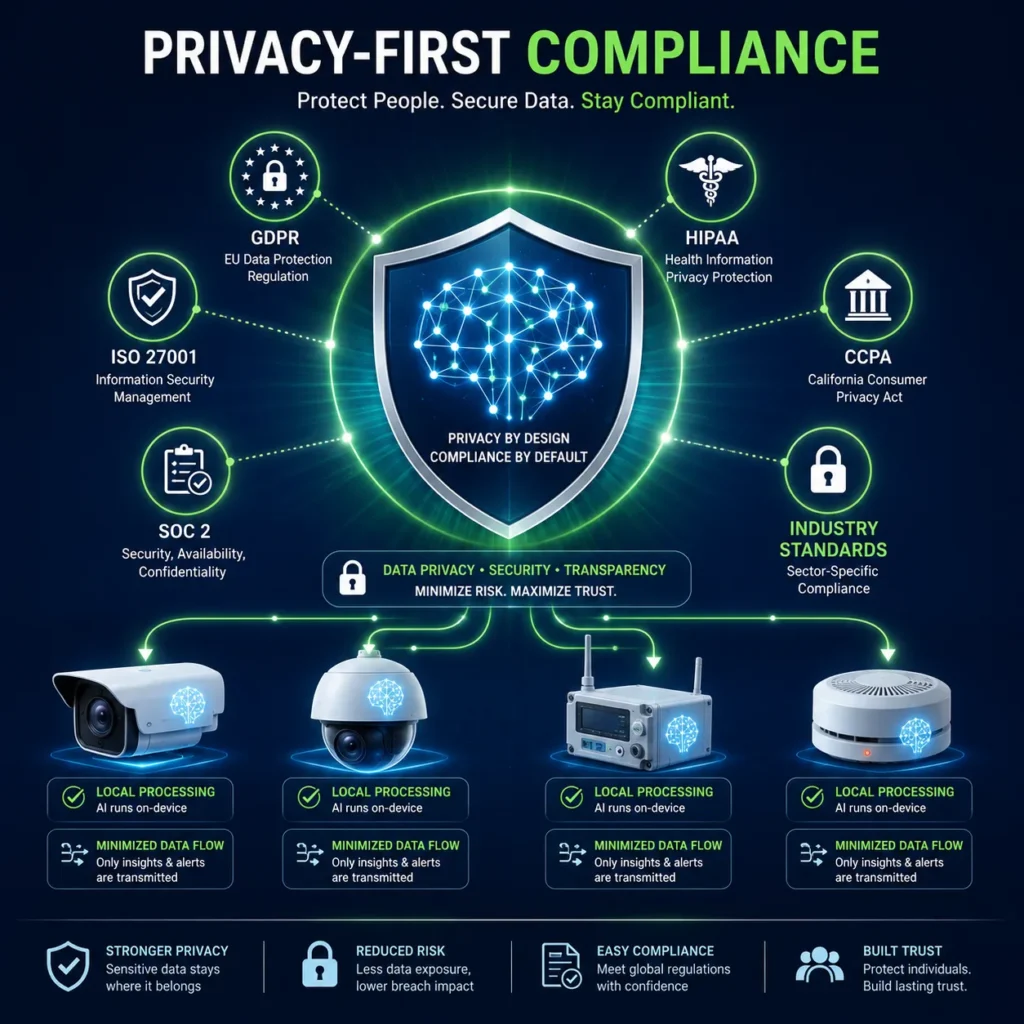
CAPASai combines AI-powered video analytics, remote monitoring, and real-time alerts while helping organizations reduce unnecessary video transmission.
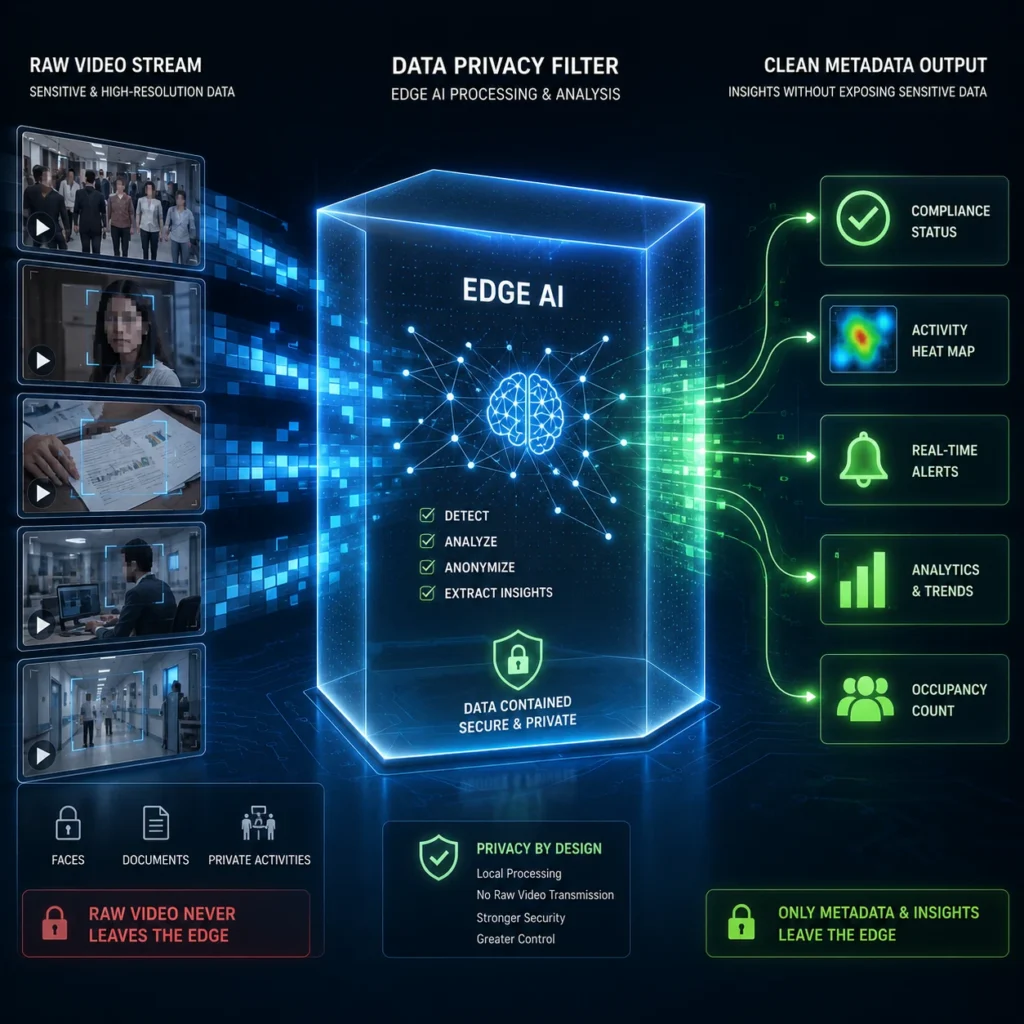
Using Edge AI technology, video analysis occurs closer to the camera source. Only pertinent alarms, events, metadata, and operational insights are sent to centralised systems when needed, as opposed to constantly delivering raw footage.
CAPASai helps organizations:
- Reduce exposure of sensitive video data
- Improve privacy controls
- Strengthen cybersecurity strategies
- Support compliance initiatives
- Enable secure remote monitoring
- Improve operational visibility
- Support CAPA investigations with controlled access to evidence
Retail chains, pharmaceutical companies, manufacturing facilities, healthcare facilities, banking and BFSI, educational institutions, transportation networks, hospitality operations, logistics centers, energy facilities, agriculture operations, and smart infrastructure environments are all supported by the platform.
Key Privacy Benefits of Edge AI Video Analytics
Reduced Data Transmission
Instead of continuously sending full video streams, Edge AI can transmit only alerts, event summaries, and operational metadata.
Better Control Over Sensitive Footage
Organizations retain greater control over where video data is processed and stored.
Lower Cybersecurity Exposure
Reducing data movement across networks decreases potential attack surfaces.
Support for Regulatory Compliance
Many industries benefit from minimizing unnecessary data collection and transmission.
Enhanced Employee and Customer Privacy
Organizations can obtain operational insights without broadly distributing raw video footage
What Makes Edge AI More Privacy-Friendly?
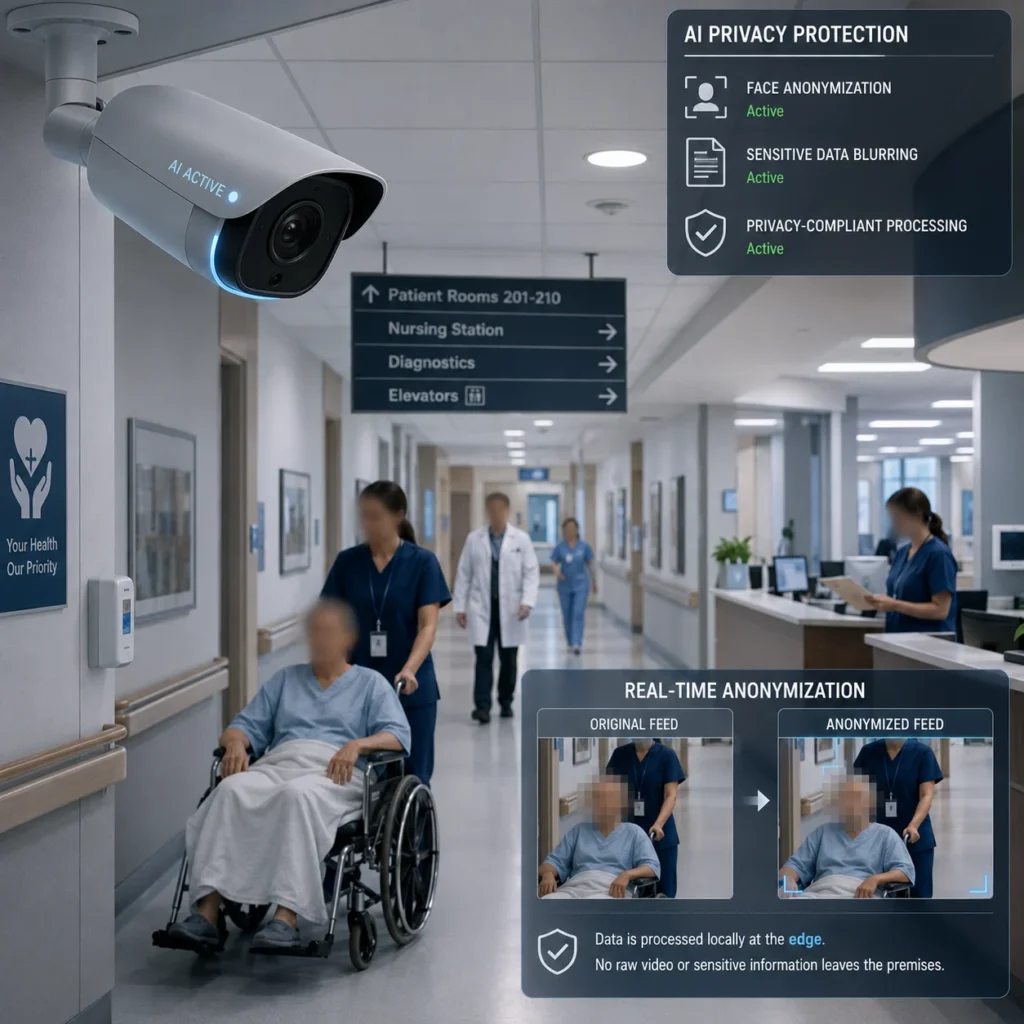
Edge AI performs video analysis directly on cameras or local processing devices rather than relying exclusively on remote servers.
This is how an Edge AI workflow typically looks.:
- CCTV captures activity.
- AI analyzes video locally.
- Events and anomalies are identified.
- Alerts and metadata are generated.
- Only necessary information is transmitted.
Because much of the processing occurs on-site, organizations can significantly reduce the amount of raw video that leaves their facilities.
Edge AI vs Centralized Video Processing
Privacy Factor | Centralized Processing | Edge AI Processing |
Raw Video Transmission | High | Reduced |
Data Exposure Risk | Higher | Lower |
Network Dependency | High | Reduced |
Local Data Control | Limited | Greater |
Privacy Protection | Moderate | Stronger |
Sensitive Environment Suitability | Good | Excellent |
For privacy-conscious organizations, Edge AI often provides a more secure operational model.
Industry Use Cases
Healthcare & Hospitals
Protect patient privacy while maintaining operational and safety monitoring.
Banking & BFSI
Improve branch monitoring while reducing unnecessary video transmission.
Pharmaceutical Manufacturing
Support controlled access monitoring and regulatory compliance requirements.
Educational Institutions
Enhance campus safety while maintaining responsible data handling practices.
Retail Chains
Keep an eye on customer areas and store operations while limiting the amount of video data that is exposed.
Why Privacy Is Driving Edge AI Adoption
Organizations increasingly recognize that effective monitoring and strong privacy protection must work together.
Edge AI helps businesses:
- Strengthen data governance
- Improve cybersecurity resilience
- Reduce unnecessary data movement
- Support privacy-focused compliance programs
- Improve control over sensitive footage
- Maintain operational visibility
- Establish trust with stakeholders, clients, and staff.
As privacy regulations continue to evolve, Edge AI is becoming an important component of modern video analytics strategies.